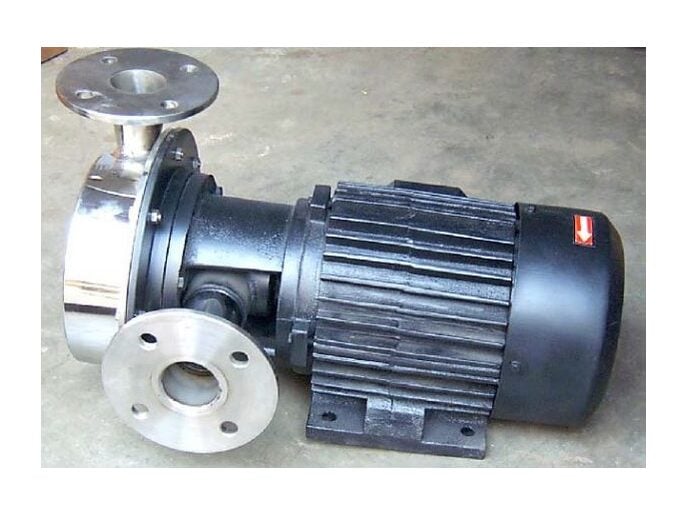
A wrongly specified transfer pump handling 30% Hydrochloric Acid (HCl) at 45°C will eat through a standard SS-316 impeller in exactly 72 hours. I know, because I've seen it happen at an electroplating plant in Vatva GIDC. The resulting shutdown, acid cleanup, and replacement cost the facility nearly ₹3.8 Lakhs in a single weekend.
₹4.2 Lakhs/year€” The average hidden cost of downtime and replacement parts when Indian chemical plants select the wrong pump material for corrosive media.
After 22 years of sizing, installing, and troubleshooting fluid transfer systems across India's harshest industrial environments, I can tell you that the debate of pp pump vs ss pump is not about which material is "better." It is about matching the precise metallurgy and polymer science to your specific fluid dynamics.
Whether you are designing an Effluent Treatment Plant (ETP) in Ankleshwar or a pharmaceutical solvent line in Baddi, you need to understand the mechanical breakdown of these materials. Here is the raw engineering data behind the polypropylene centrifugal pump and the stainless steel chemical pump so you can specify the right equipment for your next project.
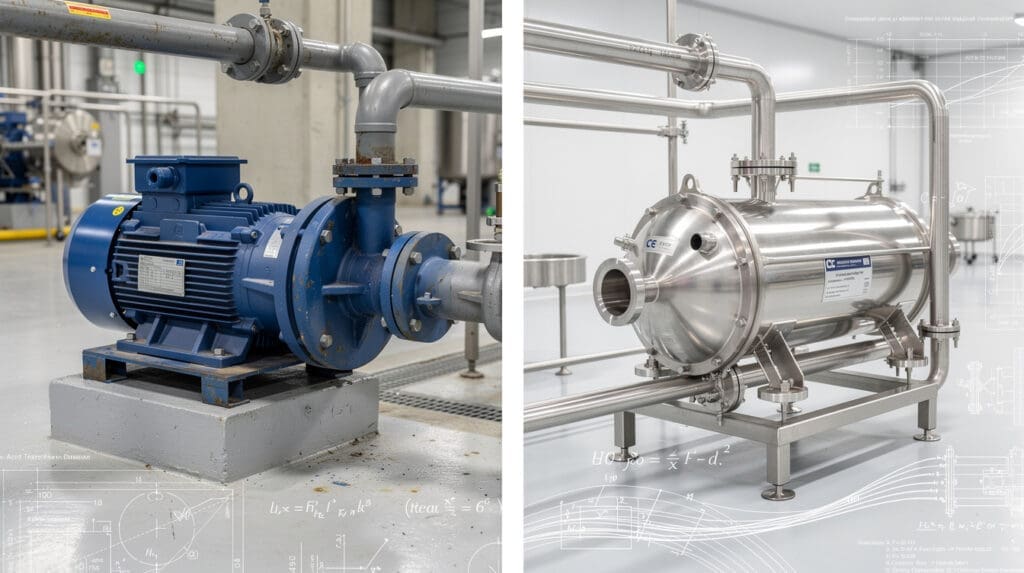
The Chemistry of Corrosion: When SS-316 Fails
Stainless steel is undeniably an exceptional alloy. In fact, our CE Series SS pumps—built with pore-free rolled stainless steel—are daily workhorses in the dairy, food, and pharmaceutical sectors. But put a standard SS-316 pump in an application involving chlorides, halogens, or reducing acids, and you trigger rapid pitting and crevice corrosion.
Acids like HCl, dilute Sulphuric Acid (H2SO4), and scrubbing liquors containing Cl2, SO2, or Br2 strip the passive chromium oxide layer right off the stainless steel. Once that layer is breached, the impeller and volute casing disintegrate. Frankly, it's not a matter of if it will fail, but when.
This is exactly why shifting to a polypropylene centrifugal pump becomes mandatory. Polypropylene (PP) is an engineered thermoplastic that offers near-total chemical inertness to a massive range of corrosive alkalis and acids.
Never use a standard stainless steel pump for Hydrochloric Acid (HCl) or Ferric Chloride. The chloride ions will cause catastrophic localized pitting corrosion. For these applications, a PP, PVDF, or UHMWPE wet-end is non-negotiable.
Dissecting the Polypropylene Centrifugal Pump
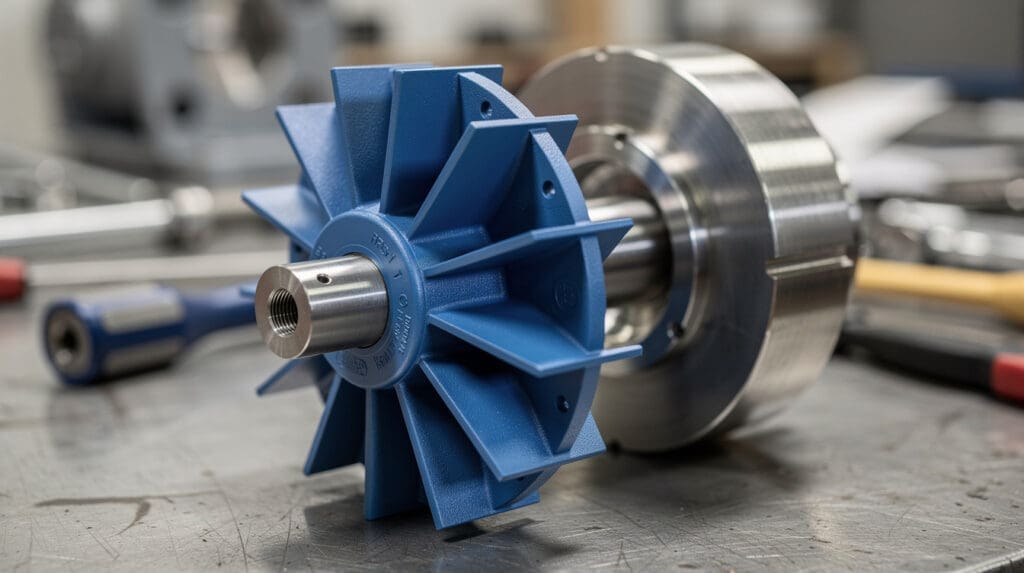
When we engineer PP pumps at Chintan Engineers, we strictly follow DIN 24256 / ISO 5199 standards. This isn't just a compliance badge for the brochure; it dictates a robust, single-piece volute casing and a heavily reinforced structure. Pure PP can deform under high pressure or elevated temperatures, which is why engineering the supporting bracket is absolutely critical.
Material of Construction (MOC) Specifications
Our standard configuration includes:
- Casing, Impeller, Back Plate: Available in PP, GRP (Glass Reinforced Plastic), UHMWPE, or PVDF depending on the aggressiveness of the media.
- Shaft Sleeve: This is the most vulnerable point. The shaft itself is SS or EN9 for mechanical strength, but the media never touches it. It is protected by a sleeve of GRP, Ceramic, Alloy-20, or Hastelloy B/C.
- Impeller Design: A semi-open, hydraulically balanced impeller with streamlined profile vanes. This is vital for handling the suspended solids often found in ETP applications or pickling line sludge.
Temperature Limits and Mechanical Seals
One limitation of PP is thermal degradation. Our PP pumps handle continuous service up to 120°C. If your process fluid exceeds this, we must look at metallic pumps or highly specialized fluoropolymers.
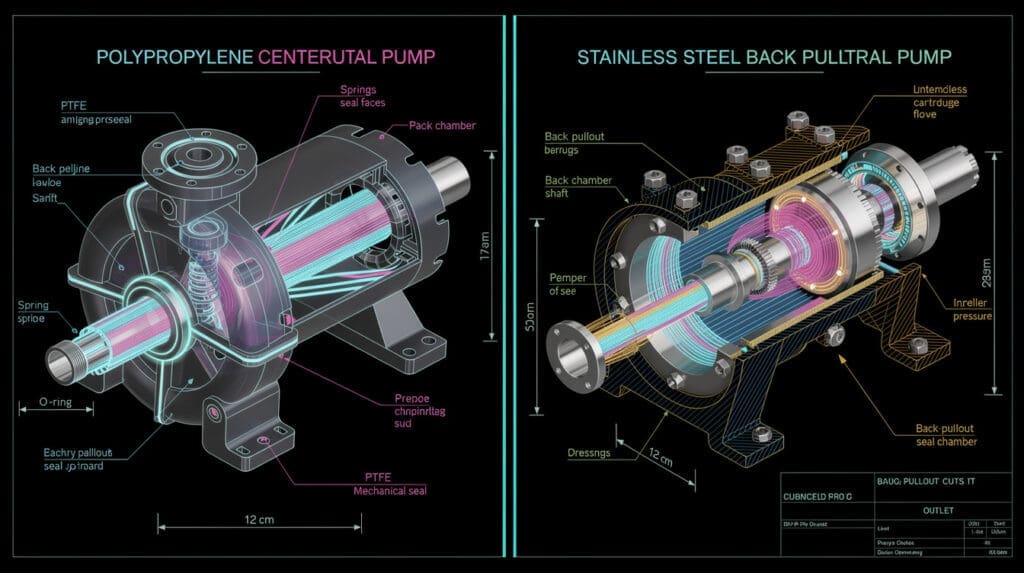
The sealing mechanism is where most pump failures begin. For highly corrosive, toxic media like ammonia scrubbing, we utilize PTFE bellows mechanical seals (internally or externally mounted). The PTFE bellow ensures that the metallic spring of the seal never contacts the fluid.
Experiencing frequent seal failures in your acid transfer lines?
Upgrade to an ISO 5199 compliant PP Pump with a PTFE Bellow Mechanical Seal to stop corrosive leaks permanently.
The Case for the Stainless Steel Chemical Pump
I’ve audited enough fluid systems to know that when you step away from brutal acids and enter the realm of organic solvents, viscous fluids, or high-temperature loops, stainless steel reigns supreme.
This is the exact environment we designed our SS Pumps – CE Series and CE Backpullout Pump BPO Series to conquer.
Viscosity and Surface Finish
The standout feature of the CE Series is its pore-free, non-pitting surface. Because it is fabricated from rolled stainless steel (rather than cast), friction losses are drastically minimized. This allows the pump to handle fluids with a viscosity of up to 1500 centipoise (cP) — a thickness where a standard PP pump would cavitate and stall.
This makes the stainless steel chemical pump ideal for:
- Ink transfer operations
- Sugar and confectionery syrups
- Pharmaceutical API processing
- Milk and dairy circulation
The Back Pull Out (BPO) Advantage
In heavy industrial settings, maintenance speed is money. Our BPO Series (complying with DIN 24255 / ISO 2858) features a back pull-out construction. This means your maintenance crew can withdraw the entire rotating assembly—impeller, shaft, and bearings—without disturbing the heavy suction and delivery pipework.
Furthermore, for aggressive media that isn't highly acidic (like certain aggressive solvents), our Cast Iron BPO casing includes a >3mm corrosion allowance, providing years of extended life, engineered for a 16 bar working pressure.
If you are transferring fluids above 1500 cP or operating at pressures exceeding 10 bar, discard PP options immediately. Specify a rolled SS-316 pump with a back-pullout design for optimal MTBF (Mean Time Between Failures).
Head-to-Head: PP vs SS Pump Comparison Guide
To cut through the marketing noise, here is how the two technologies actually stack up on the factory floor, based on our 22 years of field installation data.
| Engineering Parameter | Polypropylene Centrifugal Pump | Stainless Steel Chemical Pump (CE Series) |
| :— | :— | :— |
| Best For | Corrosive acids, alkalis, scrubbers | Solvents, food-grade media, viscous fluids |
| Max Temperature | Up to 120°C | 200°C+ (Depending on seal type) |
| Viscosity Limit | Low to medium | Up to 1500 cP |
| Corrosion Resistance | Excellent against Chlorides/Acids | Vulnerable to Chlorides/Halogens |
| Abrasion Resistance | Good (with semi-open impeller) | Moderate (unless hard-faced) |
| Cost Profile | Lower initial capital expenditure | Higher initial cost, lower TCO in right app |
| Typical Applications | ETP, Electroplating, Descaling | Pharma, Dairy, RO Systems, Ink Transfer |
Indian Industrial Context: Designing for Reality
When specifying a chemical transfer pump, India presents unique, highly localized challenges. I frequently inspect installations in coastal areas like Dahej or high-humidity zones during the monsoon.
If you install a standard cast iron pump in an acid-heavy atmosphere, the exterior will rust away before the interior fails. To combat this, our PP pumps feature a casing provided with an external metal ring for dimensional stability, coated specifically to resist aggressive atmospheric corrosion.
In electroplating hubs, voltage fluctuations are practically guaranteed. A heavy, unbalanced impeller will destroy bearings during start-up surges. Our PP pumps feature dynamically and hydraulically balanced impellers to reduce radial loads, pairing perfectly with Double Ball Bearings housed in C.I. GRFG-26 brackets.
The Economic Reality: Total Cost of Ownership (TCO)
Why do so many plant managers ignore the total cost of ownership until a pump physically fails on the floor? Let's look at a real-world TCO calculation for a 15 m³/hr transfer line handling 20% H2SO4 at ambient temperature.
Scenario A: Incorrectly using a basic SS-304 Pump
- Initial Cost: ~₹45,000
- Impeller/Seal Replacement (Every 4 months due to acid): ₹18,000 × 3/year = ₹54,000/year
- Production Downtime Cost: ₹1.5 Lakhs/year
- 3-Year TCO: ~₹6.5 Lakhs
Scenario B: Specifying a Polypropylene Centrifugal Pump
- Initial Cost: ~₹38,000
- Routine Maintenance (Seal check once a year): ₹5,000/year
- Production Downtime Cost: ₹0 (Predictable maintenance)
- 3-Year TCO: ~₹53,000
The math is brutal and undeniable. Material compatibility is the ultimate driver of your fluid system's ROI.
Many plant managers mistakenly believe that magnetic drive pumps (seal-less) are only available in metallic builds. We manufacture a robust PP Magnetic Pump specifically for transferring highly lethal or corrosive liquids where zero leakage is an absolute environmental and safety mandate.
Installation & Maintenance Directives
I constantly emphasize mechanical alignment in my Fuel Flow Meter Installation: Engineer’s Setup Guide, and the exact same principle applies to chemical pumps. The mechanical alignment dictates the lifespan of the unit.
- Baseplate Leveling: PP is a polymer. If the baseplate is warped, tightening the hold-down bolts will distort the pump casing, leading to immediate seal failure.
- Suction Piping: Ensure the suction pipe is independently supported. Never let the pump casing bear the weight of the piping network. The ISO 5199 standard dictates heavy-duty bearing frames, but pipe strain will still misalign the shaft.
- Dry Running Prohibition: A PP pump with a standard mechanical seal will melt its seal faces in under 60 seconds if run dry. Always install a dry-run protection relay or level switch in the suction tank.
- Venting: Our casings are a self-venting sort. Ensure proper priming protocols are followed. Air pockets in a centrifugal pump not only cause cavitation but also result in localized heating.
If you are dealing with fluctuating flow rates or pressure drops that cause mechanical strain on your pumps, the issue might be broader system calibration. Similar to resolving signal drift in measurement, resolving hydraulic drift requires a systematic approach. You can read my thoughts on system diagnostics in our Fuel Flow Meter Troubleshooting: Fix Drift & Signal Loss article.
Need a pump engineered for 16 Bar working pressure?
Our CE Backpullout BPO Series offers heavy-duty cast iron and SS constructions for the toughest industrial loops.
Frequently Asked Questions
Can a PP pump be used for flammable solvents?
Absolutely not. Polypropylene is not intrinsically conductive, meaning static electricity can build up and cause an arc. For highly flammable solvents like Toluene or Hexane, you must use a stainless steel chemical pump (like our CE Series) properly grounded, ideally with an ATEX-certified motor.
What is the maximum pressure a standard PP centrifugal pump can handle?
Standard PP centrifugal pumps are typically designed for system pressures up to 6 to 10 bar, depending on the temperature. High pressures at elevated temperatures will cause the polymer to creep. For 16 bar applications, our BPO series with metallic casings is required.
Why use a semi-open impeller instead of a closed impeller in PP pumps?
In chemical and ETP applications, fluids often carry sludge, salts, or suspended particles (like in electroplating or pickling lines). A semi-open impeller prevents clogging and makes cleaning significantly easier, whereas a closed impeller would foul rapidly.
How does the PP Magnetic Pump differ from the standard PP Pump?
The standard PP pump uses a mechanical seal (or gland packing) where the shaft penetrates the casing. The PP Magnetic Pump is entirely seal-less. A magnetic drive couples the motor to the impeller through a solid containment shell, ensuring zero leakage—crucial for highly toxic or expensive chemicals.
What standards apply to chemical transfer pumps in India?
While measurement devices fall under specific metrology rules (which I detail in our BIS & OIML Rules for Indian Diesel Dispensers guide), chemical pumps should be specified against dimensional and performance standards like DIN 24256 / ISO 5199 for polymer pumps, and DIN 24255 / ISO 2858 for metallic back-pullout pumps.
Final Engineering Verdict
After specifying over 5,000 fluid handling systems, my recommendation comes down to a strict review of your fluid's chemical composition.
If you are moving milk, RO water, pharmaceutical APIs, high-viscosity syrups (up to 1500 cP), or highly flammable solvents, the Stainless Steel CE Series is your definitive choice.
However, if your process involves Hydrochloric acid, Sulphuric acid, electroplating baths, or corrosive scrubber gasses like NH3, CO2, or SO2—do not waste your capital on metallic wet-ends. Specify a Polypropylene centrifugal pump built to ISO 5199 standards, equipped with a PTFE bellow mechanical seal and a Hastelloy or Ceramic shaft sleeve.
Getting the metallurgy right the first time will save you lakhs in operational downtime.
Ready to specify the exact pump for your chemical line?
Stop replacing corroded impellers. Let our engineering team match the exact MOC to your fluid dynamics.