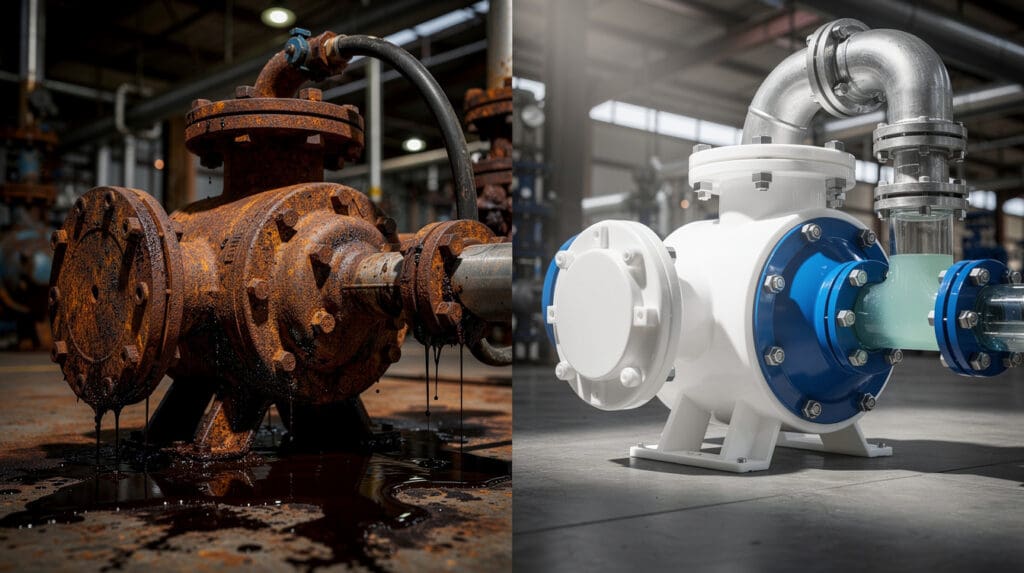
A 4-hour unscheduled shutdown during peak cane crushing season in a 5,000 TCD (Tonnes Crushing per Day) sugar mill costs roughly ₹8.5 Lakhs in lost throughput and sugar inversion. In my 22 years at Chintan Engineers, I have watched plant managers bleed their maintenance budgets dry because a standard cast iron pump impeller dissolved in a 5% hydrochloric acid descaling loop. When you are moving milk of lime, phosphoric acid, and aggressive effluents, metallic pumps are a financial liability.
Sugar manufacturing is a highly corrosive business. The presence of sulphur dioxide (SO2), aggressive pH swings in the clarifiers, and the harsh chemicals required for evaporator boil-outs demand polymers, not metals. That is exactly where Polypropylene (PP) and PVDF centrifugal pumps become an engineering necessity.
While I spend much of my time ensuring boiler fuel and molasses tracking complies with IS 14883 and OIML R117 legal metrology standards, fluid transfer inside the chemical stations requires strict adherence to DIN 24256 and ISO 5199 pump standards. Here is why corrosion-resistant industrial polypropylene pumps are the only mathematically sound choice for your chemical transfer nodes.
₹1.8 Lakhs/year€” Average replacement and maintenance cost of using a single improperly specified metallic pump for acid transfer in a sugar mill.
The True Cost of Corrosion in Sugar Manufacturing
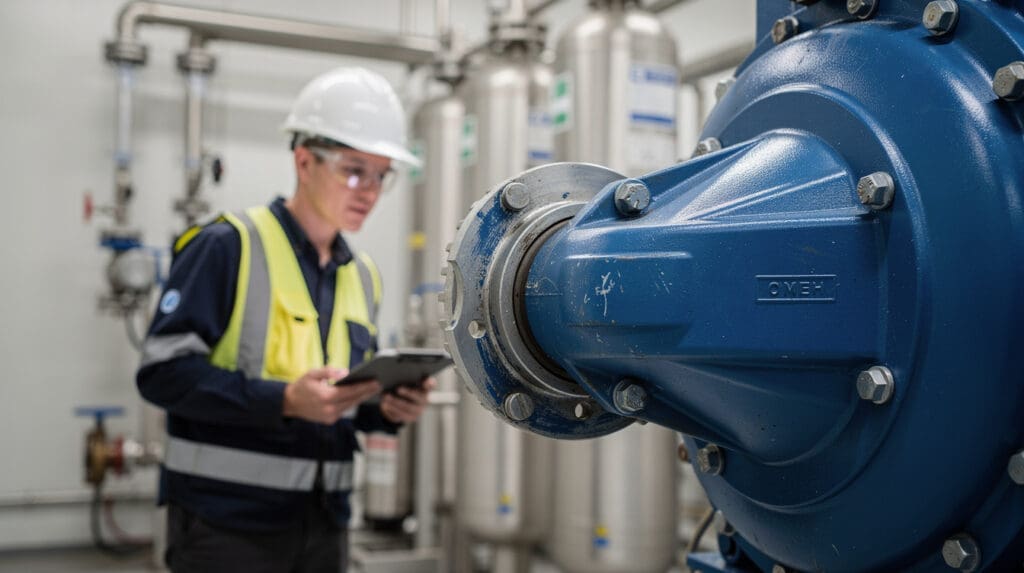
The chemical dosing and cleaning circuits in a sugar mill present a uniquely hostile environment. Rural grid voltage fluctuations mean pumps frequently operate off their Best Efficiency Point (BEP), inducing vibration that accelerates mechanical wear. Combine that with high monsoon humidity that attacks cast iron housings externally—believe me, cast iron doesn't stand a chance in 90% humidity—and highly acidic fluids attacking internals, and you have a recipe for catastrophic failure.
In the sulphitation process, SO2 gas creates highly corrosive sulphurous compounds. During off-season maintenance or weekly boil-outs, evaporators and vacuum pans are flooded with caustic soda followed by hydrochloric (HCl) or sulfamic acid to remove stubborn silica and calcium scales.
(I've lost count of how many operators I've seen use SS-316 pumps for 10% HCl transfer, thinking "stainless" means invincible. Hydrochloric acid eats SS-316 for breakfast through rapid chloride stress corrosion cracking. You need non-metallic wet ends.)
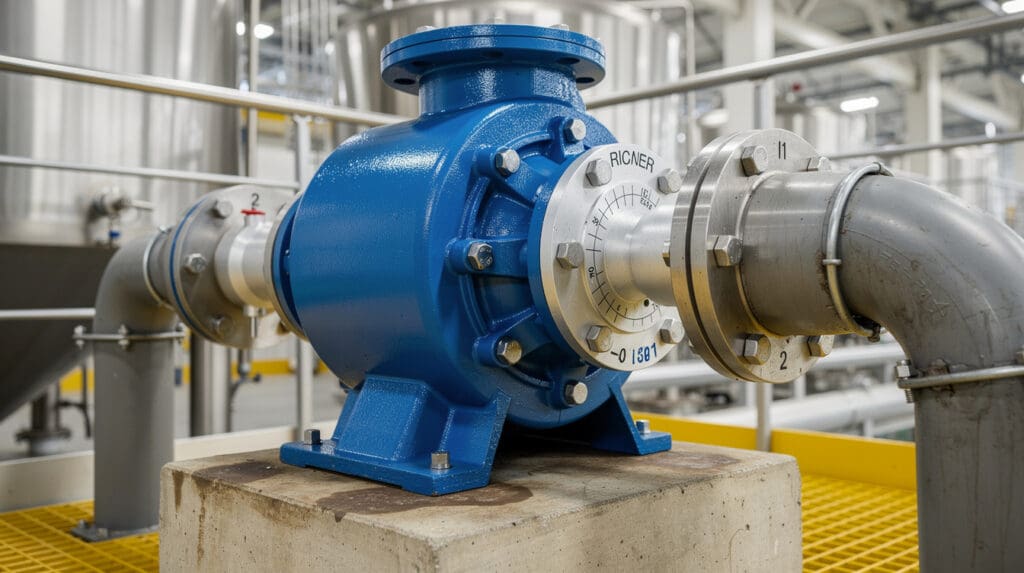
3-Year TCO: Cast Iron vs. PP Pump on Acid Duty
Here is the actual Total Cost of Ownership (TCO) for an evaporator descaling transfer pump (30 m³/hr at 20m head) operating intermittently.
| Cost Factor | Cast Iron (CI) Pump | PP Centrifugal Pump |
| :— | :— | :— |
| Initial Capital | ₹45,000 | ₹65,000 |
| Corrosion Life | 6-8 Months | 5+ Years (Chemical) |
| Annual Spares | ₹30,000 (Impellers/Casing) | ₹8,000 (Seals/Sleeves) |
| Downtime Losses | ₹1,50,000 (est. leaks) | ₹0 (if operated within temp) |
| 3-Year TCO | ₹2,85,000+ | ₹89,000 |
The numbers are indisputable. A properly specified PP pump pays for its premium within the first crushing season by simply not failing.
Losing money to pump corrosion?
Upgrade your chemical dosing stations with our ISO 5199 compliant Polypropylene Pumps designed specifically for harsh Indian industrial environments.
Engineering the Right PP Pump for Chemical Transfer
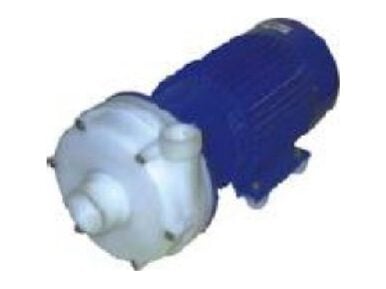
Any chemical pump is only as reliable as its dimensional stability and its mechanical seal. Our centrifugal PP pumps are designed strictly following DIN 24256 / ISO 5199 standards. To an operator, these might sound like bureaucratic red tape, but out in the plant, these rules dictate baseplate dimensions, shaft deflection limits, and bearing life—ensuring your piping doesn't crack when the pump experiences operational stress.
Core Construction Specifications
Based on field data across Maharashtra and UP sugar belts, here is the architecture required for survival:
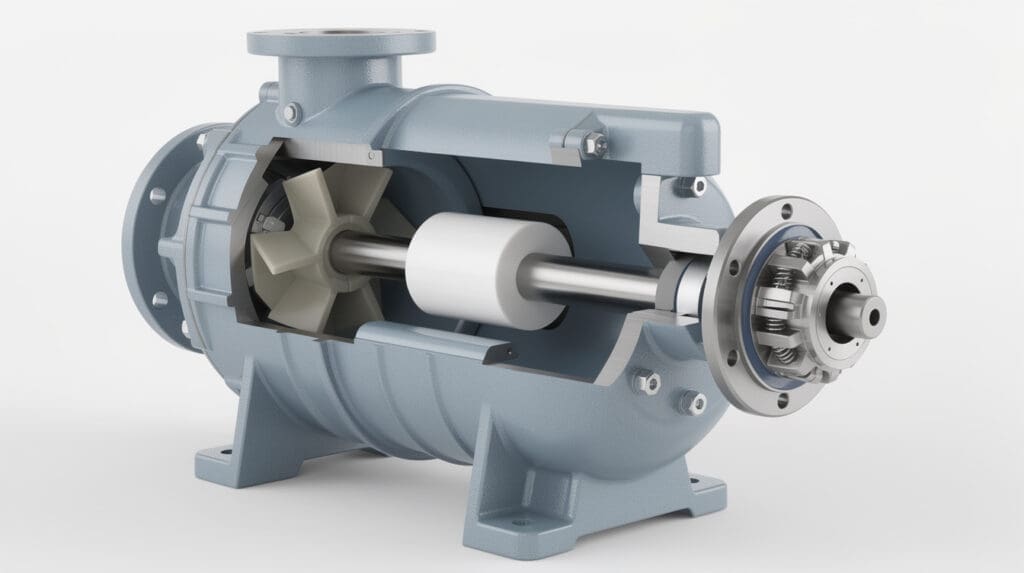
- Casing: Horizontal, single-piece volute design. This eliminates the weak point of split casings where acid inevitably leaks through gaskets. We utilize heavy-wall PP, GRP (Glass Reinforced Plastic), UHMWPE, or PVDF depending on the exact fluid and temperature.
- Impeller: A dynamically and hydraulically balanced semi-open impeller. I cannot stress this enough: sugar mill chemicals are rarely pure liquids. Milk of lime is a slurry. A closed impeller will clog within hours. The semi-open profile allows suspended solids to pass without jamming.
- Bearing Bracket: Cast Iron GRFG-26 to provide absolute rigid support to the shaft, dampening vibrations from the motor.
- Shaft & Sleeves: The shaft is isolated from the fluid. We use SS/EN9 shafts, but the sleeve that contacts the fluid dictates survival. We specify GRP, High-Alumina Ceramic, Alloy-20, or Hastelloy B/C sleeves based on the chemical aggressiveness.
Always specify Alloy-20 or Hastelloy C shaft sleeves if your effluent treatment plant (ETP) receives mixed, unpredictable acidic runoff. Ceramic sleeves are excellent for pure acids but can crack under sudden thermal shocks during washdowns.
Critical Pumping Nodes in a Sugar Mill
So, where do these pumps actually belong on your floor?
1. Juice Clarification & Sulphitation (Lime Dosing)
Handling milk of lime requires a delicate balance. It is abrasive, prone to settling, and highly alkaline. A PP pump with a semi-open impeller, fitted with a heavy-duty external mechanical seal (or specialized gland packing with clean water flush), prevents the lime from destroying the shaft. The single-passage, single-stage design ensures continuous self-venting if gas is entrained in the slurry.
2. Evaporator Descaling (Acid Transfer)
Boil-outs require moving aggressive caustics and acids (HCl, Sulphuric acid). Polypropylene is chemically inert to both up to 90°C. If your descaling fluid exceeds 90°C, we upgrade the wet-end material to PVDF, pushing the thermal limit to 120°C.
3. Effluent Treatment Plant (ETP)
Sugar mill ETPs are notorious for highly variable pH levels, foul-smelling volatile gases, and abrasive solids. PP pumps are the natural choice for filter press feeding for dyes and chemicals in the ETP, acting as high-capacity transfer pumps that ignore the pH swings.
A typical 5,000 TCD sugar mill generates roughly 500-600 cubic meters of effluent per day. The high Biological Oxygen Demand (BOD) and presence of corrosive wash-water make metallic ETP pumps a constant maintenance headache. PP neutralizes this threat entirely.
Material Limits: Temperature and Pressure Dynamics
Polypropylene is an incredible engineering polymer, but it still obeys the laws of thermodynamics. In fact, I refuse to sign off on a PP pump order without verifying the exact fluid temperature.
Our PP and PVDF pumps are designed for a maximum temperature range up to 120°C (using PVDF/UHMWPE variants). If you run boiling water (100°C) through a standard-grade PP pump under high discharge pressure, the casing will soften and warp, leading to immediate mechanical seal failure.
If your process involves hygienic food-grade transfer—like clear juice, syrup, or molasses at boiling temperatures—you need to abandon polymers entirely and switch to our SS Pumps – CE Series. These feature rolled stainless steel construction with a pore-free, non-pitting surface capable of handling viscosities up to 1500 centipoise.
Sealing the Deal: Mechanical Seals vs. Gland Packing
The heart of a chemical pump is the seal. For sugar mill chemical transfer, we offer:
- PTFE Bellows Mechanical Seal: Internally or externally mounted. The external mount keeps the delicate spring mechanisms out of the corrosive fluid entirely. Ideal for clean acids and caustics.
- Gland Packing (Teflon based): Often preferred in rural Indian mills for lime slurry, as maintenance teams can visibly monitor and adjust it without stripping the pump.
Never allow a PP pump with a PTFE mechanical seal to run dry, even for 30 seconds. Without fluid to lubricate and cool the seal faces, the friction heat will melt the PP backplate and permanently destroy the seal.
Fleet and Plant Integration
Optimizing a sugar mill doesn't stop at the chemical stations, either. During the crushing season, a mill relies heavily on a massive fleet of cane transport tractors and internal diesel power generation.
Just as using the wrong pump costs you in downtime, using a dipstick to measure your fuel yard costs you in diesel theft and spillage. If you are serious about plant efficiency, you should upgrade your fuel dispensing with a Mobile Fuel Dispenser and read up on why you need to transition from a Fuel Flow Meter vs Dipstick to stop untracked fuel losses.
Installation Protocols for Indian Conditions
Based on hundreds of installations across GIDC estates and rural cooperatives, here are my non-negotiable installation rules for PP pumps:
- Baseplate Grouting: Non-metallic pumps are lighter than cast iron. They do not dampen motor vibration naturally. The C.I. bearing bracket and base frame MUST be fully grouted into a solid concrete plinth.
- Pipe Strain: PP casings cannot bear the weight of unsupported steel piping. Install independent pipe supports immediately before the suction flange and after the discharge flange. If you transfer pipe stress to the pump casing, it will crack.
- Suction Flooded: Centrifugal PP pumps are not self-priming unless specifically designed as such. Always ensure a flooded suction (positive suction head) to prevent cavitation and dry running.
Need expert sizing for your ETP or Descaling lines?
Don't guess on chemical pump specifications. Let our engineering team calculate the exact NPSHa, impeller trim, and material compatibility for your process.
Frequently Asked Questions
What is the maximum temperature a PP pump can handle in a sugar mill?
Standard Polypropylene (PP) handles up to 80°C safely. For higher temperatures up to 120°C, we utilize advanced polymers like PVDF or UHMWPE, depending on the chemical concentration.
Why use a semi-open impeller for milk of lime?
Milk of lime contains suspended solids that agglomerate. A closed impeller will quickly pack with solids and clog, causing motor overload. A semi-open impeller allows these solids to pass through the single-stage volute while maintaining hydraulic efficiency.
Can a PP pump be run dry?
No. Centrifugal PP pumps rely on the process fluid to cool and lubricate the mechanical seal faces. Running dry will cause rapid heat buildup, melting the polymer casing around the seal and destroying the seal faces.
How does voltage fluctuation affect PP pump performance?
Rural sugar mills often face voltage drops. A drop in voltage reduces motor RPM, which exponentially drops the pump's head and flow (affinity laws). If the head drops below the system's static requirement, the pump will dead-head, boiling the fluid inside the casing and causing a catastrophic thermal failure.
Is it better to use magnetic drive pumps for chemicals?
For absolute zero-leakage transfer of highly hazardous, clean chemicals, our PP Magnetic Pump is ideal because it has no shaft seal. However, if the fluid has any suspended solids (like lime or ETP sludge), magnetic drives will fail; a mechanical seal PP pump is required.
Final Engineering Verdict
Stop throwing maintenance budgets at consumable cast-iron pumps in your chemical zones. Sugar refinery profitability relies on continuous throughput during the crushing season. A pump failure in the sulphitation or descaling circuit brings the entire evaporation train to a halt.
Based on 22 years of fluid handling data, I strictly recommend horizontally split, single-piece volute Polypropylene pumps with semi-open impellers for all acid, caustic, and lime transfer duties under 90°C. For applications stretching to 120°C, upgrade to PVDF. Ensure the shaft sleeve is specified as Hastelloy C or Alloy-20, and physically isolate the pump casing from pipe strain.
Do the math on your pump replacements over the last three years. The numbers will point you directly to engineered polymers every single time.
Ready to eliminate chemical pump downtime?
Partner with Chintan Engineers to standardize your plant's corrosive fluid transfer with high-efficiency, ISO 5199 compliant PP Pumps.