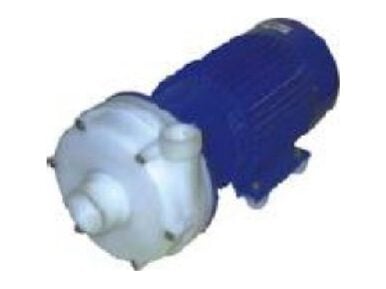
Running a 2-inch Air-Operated Double Diaphragm (AODD) pump for 8 hours a day costs your Effluent Treatment Plant (ETP) operation roughly ₹2.4 lakhs per year in compressed air alone. A similarly sized PP centrifugal pump doing the exact same chemical transfer job consumes less than ₹45,000 in electricity over the same period. In my 22 years of auditing fluid dynamics and flow measurement systems across India, I have sat in control rooms and watched plant managers routinely bleed their maintenance budgets dry because they default to pneumatic pumps where a centrifugal unit is structurally and economically superior.
₹1.95 Lakhs/year€” The average operational savings per pump when replacing an AODD unit with a similarly sized PP centrifugal pump in continuous transfer applications.
When we evaluate a chemical transfer pump, we aren't just looking at the initial capital expenditure. We are evaluating energy consumption, maintenance downtime, fluid compatibility, and flow stability. (I've calibrated enough flow meters to know that the pulsing flow of an AODD pump wreaks absolute havoc on turbine and Coriolis meters downstream—if you need accurate measurement, you demand steady flow).
Here is the engineering reality of the pp pump vs aodd pump debate, focusing strictly on data, DIN 24256 standards, and actual field performance in Indian ETPs and chemical plants.
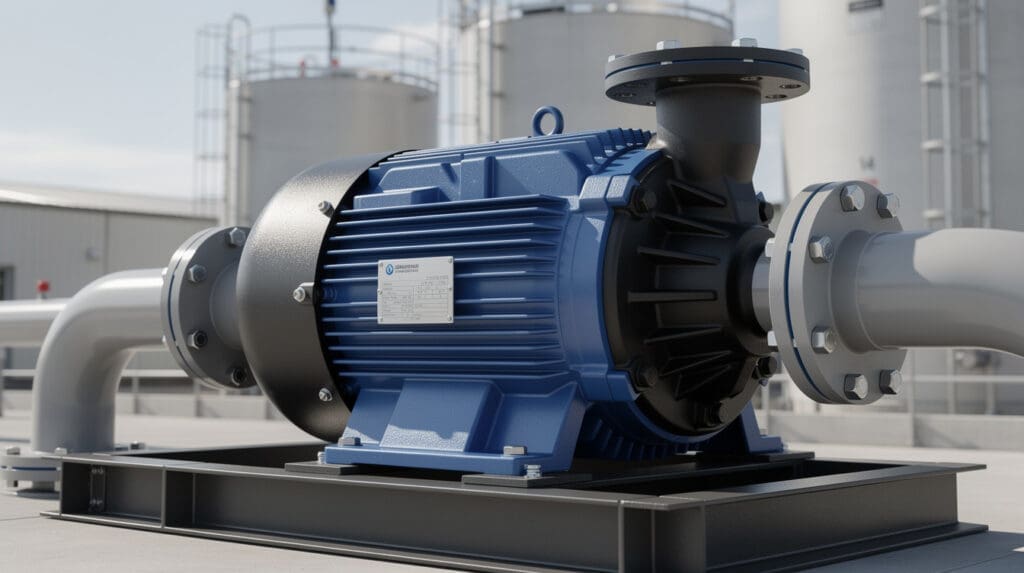
The Physics of Pumping: Centrifugal vs. Positive Displacement
The root of this cost disparity is basic physics.
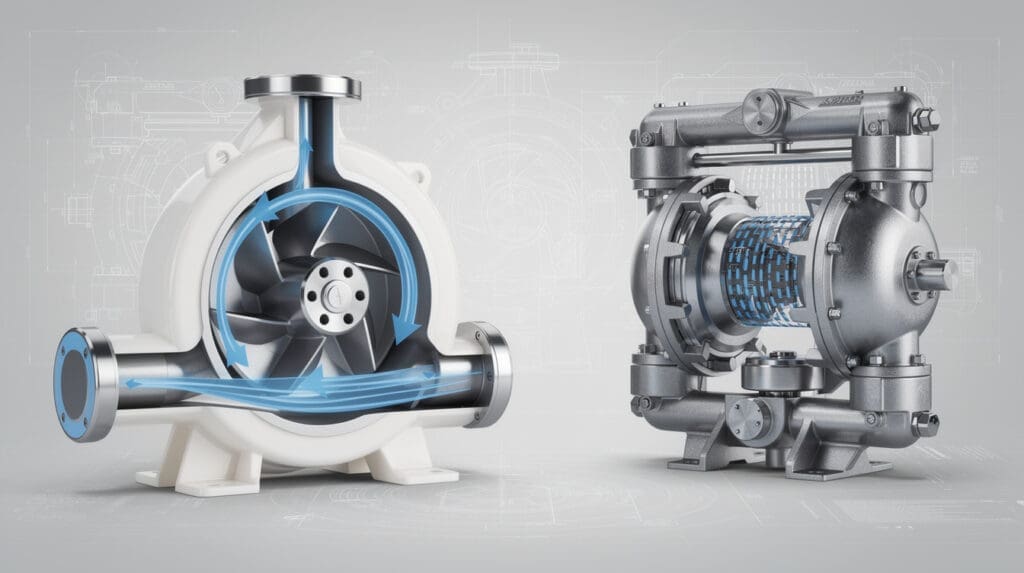
A polypropylene pump of the centrifugal type uses a spinning impeller (often a semi-open design in ETPs) housed within a one-piece volute casing. It imparts kinetic energy directly from an electric motor to the fluid. The energy transfer is direct, rotating, and highly efficient.
An AODD pump is a positive displacement pump driven by compressed air. It uses a reciprocating motion where air shifts a shaft, flexing diaphragms to draw in and push out fluid.
The glaring engineering flaw of the AODD in continuous transfer applications is its reliance on compressed air. Generating compressed air is notoriously inefficient—roughly 80% to 90% of the electrical energy used by an air compressor is lost as heat. You are essentially paying for electricity, converting it to heat, and using a tiny fractional remainder of that energy to move your chemical fluid. Not to mention the constant hissing of air line leaks that most Indian plants just learn to ignore.
Compressed air is often called the "fourth utility" in manufacturing, but it is by far the most expensive. Using it to drive primary chemical transfer pumps in an ETP when electric options exist is a severe drain on operational expenditure (OPEX).
Head-to-Head Comparison: PP Centrifugal vs AODD
When sizing equipment for pickling lines in steel mills or scrubber circulation in Gujarat's GIDC estates, I use a strict multi-factor comparison. This is how these two technologies stack up on the factory floor.
| Parameter | PP Centrifugal Pump | AODD Pump |
| :— | :— | :— |
| Energy Source | Direct electric motor (High efficiency) | Compressed air (Low efficiency) |
| Flow Profile | Smooth, continuous (Ideal for flow meters) | Pulsating (Requires pulsation dampeners) |
| Self-Priming | No (Requires foot valve or flooded suction) | Yes (Can run dry and self-prime) |
| Max Viscosity | Low to Medium (Up to 1500 cP with custom impellers) | Medium to High |
| Deadheading | Will heat up and damage mechanical seal | Stalls safely without damage |
| Maintenance Scope | Mechanical seals, double ball bearings | Diaphragms, air valves, ball checks |
| Capital Cost (CAPEX) | Generally lower for high capacities | Higher for high capacities |
Tired of overspending on compressed air for fluid transfer?
Upgrade your ETP with our high-efficiency, ISO 5199 compliant Polypropylene Centrifugal Pumps built for continuous heavy-duty chemical service.
Total Cost of Ownership (TCO) in Indian ETPs
When discussing the etp pump price in india, procurement managers often fixate entirely on the purchase order value. Consider the bare math for a 10,000 L/hr transfer application handling 30% Hydrochloric Acid (HCl).
1. Capital Expenditure (CAPEX)
A heavy-duty pp centrifugal pump (complying with DIN 24256 / ISO 5199), fitted with a semi-open impeller, PTFE bellows mechanical seal, and a premium efficiency IE3 motor, is significantly more cost-effective upfront than a 2-inch PTFE-fitted AODD pump.
2. Operational Expenditure (OPEX)
OPEX is where the centrifugal design truly proves its worth. A PP pump moving 10,000 L/hr at a 20-meter head requires roughly a 1.5 kW to 2.2 kW electric motor.
An AODD pump doing the same job might consume 40 to 60 CFM of compressed air. To generate that air, your compressor relies on a 7.5 kW to 11 kW motor. You are spending up to 5 times more on electricity every single hour the pump runs. Over a year, that single switch can save enough to hire an extra plant operator.
3. Maintenance and Spares
AODD pumps rely on wear parts that flex and degrade: diaphragms, balls, and seats. In abrasive ETP slurry, these require frequent replacement.
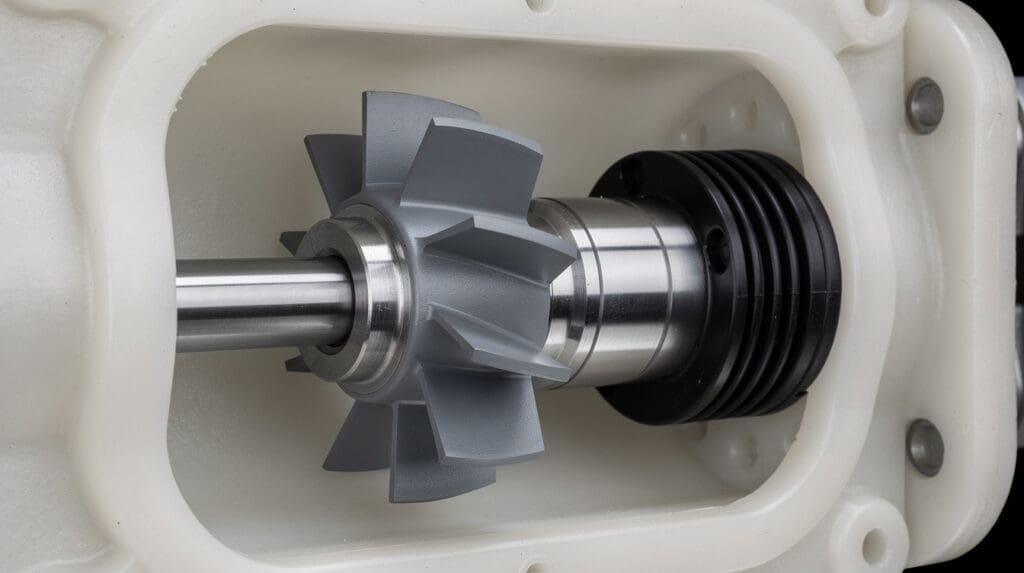
Our PP pumps are designed with a dynamically and hydraulically balanced impeller. The shaft is protected by sleeves made of GRP, Ceramic, Alloy-20, or Hastelloy B/C, depending on the chemical. Supported by a double ball bearing arrangement in a C.I. GRFG-26 bearing bracket, the only routine wear item is the mechanical seal. If operated within design parameters (meaning no dry running), a PTFE bellows mechanical seal will outlast an AODD diaphragm by years.
I always recommend installing a motor load monitor on PP centrifugal pumps. If the tank empties and the pump starts to run dry, the monitor detects the drop in electrical load and trips the motor in milliseconds, saving your mechanical seal from thermal destruction.
Material Construction: Why Polypropylene?
Handling corrosive liquids like Sulphuric Acid, Caustic, and chemical effluents requires materials that resist aggressive chemical attack. Metals, even standard stainless steel, often fall short against strong chlorides or acids. (If you are dealing with milder chemicals or need extremely high pressures, you might consult an Industrial SS Pump Setup Guide for India to evaluate SS-316 options instead).
Our polypropylene pumps are cast with heavy-duty, one-piece volute casings. The standard Material of Construction (MOC) options include:
- Casing, Impeller, Back Plate: PP / GRP / UHMWPE / PVDF
- Shaft: SS / EN9
- Shaft Sleeve: GRP / Ceramic / Alloy-20 / Hastelloy B/C
PP handles temperatures up to 80°C effortlessly, while PVDF variants can push up to 120°C. For pickling lines in steel rolling mills, where acid temperatures are elevated, I typically specify PVDF casings with Alloy-20 shaft sleeves to provide a completely inert fluid path.
Selection and Sizing Guide
Choosing the right chemical transfer pump is not guesswork; it is a strict exercise in hydraulics. When plant engineers ask me to size a pump, I demand four pieces of data upfront: Flow rate (Q), Total Differential Head (H), Specific Gravity (SG) of the fluid, and the Net Positive Suction Head Available (NPSHa).
Specific Gravity and Motor Sizing
Unlike water (SG = 1.0), chemicals like 98% Sulphuric Acid have a specific gravity of 1.84. A centrifugal pump lifting water requires less power than one lifting dense acid. If you slap a water-sized motor on an acid pump, the motor will trip on overload immediately. Always size the motor power by multiplying the required water horsepower by the specific gravity of the chemical.
NPSH and Cavitation
If the fluid boils at the impeller eye, you get cavitation—imploding vapor bubbles that will physically tear a PP impeller apart. Ensure your suction piping is short, wide, and free of unnecessary elbows to keep NPSHa higher than the pump's NPSH required (NPSHr). If you are fighting cavitation issues, review this SS Pump Troubleshooting Guide—the physics of cavitation apply equally to SS and PP centrifugal pumps.
Never use a centrifugal pump for applications requiring dry suction lift unless it is specifically designed as a self-priming centrifugal pump. Standard PP centrifugals must have flooded suction or utilize a reliable foot valve to keep the casing full of liquid before startup.
Applications in Indian Industrial Corridors
I have overseen pump installations from the pharmaceutical hubs in Baddi to the heavy chemical zones in Ankleshwar and Vapi. The environmental conditions in India—monsoon humidity, high ambient temperatures, and notorious voltage fluctuations—dictate robust engineering.
I consistently specify our PP pumps for:
- Effluent Treatment Plants (ETP) and Water Treatment: Handling chemical dosing, neutralization chemicals (HCl, NaOH), and clarifier sludge.
- Steel Rolling Mills: Pickling line circulation where hot acids are used to remove mill scale.
- Electroplating: Circulating plating baths where metallic contamination from the pump itself must be strictly avoided.
- Gas Scrubbing: Circulating neutralizing liquids to scrub corrosive gases like NH3, CO2, SO2, Cl2, and Br2 from industrial exhaust.
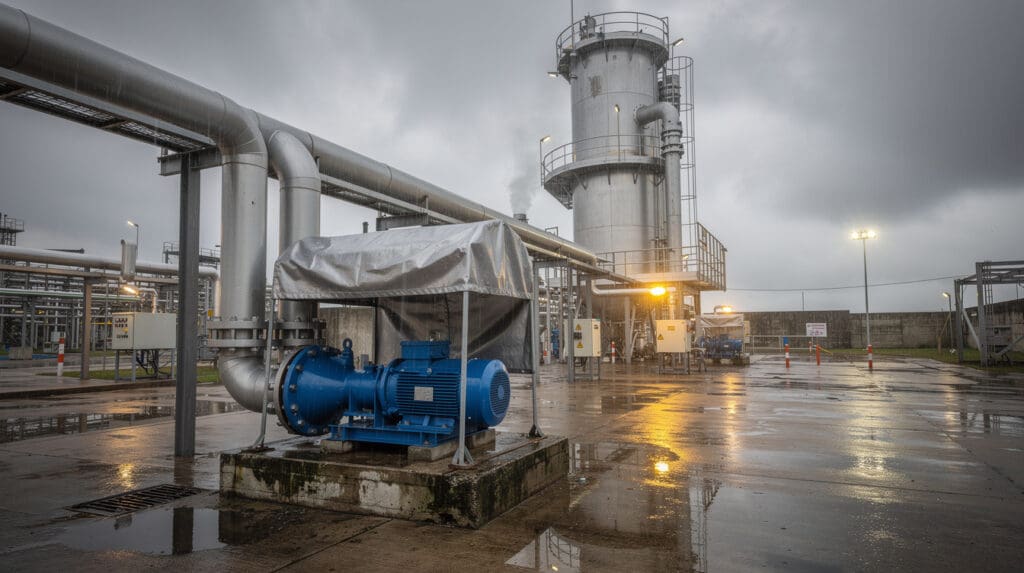
Handling highly aggressive or toxic chemicals?
For zero-leakage applications, explore our PP Magnetic Pumps. With a seal-less magnetic drive, they completely eliminate mechanical seal wear and fluid leaks.
Installation and Maintenance Best Practices
Even a pump built to exacting DIN 24256 standards will fail if installed poorly. In Indian industrial estates, dust ingress and pipe strain are the two silent killers of centrifugal pumps.
- Pipe Strain: PP is a highly durable plastic, but it is still plastic. Never use the pump casing to support the weight of your suction and discharge piping. All piping must be independently supported. If pipe strain distorts the casing, the mechanical seal faces will misalign, leading to immediate chemical leaks.
- Venting: Our pumps feature a self-venting type casing, but you must ensure that no air traps exist in your suction line. A suction pipe should always slope gently upward toward the pump inlet.
- Baseplate Grouting: Mount the pump on a rigid, flat foundation. The heavy-duty C.I. GRFG-26 bearing bracket provides excellent stability, but vibrations from uneven mounting will rapidly shorten the life of the double ball bearings.
- Seal Flush: If handling fluids that crystallize when exposed to air (like Caustic Soda), ensure you select a mechanical seal arrangement that allows for a water flush to keep the seal faces clean.
Frequently Asked Questions (FAQs)
Can a PP centrifugal pump replace an AODD pump directly?
Yes, provided the application has flooded suction (liquid level is above the pump inlet) and the fluid does not contain massive, hard solids. You will instantly save on compressed air costs and gain a much smoother flow profile.
What is the maximum temperature a PP pump can handle?
Standard Polypropylene (PP) handles up to 80°C. For higher temperatures up to 120°C, we upgrade the casing and impeller material to PVDF or UHMWPE, depending on the chemical compatibility.
Are PP pumps safe for flammable liquids?
Generally, no. Plastics can generate static electricity. For highly flammable solvents, you must use metallic pumps (like our CE Backpullout SS Series) or specially formulated conductive plastics, paired with flameproof (FLP) motors.
How do I prevent the mechanical seal from leaking?
The vast majority of seal failures are caused by operator error: dry running, cavitation, or pipe strain. Ensure a constant fluid supply, use a motor load monitor to trip on dry run, and independently support all piping. For absolute zero-leakage requirements, opt for a PP Magnetic Drive pump.
Why use a semi-open impeller instead of a closed one?
A semi-open impeller is less prone to clogging when handling industrial effluents that may contain minor suspended solids or sludge, making it highly reliable for ETP applications.
Does the pulsing of an AODD pump really affect flow meters?
Absolutely. In flow measurement, especially with turbine or Coriolis meters, a pulsing flow disrupts the velocity profile, causing severe calibration drift and measurement errors. Centrifugal pumps provide the steady, laminar flow required for accurate metrology.
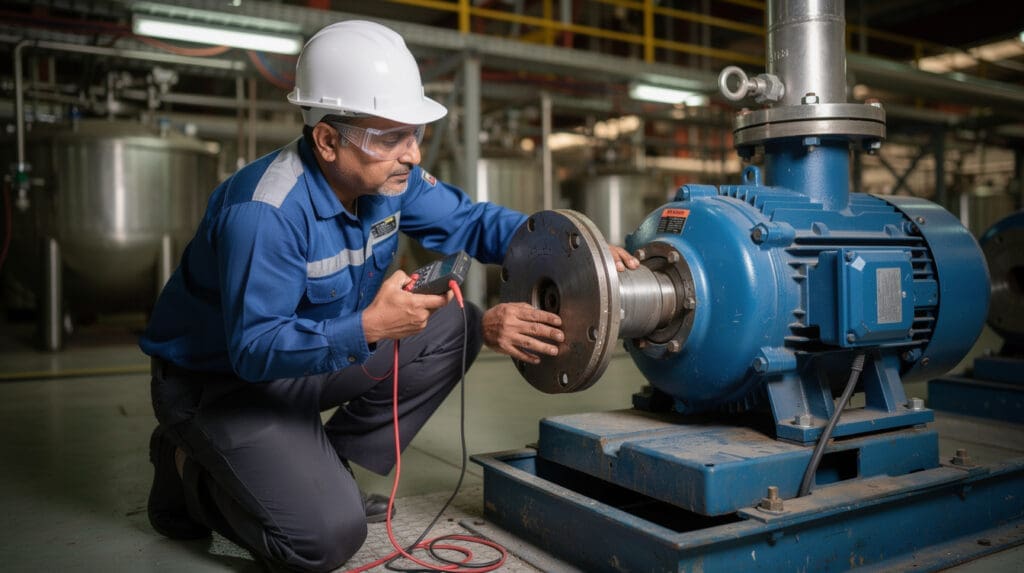
Final Verdict
Based on 22 years of field data, here is my direct recommendation: If you need self-priming capabilities from a dry state, or if you need to frequently deadhead the pump without electrical controls, keep your AODD pump.
However, for 90% of chemical transfer, ETP circulation, and scrubber applications in India, using an AODD pump is a severe misallocation of energy resources. A Polypropylene Centrifugal Pump designed to ISO 5199 standards will drastically reduce your Total Cost of Ownership, provide stable flow for your downstream instrumentation, and deliver years of reliable service with minimal maintenance.
Stop paying to compress air just to move liquids.
Ready to optimize your chemical transfer operations?
Chintan Engineers manufactures heavy-duty PP Centrifugal and Magnetic Pumps customized for India's toughest industrial environments.