
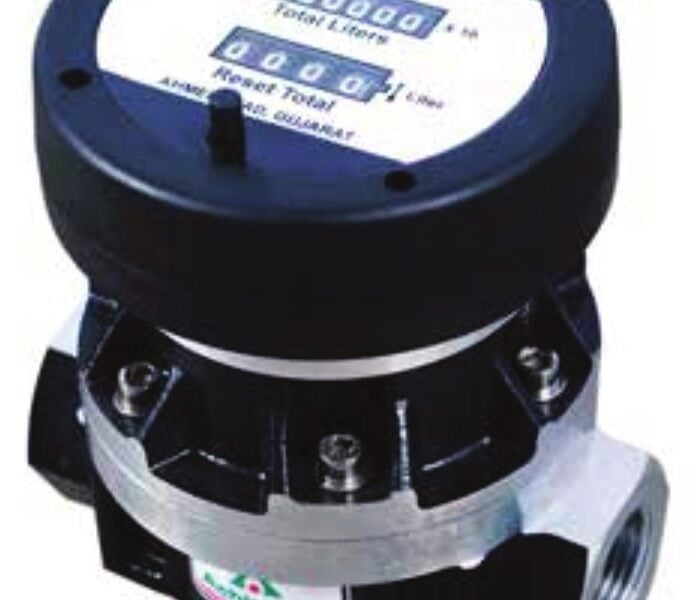
CE-118
CE-118 Oil Flow Meter
CE-118 oil flow meter with a flow range of 20-120lpm.
- Flow Range
- 20-120 lpm
- Accuracy
- +0.5 %
- Max Working Pressure
- 3.4 Mpa
Fuel monitoring
Pumps & nozzles
Batching
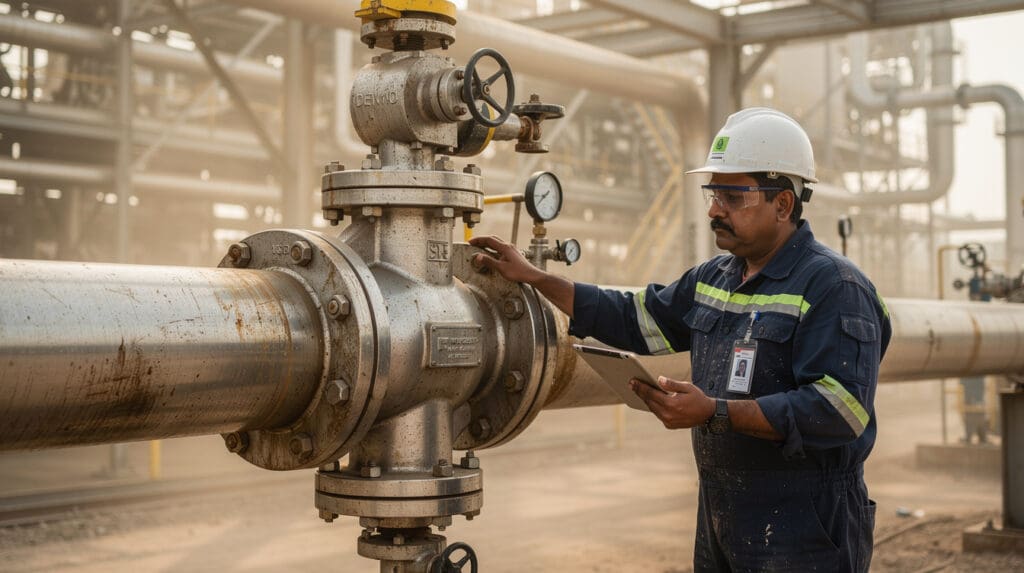
A 0.5% drift on your main transfer line doesn't sound like a crisis—until the quarterly audit hits the procurement desk. Over my 22 years as a Flow Measurement Engineer at Chintan Engineers, I have audited over 5,000 measurement systems, from heavy ONGC refineries to remote crusher plants in rural Gujarat. When plant managers call me about oil meter accuracy issues, they usually blame the meter first. But the reality? Industrial flow measurement is a complex thermodynamic and mechanical system. The meter is simply the messenger.
Troubleshooting industrial oil flow meters requires systematic diagnosis. You aren't just looking at a malfunctioning register; you are investigating fluid dynamics, mechanical wear, electrical interference, and environmental extremes. Whether you are dealing with a sudden drop in throughput, erratic pulse outputs, or an outright mechanical seizure, guessing is expensive.
I put together this practical diagnostic framework so maintenance heads and instrumentation engineers can accurately troubleshoot, repair, and optimize industrial oil flow meters in harsh field conditions. Why guess when you can diagnose?
If I had a rupee for every time a client blamed a meter for an air leak, I’d be retired. The most frequent cause of over-registration in positive displacement (PD) meters is air entrapment. PD meters measure volume by trapping fluid in precise mechanical compartments (like oval gears or rotating vanes). They literally cannot distinguish between 100ml of ISO VG 46 hydraulic oil and 100ml of trapped air.
Air enters oil lines through several common vectors:
I have walked into dozens of plants where maintenance teams were adjusting the mechanical calibrator to fix "over-reading" meters. If your meter suddenly starts reading 2% to 5% higher than tank dips indicate, do not touch the calibration screw. Find the air leak.
Per OIML R117 and Legal Metrology Act guidelines for custody transfer, bulk measuring systems must incorporate air elimination. If your pipeline geometry allows air accumulation, install a mechanical air eliminator upstream of the meter. I also always insist on a backpressure valve downstream of the meter to maintain sufficient line pressure. This keeps entrained gases in solution until they safely pass the measurement chamber.
Oil viscosity is never static; it is inversely proportional to temperature. A hydraulic oil that flows like water at a 60°C operating temperature will turn into thick molasses on a 10°C winter morning in North Gujarat.
I’ve calibrated enough turbine meters in my career to know they do not belong anywhere near viscous fuels. Turbine rotors rely on fluid velocity to spin. High-viscosity fluids create boundary layer drag that slows the rotor, causing massive under-registration. This is exactly why we insist on positive displacement architecture for heavy oils.
Positive displacement meters, like our CE-118 and CE-119 models, rely on minute clearances between the rotors and the measuring chamber wall.
If you calibrate a meter on diesel and then use it to measure heavy gear oil, the meter will appear to over-register simply because the internal slippage factor has dropped to zero.
Struggling with varying fluid viscosities in your plant?
Our CE-118 Positive Displacement Meter is engineered to be largely independent of viscosity variations, delivering a reliable 0.5% accuracy across diverse fluid profiles.
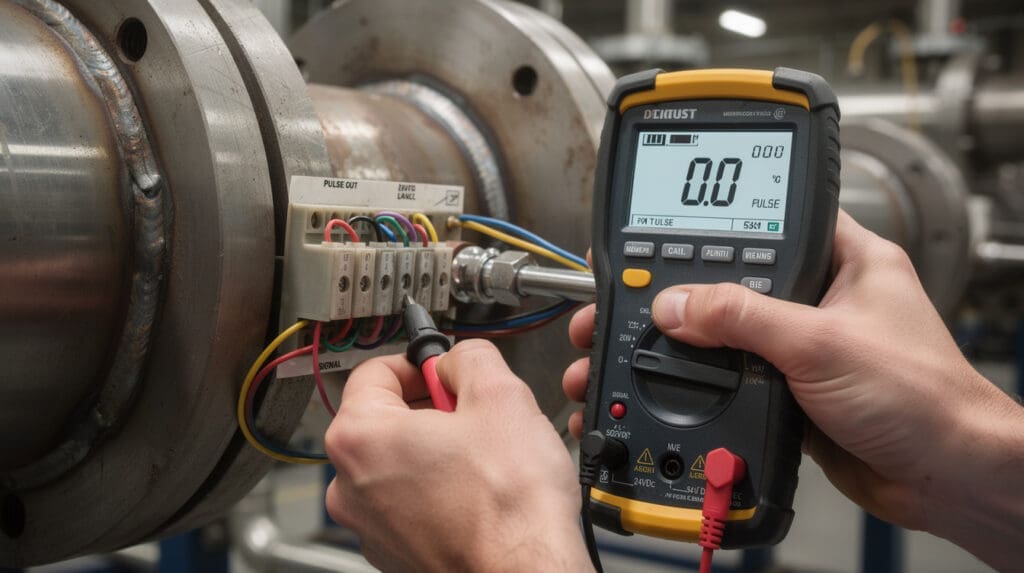
Modern digital oil flow meters, such as the CE-107, rely on magnetic pickups or Hall-effect sensors to convert mechanical rotation into digital pulses. Flow meter signal loss is rarely a failed sensor; 90% of the time, it is environmental interference or wiring degradation.
Industrial estates in India are notorious for dirty power. If your flow meter signal cable runs in the same cable tray as the power feed for a 50HP Variable Frequency Drive (VFD), the electromagnetic interference (EMI) will induce false pulses in the flow meter cable.
Ever seen a flow totalizer incrementing when the pump is completely shut off? That's classic EMI. You might also notice erratic flow rate displays that jump wildly during batching.
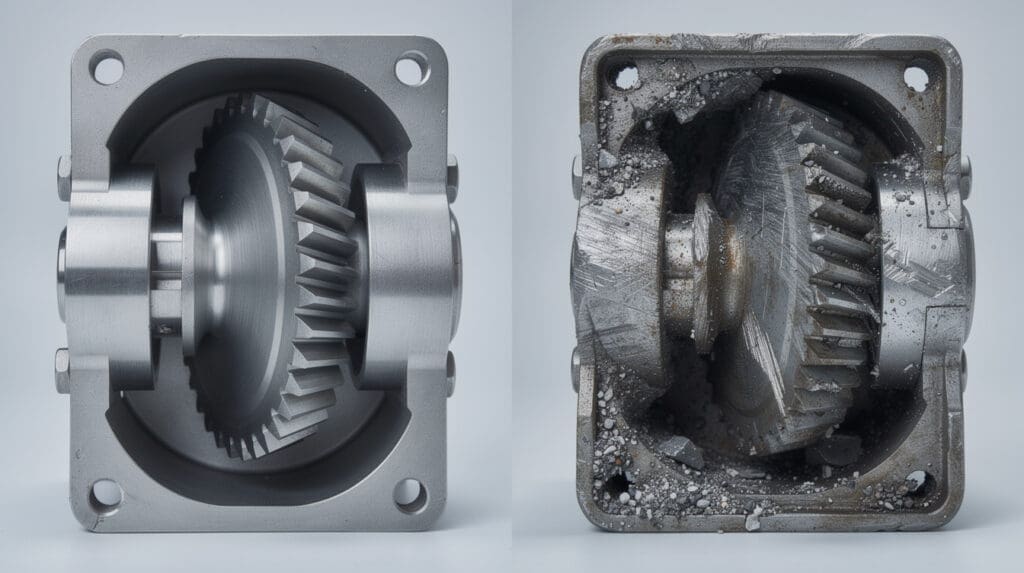
These meters are precision machined instruments. When operating within their specs, models like the CE-114 offer a long service life with minimal pressure loss. However, introducing particulate matter into these tight tolerances leads to rapid mechanical failure.
Never install an oil flow meter without an upstream Y-strainer or basket filter. Running unfiltered industrial oil through a PD meter is the fastest way to destroy the rotors. We strictly recommend filtering to at least 100 mesh (149 microns) for diesel and 40 mesh for heavy oils, adhering to IS 5765 standards.
If your pump is dead-heading (building maximum pressure but producing zero flow) and the line valves are open, your flow meter has likely seized.
If you have to open the meter up for a positive displacement meter repair, look for these specific issues:
Sometimes, a meter is just damaged beyond economical repair. When that happens, maintenance heads must specify a replacement that won't suffer the same fate. Sizing a flow meter based solely on pipe diameter is an amateur mistake. You must size based on flow rate, viscosity, and acceptable pressure drop.
Here is the specification matrix for Chintan Engineers' primary oil flow meters, designed specifically for Indian industrial environments:
| Feature/Spec | CE-107 (High Accuracy Digital) | CE-114 (High Accuracy Mechanical) | CE-118 (Standard Oval Gear) | CE-119 (Digital Oval Gear) |
| :— | :— | :— | :— | :— |
| Accuracy | 0.2% | 0.2% | 0.5% | 0.5% |
| Architecture | Positive Displacement | Positive Displacement | Oval Gear PD | Oval Gear PD |
| Display Type | Digital w/ Pulse Output | Mechanical Register | Mechanical (4-digit reset) | Digital Indicator & Totalizer |
| Max Pressure | 10 BAR (1.0 MPA) | 10 BAR (1.0 MPA) | 3.4 MPA (34 BAR) | 3.4 MPA (34 BAR) |
| Materials | Aluminium, Viton | Aluminium, Viton | Corrosion Resistant Alloy | Corrosion Resistant Alloy |
| Ideal For | Custody transfer, Fuel monitoring | Remote areas (no power), dispensing | High-pressure hydraulic/lube lines | Process batching, continuous monitoring |
Let's look at the real numbers. An uncalibrated or failing meter with a 1% error on a 5,000L/day diesel line (at ₹90/L) loses ₹4,500 per day. That equates to ₹1.35 Lakhs per month. Upgrading to a 0.2% accuracy CE-107 digital meter pays for itself in less than 14 days of operation simply by eliminating that volumetric shrinkage.
Stop losing money to volumetric shrinkage.
Upgrade to the CE-107 High Accuracy Digital Oil Flow Meter for 0.2% custody-level accuracy. Built with robust Aluminium and Viton components for long service life.
Textbooks rarely teach you how to handle the unique environmental challenges of operating flow meters in India.
In coastal areas like Dahej or Hazira, ambient humidity during the monsoon hits 95%. Mechanical registers (like on the CE-114) "breathe" as temperatures fluctuate day to night. This draws humid air into the register glass, which condenses and fogs the display, eventually rusting the mechanical gear train.
Field Solution: For high-humidity coastal installations, ensure the register seals are strictly maintained. Better yet, consider digital meters like the CE-119 with IP65 or higher rated enclosures that are hermetically sealed against atmospheric moisture.
In the stone crushing belts, airborne silica dust acts as a grinding paste. If a mechanical register's glass is cracked, dust enters the totalizer wheels, jamming the mechanism. Furthermore, when integrating these meters into mobile bowsers, vibration becomes a severe factor.
For maintenance heads outfitting mobile fuel trucks, proper meter selection must be paired with vibration isolation. I strongly recommend reviewing our Mobile Fuel Dispenser Engineering & Bowser Sizing guide to understand how to protect your metering equipment on rough terrain.
The Y-Strainer Rule: In Indian industrial estates, tank truck deliveries often contain suspended rust and scale from the transport tankers. Even if your internal plant tanks are clean, the simple act of decanting introduces particulates. The upstream strainer on your flow meter is the only thing standing between a ₹50,000 asset and catastrophic rotor failure.
Most maintenance calls could be prevented on day one with proper installation that respects strict fluid dynamic principles.
If you are setting up a comprehensive dispensing loop, the meter is just one component. For a holistic view of pump, meter, and hose integration, consult our Industrial Fuel Dispenser Setup Guide.
Nine times out of ten, over-registration is caused by air entrapment in the fluid line. When air passes through a positive displacement meter, it is measured as liquid volume. Check your pump suction lines for leaks and ensure bulk tanks are not drawn down to the point of creating suction vortices.
It depends on the operating principle. A positive displacement oval gear meter (like the CE-118) can handle varying viscosities, though you will experience a higher pressure drop with thicker oils. However, a turbine meter designed for diesel will fail to read accurately on hydraulic oil due to viscous drag.
Erratic flow meter signal loss is usually electrical, not mechanical. Verify that the shielded signal cable is grounded at only one end. Ensure the cable is not routed parallel to high-voltage lines or Variable Frequency Drives (VFDs) which cause electromagnetic interference.
Standard meters in our lineup, like the CE-107 and CE-114, are equipped with Viton seals and engineered to operate safely up to 80°C. Exceeding this temperature can cause rotor expansion leading to mechanical seizure and seal degradation.
For internal process monitoring, we recommend volumetric proving every 6 to 12 months, or after every 500,000 liters of throughput. For commercial custody transfer, the Legal Metrology Act strictly mandates annual stamping and certification.
This indicates a mechanical seizure due to particulate ingress. A hard particle (like welding slag or sand) has likely bypassed the filter and jammed between the rotor and the measuring chamber wall. Immediate isolation and positive displacement meter repair are required.
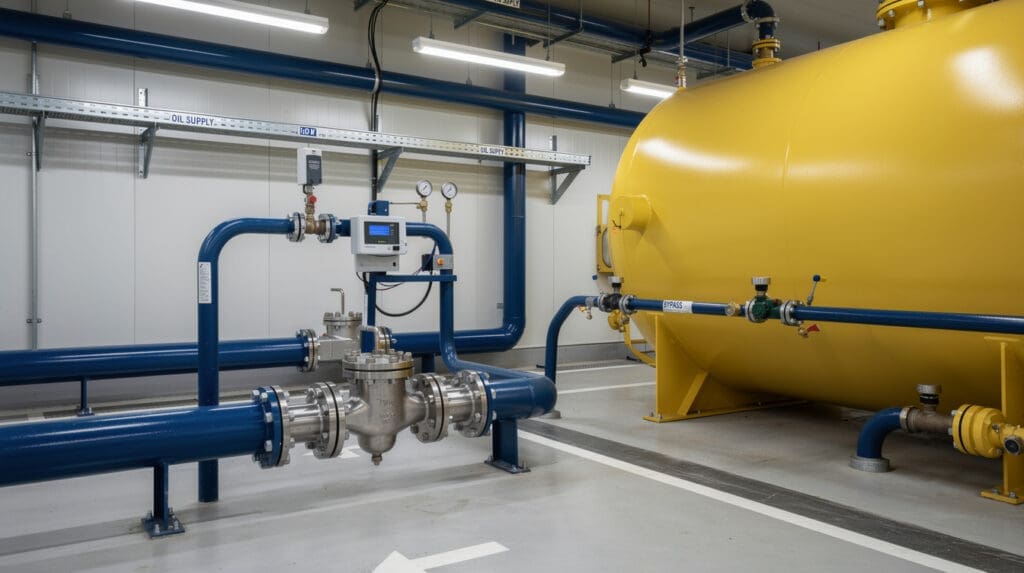
Troubleshooting oil meter accuracy issues is an exercise in eliminating variables. Start with the fluid mechanics: check for air leaks and verify viscosity parameters. Move to electrical: scope the pulse outputs and eliminate ground loops. Finally, inspect the mechanicals: look for rotor wear and verify strainer integrity.
Based on my 22 years of field data, trying to nurse a severely scored or mathematically drifting mechanical meter is a false economy. The volumetric loss in a single week will easily exceed the cost of a replacement.
If your plant requires absolute confidence in consumption tracking, I recommend replacing aging mechanical units with the CE-107 High Accuracy Digital Oil Flow Meter. At 0.2% accuracy, with an uncompromising Aluminium/Viton construction and robust positive displacement design, it removes the guesswork from your fluid accounting.
Ready to audit and upgrade your fluid measurement systems?
Partner with Chintan Engineers for rugged, high-accuracy oil flow meters designed for India's toughest industrial applications.
CE-118 oil flow meter with a flow range of 20-120lpm.
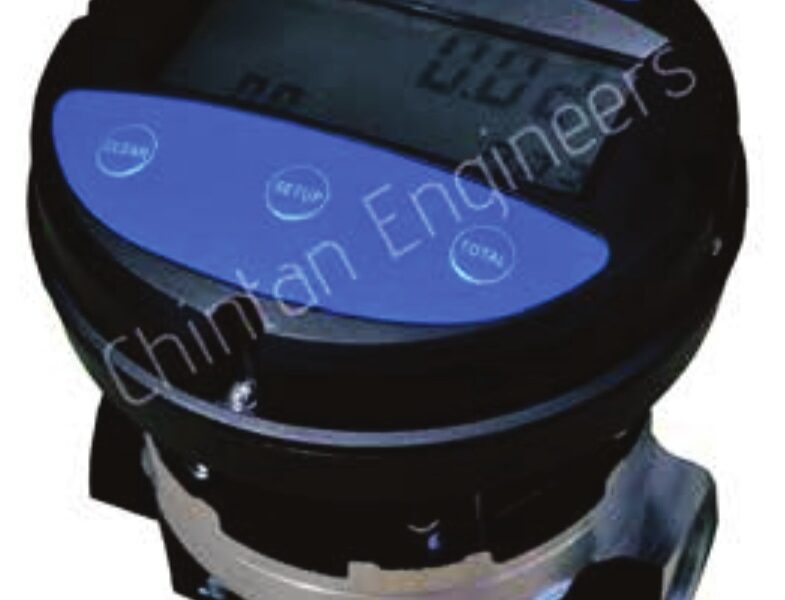
CE-119 oil flow meter with a flow range of 20-120lpm.
Tell us the fluid, flow range and site; we reply with a model and a quote within one working day.