Transferring highly corrosive fluids, acidic compounds, and aggressive wastewater demands more than just standard pumping equipment. In Indian manufacturing plants, effluent treatment plants (ETPs), and chemical processing facilities, the reliability of your fluid handling system directly impacts operational uptime, environmental safety, and overall process efficiency. When dealing with hazardous chemicals, even a minor installation error can lead to toxic leaks, premature equipment failure, and costly downtime.
To prevent these issues, adopting a rigorous, standardized approach to equipment installation is non-negotiable. Proper foundation leveling, meticulous alignment, and correct piping design are critical factors that determine the lifespan of your pumping systems. This comprehensive guide provides plant engineers and maintenance teams with the technical insights needed to ensure flawless deployment, focusing on best practices tailored for harsh industrial site conditions across India.
1. What this product does
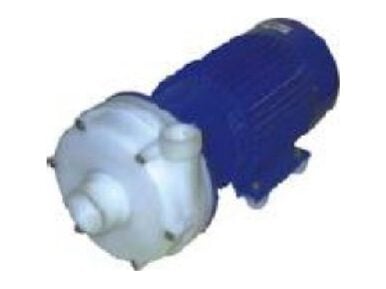
PP Pumps are heavy-duty, corrosion-resistant centrifugal pumps engineered specifically to handle aggressive chemicals, acidic solutions, and industrial effluents where standard metallic pumps would rapidly degrade. Built with solid polypropylene (PP) casings and impellers, these units offer exceptional chemical inertness, making them the standard choice for moving fluids that pose a severe corrosion risk.
At their core, these pumps operate on the centrifugal principle, utilizing a precision-engineered impeller to impart kinetic energy to the fluid, thereby generating the required flow and head. Depending on the exact model and plant requirements, they are available in direct-coupled monoblock designs or baseplate-mounted bare shaft configurations driven by standard AC induction motors.
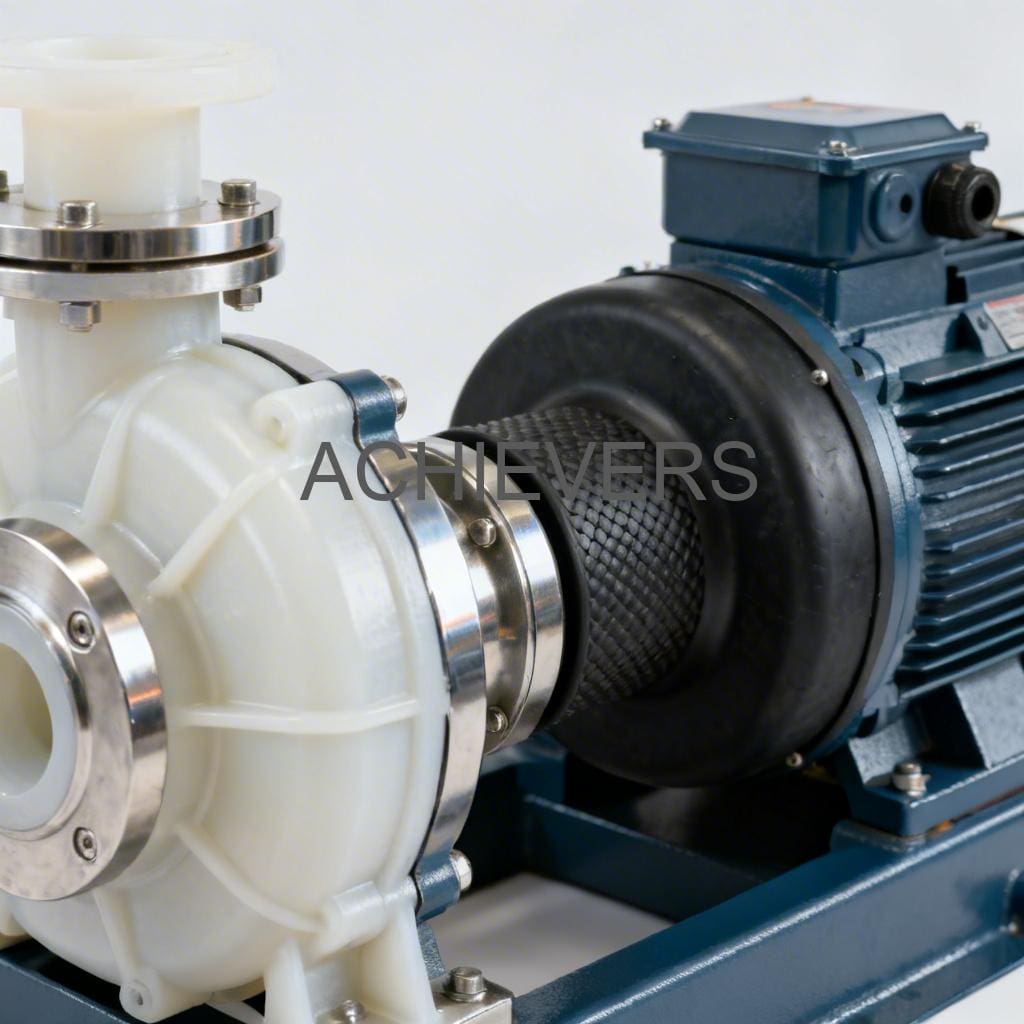
Key features include a heavy-duty stainless steel shaft completely encased in a protective PTFE or Teflon sleeve, ensuring that no metallic components ever come into direct contact with the process fluid. To prevent leaks, these units are equipped with advanced sealing arrangements—ranging from chemically inert gland packings to high-performance single or double mechanical seals, depending on the toxicity and volatility of the liquid. With accurate calibration verified for consistent performance, these pumps deliver reliable flow rates necessary for demanding continuous-duty applications. Built for rugged environments, they combine durable workmanship with efficient hydraulic design to maintain steady flow parameters without excessive power consumption.
2. Practical Installation & Commissioning Checklist for Chemical and ETP Lines
This post gives plant engineers a practical, step-by-step checklist to install and commission PP Pumps on corrosive chemical transfer and effluent treatment lines—covering alignment, baseplate/foundation, suction piping, priming/venting, seal flushing, and trial-run checks. It also highlights common site mistakes in Indian plants (air leaks, wrong suction layout, dry running, vibration) that lead to poor flow and premature failures.
To maximize the operational lifespan of your equipment, follow this comprehensive PP pumps installation checklist meticulously before and during startup:
A. Baseplate and Foundation Preparation
- Foundation Mass: Ensure the concrete foundation is at least three to five times the mass of the pump and motor combined to absorb operational vibrations.
- Leveling and Grouting: Place the baseplate on the foundation using shims. Ensure it is perfectly level using a machinist’s level before pouring non-shrink epoxy grout. Do not tighten foundation bolts until the grout has fully cured.
B. Suction Piping Rules
Adhering to strict PP pump for ETP chemical transfer suction piping guidelines is vital to prevent cavitation.
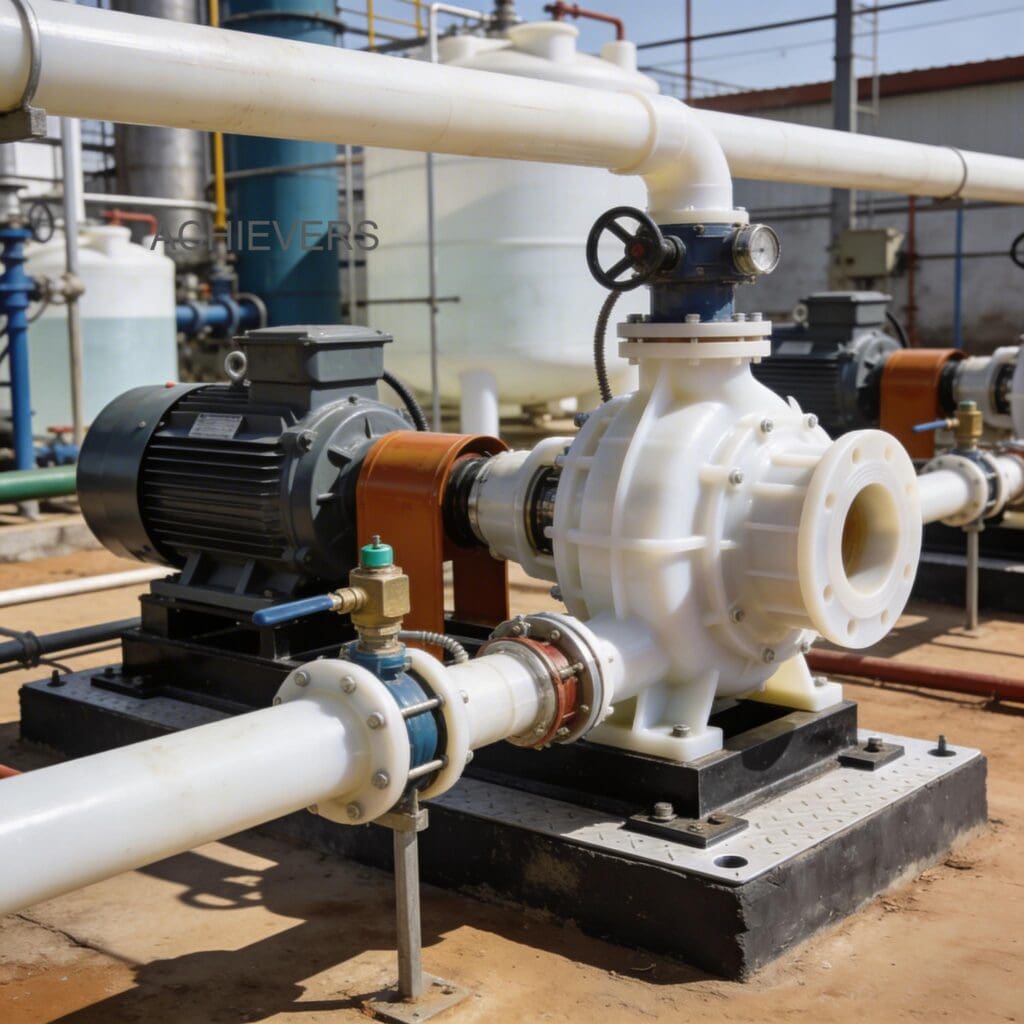
- Short and Straight: Keep the suction line as short and straight as possible. Ensure a straight run of pipe (at least 5 to 10 times the pipe diameter) immediately before the pump suction flange.
- Eccentric Reducers: If pipe size reduction is necessary at the suction inlet, always use an eccentric reducer with the flat side facing up. Using a concentric reducer traps air pockets, leading to flow disruption.
- Independent Support: The PP Pumps must never carry the weight of the piping. Ensure all pipes are independently supported and perfectly aligned with the pump flanges before bolting. Forcing misaligned pipes onto the plastic flanges will cause the casing to crack or distort under stress.
C. Motor and Pump Alignment
- Even if the unit was aligned at the factory, transportation and installation can cause shifts. Use a dial indicator or laser alignment tool to check the coupling alignment. Misalignment is the leading cause of mechanical seal failure and bearing wear.
D. Priming and Venting
- Centrifugal PP Pumps are not self-priming. Before starting, the casing and suction line must be completely filled with the process fluid.
- Open the vent valve at the highest point of the casing to expel all trapped air. Starting the pump while dry will generate immense friction heat, instantly melting the internal plastic components and destroying the mechanical seal.
E. Seal Flushing and Cooling
- If your unit features a double mechanical seal, ensure the external flush line is connected, active, and set to the correct pressure (usually 1 bar higher than the pump’s stuffing box pressure) before energizing the motor. This provides essential cooling and lubrication.
F. Trial-Run and Commissioning Checks
Following proper industrial polypropylene pump commissioning steps ensures safe startup:
- Direction of Rotation: Briefly "bump" the motor to verify rotation matches the directional arrow on the pump casing. Incorrect rotation will loosen the impeller.
- Discharge Valve: Start the pump with the discharge valve partially closed (around 10-15% open) to prevent motor overloading, then gradually open it to achieve the desired operating point.
- Monitoring: Monitor the motor's amperage draw, check pressure gauges for stable readings, and measure casing vibration.
Common Site Mistakes in Indian Plants:
During plant audits, our engineers frequently observe installation errors that severely impact performance. Air leaks in the suction line joints are a major culprit, causing the pump to lose its prime and fail to deliver flow. A wrong suction layout—such as excessive elbows near the inlet or U-bends—creates turbulence and cavitation, physically eating away at the impeller. Dry running, often caused by operators failing to prime the system or bypassing low-level tank switches, remains the fastest way to destroy the mechanical seal. Finally, failing to isolate vibration through proper piping supports and baseplate grouting leads to shattered casings and premature bearing collapse.
3. Selection / configuration guide
Properly sizing and configuring your equipment is just as critical as the commissioning checklist for PP pumps in chemical plants. Plant engineers must account for the specific gravity, viscosity, and chemical aggressiveness of the fluid. Selecting PP pumps for HCl caustic transfer in India requires special attention to the shaft sleeve and seal materials to prevent rapid degradation.
When selecting a unit for your facility, evaluate the following criteria:
- Fluid Characteristics: Ensure the fluid temperature does not exceed the structural limits of polypropylene (typically around 70°C to 80°C). Higher temperatures may require alternative materials like PVDF or PTFE.
- Specific Gravity: Highly dense fluids require higher motor horsepower. A motor sized for water will overload when pumping high-density sulfuric acid.
- Seal Compatibility: Choose standard Teflon bellows or PTFE mechanical seals for general acids. For liquids containing abrasive suspended solids (common in ETPs), opt for specialized silicon carbide (SiC) seal faces or heavy-duty gland packing.
- Drive Configuration: Decide between a space-saving direct-coupled monoblock design or a bare-shaft baseplate mounted unit that allows for easier maintenance without disconnecting the piping.
To ensure your supplier configures the correct system, clearly communicate the following details during your enquiry:
- Target flow rate (m³/hr or LPM)
- Total differential head required (in meters)
- Exact chemical composition and concentration percentage
- Operating temperature and specific gravity of the fluid
- Presence and size of any solid particles in the fluid
- Available site power specifications (e.g., 3-phase AC voltage)
4. Typical applications
Due to their inert thermoplastic construction, PP Pumps are the workhorses of aggressive fluid management. They are heavily utilized in applications where stainless steel or cast iron would suffer from rapid galvanic or chemical corrosion.
- Effluent Treatment Plants (ETP) and STP: Used for transferring neutralized wastewater, dosing coagulants, and managing acidic or alkaline runoff from manufacturing processes.
- Chemical Manufacturing: Essential for the safe transfer of bulk chemicals, including hydrochloric acid (HCl), sulfuric acid, nitric acid, and sodium hydroxide (caustic soda), from storage tanks to processing reactors.
- Electroplating and Surface Treatment: Ideal for circulating plating baths, acidic pickling solutions, and metal finishing chemicals where maintaining fluid purity and preventing metallic contamination is critical.
- Steel Processing and Pickling: Used to spray and circulate aggressive acids over steel coils to remove impurities and oxidation scales.
- Water Treatment and Desalination: Utilized for dosing chlorine, alum, and other water purification chemicals accurately into main supply lines.
5. Service, installation, and support
Driven by innovation and powered by engineering, Chintan Engineers stands out among PP pump manufacturers in India by delivering end-to-end solutions that extend far beyond manufacturing. We understand that in demanding environments like logistics, chemical processing, and energy, you need enduring support to maintain operational efficiency.
Every unit we supply undergoes rigorous quality workmanship and accurate calibration checks at our factory, ensuring the impeller is perfectly balanced and the pump meets the certified flow and head parameters. We believe in transparent communication—there are no hidden costs or false claims about our performance metrics.
Our nationwide reach ensures that industrial clients across India receive prompt customer-first support. From the initial engineering and design phase to site installation guidance and long-term Annual Maintenance Contracts (AMC), we back every order with deep technical expertise. Having a reliable supplier with locally available, genuine spare parts—such as replacement impellers, PTFE sleeves, and mechanical seals—drastically reduces downtime and ensures your chemical transfer processes perform reliably under any condition.
To ensure your plant operates safely and efficiently, reach out to our technical experts to size the ideal equipment for your facility. Please share the specific PP Pumps capacity you require, the target flow and head, the precise chemical application, and your site conditions, and our team will engineer a robust, customized solution tailored to your operational needs.