
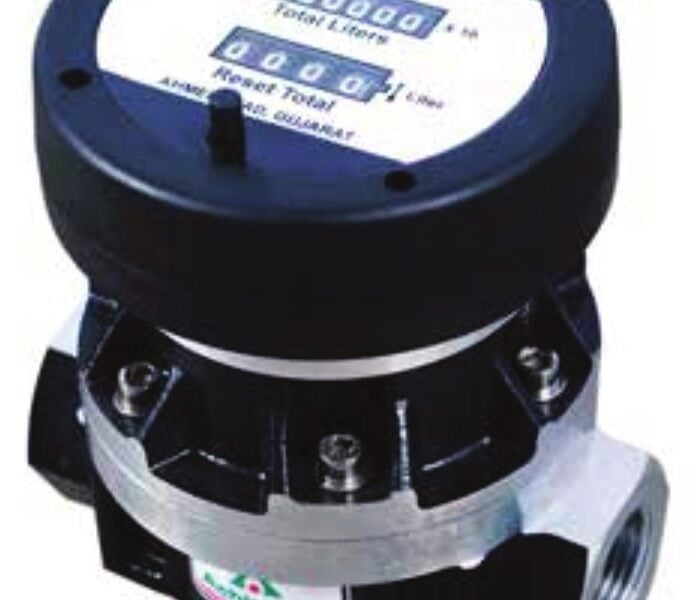
CE-118
CE-118 Oil Flow Meter
CE-118 oil flow meter with a flow range of 20-120lpm.
- Flow Range
- 20-120 lpm
- Accuracy
- +0.5 %
- Max Working Pressure
- 3.4 Mpa
Fuel monitoring
Pumps & nozzles
Batching
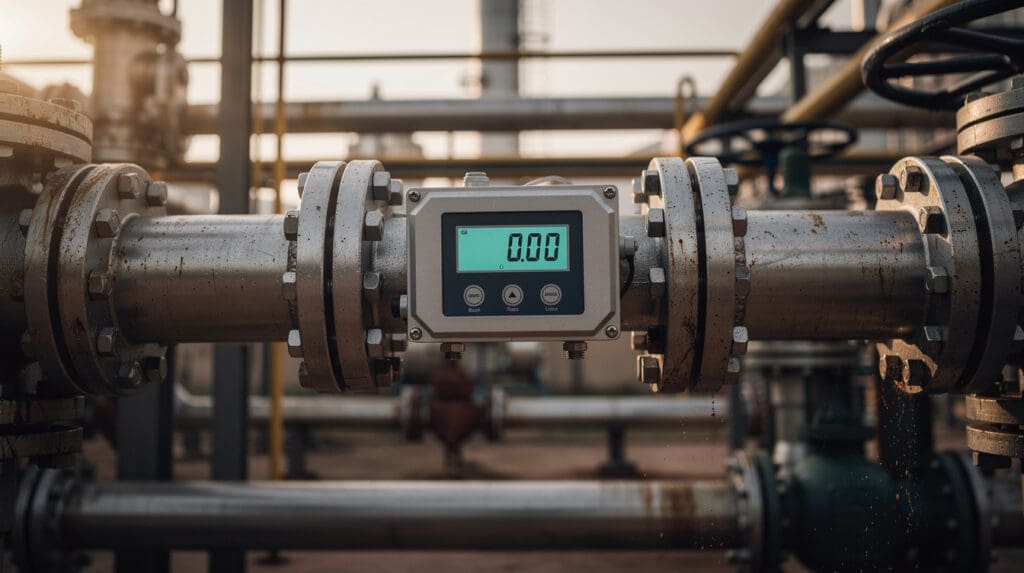
A 1% calibration drift on a modest 5,000-liter-per-day diesel throughput costs your operation roughly ₹1.3 lakh per month in untracked fuel. I am Vikram Desai, Senior Flow Measurement Engineer at Chintan Engineers. Over the last 22 years, I have designed, installed, and calibrated over 5,000 flow measurement systems—from high-pressure ONGC refineries on the Gujarat coast to dusty fleet transport depots deep in Kutch. And yet, almost every week, I see procurement managers haggling over ₹15,000 upfront savings on uncertified, non-compliant meters that will silently bleed their company's bottom line dry within a fortnight.
When we talk about measuring petroleum products, hydraulic oils, or industrial lubricants, accuracy is not a luxury; it is a strict legal and financial imperative. You are not just buying a piece of cast aluminum with a dial on it. You are buying an audited financial instrument.
Below, I'll break down exactly what the oil flow meter standards in India demand, how Legal Metrology frameworks apply to your site, and why ignoring OIML R117 and BIS certifications is the fastest route to compliance shutdowns—and massive financial leaks.
The Legal Metrology Act, 2009, strictly governs any weighing or measuring instrument used in commercial transactions, industrial production, or protection. If oil is changing hands—whether you are receiving bulk diesel from an OMC (Oil Marketing Company) or dispensing it to your sub-contractors—you fall under custody transfer regulations.
Securing weights and measures approval for oil meters is non-negotiable. The Legal Metrology Department requires that any flow meter used for commercial transactions must be model-approved. This means the base design of the meter must be tested against specific Indian Standards (IS) to ensure it does not facilitate fraud, either intentionally or through mechanical degradation.
I have seen entire operations at GIDC (Gujarat Industrial Development Corporation) estates halted because a plant manager installed an imported, uncertified turbine meter for internal fuel accounting, only for an auditor to flag the lack of Legal Metrology certification. Trust me, explaining that kind of downtime to the board is not a conversation you want to have.
Compliance Penalty Risk
Operating a fuel dispensing or custody transfer system without valid Legal Metrology stamping can result in immediate equipment seizure, heavy fines, and operational shutdowns under Section 25 of the Legal Metrology Act.
If you want to evaluate high-accuracy metering properly, look to the global gold standard—which is also the basis for India's own regulations: the International Organization of Legal Metrology (OIML), specifically OIML R117.
OIML R117 dictates the metrological and technical requirements for "Dynamic measuring systems for liquids other than water." It categorizes meters into strictly defined Accuracy Classes based on their application.
For most oil and diesel applications, you are looking at two primary classes:
An OIML R117 compliant flow meter undergoes rigorous testing for volumetric accuracy across varied flow rates, pressure fluctuations, and temperature extremes. When a meter claims ±0.2% accuracy—like our CE-107 and CE-114 models—that is not a theoretical bench test under perfect conditions. Under OIML protocols, it means the meter maintains that ±0.2% envelope even when the viscosity of the oil changes due to a 15°C temperature drop during a monsoon night shift.
Upgrading for OIML & BIS Compliance?
Stop losing money to uncalibrated drift. Upgrade to positive displacement precision.
The Bureau of Indian Standards (BIS) translates these international rules into strict domestic codes. But certification alone isn't a magic bullet—you still have to match the underlying technology to your fluid.
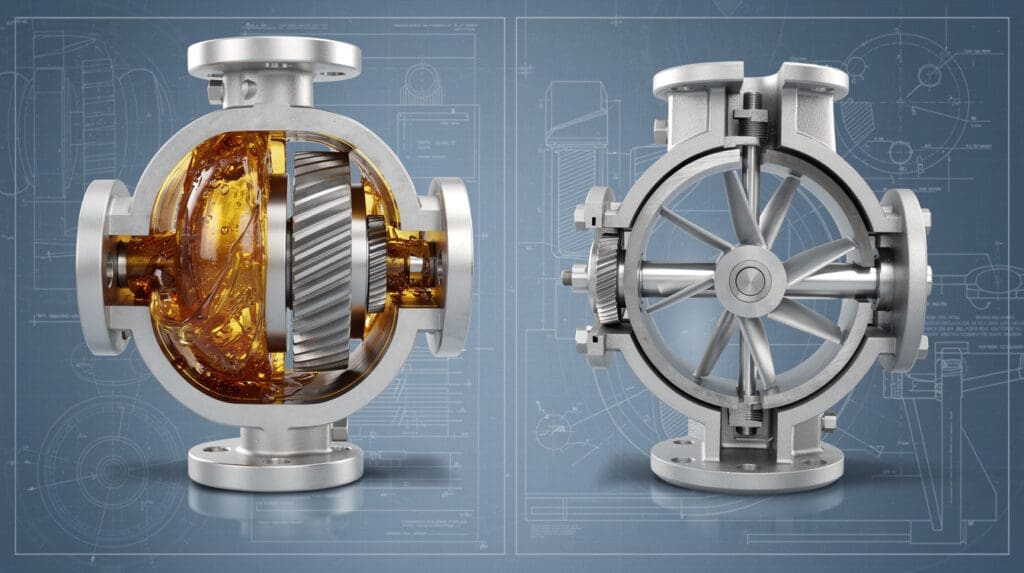
IS 14883 covers the requirements for positive displacement meters used in liquid hydrocarbons. Unlike cheap turbine meters that rely on fluid velocity (and fail miserably when fluid viscosity shifts or particulate matter enters the line), positive displacement (PD) meters trap a known volume of fluid in a mechanical compartment.
I'll be blunt: I've calibrated enough turbine meters to know they have no business being near viscous oils or typical Indian diesel lines. Turbine rotors suffer from bearing wear, and their accuracy curve falls off a cliff the moment viscosity increases.
Conversely, a positive displacement meter, particularly oval gear or rotary vane types, thrives on viscosity. The thicker the fluid, the less "slip" occurs between the gears and the casing, actually improving accuracy at lower flow rates. This is exactly why models like our CE-118 Positive Displacement Flow Meter guarantee 0.5% accuracy regardless of fluid viscosity variations, effectively making them the workhorse for Indian fleet depots.
Selecting the right meter requires balancing accuracy requirements, pressure ratings, and environmental conditions. If you are integrating a meter into a larger system, such as those detailed in my Mobile Fuel Dispenser: Specs & Sizing Guide, the meter is the heart of the system. Here is the empirical data I use to make that selection:
When you are dispensing expensive lubricants or monitoring heavy engine fuel consumption, you need custody-level precision.
Recommendation: The CE-107 High Accuracy Digital Oil Flow Meter or the CE-114 High Accuracy Mechanical Meter.
For diesel unloading or general fleet management where high flow rate and durability are prized alongside standard commercial accuracy.
Recommendation: The CE-118 Oil Flow Meter.
For factory floor integration where pulse outputs are needed to trigger batching systems.
Recommendation: The CE-124-FM Oil Flow Meter.
The Expansion Factor
Diesel expands by roughly 0.00083 liters per degree Celsius. A 5,000L delivery at 15°C will measure as 5,041L at 25°C. High-end OIML R117 compliance often dictates Automatic Temperature Compensation (ATC) algorithms in the digital head to correct volume back to standard reference temperatures.
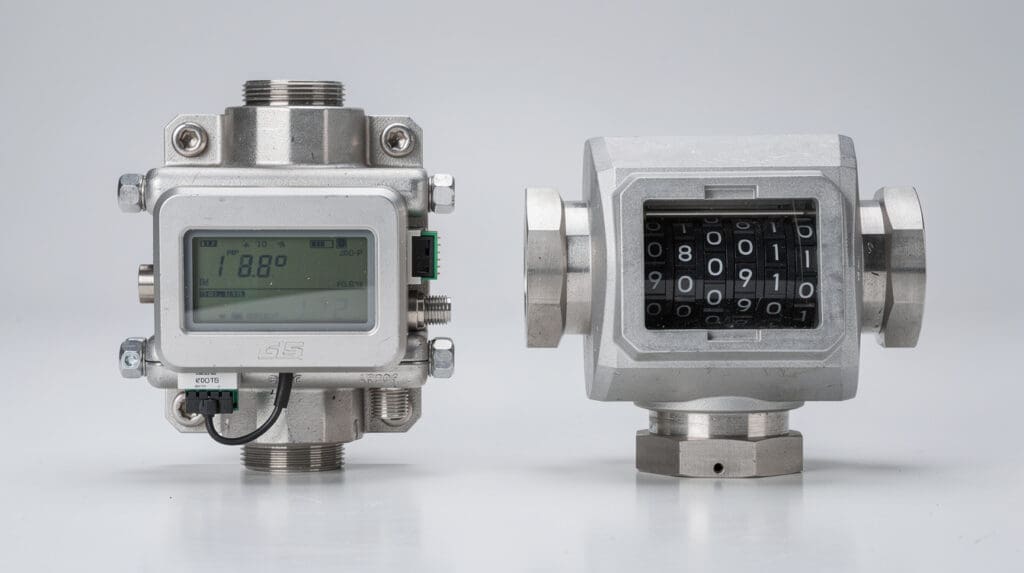
Run the real numbers for a second. Assume you operate a transport fleet consuming 10,000 liters of diesel daily. You buy a cheap, non-compliant meter for ₹8,000 that advertises "1% accuracy" but practically drifts to 2% within three months due to gear wear.
At a 2% error rate, you are "losing" 200 liters of diesel a day in your accounting.
At ₹87 per liter, that is ₹17,400 per day.
That is ₹5.2 Lakhs a month in untracked, unaccounted fuel consumption.
Can your operating margins absorb a half-million rupee hit every month just to save a few thousand upfront on procurement?
Upgrading to a CE-107 Digital Oil Flow Meter with a verifiable 0.2% accuracy drops that uncertainty down to 20 liters a day. The cost of the premium meter pays for itself in less than 48 hours of operation.
This is the data you need to put in front of your board. You are not spending capital on an instrument; you are plugging a massive operational leak. And if you want to see how these flow dynamics impact the rest of your pumping infrastructure, I highly recommend reviewing my guide on PP Pump Specs & ISO 5199 Standards for a baseline on total system design.
Vikram's Field Advice: Upstream Filtration
The fastest way to destroy a 0.2% accurate PD meter is particulate ingress. Always, without exception, install a Y-strainer (usually 40 to 60 mesh for diesel, finer for lighter oils) immediately upstream of the flow meter. A ₹2,000 strainer protects a high-end metrology instrument from catastrophic gear jam.
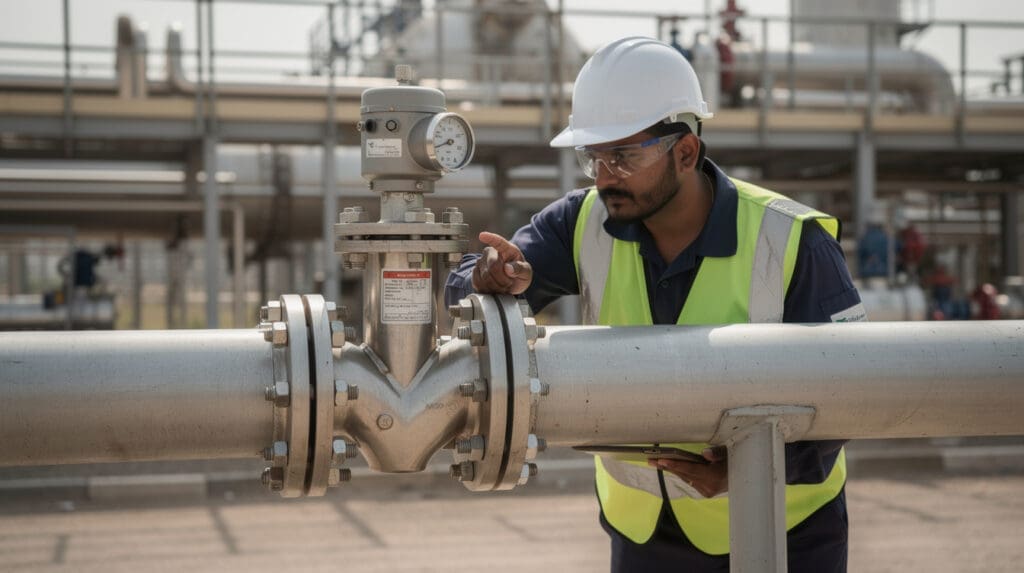
A BIS certified oil flow meter is only as accurate as its installation. Based on two decades of rectifying botched field installations, adhere to these non-negotiable rules:
Need a Custom Metering Solution?
Ensure your operation meets all Legal Metrology requirements with our rugged, 0.2% accuracy meters.
An OIML R117 compliant flow meter has undergone rigorous international testing to prove it maintains specific accuracy class limits (e.g., ±0.2% or ±0.5%) under varying dynamic conditions, including changes in fluid temperature, pressure, and viscosity, ensuring it is fit for commercial custody transfer.
Weights and Measures approval requires submitting the flow meter to an accredited Legal Metrology laboratory in India. The meter must pass type-approval tests based on Indian Standards (like IS 14883). Once approved, individual units must be stamped and periodically re-verified by local metrology officers.
Under Indian Legal Metrology rules, Class 0.5 is generally acceptable for bulk unloading and standard commercial transactions of hydrocarbons. However, for high-value dispensing or strict contractual custody transfers, a Class 0.2 meter (like the CE-107) is highly recommended and sometimes legally mandated.
OIML provides the international framework and testing protocols for legal metrology. The Bureau of Indian Standards (BIS) adapts these international guidelines into specific IS codes tailored for Indian manufacturing and environmental conditions. A high-quality meter will typically satisfy both.
Turbine meters require a constant, low-viscosity fluid to spin the rotor accurately. Oil viscosity changes significantly with temperature. Positive displacement meters (like the CE-118) measure discrete volumetric compartments, making them inherently immune to viscosity changes, thus providing far superior accuracy for oils and diesel.
Per the Legal Metrology Act, flow meters used in commercial transactions must typically be re-verified and stamped annually. However, for internal process control in high-volume applications, I recommend proving (calibrating against a master meter or prover tank) every 6 months to prevent expensive drift.
Procuring an oil flow meter is an exercise in risk management. You are protecting your inventory, ensuring legal compliance, and preventing operational downtime.
Here is my blunt recommendation based on two decades of field data: If you require absolute, undeniable precision for custody transfer or high-value lubricant dispensing, specify the CE-107 Digital Oil Flow Meter or its mechanical sibling, the CE-114. At 0.2% accuracy with robust Viton and Aluminium construction rated to 10 BAR, it exceeds the strict requirements of oil flow meter standards India enforces.
If your application is high-volume diesel transfer at a fleet depot where robust reliability and low pressure drop are paramount, the CE-118 Positive Displacement Flow Meter at 0.5% accuracy is your optimal choice.
Metrology isn't the place to cut corners. Specify the right instrument, install it correctly with upstream filtration, and protect your bottom line.
Secure Your Fluid Inventory Today
Stop relying on uncalibrated guesswork. Implement Chintan Engineers' PD flow meters for verifiable, Legal Metrology compliant accuracy.
CE-118 oil flow meter with a flow range of 20-120lpm.
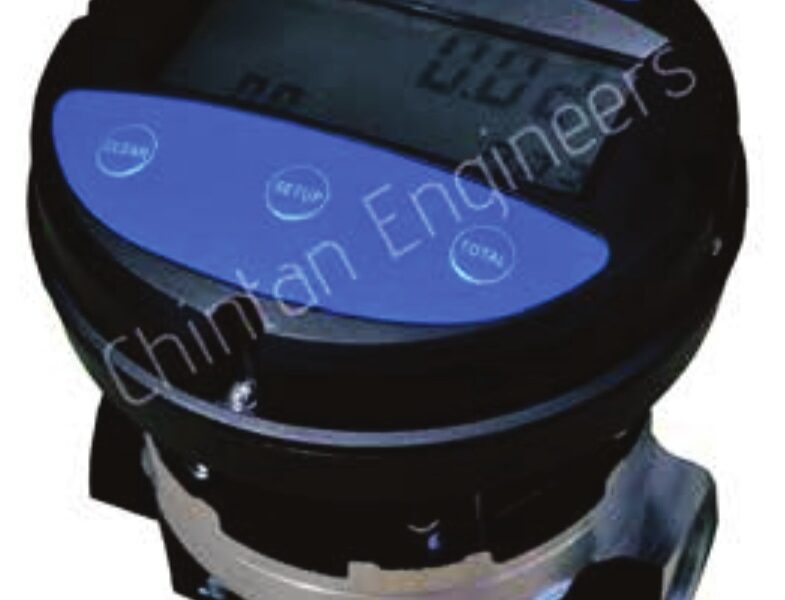
CE-119 oil flow meter with a flow range of 20-120lpm.
Tell us the fluid, flow range and site; we reply with a model and a quote within one working day.