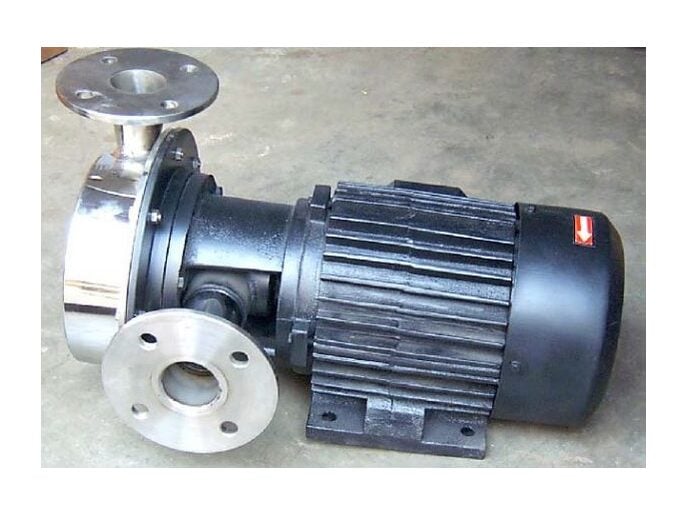
A leaking mechanical seal on a 96% Extra Neutral Alcohol (ENA) transfer line isn't just a fire hazard; at 20,000 LPH throughput, a 0.5% leak rate evaporates ₹65,000 worth of premium alcohol every single shift. When you're pushing those kinds of volumes, your pumps are the absolute bottleneck of your profitability.
I am Vikram Desai, Senior Flow Measurement and Fluid Dynamics Engineer at Chintan Engineers. Over the past 22 years, I have designed, sized, and calibrated fluid transfer systems across India—from massive sugarcane-based ENA plants in Maharashtra to state-of-the-art craft breweries in Bengaluru and heavy-duty grain distilleries in Punjab.
I have seen procurement teams attempt to save ₹40,000 on a cast-iron water pump, only to spend ₹4 Lakhs replacing it three months later when the acidic spent wash dissolved the volute casing. I've investigated "mysterious" pump failures that turned out to be ENA flashing inside the impeller because the suction lines were sized for water, not volatile alcohol.
Today, we're cutting through the marketing fluff to look strictly at the engineering realities of handling abrasive grain mashes, transferring highly volatile industrial alcohol, and surviving brutal Clean-in-Place (CIP) cycles.
I'll walk you through exact metallurgical requirements, mechanical seal selection, and how to specify the right ss pumps for distillery operations so you never have to explain a catastrophic mid-batch pump failure to your board.
₹1.3 Lakhs/month€” The average value of lost product in a medium-scale distillery operating just two transfer pumps with failing, non-optimized single mechanical seals.
—
The Fluid Dynamics of Indian Distillation Lines
Pumping water is easy. Pumping a thick, abrasive grain mash, transferring 90°C boiling wort, or moving 96% ABV Rectified Spirit (RS) in a 45°C Indian summer requires a deep understanding of fluid dynamics.
Walk through any major Indian distillery and you'll quickly realize you aren't dealing with a single type of fluid. You are managing an entire spectrum of viscosities, specific gravities, and vapor pressures.
1. Handling Viscous and Abrasive Mashes
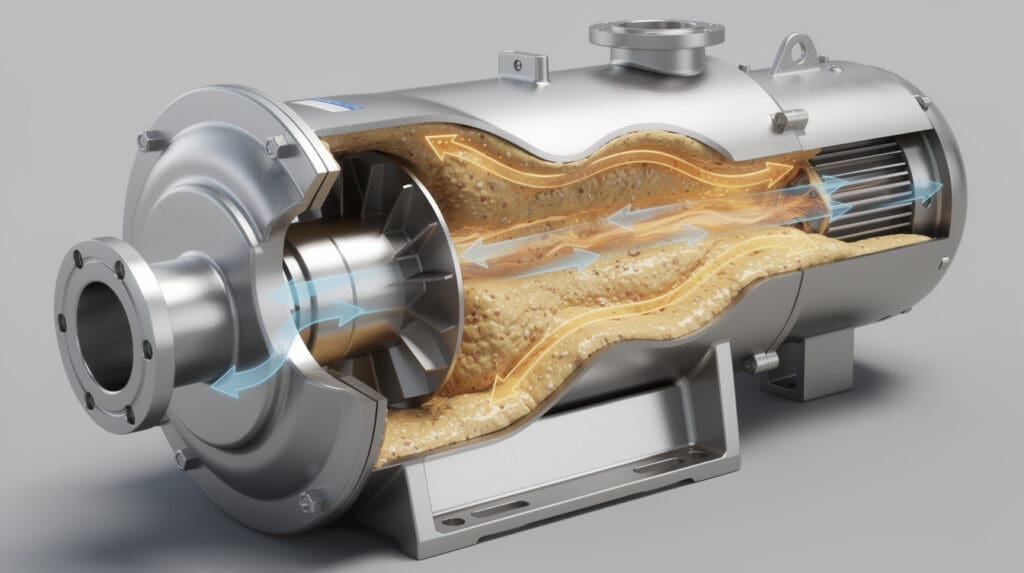
In grain-based distilleries and breweries, the initial stages involve moving a mixture of milled grains and water (mash or wort). This fluid is highly viscous and contains suspended solids that act like liquid sandpaper.
A standard closed-impeller centrifugal pump will choke on grain mash. I've seen closed-impellers literally lock up within 48 hours on a heavy mash duty. The narrow passages clog rapidly, leading to dead-heading, massive vibration, and motor burnout. Worse, cast iron impellers suffer severe abrasive wear, losing their hydraulic profile within weeks.
For mash handling, the pump must feature a semi-open impeller cast in SS-316 or SS-304. Our CE Series stainless steel pumps are manufactured with rolled stainless steel construction. Unlike cast iron, which is porous and prone to pitting, rolled SS provides a pore-free, non-pitting surface. This drastically reduces the friction coefficient, allowing the pump to handle viscosities up to 1500 centipoise without excessive shear forces that could damage the grain profile.
2. High-Temperature Wort and NPSHr Challenges
In breweries, transferring hot wort (often near 90°C to 100°C) turns Net Positive Suction Head (NPSH) into a massive headache.
As fluid temperature rises, its vapor pressure increases. If the Net Positive Suction Head Available (NPSHa) at the pump inlet drops below the pump's Required NPSH (NPSHr), the hot wort literally boils inside the low-pressure eye of the impeller.
I've calibrated hundreds of brewery lines. When a pump sounds like it's pumping gravel, it's not a bearing failure—it's cavitation. The collapsing vapor bubbles strike the impeller with thousands of pounds of localized pressure, destroying an SS-304 impeller in a matter of months. Always ensure your hot wort transfer pumps are positioned with maximum flooded suction, and calculate your NPSHa assuming the absolute lowest atmospheric pressure (e.g., during monsoon season).
3. High-Proof Alcohol Transfer: The Volatility Threat
When acting as an industrial alcohol transfer pump, moving 95%+ ENA or Rectified Spirit, the physics flip completely. The fluid is thin (low viscosity), but highly volatile. ENA has a much higher vapor pressure than water at ambient temperatures.
In the peak of an Indian summer, where ambient plant temperatures can reach 40°C-45°C, drawing ENA from an underground storage tank creates a vacuum that easily causes the alcohol to flash into vapor in the suction line. This vapor locking destroys pump efficiency and creates severe safety hazards.
This is exactly why I insist on heavy-duty volute designs like our BPO (Back Pull Out) Series, which feature highly optimized impeller geometries requiring exceptionally low NPSHr, ensuring stable transfer even under high ambient temperature conditions.
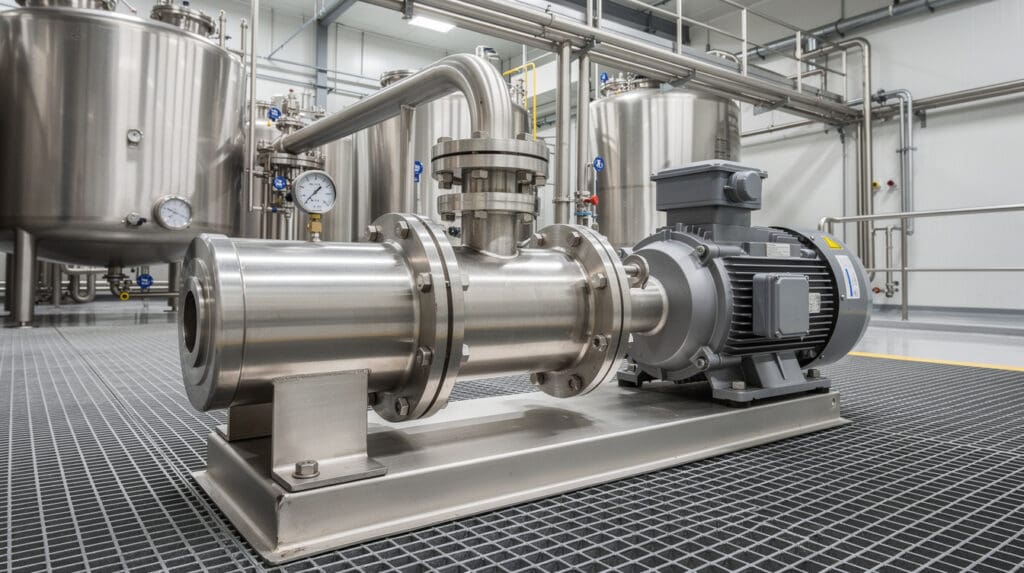
Experiencing cavitation or vapor lock in your ENA transfer lines?
Upgrading to an optimized SS Centrifugal pump with low NPSHr can eliminate mid-batch transfer failures.
—
Mechanical Seal Selection: The Make-or-Break Component
If I had to identify the single most common reason why standard centrifugal pumps fail in distilleries, it is incorrect mechanical seal selection. I've had arguments with old-school plant managers who swear by gland packing, but let me be clear: gland packing is entirely obsolete for alcohol transfer. It inherently leaks by design to stay lubricated, and you cannot allow ENA to drip onto a factory floor.
Mechanical seals are mandatory. But what kind?
Single vs. Double Mechanical Seals
For handling ENA, Rectified Spirit, or any high-proof spirit, a standard single mechanical seal (Carbon vs. Ceramic) is highly risky. Because industrial alcohol is a poor lubricant and flashes into vapor easily, the thin film of fluid that is supposed to lubricate the seal faces evaporates. The seal runs dry, heats up rapidly, and shatters.
For any true stainless steel brewery pump or distillery pump, you have to specify Double Mechanical Seals with an appropriate API seal plan.
API Plan 52 and 53 for Distilleries
We strongly recommend installing API Plan 52 (unpressurized barrier fluid) or API Plan 53A (pressurized barrier fluid) systems for ENA transfer pumps.
In these configurations, a barrier fluid (often water or a food-grade glycol mixture) circulates between the two seals.
- It absorbs the heat generated by the seal faces.
- It guarantees the seal never runs dry, even if the pump momentarily loses suction or the ENA flashes.
- In Plan 53A, the barrier fluid is kept at a pressure higher than the pump's stuffing box pressure. If the inner seal fails, barrier fluid leaks into the product (which is safe and sterile), preventing highly flammable alcohol from leaking out into the plant atmosphere.
Metallurgy of the Seal Faces
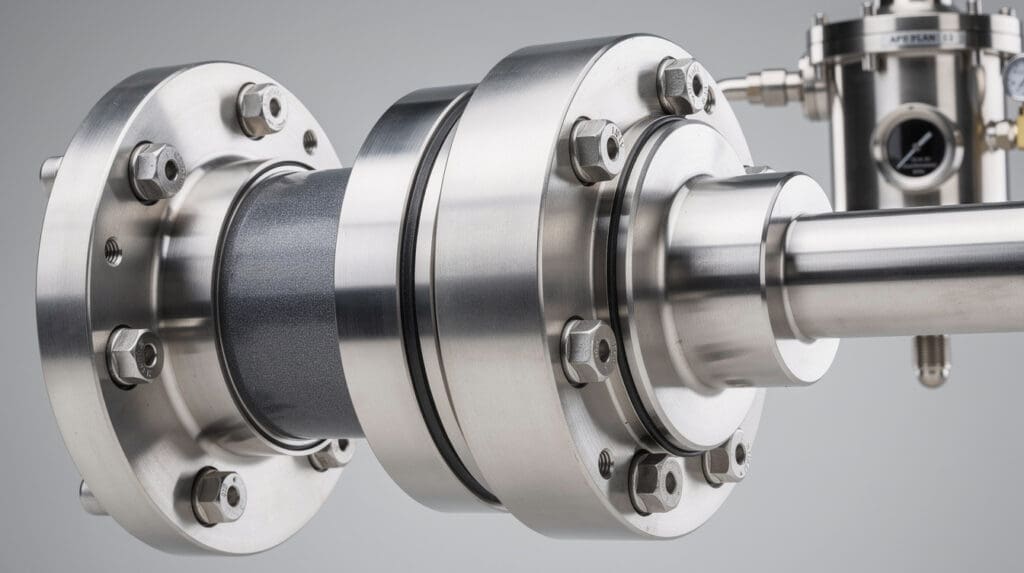
For abrasive fluids like grain mash or spent wash containing silica and unfermented solids, Carbon/Ceramic seals will be chewed to pieces. You must insist on Silicon Carbide vs. Silicon Carbide (SiC/SiC) or Tungsten Carbide faces.
Never use standard Viton or EPDM O-rings for high-concentration alcohol or aggressive CIP chemicals. We specify PTFE (Teflon) or Kalrez elastomers for all O-rings and gaskets in our distillery-spec pumps to prevent swelling and degradation over time.
—
Flameproof Safety and BIS Compliance in High-Proof Alcohol Transfer
When we talk about an industrial alcohol transfer pump, we are talking about handling a Class A highly flammable liquid. The engineering requirements shift from purely hydraulic to strict explosion prevention. The Legal Metrology rules and PESO (Petroleum and Explosives Safety Organization) standards that apply to fuel transfers have direct parallels in bulk alcohol handling.
(For a deeper look into how PESO handles hazardous fluid transfer regulations, you can read my analysis on Mobile Fuel Dispensers: PESO & Metrology Guide).
Zone Classifications and Motors
The pump area in an ENA or Ethanol distillation plant is typically classified as a Zone 1 or Zone 2 hazardous area under IS/IEC 60079-10-1.
A standard TEFC (Totally Enclosed Fan Cooled) motor is a severe ignition risk. A single spark from the motor terminal box or a static discharge can ignite the alcohol vapors in the air.
When Chintan Engineers supplies the CE or BPO series pumps for alcohol transfer, they are strictly coupled with Flameproof (FLP) / Explosion Proof (Ex 'd') electric motors. These motors are constructed with heavy cast iron or specialized enclosures designed to contain an internal explosion without allowing the flame to escape and ignite the surrounding atmosphere.
Earthing and Static Dissipation
Stainless steel, while excellent for hygiene, does not prevent static buildup. This catches a lot of junior engineers off guard. High-velocity transfer of ENA through SS pipes generates static electricity. Our pump baseplates and casings are designed with dedicated earthing bosses. If the pump is not perfectly bonded to the plant's grounding grid (maintaining resistance below 1 ohm), a static spark at the discharge flange is inevitable.
—
Clean-in-Place (CIP) Rigors and Material Selection
In breweries and distilleries, hygiene is non-negotiable. Bacterial contamination in the wort or mash lines will ruin an entire batch, leading to massive financial losses.
The modern standard for maintaining hygiene without dismantling the piping is the Clean-in-Place (CIP) and Sterilization-in-Place (SIP) process.
The Brutality of the CIP Cycle
A standard CIP cycle involves pumping sequentially:
- Pre-rinse with warm water.
- Circulation of 2% to 4% Caustic Soda (NaOH) at 80°C to 85°C to break down organic proteins.
- Intermediate water rinse.
- Circulation of Phosphoric or Nitric Acid (at ambient to 60°C) to remove mineral scaling (beer stone).
- Final rinse with sterilized or RO water.
Standard cast iron pumps will literally dissolve under these conditions. The caustic soda will corrode the iron, and the nitric acid will strip the material layer by layer. This is exactly why we often compare the TCO of different pump materials. (See my detailed breakdown in PP Pump vs AODD Pump: TCO Analysis for more on handling heavy CIP dosing chemicals).
Why We Mandate SS-316 over SS-304 for Brewery Pumps
I see a lot of distillery pump manufacturers undercutting bids by quoting SS-304 pumps. While SS-304 is fine for clear water or neutral spirits, it is highly susceptible to chloride stress corrosion cracking and pitting when exposed to high-temperature acids and sanitizers used in breweries.
We specify SS-316 or SS-316L for our CE Series and BPO Series pumps used in breweries. SS-316 contains 2% to 3% Molybdenum. This single addition dramatically increases the alloy's resistance to pitting corrosion from chlorides and acidic CIP cycles.
Additionally, the internal surfaces of our CE Series rolled stainless steel pumps feature a pore-free, highly polished finish (typically Ra < 0.8 micrometers). A rough cast surface allows bacteria to hide and multiply; a smooth, rolled surface ensures the CIP fluids strip the pump internals perfectly clean.
Is your current pump failing under rigorous CIP cycles?
Upgrade to our CE Series rolled SS pumps, engineered specifically for high-temperature caustic and acid resistance in hygienic applications.
—
Comparing Pump Types for Distillery Operations
At Chintan Engineers, we deploy two primary categories of stainless steel centrifugal pumps for the distillery and brewery sectors. Spec the wrong one, and you're buying a maintenance nightmare.
Here is a comparative engineering breakdown:
| Specification | CE Series (Monoblock / Bare Shaft) | CE Backpullout (BPO) Series |
| :— | :— | :— |
| Primary Application | Light spirits, milk, pharmaceutical, RO water, CIP transfer | Heavy mash, massive volume ENA transfer, spent wash |
| Capacity (Max) | Up to 120 M³ / hr | Up to 990 M³ / hr |
| Head (Max) | Up to 60 Meters | Up to 120 Meters |
| Material of Construction | Rolled Stainless Steel (SS-304, SS-316) | Cast SS-304, SS-316, Cast Iron, Bronze |
| Maintenance Feature | Compact, modular construction | Back pull-out design (leave volute in pipeline) |
| Viscosity Handling | Up to 1500 centipoise | Excellent for high specific gravity fluids |
| Power Rating | 1.0 HP to 20 HP (Three Phase) | Built to order for large plant loads |
| Key Distillery Advantage | Pore-free surface, highly energy efficient, zero pitting | >3mm corrosion allowance, extremely robust under high suction pressure |
The Back Pull-Out (BPO) Advantage
For heavy-duty, continuous operation (24/7 during the crushing/fermenting season), the CE BPO Series is the definitive choice.
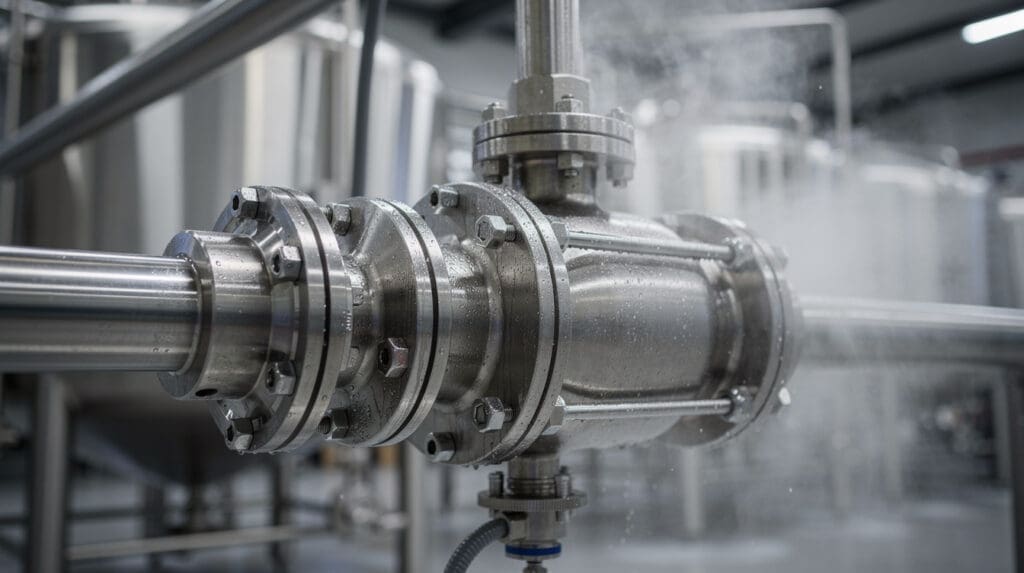
The "Back Pull-Out" design means the entire rotating assembly (motor, coupling, bearing housing, shaft, and impeller) can be unbolted and removed from the rear without ever disconnecting the heavy flanged suction and discharge piping from the volute casing.
In a distillery where piping networks are rigid and insulated, disconnecting pipes just to change a mechanical seal takes hours (and usually requires cutting the insulation). With the BPO design, a skilled maintenance crew can replace a seal and have the pump back online in under 45 minutes, slashing downtime.
—
Installation & Maintenance Guidelines for the Factory Floor
Even the finest stainless steel brewery pump will vibrate itself to death if installed incorrectly. Based on thousands of field calibrations, here are my non-negotiable rules for installation:
1. Baseplate Rigidity and Grouting
Do not simply bolt the pump baseplate to the factory floor. I cannot stress this enough—don't skip the epoxy grout. A pump transferring 120 M³/hr of fluid generates substantial kinetic energy. The baseplate must be filled with non-shrink epoxy grout. This dampens vibrations, keeps the motor and pump shaft perfectly aligned, and extends bearing life by 400%.
2. Eliminating Pipe Strain
Pumps are not pipe supports. When you bolt the heavy SS discharge piping to the pump flanges, the pipes must be independently supported. If the piping is pushing down or pulling sideways on the pump casing, it will deform the casing by fractions of a millimeter. This causes the internal wear rings to rub, overloads the bearings, and destroys the mechanical seal instantly.
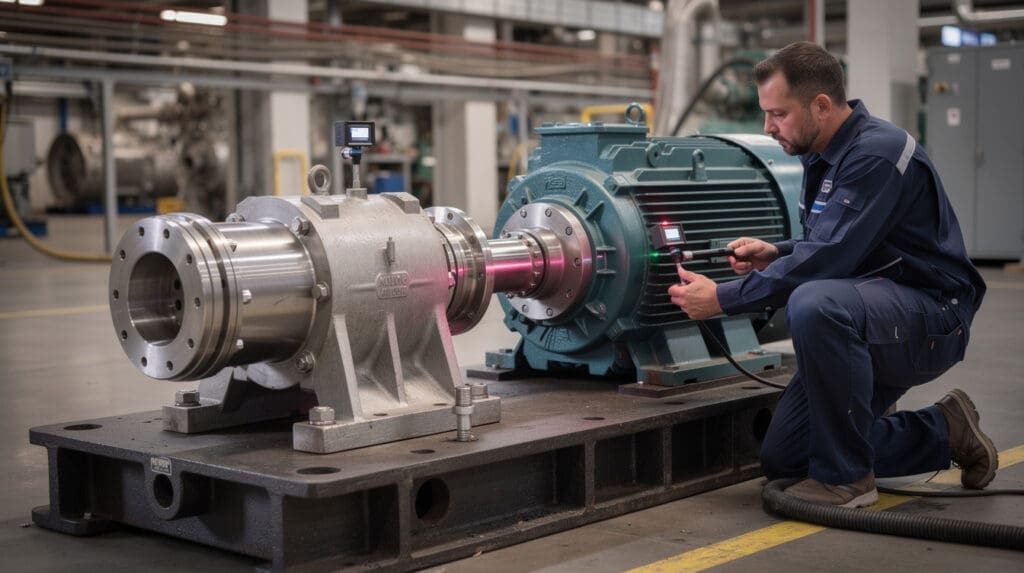
3. Laser Alignment
Throw away the straight edge. For our BPO series pumps coupled to large frame motors, it's not enough. You must use laser alignment tools to ensure the motor shaft and pump shaft are perfectly collinear. A misalignment of just 0.05 mm on a pump running at 2880 RPM will induce harmonic vibrations that shatter the mechanical seal faces.
If your pump is suddenly leaking from the stuffing box or vibrating heavily, do not just tighten the bolts. Check out my comprehensive SS Centrifugal Pump Troubleshooting Guide to properly diagnose cavitation, pipe strain, and bearing fatigue before catastrophic failure occurs.
—
Frequently Asked Questions
What is the best mechanical seal for a 96% ENA transfer pump?
For 96% Extra Neutral Alcohol (ENA), a double mechanical seal (Silicon Carbide vs. Silicon Carbide) with an API Plan 52 or 53 barrier fluid system is mandatory. Single seals are prone to dry running due to ENA's low vapor pressure, leading to flashing at the seal faces, rapid failure, and severe fire hazards.
Can I use an SS-304 pump for brewery wort transfer?
While SS-304 is acceptable for cold water applications, hot wort transfer (typically at 90°C+) requires SS-316. SS-316 contains molybdenum, which provides significantly better resistance to pitting and corrosion during high-temperature Clean-in-Place (CIP) cycles involving caustic soda and phosphoric acid.
Why does my distillery transfer pump cavitate during the summer?
Cavitation in summer occurs because the vapor pressure of alcohol increases drastically with ambient temperatures. When the Net Positive Suction Head Available (NPSHa) drops below the pump's Required NPSH (NPSHr), the alcohol boils inside the volute. Ensuring flooded suction and increasing the suction pipe diameter resolves this.
Are Chintan Engineers' SS pumps PESO approved for hazardous areas?
Our bare shaft SS pumps are mechanically sound for hazardous fluids. For explosive environments like ENA transfer, they must be coupled with PESO-certified Flameproof (FLP) motors complying with IS/IEC 60079-1 standards for Zone 1 or Zone 2 classifications.
How do you handle viscous grain mash (up to 1500 cp) with a centrifugal pump?
Handling high-viscosity mash up to 1500 centipoise requires an SS pump with a semi-open impeller, a lowered operating speed (typically 1450 RPM instead of 2880 RPM), and an oversized motor. Our CE Series handles this efficiently by utilizing rolled stainless steel with pore-free surfaces that prevent mash build-up.
What is the advantage of the Back Pull-Out (BPO) design in a distillery?
The BPO design allows maintenance teams to remove the rotating assembly (impeller, shaft, seal, and bearings) without disturbing the heavy suction and delivery pipework. This reduces a 4-hour maintenance job to a 45-minute task, minimizing critical downtime during continuous distillation processes.
—
Final Engineering Verdict
Distilleries and breweries operate on strict production schedules. You cannot afford to lose thousands of liters of high-proof ENA to a leaking seal, nor can you risk an entire batch of beer to a CIP failure caused by a pitted cast iron casing.
Based on 22 years of field data, here is the bottom line for your operation:
- For hygienic transfers, RO water, and CIP chemical dosing, specify the Chintan Engineers CE Series. Its rolled stainless steel construction and pore-free surface ensure perfect sanitation and energy efficiency up to 120 M³/hr.
- For heavy-duty mash transfer, spent wash handling, and massive volume ENA transfer, specify the Chintan Engineers CE Backpullout (BPO) Series. Its heavy casing, >3mm corrosion allowance, and rapid maintenance design make it the workhorse of the Indian distillery sector, capable of handling up to 990 M³/hr.
Do not compromise on metallurgy or mechanical seals. Invest in the right fluid dynamics engineering from day one, and the pump will pay for itself in prevented product loss alone within the first quarter.
Ready to specify the exact SS pump for your distillery or brewery application?
Our engineering team is ready to calculate your NPSHa, viscosity requirements, and API seal plans.