
Mobile Fuel Dispenser Engineering: Specs & TCO
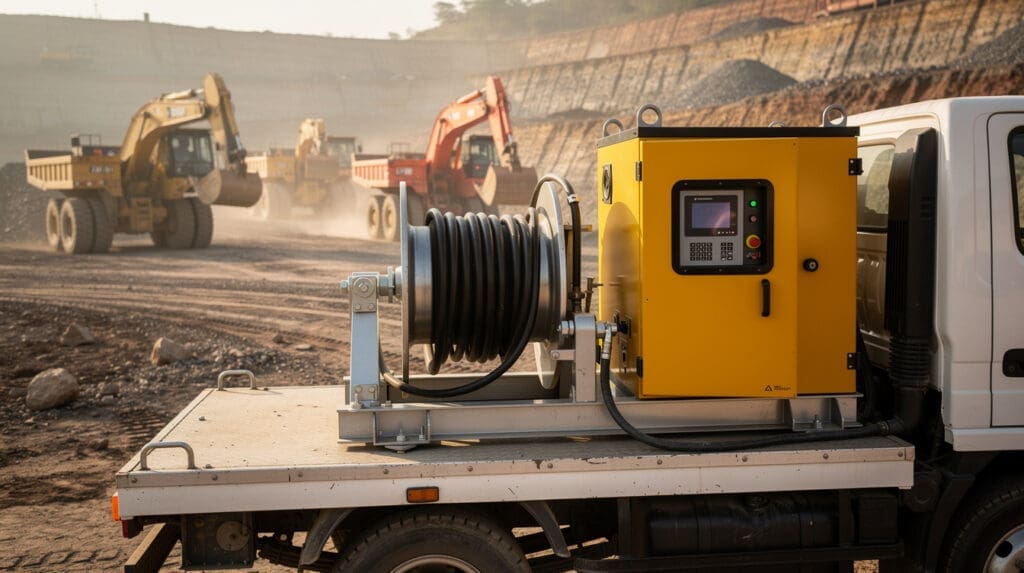
When you're managing heavy fleet operations—whether it's a mining site in Keonjhar or a construction corridor along the Delhi-Mumbai Expressway—fuel is your largest variable operating expense. A 1% calibration drift on a 5,000L/day throughput costs your operation roughly ₹1.35 lakh per month in untracked, un-reconciled diesel.
I'm Vikram Desai, Senior Flow Measurement Engineer at Chintan Engineers. Over the last 22 years, I've designed, calibrated, and commissioned over 5,000 flow measurement systems. I've crawled under service trucks in the peak of the Gujarat summer and analyzed flow data from ONGC offshore rigs. When procurement managers ask me why their fuel reconciliation numbers are constantly in the red, the answer is usually staring right at us: they're relying on substandard, stationary-grade pumping equipment bolted haphazardly onto a moving vehicle chassis.
Mobile fueling isn't just depot dispensing on wheels—it's a fundamentally different engineering challenge. You're dealing with intense mechanical vibration, fluctuating DC power sources, fluid sloshing, aeration, and extreme environmental ingress. I'll strip down the architecture of certified mobile fuel dispensers, analyze the underlying fluid dynamics, and give you the hard specifications required to spec a bowser-ready system that meets Legal Metrology standards and stops bottom-line fuel bleeding.
The Physics of Mobile Fuel Transfer: Why Standard Depot Dispensers Fail on the Road
Before spec'ing a purpose-built mobile fuel dispenser, you need to understand the fluid dynamics and mechanical stresses of a moving fuel tank.
When a standard stationary dispenser sits on a retail concrete island, it operates under highly controlled conditions. The fuel rests in an underground tank at a relatively stable temperature. Suction lines are static. The power supply is a stabilized grid, often backed by a UPS.
Mount a pump and meter on a truck chassis, and every one of these controlled variables goes out the window.
1. Cavitation and Fluid Aeration
As a bowser navigates rutted haul roads, the diesel inside the tank sloshes violently. This turbulence introduces entrained air into the fluid column. Standard centrifugal pumps and uncompensated meters can't distinguish between liquid volume and air volume. (If you've ever heard your pump sound like it's chewing on gravel, that's cavitation destroying your impeller.) If your system lacks a proper air elimination chamber before the metering unit, you are quite literally paying for air. A properly engineered mobile skid utilizes a rotary vane pump with an integrated bypass valve and a dedicated air separator to strip entrained air before it reaches the measuring chamber.
2. Torsional Vibration and Chassis Flex
Truck frames flex—it's that simple. Rigid piping that works perfectly on a concrete island will suffer stress fractures when subjected to the torsional twist of a truck navigating a mining site. Mobile fuel dispensers must utilize flexible, high-pressure braided interconnects between the pump outlet and the meter inlet to absorb these kinetic shocks without compromising seal integrity.
3. DC Power Voltage Sags
Most mobile dispensing kits operate on 12V or 24V DC power drawn directly from the vehicle's alternator. As cables run from the engine bay to the rear-mounted skid, voltage drop becomes a significant mathematical factor. A pump rated for 60 L/min at 24V might only see 20.5V at the terminals if the wire gauge is too thin, resulting in a 30% reduction in motor RPM, increased heat generation, and premature motor burnout.
I always mandate a minimum of 4 AWG (approx. 21 mm²) copper cabling for any DC pump run exceeding 4 meters. Additionally, the system must include an inline 50-amp circuit breaker, not just a standard fuse, to protect the motor windings during dead-head scenarios when the nozzle snaps shut.
Core Architecture of a Certified Mobile Dispenser Skid
At Chintan Engineers, we manufacture self-contained mobile fuel dispenser kits that transform standard liquid tankers into certified, auditable fueling stations. Here is what actually goes into a reliable mobile skid.
Metering Technology: The Superiority of Positive Displacement
I've calibrated enough turbine meters to know they don't belong anywhere near viscous fuels on a moving chassis. Turbine meters rely on fluid velocity turning a rotor. As diesel temperature changes throughout the day (say, 20°C in the morning to 45°C in the afternoon sun), its kinematic viscosity changes. This shift alters the fluid's velocity profile across the turbine blades, leading to unpredictable accuracy drifts that easily exceed ±2.0%.
This is exactly why we strictly specify Positive Displacement (PD) meters for mobile diesel applications.
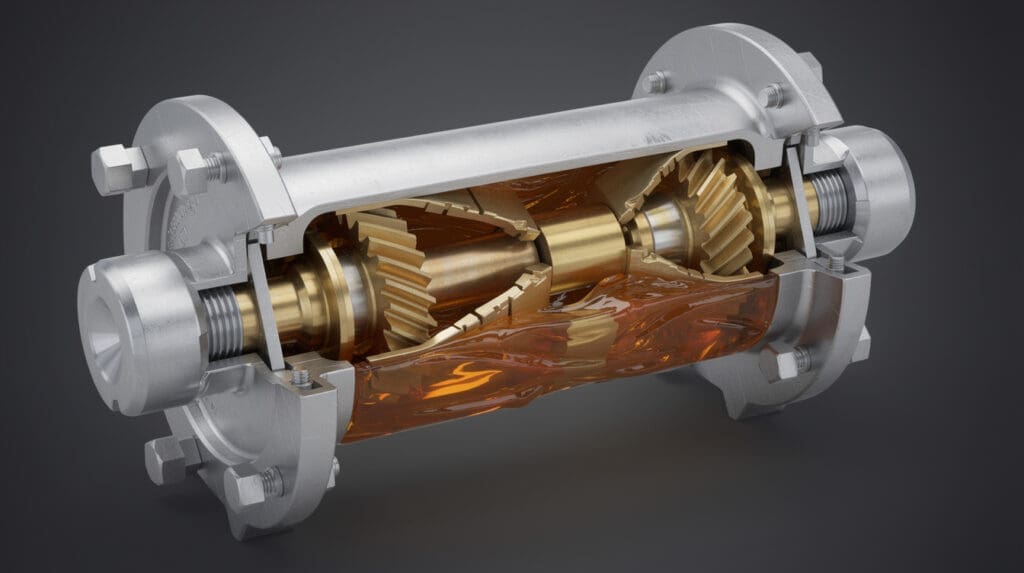
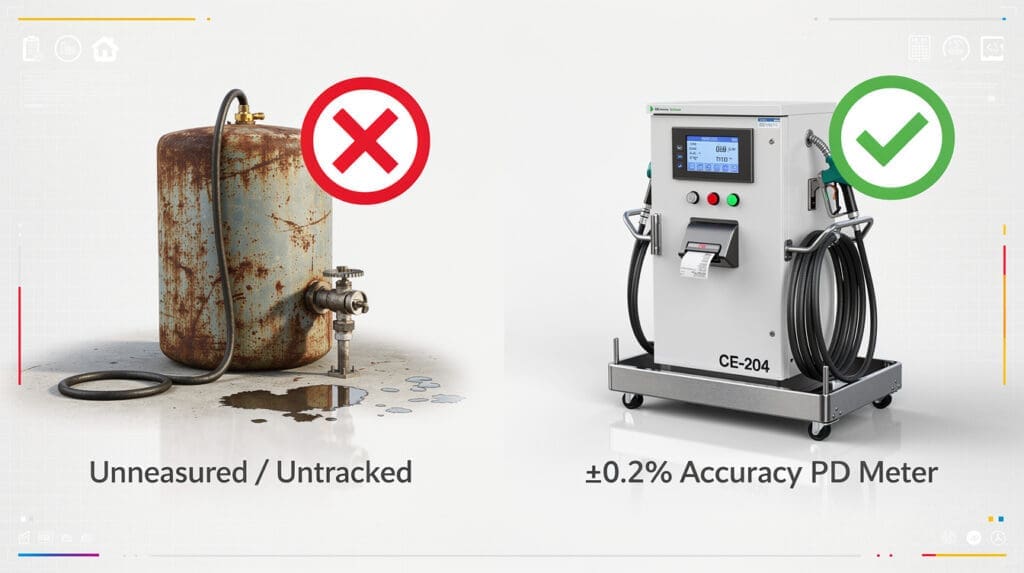
Whether it's a mechanical oval gear meter or a digital nutating disc system, a PD meter divides the fluid into fixed, exact volumetric pockets. The physical geometry of the measuring chamber doesn't care about fluid viscosity. This allows our CE-204 models to maintain an accuracy of ±0.2% (or 2 ml per liter) regardless of temperature fluctuations or pump RPM variances.
Pumping Dynamics: Rotary Vane Mechanisms
For mobile extraction, you need a self-priming mechanism that can handle dry lifts. We build our skids around rotary vane pumps. As the rotor turns, centrifugal force pushes the carbon vanes outward against the cam ring, creating a vacuum that draws fuel up from the tank. Crucially, these pumps include an internal pressure relief bypass valve. If the operator snaps the automatic shut-off nozzle closed while the pump is running, the bypass opens, circulating the fuel internally and preventing hose ruptures or motor burnout.
Multi-Stage Filtration
Modern heavy earth-moving equipment (HEMM) utilizes Common Rail Direct Injection (CRDI) diesel engines with operating pressures exceeding 30,000 PSI. Injector tolerances are measured in microns. Dispensing contaminated fuel from a dusty bowser will destroy a $4,000 injector bank in a matter of weeks. I've seen it bankrupt smaller contractors.
We utilize a dual-stage filtration approach on our mobile skids:
- Suction Strainer (100-micron): A washable Y-strainer on the suction line to catch large rust flakes and tank debris before they enter the pump.
- Delivery Filter (10-micron): A spin-on particulate and water-absorbing (hydro-glass) filter on the discharge side, ensuring only clean, dry diesel enters the asset.
Never bypass the delivery filter to increase flow rates. The pressure drop across a clean 10-micron filter is roughly 0.1 to 0.2 BAR. If you see flow rates dropping significantly, the filter is doing its job by capturing dirt. Change the element; do not remove it.
Tired of unaccounted fuel losses in your fleet?
Upgrade your existing bowsers with high-accuracy, auditable mobile dispenser skids. Stop fuel shrinkage today.
Technical Comparison: Selecting the Right Dispenser Configuration
Specifying a mobile fuel dispenser means matching volumetric throughput to your operational turnaround time. If you're fueling small service pickups, a 40 L/min system works. If you're filling 1,000-liter tanks on excavators, that same 40 L/min system takes 25 minutes per machine—wasting expensive operator man-hours.
Here is the exact engineering matrix my team uses to spec equipment across our range:
| Model | Flow Range | Metering Technology | Accuracy | Power Supply | Primary Application Profile |
| :— | :— | :— | :— | :— | :— |
| CE-202 Compact | 20 – 60 L/min | Digital PD (Pulse Output) | ±0.5 % | 12/24V DC or 220V AC | Service pickups, light maintenance rigs. Lightweight housing with LCD. |
| CE-130 Preset | 20 – 60 L/min | Digital Preset Controller | ±0.5 % | 12/24V DC or 220V AC | Remote construction projects, rental fleets requiring pre-programmed batching. |
| CE-204 High Accuracy | 20 – 80 L/min | Advanced Digital Preset | ±0.2 % | 12/24V DC or 220V AC | Heavy bowser fleets needing strict audit trails, printer-ready outputs, and 365-day transaction memory. |
| CE-201 Heavy Duty | Up to 110 L/min | Mechanical Oval Gear | 220/440V AC (Gen-set) | ±0.5 % | High-volume tanker trucks, mining excavators, large infrastructure corridors. |
Note: Final flow rates depend heavily on suction lift height, pipe diameter, and filter status.
Deep Dive: The CE-204 High Accuracy System
We engineered the CE-204 specifically for operations where fuel accounting is as critical as the fuel delivery itself. Achieving ±0.2% accuracy in a high-vibration environment requires tight machining tolerances in the metering block and advanced CPU compensation. Furthermore, the CE-204 (and its stationary counterpart, the CE-206) incorporates onboard memory capable of storing daily transaction data for 365 days and monthly cumulative data for the last 12 months. When paired with an optional thermal receipt printer, it guarantees every drop dispensed is mathematically accounted for. Ghost deliveries and pilferage on remote stretches simply disappear.
TCO and ROI: The True Cost of Mobile Fueling
If you're making procurement decisions driven solely by initial Capex, you're looking at flow measurement the wrong way. The true metric is Total Cost of Ownership (TCO). (For a deep dive into comprehensive depot economics, refer to our Fuel Dispenser TCO Analysis: 5-Year Cost Breakdown).
Let's run the numbers on a standard calculation based on real field data I pulled from a mid-sized road construction contractor in Maharashtra.
Scenario:
- Fleet of 3 mobile bowsers, each dispensing 3,000 L/day.
- Total daily volume: 9,000 L/day.
- Operating days: 300 days/year.
- Annual throughput: 2,700,000 Liters.
- Cost of Diesel: ₹90 / Liter.
Option A: Unbranded Mechanical Meter (Capex: ₹25,000/unit)
These meters typically drift by about 1.5% under field vibration over six months.
- Unaccounted volume loss: 2,700,000 L * 0.015 = 40,500 Liters/year.
- Financial loss: 40,500 * ₹90 = ₹36,45,000 per year.
Option B: Chintan CE-204 High Accuracy Dispenser (Capex: ₹85,000/unit)
Maintained at ±0.2% accuracy.
- Maximum variance: 2,700,000 L * 0.002 = 5,400 Liters/year.
- Financial variance limit: 5,400 * ₹90 = ₹4,86,000 per year.
The ROI Calculation:
The additional Capex for three high-accuracy dispensers is ₹1,80,000.
The operational savings in the first year alone is over ₹31.5 Lakhs.
The payback period for upgrading to a precision-engineered CE-204 system is exactly 17 days.
If you are running uncalibrated equipment, you aren't saving money on procurement; you're bleeding capital through the delivery nozzle.
The thermal expansion coefficient of diesel is roughly 0.00083 per °C. In the Indian climate, fueling a bowser at 20°C in the morning and dispensing at 40°C in the afternoon changes the actual fluid volume by ~1.6%. Advanced telemetry and temperature-compensated flow computers can adjust for this, but even a standard high-accuracy PD meter is critical to establishing a reliable baseline.
Indian Industrial Context: Designing for Environmental Extremes
Designing equipment for the European market is relatively easy. Designing flow measurement systems that survive the Indian industrial landscape? That requires a different breed of engineering. (Try keeping a standard meter running in Kandla during the monsoons.) We build our equipment to withstand brutal realities:
1. Monsoon Humidity and Coastal Salinity
Standard mild-steel cabinets rot within 18 months on the coastal belts of Odisha. Our mobile skids utilize heavy-gauge CRCA sheets, chemically treated with a 7-tank phosphating process, followed by UV-resistant pure polyester powder coating. Electronic enclosures are sealed to IP65 standards to prevent moisture from shorting the CPU boards during heavy monsoons.
2. The Dust of Industrial Estates (GIDC)
In places like the Gujarat Industrial Development Corporation (GIDC) estates or Jharkhand's mining belts, ultrafine dust is a constant threat. It gets into mechanical counter gears, grinds down plastic internals, and jams bearings. We counter this by using sealed magnetic couplings between the wet metering chamber and the dry electronic display. No physical shaft protruding through a packing gland means nothing to leak or wear down.
3. Generator Power Fluctuations
For heavy-duty skids like the CE-201 running on 220V/440V AC power, reliance on vehicle-mounted generators is common. We know these generators experience massive voltage dips when large inductive loads start. We spec our AC motors with high service factors and robust thermal overload relays to prevent stator windings from burning out during under-voltage events.
For more on how we build to these rigorous specifications, you can review our documentation on Engineering Standards for Mobile Fuel Dispensers.
Need a heavy-duty fueling solution that survives the Indian climate?
Our powder-coated, IP65-rated mobile dispensers are built for harsh mining and construction environments.
Installation, Calibration, and Legal Metrology Compliance
Buying an accurate meter is only half the equation; proving and maintaining that accuracy legally is the rest. In India, any transaction involving the sale of fuel by volume falls strictly under the purview of the Legal Metrology Act.
The Calibration Proving Process
We adhere to OIML R117 (Dynamic measuring systems for liquids other than water) and IS 14883 guidelines. When a mobile dispenser skid is commissioned, it must be proved volumetrically.
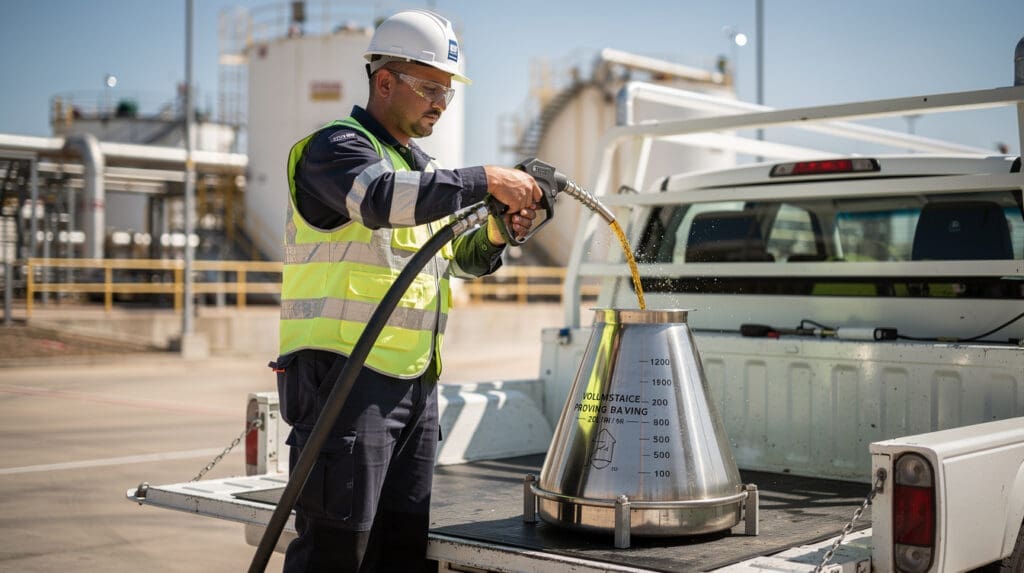
We utilize certified 10-liter or 20-liter volumetric proving cans. The process involves:
- Wetting the Can: Running a fast batch to wet the internal surfaces of the prover.
- Fast Flow Test: Running the pump at maximum RPM to check the high-flow calibration factor.
- Slow Flow Test: Feathering the nozzle to restrict flow to about 30% of maximum, ensuring the PD meter doesn't "slip" fluid at low pressures.
- Electronic Adjustment: Accessing the CPU via a secure PIN to adjust the calibration pulse factor (K-Factor) until the mechanical delivery perfectly matches the electronic display within ±0.1%.
- Sealing: Applying a physical lead-and-wire seal to the calibration access port to prevent unauthorized tampering by fleet drivers.
A mobile dispenser should be re-calibrated every 6 months, or after every 5,00,000 liters dispensed—whichever comes first. The vibration of a moving chassis accelerates the mechanical wear on metering gears compared to a stationary pump.
If you're experiencing unexpected volume drift or error codes, refer to our comprehensive Troubleshoot Liquid Batching Systems | Plant Engineer Guide to diagnose electrical noise or mechanical binding issues.
Field Questions I Get Asked Most
Can I run the dispenser entirely on vehicle battery power?
Yes. Models like our CE-130, CE-202, and CE-204 utilize dedicated 12V or 24V DC continuous-duty motors. They power the pump, the meter, and the preset controller directly from the vehicle's alternator. AC backup or generator integration is strictly optional for these models.
How do I prevent pilferage on the road?
This is the number one concern for fleet managers. By utilizing preset controllers with password locks, paired with receipt printers and GSM telemetry, you remove the human element. The CE-204 logs the exact time, volume, and date of every transaction. If a driver attempts to dispense 50 liters into an unapproved container, the transaction is permanently recorded in the 365-day onboard memory.
Is hose management included in the skid?
Yes. Leaving a diesel-filled hose dragging across a truck bed is a safety hazard and destroys the NBR rubber. Each Chintan mobile kit can be configured with heavy-duty auto-retracting hose reels capable of housing up to 15 meters of 1-inch delivery hose, complete with swivel joints and auto shut-off nozzles.
Do you offer flameproof (FLP) versions for hazardous areas?
Absolutely. If your bowser operates in designated hazardous zones (such as underground coal mines or near aviation fuel depots), we engineer the skid with PESO-approved EX/FLP motors, flameproof junction boxes, and strict grounding interlocks. You must specify this requirement during the engineering phase.
What documentation do I receive with the unit?
Industrial procurement demands strict traceability. Every mobile dispenser skid ships with a factory calibration certificate, detailed wiring diagrams for the DC/AC integration, mechanical dimensional drawings, and standard operating procedures (SOPs) for field operators covering safe hose handling, static grounding, and emergency shut-offs.
Why does the flow rate drop when I add a longer hose?
Fluid friction. Pushing 60 liters of viscous diesel per minute through a 4-meter hose creates a specific pressure drop. Push that same volume through a 15-meter hose, and friction loss skyrockets. If you need a long hose reel, we have to upsize the rotary vane pump and increase the delivery line diameter to 1.25 inches to maintain your target flow rate at the nozzle.
Final Engineering Verdict
Based on 22 years of field data and analyzing thousands of flow meters across the Indian subcontinent, here is my direct recommendation for your fleet operations:
If you're managing a fleet of service pickups doing light, intermittent fueling, the CE-202 Compact Kit gives you necessary ±0.5% accuracy in a lightweight, DC-powered form factor.
But if you're operating dedicated diesel bowsers serving heavy earth-moving machinery, where high volumes are transferred daily and absolute accountability is demanded by your finance team, you must specify the CE-204 High Accuracy Mobile Dispenser.
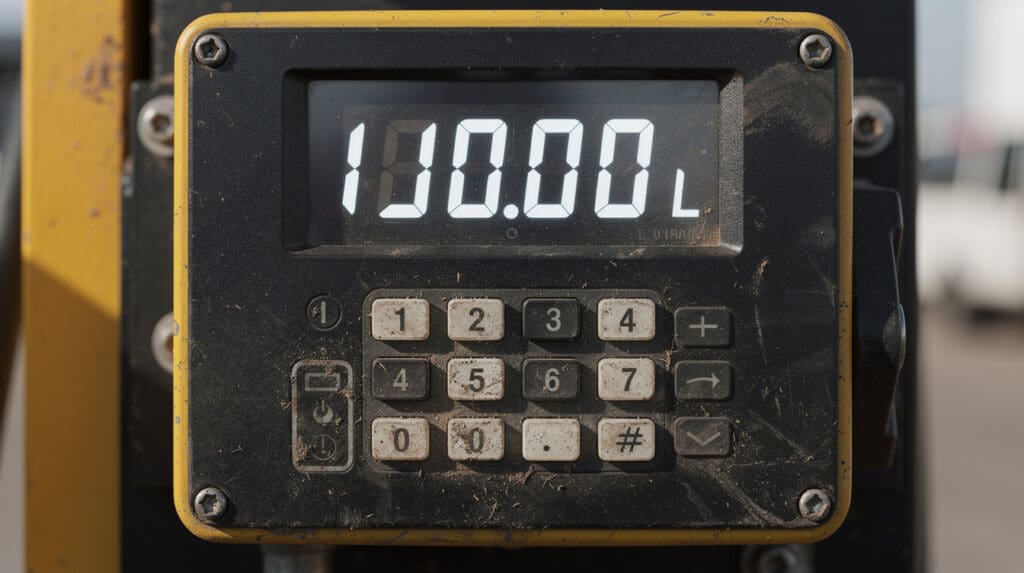
Don't rely on standard gravity drops. Don't bolt un-compensated stationary meters to a vibrating truck chassis. Engineer the solution correctly the first time, protect your fuel assets with positive displacement precision, and watch your monthly reconciliation reports finally balance.
Ready to engineer a reliable mobile fueling strategy?
Send us your bowser tank capacity, available power supply, and target flow rates. We will configure a precision dispenser skid tailored to your exact operational physics.
Need a meter or dispenser for a specific duty?
Tell us the fluid, flow range and site; we reply with a model and a quote within one working day.