In the high-stakes world of industrial operations in India, fuel management is often the thin line between profitability and operational loss. With diesel costs fluctuating and the persistent risk of pilferage or inefficiency in supply chains, accurate measurement is not a luxury—it is a necessity. For plant managers, fleet operators, and procurement engineers, the challenge lies not just in buying a meter, but in selecting the right technology that can withstand harsh site conditions while delivering consistent data.
At Chintan Engineers, we understand that precision is engineered, not accidental. Whether you are managing a logistics fleet, monitoring generator fuel consumption, or handling bulk transfers in a manufacturing plant, the core of your control system is the Fuel Flow Meter. This component determines the fidelity of your data and, ultimately, the efficiency of your operation.
1. What the Fuel Flow Meter Does
A Fuel Flow Meter is a precision instrument designed to measure the volumetric or mass flow rate of liquid fuels such as diesel, petrol, kerosene, and light oils moving through a pipeline. In industrial contexts, these devices serve as the "cash register" for your fuel assets, providing real-time data on how much fuel is being received, transferred, or consumed.
Based on the engineering standards maintained at Chintan Engineers, these meters are built to perform in demanding environments. They are typically integrated into dispensing pumps, loading gantries, or fuel management systems (FMS). Key functionalities and specifications often associated with high-quality industrial flow meters include:
- Volumetric Measurement: Accurately capturing the volume of liquid passing through the meter mechanism.
- Material Compatibility: Constructed from robust materials (often aluminum, stainless steel, or cast iron) to resist corrosion from hydrocarbons and endure physical wear.
- Flow Range Versatility: Capable of handling various flow rates, from low-flow dosing applications to high-speed bulk transfer.
- Data Output: Many modern variants offer pulse output or analog signals (4-20mA) for integration with PLCs, remote displays, and automation systems.
- Calibration: Factory-calibrated to ensure linearity and repeatability, critical for custody transfer and inventory reconciliation.
The device acts as the critical verification point, ensuring that the fuel paid for is the fuel received, and the fuel consumed matches the work performed.
2. Comparing Technologies: Turbine vs. PD vs. Helical
Selecting the correct fuel flow meter for diesel transfer requires navigating a landscape of different underlying technologies. For Indian industrial buyers, the choice often comes down to three primary types: Turbine, Positive Displacement (PD), and Helical Gear meters. Each has distinct strengths regarding accuracy, viscosity tolerance, pressure drop, and contamination handling.
To help you make an informed decision, we have broken down these technologies based on performance in real-world scenarios.
Turbine Flow Meters
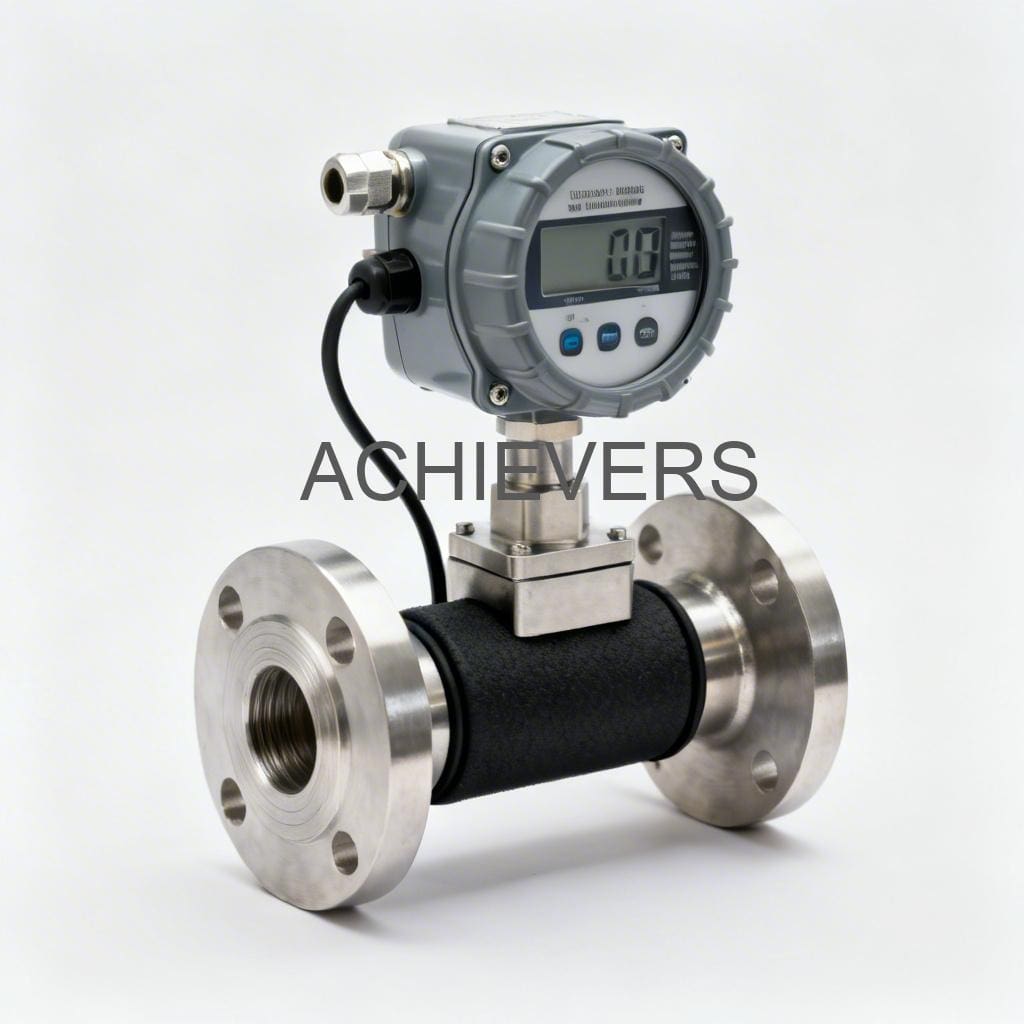
Turbine meters operate on the principle of velocity. A rotor with blades is suspended in the flow stream; as the fuel moves, it spins the rotor. The speed of rotation is directly proportional to the flow velocity.
- Best Application: High-speed diesel dispensing and clean fuel transfer.
- Viscosity Tolerance: Low. Turbine meters differ in accuracy if viscosity changes significantly (e.g., diesel thickening in winter). They are best for low-viscosity fluids like petrol or warm diesel.
- Contamination Handling: Poor. Debris can damage the blades or bearings. Pre-filtering is mandatory.
- Pressure Drop: Low.
- Lifecycle Cost: Generally lower initial cost, but maintenance can be higher if the fuel is dirty.
Positive Displacement (PD) / Oval Gear Meters
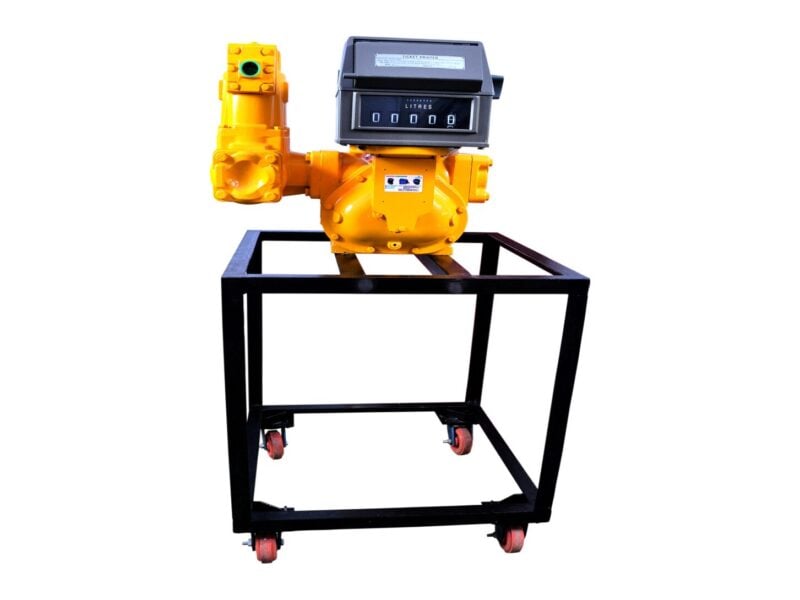
When discussing turbine vs positive displacement fuel flow meter options, the PD meter is often the superior choice for variable conditions. PD meters divide the liquid into fixed volumetric "pockets" using gears (often oval gears).
- Best Application: Fleet fueling, custody transfer, and applications where high accuracy is non-negotiable.
- Viscosity Tolerance: High. PD meters are relatively immune to changes in viscosity, making them ideal for diesel that may fluctuate in temperature.
- Contamination Handling: Moderate. While robust, large particulates can jam the gears. Strainers are recommended.
- Pressure Drop: Higher than turbines, as energy is required to move the gears.
- Accuracy: Very high (often ±0.5% or better), even at lower flow rates.
Helical Gear Flow Meters
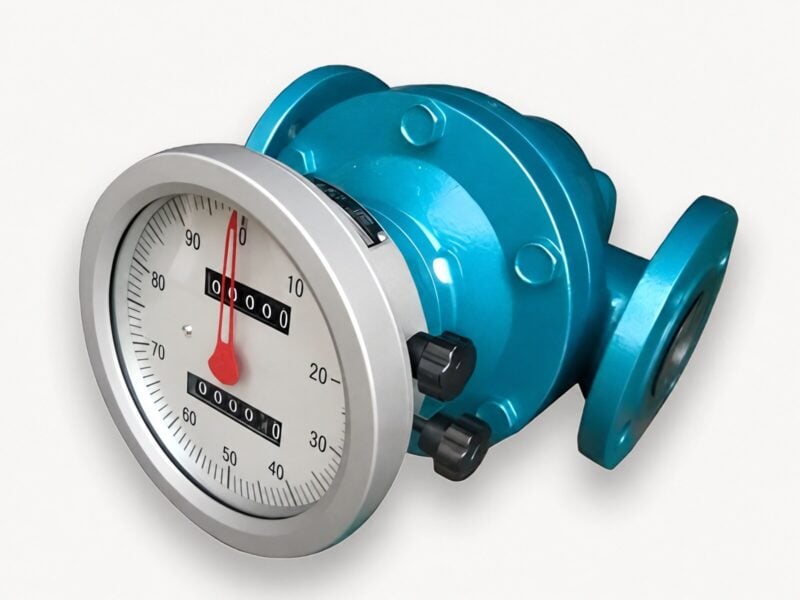
For specialized applications, the helical fuel flow meter for low flow diesel monitoring or high-viscosity heavy oils is a powerhouse. These use helical rotors that turn continuously with no pulsation.
- Best Application: Heavy fuel oil (HFO), furnace oil, and generator fuel monitoring where flow is constant but slow, or extremely high-viscosity transfers.
- Viscosity Tolerance: Excellent. They thrive in thick fluids.
- Pressure Drop: Very low compared to standard PD meters, even at high viscosities.
- Vibration/Noise: Extremely low due to the smooth rotation of helical gears.
Mapping Use Cases to Technology
- Fleet Depots & Gantries: A Fuel Flow Meter using PD (Oval Gear) technology is usually preferred here. The start-stop nature of vehicle fueling requires the high repeatability that PD meters provide.
- Bulk Unloading: Turbine meters are often selected for bulk offloading where the flow is continuous, high-speed, and the fuel is relatively clean.
- Generator Day Tanks: For monitoring consumption on gensets, a Helical or low-flow PD meter is essential to capture the slow return lines and supply lines accurately without restricting flow.
3. Selection and Configuration Guide
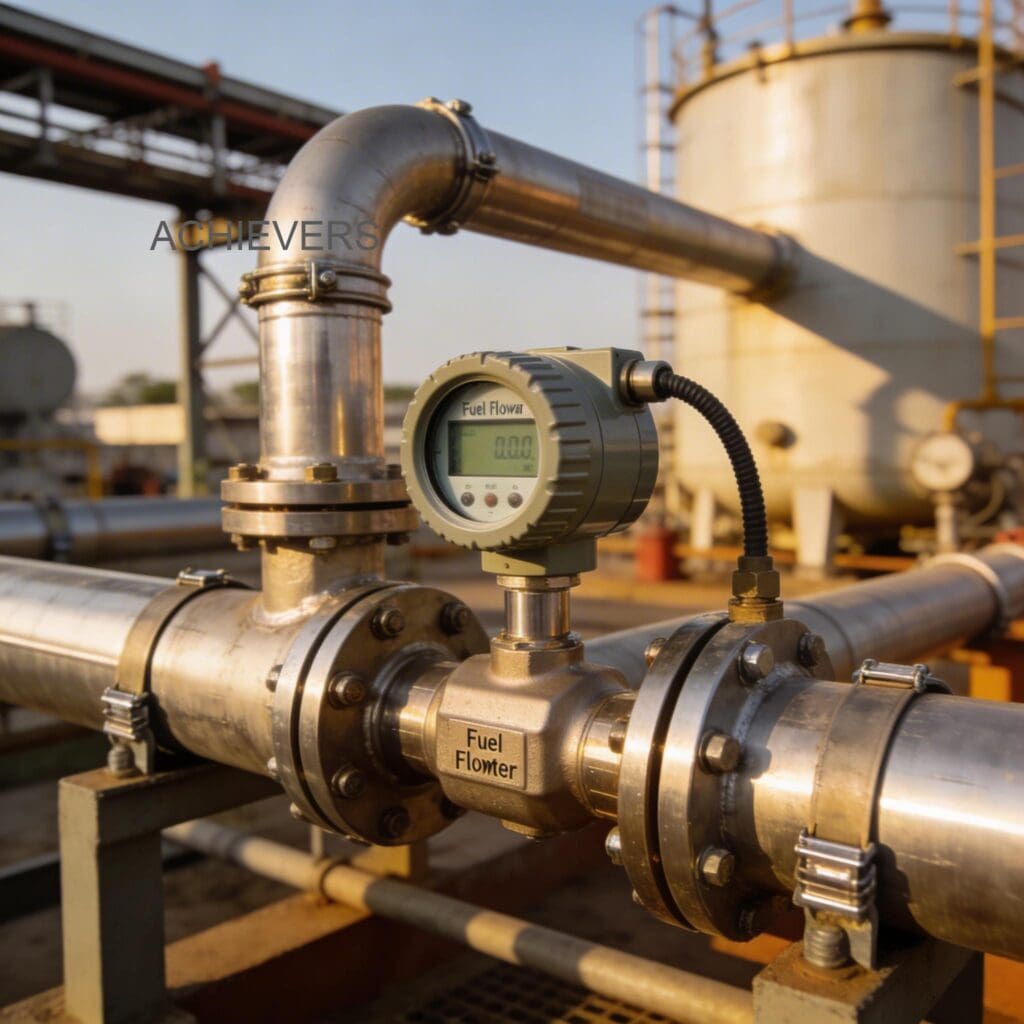
Choosing the right Fuel Flow Meter involves more than just picking a technology. To ensure the device performs accurately over its lifecycle, engineers must define the operating parameters clearly. A fuel flow meter selection guide for industrial applications always begins with the fluid properties and the flow profile.
When configuring your system, consider the following critical parameters:
1. Flow Rate Range (Min/Max)
- Never size a meter based on the pipe size alone (e.g., don't just buy a 2-inch meter because you have a 2-inch pipe).
- Size the meter based on the actual flow rate (LPM or m³/hr).
- If you operate below the minimum flow rating of a turbine meter, it will under-read significantly. PD meters offer a wider "turndown ratio," allowing them to read accurately at lower flow rates.
2. Fluid Compatibility and Viscosity
- Standard diesel is easy to handle, but if you are measuring Furnace Oil (LDO/FO) or heavy crude, you must specify this.
- Viscosity affects the "slippage" in mechanical meters. A meter calibrated for diesel may not be accurate for petrol without recalibration.
3. Integration and Output
- Mechanical Display: Simple, requires no power, ideal for remote sites or mobile tankers.
- Pulse Output: Sends a digital signal to a remote totalizer or FMS. Essential for automated fleet management.
- 4-20mA / Modbus: Used for integrating flow rate data into plant PLCs or SCADA systems for real-time monitoring.
4. Pressure and Temperature
- Ensure the meter body rating exceeds your maximum system pressure.
- In India, ambient temperatures can soar. Ensure the electronic components (if any) are rated for high-temperature environments.
4. Typical Applications
The versatility of the Fuel Flow Meter makes it a staple across various sectors in India. Based on our experience at Chintan Engineers, typical deployments include:
- Transport and Logistics: Installing diesel fuel flow meter for fleet and bulk fueling points to reconcile fuel purchases against vehicle consumption. This is the primary defense against fuel theft.
- Construction and Mining: Mobile bowing (refueling) trucks equipped with rugged flow meters to dispense fuel to excavators and dumpers in remote, dusty locations.
- Manufacturing Plants: Monitoring fuel intake for boilers and furnaces to calculate thermal efficiency and operational costs.
- Power Generation: Precise measurement of diesel consumed by backup generators (DG Sets) in hospitals, data centers, and industrial parks.
- Chemical Processing: While focused on fuel, the same engineering principles allow these meters (with appropriate material changes like SS316) to measure solvents and industrial fluids.
5. Service, Installation, and Support
Even the most robust hardware requires correct installation to function correctly. As a fuel flow meter manufacturer in India with over 15 years of expertise, we emphasize that the lifespan of a meter is determined during installation.
Installation Best Practices:
- Filtration is Non-Negotiable: Always install a strainer or filter upstream of the meter. A single metal shaving or welding slag can destroy the rotors of a PD meter or shear the blades of a turbine.
- Straight Run Requirements: Turbine meters generally require a straight run of pipe (typically 10x diameter upstream and 5x downstream) to smooth out the flow profile. PD meters are less sensitive to turbulence and can be installed in tighter spaces.
- Air Elimination: Air passing through a meter spins the rotor just like liquid, leading to "air counting" and false high readings. An air eliminator should be used in bulk transfer applications.
Maintenance and AMC:
Industrial flow meters are mechanical devices subject to wear. Regular calibration checks are vital to maintain accuracy, especially for custody transfer applications. Chintan Engineers provides end-to-end support, from initial consultation and manufacturing to installation and Annual Maintenance Contracts (AMC). Our "Quality Workmanship" promise means every unit is backed by rigorous testing and genuine components, ensuring that your meter remains accurate year after year.
Summary
Choosing the right Fuel Flow Meter is a balance of accuracy, fluid properties, and budget. While Turbine meters offer a cost-effective solution for high-volume clean fuel, Positive Displacement and Helical meters provide the reliability and viscosity tolerance required for precise fleet management and industrial process monitoring.
At Chintan Engineers, we combine innovative design with customer-focused service to deliver solutions that secure your fuel assets.
Ready to configure your system?
To get the correct specification for your site, contact our technical team with the following details:
- Fluid type (Diesel, Petrol, Oil)
- Min and Max Flow Rate (LPM)
- Operating Pressure and Temperature
- Required Output (Mechanical, Pulse, or PLC integration)