
















A ₹50,000 Weights and Measures penalty is the least of your worries when an uncalibrated diesel bowser drifts by 1.5% on a 5,000-liter daily throughput. That seemingly small error costs your operation over ₹2.2 lakh per month in untracked fuel. I've spent 22 years calibrating fluid measurement systems across India, and I can tell you exactly what happens when procurement prioritizes a cheap transfer pump over a compliant legal metrology fuel dispenser. The tank gets impounded, the site gets red-flagged by safety auditors, and the fuel theft quietly continues.
Running mobile diesel bowsers in Indian industrial sites—whether it's a sprawling GIDC estate in Gujarat or a remote ONGC drilling pad—requires strict adherence to two independent regulatory pillars: The Petroleum and Explosives Safety Organisation (PESO) for transport safety, and the Legal Metrology Act, 2009 for commercial transaction accuracy.
Let me show you exactly how to specify, install, and certify a mobile fueling system that satisfies both the local inspector and your bottom line.
In This Article
The Regulatory Reality of Diesel Bowsers in India
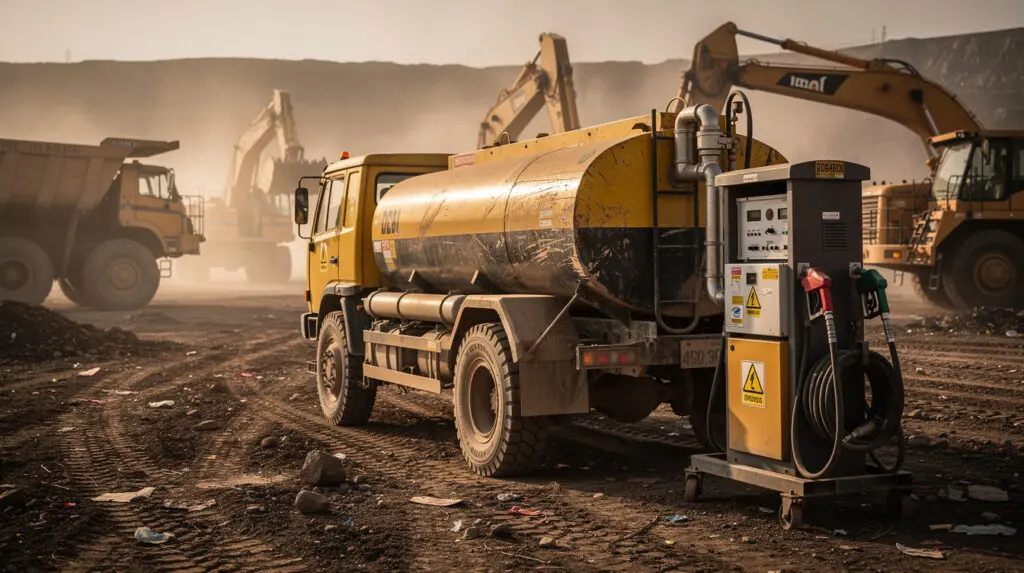
Diesel is classified as a Class B petroleum product (flash point between 23°C and 65°C) under the Petroleum Rules, 2002. While it doesn't pose the extreme explosive risks of Class A products like petrol, transporting it in a mobile bowser for on-site refueling fundamentally changes your liability. You are no longer just storing fuel; you are operating a mobile retail outlet.
This triggers the necessity for a PESO approved mobile fuel dispenser setup. Remember: PESO approves the safety of the installation (chassis, tank, electrical zoning, and spark mitigation), while the Legal Metrology Department dictates the accuracy and tamper-proofing of the meter. You simply cannot have one without the other.
PESO Chassis and Safety Mandates
When converting a standard truck or trolley into a diesel bowser, the integration of the dispenser must not compromise the vehicle's safety profile. Key PESO requirements typically include:
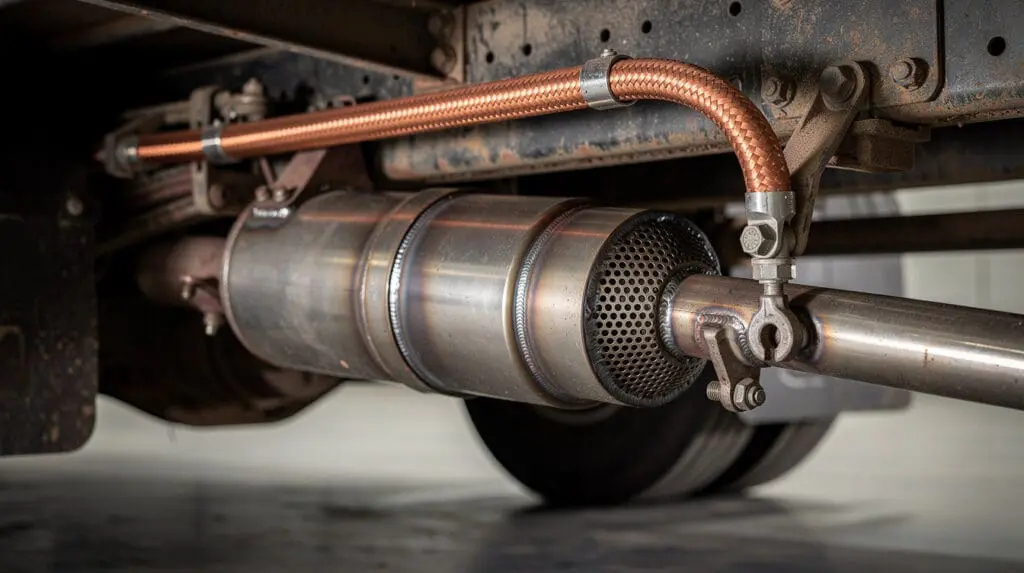
- Spark Arrestors: Every diesel bowser must have an approved spark arrestor welded to the vehicle exhaust. (I cannot count how many sites I've visited where a ₹2,500 spark arrestor was omitted, halting a ₹20 Lakh fueling operation).
- Electrical Isolation: Mobile fuel dispenser safety norms mandate a master battery cut-off switch for DC-powered kits (like our 12V/24V CE-202 and CE-130 models).
- Bonding and Grounding: Static electricity during high-flow transfer (80+ L/min) is a severe hazard. The dispenser chassis, the storage tank, and the receiving vehicle must be equipotentially bonded.
- Fire Extinguishers: Minimum two 9kg DCP (Dry Chemical Powder) extinguishers mounted on accessible quick-release brackets.
Warning: Never run standard 220V AC dispenser motors from portable generators on a bowser without ensuring the motor is ATEX/PESO certified as Flameproof (FLP/Ex d). If you are dispensing in hazardous zones, standard IP55 weatherproof motors are a violation. I've seen too many rigs shut down by auditors for this exact reason.
Legal Metrology Stamping Protocols
If you are using the diesel bowser to track subcontractor fuel usage, deduct costs from transporters, or manage internal commercial accounting, you must use a legal metrology fuel dispenser. Trust me, the Weights and Measures rules are unforgiving.
Under OIML R117 and IS 14883 standards, a mobile fuel dispenser must demonstrate a maximum permissible error of ±0.5%. Furthermore, the meter must have provisions for physical lead-wire sealing (stamping) by a local Legal Metrology Inspector.
When the inspector shows up for the initial stamping or annual re-verification, here is exactly what they will look for:
- Non-resettable Totalizer: The mechanical or digital cumulative total must be completely tamper-proof.
- Positive Displacement Precision: Turbine meters are notorious for drifting with viscosity changes (especially during Indian winters or with adulterated diesel). Always specify a Positive Displacement (PD) meter or Oval Gear meter for bowsers.
- Air Separation: The system must have an air elimination mechanism. Otherwise, you're counting air bubbles as diesel when the tank runs low—a quick way to fail a proving test.
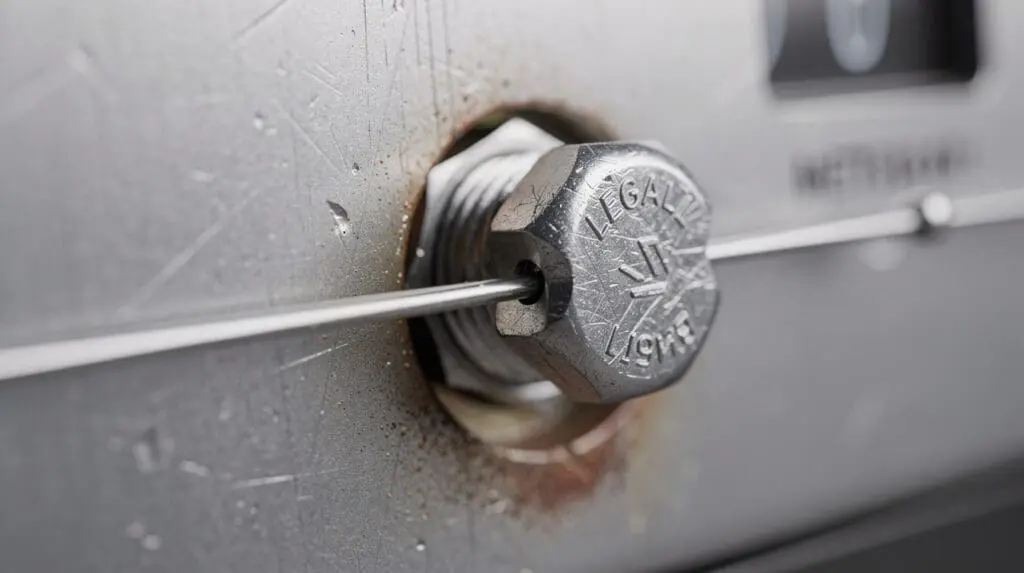
- Seal Points: The calibration screw on mechanical meters (like our CE-101) or the CPU calibration switch on digital boards (like the CE-206) must be physically sealed.
Pro Tip: Always request the dispenser manufacturer to provide a "stamping-ready" unit with pre-drilled sealing screws. It saves hours of arguing with the inspector at the RTO or local W&M office.
Tired of unaccounted fuel losses and compliance headaches?
Our mobile dispensers are engineered for ±0.2% accuracy and arrive ready for Legal Metrology stamping.
Sizing and Selecting the Right Dispenser Kit
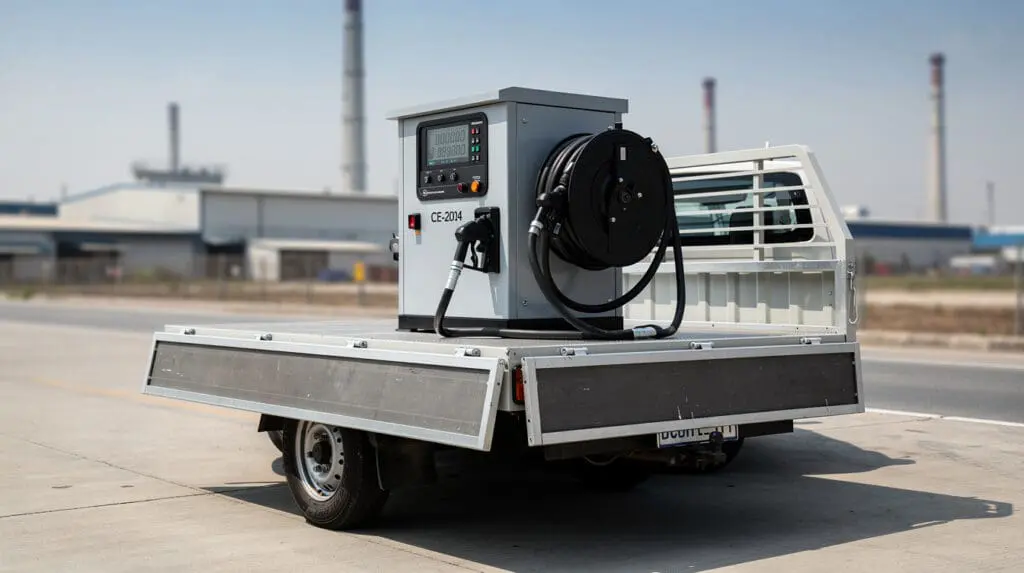
Specifying the right kit depends entirely on your chassis capacity and daily throughput. A 1,000-liter pickup skid requires a radically different dispenser than a 12,000-liter heavy tanker.
At Chintan Engineers, we build mobile fuel dispenser kits using either rotary vane pumps for DC vehicle-battery setups, or heavy-duty centrifugal/gear pumps for AC generator setups.
(Side note: If you're building stationary bulk transfer depots to feed these bowsers, your pump selection is just as critical. I highly recommend reviewing our Industrial SS Pump Setup Guide for India for bulk offloading specs.)
Here is a practical selection matrix based on our most deployed mobile units:
| Model | Power Supply | Flow Rate | Accuracy | Ideal Bowser Application |
| :— | :— | :— | :— | :— |
| CE-204 High Accuracy | 12/24V DC or 220V AC | 20-80 L/min | ±0.2% | Fleet bowsers needing commercial accuracy & printer logs. |
| CE-130 Preset | 12/24V DC | 20-60 L/min | ±0.5% | Mining trolleys requiring batch presets (e.g., exactly 100L per dump truck). |
| CE-206 Digital | 12/24V DC | 20-80 L/min | ±0.5% | Remote sites; features 365-day internal data storage for audit trails. |
| CE-201 Heavy Duty | 220/440V AC | Up to 110 L/min | ±0.5% | 12KL+ tanker trucks refueling heavy earth-moving machinery. |
| CE-101 Mechanical | 12/24V DC | 40-60 L/min | ±0.5% | Rugged, basic service pickups in highly corrosive/dusty environments. |
For high-volume operations, I strongly recommend the CE-204. Achieving ±0.2% accuracy on a vibrating mobile rig was historically difficult, but by utilizing a high-precision digital preset controller and a premium positive displacement meter, this unit practically pays for itself in prevented fuel shrink within 60 days.
Field Integration: The Indian Context
Discussing diesel bowser rules in India wouldn't be complete without addressing the brutal reality of our operating environments.
The Monsoon Moisture Threat
Water ingress is the absolute enemy of fuel accuracy. Indian monsoons introduce heavy condensation inside mobile bowser tanks. If your dispenser isn't equipped with a water-absorbing inline filter, that moisture hits the fuel injectors of your expensive heavy machinery. All our CE-series mobile dispensers can be fitted with 10-micron water-block filters to prevent this.
Voltage Drops and DC Motors
Running a 24V DC dispenser continuously for 30 minutes to fill an excavator will drain a bowser's battery if the vehicle alternator isn't running. Low voltage causes the rotary pump to cavitate and overheat. Always run the bowser engine during long dispensing cycles to maintain a healthy 27.5V output from the alternator. (If you frequently experience pump noise or flow drops in your broader fluid systems, check out our SS Pump Troubleshooting: Fix Cavitation & Seal Leaks).
Vibration and Structural Integrity
Rural roads and quarry tracks will shake standard pipe fittings apart in weeks. A compliant dispenser skid must use flexible anti-vibration bellows between the tank outlet and the pump suction, combined with Nyloc nuts on all mounting brackets.
Did You Know: A legally stamped dispenser operating on an unlevel surface (like a truck parked on a 15-degree incline in a mine) can experience minor metering deviations because the air-separator floats are affected by gravity. Always try to park the bowser on level ground during dispensing.
Need a custom-engineered dispensing skid?
We design powder-coated, vibration-resistant skids complete with hose reels, auto shut-off nozzles, and filtration.
Installation & Maintenance Strictures
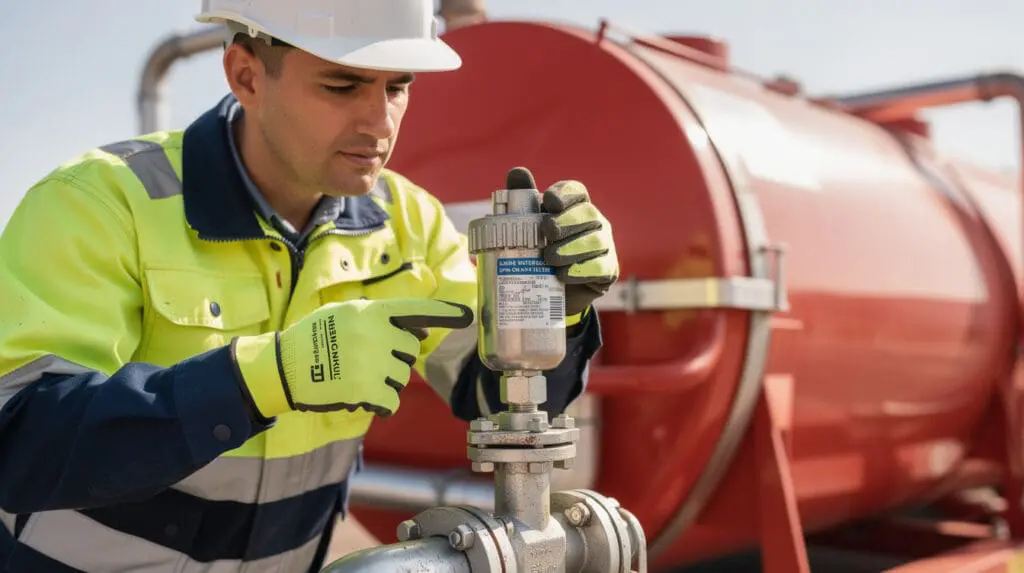
To maintain Legal Metrology compliance and PESO safety standards, your maintenance team must adopt a proactive schedule:
- Monthly Proving: Do not wait for the annual government inspector. Buy a certified 10-liter or 20-liter proving measure. Run a test batch once a month to verify the meter hasn't drifted.
- Filter Replacements: A clogged suction filter forces the pump to work harder, increasing amp draw and risking motor burnout. Change spin-on filters every 3 months or whenever flow drops below 70% of rated capacity.
- Hose Inspections: When an auditor conducts a mobile fuel dispenser safety norms inspection, they always check the delivery hose. Look for bulging, cracking, or static-wire breakage on your 4m/6m rubber hoses. Replace immediately if compromised.
- TCO Monitoring: Track maintenance costs against fuel saved. In our 5-Year TCO Analysis of Industrial SS Pumps, we note that cheap initial equipment costs vastly more in downtime. The same applies to dispensers—invest in high-quality brass and cast-iron internals initially.
Frequently Asked Questions
Do I need PESO approval for a 500-liter diesel pickup tank?
Under the Petroleum Rules, storing less than 1,000 liters of Class B petroleum for your own use typically exempts you from a specific storage license, but transporting it in a vehicle for dispensing still requires basic safety compliance (spark arrestors, proper anchoring). Always consult local authorities, as interpretations vary by state.
Can a mobile fuel dispenser run entirely on the vehicle's battery?
Yes, absolutely. For instance, our CE-130 and CE-202 models utilize 12V or 24V DC motors specifically designed to run off the truck's battery, achieving 40-60 L/min without needing an external AC generator.
How do we prevent fuel theft by the bowser driver?
Opt for a digital unit like the CE-206 or CE-204. These models feature CPU-based preset batching, 365-day internal transaction memory, and optional receipt printers. You can easily reconcile the exact liters dispensed against your inventory drop.
Is Legal Metrology stamping mandatory if we only fuel our own fleet?
Legally, if money changes hands (e.g., deducting fuel costs from a subcontractor's invoice), stamping is mandatory. Even for internal fleet use, failing to stamp the meter leaves you blind to calibration drift and internal theft. I consider it a non-negotiable best practice regardless of legal strictures.
What happens if the RTO catches a bowser without a stamped meter?
Authorities can impound the vehicle under the Legal Metrology Act and the Motor Vehicles Act, levying fines starting at ₹50,000, alongside potential seizure of the fuel cargo.
Engineer's Final Recommendation
After designing and calibrating thousands of fluid measurement systems, my advice to operations heads is blunt: Do not cut corners on mobile dispensing. The vibration, dust, and electrical inconsistencies of mobile operations will destroy cheap commercial meters in a matter of months, leaving you non-compliant and hemorrhaging fuel.
Here is my bottom-line recommendation for your operation:
If you are operating a standard 3KL to 6KL industrial bowser, specify the Chintan Engineers CE-204 High Accuracy Mobile Dispenser.
Run it on a 24V DC setup direct from the vehicle. It provides an unmatched ±0.2% accuracy, features a positive displacement meter that ignores viscosity changes, and comes ready with a preset controller and printer capability. Most importantly, it is built to sail through Legal Metrology stamping and integrate seamlessly into a PESO-compliant chassis.
Stop guessing how much diesel your bowsers are dispensing. Secure your inventory, mandate compliance, and lock down your fuel costs today.
Ready to upgrade your fleet to compliant, accurate mobile dispensers?
Get a customized specification sheet based on your exact tank size, flow requirements, and power availability.
