
















In the highly corrosive environments of global chemical processing, effluent treatment plants (ETP), and industrial metal finishing, material selection and hydraulic efficiency dictate plant uptime. For industrial engineers, plant managers, and procurement heads tasked with specifying fluid transfer solutions for aggressive acids, alkalis, and scrubbing liquids, understanding the nuances of centrifugal hydraulics and engineered polymer material science is absolutely critical. A misapplication in these harsh environments can lead to catastrophic seal failure, volute cracking, hazardous chemical leakage, and unacceptable downtime. Selecting the right equipment, especially when evaluating heavy-duty PP Pumps, requires moving far beyond basic flow and head parameters to deeply scrutinize impeller geometry, shaft deflection tolerances, casing reinforcement, and international design standards.
Historically, highly corrosive applications required expensive exotic alloys like Hastelloy, Titanium, or Alloy-20. However, modern polymer engineering allows high-performance plastics to handle extreme chemical duties at a fraction of the life-cycle cost. As a leading PP pump manufacturer and supplier serving global markets from the Middle East to North America, we focus on engineering units that comply with stringent DIN 24256 and ISO 5199 standards. When integrating PP Pumps into complex process lines, understanding their hydraulic working principles, sealing configurations, and chemical compatibility ensures reliable, long-term performance. This technical deep dive breaks down the internal mechanics that make PP Pumps the definitive choice for hazardous fluid handling.
In This Article
1. Working Principle: How PP Pumps Operates
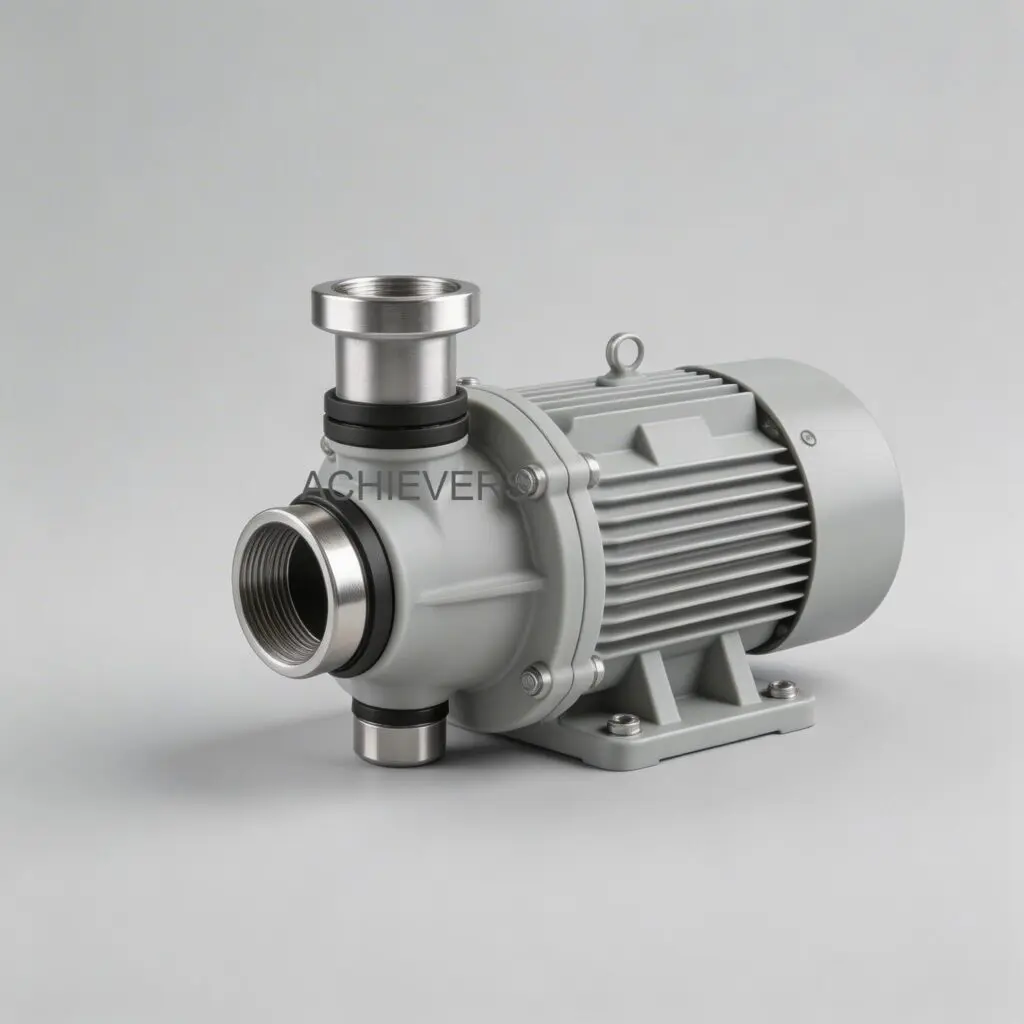
To fully comprehend the operational efficiency of these systems and how centrifugal PP pumps work semi-open impeller architecture and fluid dynamics must be examined at the component level. Centrifugal PP Pumps operate on the fundamental principle of converting rotational kinetic energy, supplied by an electric motor, into hydrodynamic pressure energy within the pumped fluid.
Fluid enters the pump axially through the suction nozzle and flows directly into the "eye" of the rotating impeller. The impeller, which is dynamically and hydraulically balanced, accelerates the fluid radially outward through its streamlined profile vanes. This extreme radial acceleration increases the fluid's kinetic energy and pushes it towards the outer periphery of the volute casing. The casing is designed with a one-piece volute—an expanding spiral chamber that systematically slows the fluid velocity down while simultaneously increasing its static pressure according to Bernoulli's principle.
The choice of a semi-open impeller, as opposed to a closed or fully open design, is a highly calculated engineering decision. A semi-open impeller features vanes attached to a single back shroud, leaving the front of the vanes exposed to the casing wall with tightly controlled clearances. This configuration offers exceptional advantages for industrial fluid handling. Firstly, it significantly reduces the risk of clogging when handling liquids with suspended solids, making it ideal for Effluent Treatment Plants (ETP) and industrial slurries. Secondly, the semi-open design actively manages boundary layer separation and reduces internal recirculation losses, maintaining higher hydraulic efficiency over the pump's lifecycle even as wear occurs.
Furthermore, these impellers are equipped with back pump-out vanes. These small ribs on the rear of the shroud serve a critical mechanical function: they actively reduce the pressure acting on the stuffing box or mechanical seal chamber, and they balance the axial thrust generated by the hydraulic forces. By minimizing axial thrust, the double ball bearings housed in the cast iron bracket experience far less mechanical fatigue, extending the L10h bearing life significantly.
2. Complete Technical Specifications
Specifying the correct equipment requires a rigorous analysis of construction materials and mechanical tolerances. When evaluating PP pump specifications for corrosive fluids, engineers must align the physical build of the unit with the specific demands of their site conditions, taking into account temperature, pressure, and chemical aggressiveness.
Below is the comprehensive technical specification matrix for our centrifugal PP Pumps, designed in accordance with heavy-duty process standards to ensure dimensional interchangeability and low vibration limits.
| Parameter | Specification | Engineering Notes |
| :— | :— | :— |
| Design Standard | DIN 24256 / ISO 5199 | Ensures standardized installation dimensions and heavy-duty process performance requirements globally. |
| Orientation & Type | Horizontal, Single Stage, Single Entry | Radially split casing design allowing for back-pull-out maintenance without disturbing piping. |
| Casing Geometry | One-piece volute, self-venting | Optimized cutwater clearance to reduce radial thrust and vibration. Self-venting prevents gas locking. |
| Casing Materials | PP / GRP / UHMWPE / PVDF | Polypropylene (PP) offers excellent baseline chemical resistance; PVDF used for extreme oxidizers. |
| Impeller Design | Semi-open, single entry | Dynamically and hydraulically balanced. Streamlined vanes for optimal fluid handling and solids passage. |
| Impeller Materials | PP / GRP / UHMWPE / PVDF | Matched to casing material to ensure uniform thermal expansion and chemical resistance. |
| Casing Reinforcement | External metal ring | Counteracts hoop stress and prevents volute deformation or creep under high discharge pressures. |
| Shaft Material | SS / EN9 | High tensile strength steel to minimize shaft deflection below 0.05 mm at the seal face. |
| Shaft Sleeve | GRP / Ceramic / Alloy-20 / Hastelloy B/C | Protects the main shaft from chemical attack. Select Hastelloy for highly aggressive acid mixtures. |
| Bearing Bracket | C.I. GRFG – 26 (Cast Iron) | Heavy-duty cast iron construction to rigidly support the shaft and dampen operational vibrations. |
| Bearings | Double Ball Bearing | Handles both residual radial loads and axial thrust, ensuring smooth continuous duty operation. |
| Sealing Options | External Mech Seal / Internal / Gland Packing | Options include PTFE bellows mechanical seals or traditional gland packing depending on the fluid toxicity. |
| Max Temperature | Up to 120 Degrees Celsius | Temperature limits vary strictly by material pairing (e.g., PP limits vs. PVDF limits). |
3. Performance Characteristics and Error Sources
Achieving the rated performance curve of a centrifugal polymer pump requires strict control over system variables. Unlike metallic pumps, engineered polymers have distinct thermal expansion coefficients and yield strengths that must be factored into hydraulic calculations.
Net Positive Suction Head (NPSH) and Cavitation
One of the most critical factors in maintaining pump performance is ensuring that the Net Positive Suction Head available (NPSHa) at the site exceeds the Net Positive Suction Head required (NPSHr) by the pump. If NPSHa falls below NPSHr, the localized fluid pressure drops below its vapor pressure, causing vapor bubbles to form. As these bubbles pass into the higher-pressure region of the volute, they violently implode. While metals suffer from pitting during cavitation, polymers like Polypropylene can suffer from rapid micro-erosion and material embrittlement. Engineers must design suction piping to be as short and straight as possible, minimizing friction losses and avoiding sudden diameter reductions.
Specific Gravity and Motor Sizing
When pumping highly concentrated chemicals—such as 98 percent Sulphuric Acid with a specific gravity (SG) of 1.84—the required power to drive the pump increases proportionally. If a pump requires 10 kW of shaft power to move water (SG 1.0), it will require 18.4 kW to move the concentrated acid at the same flow and head. Failure to calculate the specific gravity accurately will result in immediate motor overload and tripping.
Thermal Derating and Polymer Creep
While PP Pumps are rated for temperatures up to 120 degrees Celsius, engineers must apply thermal derating curves. As temperatures rise, the tensile strength of Polypropylene decreases. To counteract polymer creep under high temperatures and high discharge pressures, our casing designs feature an external metal ring. This structural reinforcement guarantees dimensional stability and ensures that the critical clearances between the semi-open impeller and the casing remain tight, preventing internal fluid recirculation that would otherwise destroy pump efficiency.
4. Materials and Chemical Compatibility
The success of industrial PP Pumps in India for chemical transfer, as well as in export installations across Europe and Asia, hinges entirely on rigorous material pairing. The wetted parts—comprising the casing, impeller, back plate, and shaft sleeve—must be impervious to the target fluid. Polypropylene (PP) is a highly versatile thermoplastic polymer known for its exceptional resistance to acidic and alkaline environments. However, for highly oxidizing acids or abrasive slurries, upgrades to Polyvinylidene Fluoride (PVDF) or Ultra-High-Molecular-Weight Polyethylene (UHMWPE) may be required.
For applications requiring extreme high temperatures combined with high pressures that exceed the mechanical limits of polymers, engineers typically cross-evaluate SS Pumps (Stainless Steel) for non-corrosive or mildly corrosive duties.
Below is a compatibility matrix for typical chemical applications handled by our PP Pumps:
| Fluid Handled | Concentration / State | Recommended Polymer | Engineering Compatibility Notes |
| :— | :— | :— | :— |
| Hydrochloric Acid (HCl) | Up to 37 percent | Polypropylene (PP) | Excellent baseline resistance. PTFE external mechanical seal highly recommended. |
| Sulphuric Acid (H2SO4) | Up to 70 percent | Polypropylene (PP) | For concentrations above 70 percent, PVDF is strictly required to prevent polymer oxidation. |
| Sodium Hydroxide (NaOH) | Any aqueous conc. | Polypropylene (PP) | Excellent for caustic transfer; immune to the caustic embrittlement that plagues some metals. |
| Ammonia Gas (NH3) | Wet Scrubber System | Polypropylene (PP) | Highly effective for ETP scrubbing towers. Handles continuous recirculation reliably. |
| Chlorine (Cl2) | Wet Scrubber Gas | PVDF | Wet chlorine is highly aggressive. PVDF provides superior longevity over standard PP. |
| Ferric Chloride (FeCl3) | Aqueous Solution | Polypropylene (PP) | Standard for water treatment and ETP dosing plants. No metallic wetted parts allowed. |
| Hydrofluoric Acid (HF) | Up to 50 percent | UHMWPE / PVDF | Extreme caution required. Shaft sleeve must be highly resistant (e.g., Hastelloy C or Ceramic). |
| Nitric Acid (HNO3) | High Concentration | PVDF | Highly oxidizing acid. Standard PP will rapidly degrade; PVDF casing and impeller are mandatory. |
5. Calibration, Verification, and Installation Standards
A precision-engineered centrifugal pump will only deliver optimal lifecycle value if installed and aligned correctly. Unlike heavy cast-steel pumps, polymer pumps require careful handling of pipe strain. If the suction or discharge piping is not independently supported, the mechanical weight of the pipes can be transmitted to the PP volute, leading to casing deformation, shaft misalignment, and premature bearing failure.
For process plants automating their chemical dosing, these pumps are frequently integrated alongside a Liquid Batching System to ensure high-accuracy volume transfer.
To ensure compliance with ISO 5199 vibration and operational tolerances, site engineers must follow this strict installation and alignment procedure:
- Foundation Preparation: Ensure the concrete foundation is fully cured and leveled. The mass of the foundation should be at least three times the mass of the pump and motor assembly to adequately dampen operational frequencies.
- Baseplate Grouting: Position the cast iron baseplate and use non-shrink epoxy grout to secure it. Allow full curing before applying any torque to the foundation bolts to prevent baseplate twisting.
- Piping Alignment and Strain Mitigation: Route all suction and discharge piping to the pump flanges without applying physical force. Install PTFE-lined expansion joints (bellows) directly at the pump flanges to isolate the polymer casing from thermal pipe expansion and static weight.
- Shaft Alignment: Utilize a laser alignment tool to align the motor shaft with the pump shaft. Misalignment must be kept strictly below 0.05 mm (parallel) and 0.05 degrees (angular) to protect the mechanical seal faces and shaft sleeve from uneven wear.
- Seal Flushing Verification: If an externally mounted mechanical seal is used, verify the API seal flush plan (e.g., Plan 11 or Plan 32). Ensure the flush fluid is clean and at the correct pressure to lubricate the silicon carbide or ceramic seal faces.
- Priming and Startup: Never run a PP pump dry. Utilize the self-venting casing feature to ensure the volute is 100 percent flooded with the process fluid. Verify the correct direction of motor rotation (jog the motor briefly) before bringing the unit up to full operational speed.
FAQ
Q: Can PP Pumps handle dry running conditions?
A: No. Centrifugal PP pumps rely on the pumped fluid to lubricate and cool the mechanical seal faces and internal clearances. Dry running will cause immediate localized heating, potentially melting the polymer casing and shattering the mechanical seal faces.
Q: What is the maximum operating temperature for these pumps?
A: The absolute maximum temperature limit is 120 degrees Celsius. However, operating at this upper limit requires strict evaluation of the system pressure, as the mechanical strength of Polypropylene decreases at elevated temperatures.
Q: Are semi-open impellers better than closed impellers for chemical transfer?
A: Yes, in most industrial chemical and ETP applications. Semi-open impellers prevent the clogging of suspended solids, handle viscous fluids better, and utilize back pump-out vanes to reduce stuffing box pressure and balance axial thrust.
Q: How do I choose between an internal mechanical seal and an external one?
A: External mechanical seals (often using PTFE bellows) keep the metallic spring and complex seal components outside the corrosive fluid path, making them ideal for aggressive acids. Internal seals are typically reserved for cleaner, less chemically hostile fluids.
Q: Do I need to upsize my motor when pumping concentrated acids?
A: Yes. Motor sizing is directly proportional to the specific gravity of the fluid. A pump handling Sulphuric Acid (Specific Gravity ~1.84) requires an electric motor with nearly double the kilowatt rating compared to pumping water.
Q: Can Polypropylene handle abrasive slurries in steel rolling mills?
A: While PP has good baseline wear characteristics, applications with highly abrasive suspended solids (like descaling operations) should utilize UHMWPE (Ultra-High-Molecular-Weight Polyethylene) wetted parts, which offer significantly higher abrasion resistance.
Q: What maintenance interval is expected for the double ball bearings?
A: When correctly aligned according to ISO 5199 standards, and operating within their best efficiency point (BEP) to minimize radial thrust, the double ball bearings housed in the C.I. bracket are designed for an L10h life exceeding 25,000 hours of continuous service.
Ready to optimize your chemical transfer operations with highly engineered, corrosion-resistant pumping solutions? Contact our technical engineering team today with your required flow rate, total dynamic head, specific fluid properties, and site operating conditions to receive a detailed hydraulic curve and material selection proposal.
