
















ഒരു ഷിഫ്റ്റിൽ 500 ഡ്രമ്മുകൾ പ്രവർത്തിക്കുന്ന 200L ലൂബ് ഓയിൽ ഡ്രം ഫില്ലിംഗ് ലൈനിൽ 0.5% ഓവർഷൂട്ട് ചെയ്താൽ, ട്രാക്ക് ചെയ്യാത്ത ഉൽപ്പന്ന സമ്മാനമായി നിങ്ങളുടെ പ്രവർത്തനത്തിന് പ്രതിമാസം ഏകദേശം ₹1.2 ലക്ഷം ചിലവാകും. ഒരു വർഷത്തിൽ, നിങ്ങളുടെ അടിത്തട്ടിൽ നിന്ന് നേരിട്ട് ₹14.4 ലക്ഷം രക്തസ്രാവമുണ്ടാകും, കാരണം നിങ്ങളുടെ മാനുവൽ വാൽവുകൾക്കോ കാലിബ്രേറ്റ് ചെയ്യാത്ത ഫ്ലോ മീറ്ററുകൾക്കോ വേണ്ടത്ര വേഗത്തിൽ പ്രതികരിക്കാൻ കഴിയില്ല.
എന്റെ 22 വർഷത്തെ എഞ്ചിനീയറിംഗ്, കാലിബ്രേറ്റിംഗ് ഫ്ലോ മെഷർമെന്റ് സിസ്റ്റങ്ങൾ - വമ്പൻ ഒഎൻജിസി റിഫൈനറികൾ മുതൽ വാപി ജിഐഡിസിയിലെ പ്രത്യേക കെമിക്കൽ പ്രോസസ്സിംഗ് യൂണിറ്റുകൾ വരെ - പ്ലാന്റ് മാനേജർമാർ പ്രീമിയം അസംസ്കൃത വസ്തുക്കൾക്കായി വൻതോതിൽ ചെലവഴിക്കുന്നത് ഞാൻ കണ്ടിട്ടുണ്ട്, പക്ഷേ ഡിസ്പെൻസിംഗ് നോസിലിൽ അവരുടെ മാർജിൻ നഷ്ടപ്പെടുന്നു. നിങ്ങൾ അഡിറ്റീവുകൾ കലർത്തുകയോ, റിയാക്ടറുകൾ പൂരിപ്പിക്കുകയോ, ലൂബ്രിക്കന്റുകൾ പാക്കേജിംഗ് ചെയ്യുകയോ ചെയ്യുകയാണെങ്കിൽ, കൃത്യത ഒരു ആഡംബരമല്ല; അത് ലാഭത്തിന്റെ കേവല അടിസ്ഥാനമാണ്.
നിങ്ങളുടെ പ്രോസസ് ഫ്ലൂയിഡ് വാട്ടർ-നേർത്ത ലായകമാണോ കട്ടിയുള്ള ഗിയർബോക്സ് ഓയിലാണോ എന്നത് പരിഗണിക്കാതെ, ഓരോ തവണയും ±0.5% മുതൽ ±0.2% വരെ കൃത്യത കൈവരിക്കുന്ന ഒരു ഇൻഡസ്ട്രിയൽ ബാച്ചിംഗ് കൺട്രോളറും ഫ്ലോ സ്കിഡും ഞങ്ങൾ കൃത്യമായി എങ്ങനെ വ്യക്തമാക്കുകയും കോൺഫിഗർ ചെയ്യുകയും ചെയ്യുന്നുവെന്ന് ഇതാ.
ഈ ലേഖനത്തിൽ
- ഒരു ഓട്ടോമാറ്റിക് ലിക്വിഡ് ബാച്ചിംഗ് സിസ്റ്റത്തിന്റെ കോർ ആർക്കിടെക്ചർ
- PLC ലോജിക് vs. പ്രീസെറ്റ് കൗണ്ടറുകൾ: നിങ്ങളുടെ പ്ലാന്റിന് അനുയോജ്യമായ സജ്ജീകരണം ഏതാണ്?
- ഫ്ലോ സെൻസർ തിരഞ്ഞെടുക്കൽ: പോസിറ്റീവ് ഡിസ്പ്ലേസ്മെന്റ് vs. ടർബൈൻ
- ഓവർഷൂട്ട് ഒഴിവാക്കൽ: ഡ്യുവൽ-സ്റ്റേജ് വാൽവ് നിയന്ത്രണത്തിന്റെ മെക്കാനിക്സ്
- ഇന്ത്യൻ വ്യാവസായിക സന്ദർഭവും അനുസരണ മാനദണ്ഡങ്ങളും
- ഇൻസ്റ്റാളേഷൻ & പരിപാലന യാഥാർത്ഥ്യങ്ങൾ
- പതിവ് ചോദ്യങ്ങൾ
- അന്തിമ എഞ്ചിനീയറിംഗ് ശുപാർശ
ഒരു ഓട്ടോമാറ്റിക് ലിക്വിഡ് ബാച്ചിംഗ് സിസ്റ്റത്തിന്റെ കോർ ആർക്കിടെക്ചർ
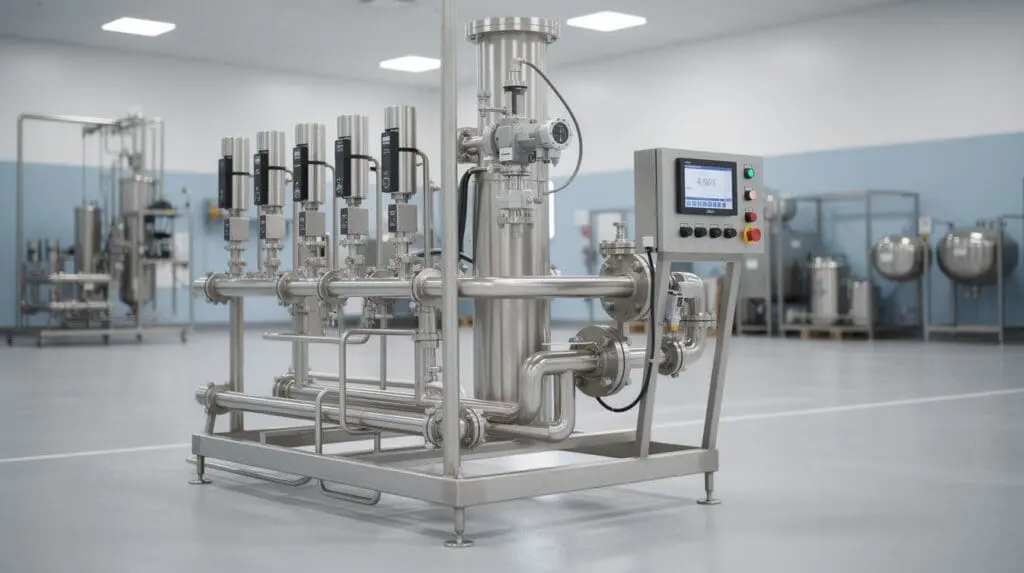
ഫലപ്രദമായ ഒരു ഓട്ടോമാറ്റിക് ലിക്വിഡ് ബാച്ചിംഗ് സിസ്റ്റം ഒരിക്കലും ഒരു പമ്പിലേക്ക് വയർ ചെയ്ത ഒരു ഫ്ലോ മീറ്റർ മാത്രമല്ല. ഇത് അളക്കൽ, യുക്തി, ആക്ച്വേറ്റഡ് നിയന്ത്രണം എന്നിവയുടെ കർശനമായി സംയോജിപ്പിച്ച ഒരു ലൂപ്പാണ്. ചിന്തൻ എഞ്ചിനീയേഴ്സിൽ ലിക്വിഡ് ബാച്ചിംഗ് സ്കിഡുകൾ എഞ്ചിനീയറിംഗ് ചെയ്യുമ്പോൾ, ഞങ്ങൾ അവ നാല് നോൺ-നെഗോഷ്യബിൾ പില്ലറുകളെ ചുറ്റിപ്പറ്റിയാണ് നിർമ്മിക്കുന്നത്:
- ഫ്ലോ സെൻസർ: സാധാരണയായി ഞങ്ങളുടെ CE-110/111 പോസിറ്റീവ് ഡിസ്പ്ലേസ്മെന്റ് (PD) മീറ്ററുകൾ അല്ലെങ്കിൽ CE-210 ടർബൈൻ സെൻസറുകൾ, കടന്നുപോകുന്ന ദ്രാവകത്തിന്റെ വ്യാപ്തത്തിന് നേർ അനുപാതത്തിൽ ഉയർന്ന റെസല്യൂഷൻ വൈദ്യുത പൾസുകൾ സൃഷ്ടിക്കുന്നു.
- കൺട്രോളർ: പ്രവർത്തനത്തിന്റെ പ്രധാന ബുദ്ധി - ഒരു ഒറ്റപ്പെട്ട CE-136 പ്രീസെറ്റ് ബാച്ചിംഗ് സിസ്റ്റം അല്ലെങ്കിൽ പൾസുകൾ എണ്ണുകയും പാചകക്കുറിപ്പ് ലോജിക് നടപ്പിലാക്കുകയും ചെയ്യുന്ന ഒരു കേന്ദ്രീകൃത PLC/HMI പാനൽ.
- നിയന്ത്രണ വാൽവ്: ന്യൂമാറ്റിക് ആയി പ്രവർത്തിക്കുന്ന, ഡ്യുവൽ-സ്റ്റേജ് സോളിനോയിഡ് വാൽവ്, വാട്ടർ-ഹാമർ, ഓവർഷൂട്ട് എന്നിവ തടയുന്നതിന് ദ്രാവക പ്രവാഹം ഘട്ടം ഘട്ടമായി യാന്ത്രികമായി നിർത്തുന്നു.
- ഫ്ലൂയിഡ് കണ്ടീഷനിംഗ്: അപ്സ്ട്രീം സ്ട്രെയിനറുകൾ, എയർ എലിമിനേറ്ററുകൾ, വലത് ട്രാൻസ്ഫർ പമ്പ് (ഞങ്ങളുടെ ഉയർന്ന താപനിലയുള്ള റോട്ടറി ഗിയർ ലിക്വിഡ് ട്രാൻസ്ഫർ പമ്പ് പോലെ) എന്നിവ മീറ്റർ ഖര ദ്രാവകം മാത്രമേ വായിക്കുന്നുള്ളൂ, വായു പോക്കറ്റുകളോ അവശിഷ്ടങ്ങളോ ഇല്ലെന്ന് ഉറപ്പാക്കുന്നു.
ഒരു പ്ലാന്റ് എഞ്ചിനീയർ എന്നോട് അവരുടെ നിലവിലെ സിസ്റ്റം എന്തുകൊണ്ടാണ് മാറിമറിയുന്നതെന്ന് ചോദിക്കുമ്പോൾ, ഈ നാല് ഘടകങ്ങളുടെയും സംയോജനത്തിലെ പരാജയമാണ് ഞാൻ എപ്പോഴും കാണുന്നത്. (സൂചന: സാധാരണയായി, സാവധാനത്തിൽ പ്രവർത്തിക്കുന്ന വാൽവ് യഥാർത്ഥ കുറ്റവാളിയാകുമ്പോൾ അവർ മീറ്ററിനെയാണ് കുറ്റപ്പെടുത്തുന്നത്.) വേഗത കുറഞ്ഞ വാൽവ് ഒരു വേഗത കൂടിയ പിഎൽസി ഉപയോഗിച്ച് ശരിയാക്കാൻ കഴിയില്ല.
PLC ലോജിക് vs. പ്രീസെറ്റ് കൗണ്ടറുകൾ: നിങ്ങളുടെ പ്ലാന്റിന് അനുയോജ്യമായ സജ്ജീകരണം ഏതാണ്?
നിങ്ങളുടെ മുഴുവൻ ഫ്ലോ മീറ്റർ ബാച്ചിംഗ് സിസ്റ്റത്തിന്റെയും വേഗതയും കൃത്യതയും കൺട്രോളർ നിർദ്ദേശിക്കുന്നു. ഉയർന്ന കൃത്യതയ്ക്ക് അത് ആവശ്യമാണെന്ന് കരുതി, പ്ലാന്റ് എഞ്ചിനീയർമാർ പലപ്പോഴും പൂർണ്ണ PLC സംയോജനം അഭ്യർത്ഥിക്കുന്നതിൽ സ്ഥിരസ്ഥിതിയായി പ്രവർത്തിക്കുന്നു. പ്രായോഗികമായി, ഒരു സമർപ്പിത പ്രീസെറ്റ് ബാച്ച് കൺട്രോളർ പലപ്പോഴും റോ പൾസ്-കൗണ്ടിംഗ് വേഗതയിൽ ഒരു പൊതു-ഉദ്ദേശ്യ PLC-യെ മറികടക്കുന്നു.
ഡെഡിക്കേറ്റഡ് പ്രീസെറ്റ് ബാച്ച് കൺട്രോളർ (CE-136)
CE-136 പ്രീസെറ്റ് ബാച്ചിംഗ് സിസ്റ്റം പോലുള്ള ഒരു സമർപ്പിത വ്യാവസായിക ബാച്ചിംഗ് കൺട്രോളർ ഒരു ജോലിക്ക് മാത്രമായി ഹാർഡ്-കോഡ് ചെയ്തിരിക്കുന്നു: കൃത്യമായ ഡിസ്പെൻസിംഗ്. ആവശ്യമില്ലെങ്കിൽ എന്തിനാണ് കാര്യങ്ങൾ അമിതമായി സങ്കീർണ്ണമാക്കുന്നത്?
- ഇത് എങ്ങനെ പ്രവർത്തിക്കുന്നു: ഓപ്പറേറ്റർ ആവശ്യമുള്ള അളവിൽ (ഉദാ: 250 ലിറ്റർ) പഞ്ച് ചെയ്യുകയും സ്റ്റാർട്ട് അടിക്കുകയും ചെയ്യുന്നു. CE-136 വൈദ്യുതപരമായി സജീവമാക്കിയ ഓൺ/ഓഫ് വാൽവുകളെ നിയന്ത്രിക്കുകയും പൾസ് കൗണ്ട് ലക്ഷ്യവുമായി പൊരുത്തപ്പെടുന്ന മില്ലിസെക്കൻഡ് അനുസരിച്ച് ഫ്ലോ കുറയ്ക്കുകയും ചെയ്യുന്നു.
- ഇതിന് ഏറ്റവും അനുയോജ്യം: സമർപ്പിത ഡ്രം ഫില്ലിംഗ് സ്റ്റേഷനുകൾ, ട്രക്ക് ലോഡിംഗ് ആയുധങ്ങൾ, സിംഗിൾ-ഫ്ലൂയിഡ് റിയാക്ടർ ഫില്ലിംഗ്.
- പ്രോസ്: തൽക്ഷണ വാൽവ് പ്രതികരണം, ഓപ്പറേറ്റർ-സൗഹൃദ ഫീൽഡ് മാറ്റിസ്ഥാപിക്കൽ, ലാഡർ-ലോജിക് പ്രോഗ്രാമിംഗ് ഇല്ലാതെ എളുപ്പത്തിലുള്ള കാലിബ്രേഷൻ. (ലൈൻ ഓപ്പറേറ്റർമാർ ഇവ 15 മിനിറ്റിനുള്ളിൽ മാറ്റി വീണ്ടും കാലിബ്രേറ്റ് ചെയ്യുന്നത് ഞാൻ കണ്ടിട്ടുണ്ട്.)
പൂർണ്ണ PLC/HMI ഓട്ടോമേഷൻ
ഒരു പ്രക്രിയയ്ക്ക് മൾട്ടി-ഇൻഗ്രഡിയന്റ് പാചകക്കുറിപ്പ് മാനേജ്മെന്റ് ആവശ്യമായി വരുമ്പോൾ, ഞങ്ങൾ ഒരു PLC-അധിഷ്ഠിത ബാച്ചിംഗ് ലോജിക് പാനൽ വ്യക്തമാക്കുന്നു.
- ഇത് എങ്ങനെ പ്രവർത്തിക്കുന്നു: PLC ഒന്നിലധികം പമ്പുകളും മാനിഫോൾഡ് വാൽവുകളും കമാൻഡ് ചെയ്യുന്നു, വ്യത്യസ്ത ടാങ്കുകളിൽ നിന്ന് നിർദ്ദിഷ്ട അനുപാതങ്ങളിൽ വലിച്ചെടുക്കുന്നു, അതേസമയം Ethernet/Modbus വഴി പ്ലാന്റിന്റെ ERP സിസ്റ്റത്തിലേക്ക് ബാച്ച് ഡാറ്റ ലോഗ് ചെയ്യുന്നു.
- ഇതിന് ഏറ്റവും അനുയോജ്യം: സങ്കീർണ്ണമായ ഇന്ധന മിശ്രിതം, കെമിക്കൽ മിക്സിംഗ് സ്കിഡുകൾ, ഓട്ടോമേറ്റഡ് അസംബ്ലി ലൈൻ ഡോസിംഗ്.
- പ്രോസ്: പരിധിയില്ലാത്ത പാചകക്കുറിപ്പ് സംഭരണം, SCADA സംയോജനം, മൾട്ടി-സ്ട്രീം സമന്വയം.
| സവിശേഷത | CE-136 പ്രീസെറ്റ് ബാച്ച് കൺട്രോളർ | പിഎൽസി/എച്ച്എംഐ അധിഷ്ഠിത സിസ്റ്റം |
| :— | :— | :— |
| മുൻകൂർ ചെലവ് | താഴ്ന്നത് മുതൽ ഇടത്തരം വരെ | ഉയർന്ന |
| ഓപ്പറേറ്റർ പരിശീലനം | കുറഞ്ഞത് (10 മിനിറ്റ്) | മോഡറേറ്റ് (HMI നാവിഗേഷൻ ആവശ്യമാണ്) |
| മൾട്ടി-ഫ്ലൂയിഡ് മിശ്രിതം | പരിമിതം (സിംഗിൾ സ്ട്രീം ഫോക്കസ്) | മികച്ചത് (സങ്കീർണ്ണമായ മാനിഫോൾഡുകൾ കൈകാര്യം ചെയ്യുന്നു) |
| ഡാറ്റ ലോഗിംഗ് | പ്രാദേശിക ടിക്കറ്റ് പ്രിന്റിംഗ് | പൂർണ്ണ ERP/MES സംയോജനം |
| വാൽവ് നിയന്ത്രണ വേഗത | വളരെ വേഗതയുള്ളത് (നേരിട്ടുള്ള ഹാർഡ്വെയർ ഇന്ററപ്റ്റ്) | വേഗത (സ്കാൻ സമയത്തെ ആശ്രയിച്ചിരിക്കുന്നു) |
പ്രോ ടിപ്പ്: ഒരു ഫ്ലോ മീറ്ററിൽ നിന്ന് ഉയർന്ന ഫ്രീക്വൻസി പൾസുകൾ എണ്ണാൻ നിങ്ങൾ ഒരു PLC ഉപയോഗിക്കുകയാണെങ്കിൽ, നിങ്ങൾ ഒരു ഹൈ-സ്പീഡ് കൗണ്ടർ (HSC) ഇൻപുട്ട് കാർഡിലേക്ക് വയറിംഗ് ചെയ്യുന്നുണ്ടെന്ന് ഉറപ്പാക്കുക. സ്റ്റാൻഡേർഡ് ഡിസ്ക്രീറ്റ് ഇൻപുട്ട് കാർഡുകൾക്ക് വളരെ മന്ദഗതിയിലുള്ള സ്കാൻ സമയങ്ങളുണ്ട്, ഇത് നിങ്ങൾക്ക് പൾസുകൾ "നഷ്ടപ്പെടാൻ" ഇടയാക്കുകയും നിങ്ങളുടെ ബാച്ച് ഓവർഫിൽ ചെയ്യുകയും ചെയ്യുന്നു.
ഒരു പുതിയ ഫില്ലിംഗ് സ്റ്റേഷൻ രൂപകൽപ്പന ചെയ്യുകയാണോ?
നിങ്ങളുടെ നിർദ്ദിഷ്ട ഫ്ലൂയിഡ്, ത്രൂപുട്ട് ആവശ്യകതകൾക്ക് അനുയോജ്യമായ കൃത്യമായ നിയന്ത്രണ ആർക്കിടെക്ചർ തിരഞ്ഞെടുക്കാൻ ഞങ്ങളുടെ ടീമിന് നിങ്ങളെ സഹായിക്കാനാകും.
ഫ്ലോ സെൻസർ തിരഞ്ഞെടുക്കൽ: പോസിറ്റീവ് ഡിസ്പ്ലേസ്മെന്റ് vs. ടർബൈൻ
വിസ്കോസ് ദ്രാവകങ്ങളുടെ അടുത്തെങ്ങും അവ പെടില്ലെന്ന് മനസ്സിലാക്കാൻ ഞാൻ വേണ്ടത്ര ടർബൈൻ മീറ്ററുകൾ കാലിബ്രേറ്റ് ചെയ്തിട്ടുണ്ട്. എന്നിരുന്നാലും, കുറച്ച് രൂപ മുൻകൂട്ടി ലാഭിക്കുന്നതിനായി അവ എല്ലായ്പ്പോഴും ഹെവി ഓയിൽ ലൈനുകളിൽ ഇൻസ്റ്റാൾ ചെയ്യുന്നത് ഞാൻ കാണുന്നു. നിങ്ങളുടെ ഫ്ലോ മീറ്ററിന്റെ ഭൗതിക തത്വമാണ് നിങ്ങളുടെ ഓട്ടോമാറ്റിക് ലിക്വിഡ് ബാച്ചിംഗ് സിസ്റ്റത്തിന്റെ വിജയത്തെ നിർണ്ണയിക്കുന്നത്.
പോസിറ്റീവ് ഡിസ്പ്ലേസ്മെന്റ് (PD) മീറ്ററുകൾ (CE-110/111)
വ്യത്യസ്തമോ ഉയർന്നതോ ആയ വിസ്കോസിറ്റി ഉള്ള ദ്രാവകങ്ങൾക്ക് (ലൂബ് ഓയിൽ, റെസിൻ, ഡീസൽ, 5,000 mPa·s വരെയുള്ള സ്പെഷ്യാലിറ്റി കെമിക്കലുകൾ), പോസിറ്റീവ് ഡിസ്പ്ലേസ്മെന്റ് മാത്രമാണ് ഞാൻ ശുപാർശ ചെയ്യുന്ന ഏക മാനദണ്ഡം. PD മീറ്ററുകൾ ഒരു മെക്കാനിക്കൽ അളക്കൽ ചേമ്പറിൽ (ഓവൽ ഗിയറുകൾ അല്ലെങ്കിൽ റോട്ടറി വാനുകൾ പോലുള്ളവ) ഒരു പ്രത്യേക അളവിലുള്ള ദ്രാവകം പിടിച്ചെടുക്കുകയും അത് താഴേക്ക് കടത്തിവിടുകയും ചെയ്യുന്നു.
- പ്രയോജനം: യഥാർത്ഥത്തിൽ വിസ്കോസിറ്റി മെച്ചപ്പെടുത്തുന്നു ആന്തരിക ക്ലിയറൻസുകൾ അടച്ചുകൊണ്ട് ഒരു PD മീറ്ററിന്റെ കൃത്യത, "സ്ലിപ്പേജ്" കുറയ്ക്കുന്നു. PD സാങ്കേതികവിദ്യ ഉപയോഗിച്ച് ഞങ്ങളുടെ CE-113-അധിഷ്ഠിത കസ്റ്റഡി സ്കിഡുകൾ ±0.2% കൃത്യത കൈവരിക്കുന്നു.
- മാനദണ്ഡങ്ങൾ: പോസിറ്റീവ് ഡിസ്പ്ലേസ്മെന്റ് അളക്കുന്നതിനുള്ള IS 14883 മാർഗ്ഗനിർദ്ദേശങ്ങൾ പാലിച്ചുകൊണ്ടാണ് നിർമ്മിച്ചിരിക്കുന്നത്.
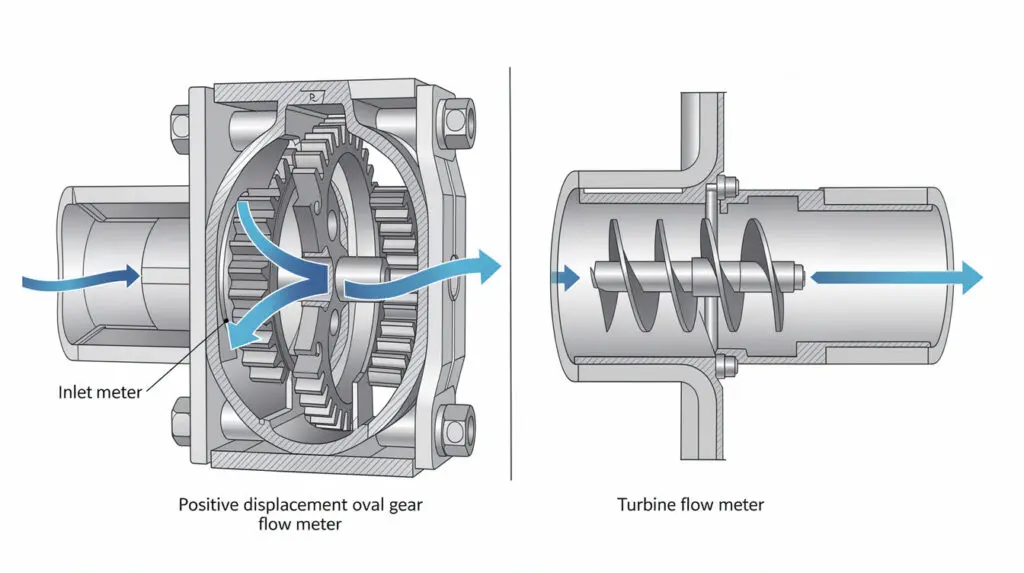
ടർബൈൻ / ഹെലിക്കൽ മീറ്ററുകൾ (CE-210)
കുറഞ്ഞ വിസ്കോസിറ്റി, ശുദ്ധമായ ദ്രാവകങ്ങൾക്ക് (വെള്ളം, നേരിയ ലായകങ്ങൾ, പെട്രോൾ), ഒരു CE-210 ടർബൈൻ മീറ്റർ വളരെ ചെലവ് കുറഞ്ഞതും ഒതുക്കമുള്ളതുമായ ഒരു പരിഹാരം നൽകുന്നു. ദ്രാവകം ഒരു റോട്ടർ തിരിക്കുന്നു, ഒരു കാന്തിക പിക്കപ്പ് ബ്ലേഡ് പാസുകൾ എണ്ണുന്നു. ദ്രാവകം കട്ടിയാകുന്നതുവരെ ഇത് മനോഹരവും ലളിതവുമായ ഒരു സംവിധാനമാണ്.
- പരിമിതി: ആംബിയന്റ് താപനിലയിലെ മാറ്റങ്ങൾ കാരണം വിസ്കോസിറ്റി മാറുന്ന നിമിഷം (ഇൻസുലേറ്റ് ചെയ്യാത്ത ടാങ്ക് ഫാമിലെ ഡിസംബർ മാസത്തെ തണുത്ത പ്രഭാതവും മെയ് മാസത്തെ ചുട്ടുപൊള്ളുന്ന ഉച്ചതിരിഞ്ഞതും ഓർക്കുക), ടർബൈൻ റോട്ടറിന്റെ ഡ്രാഗ് പ്രൊഫൈൽ മാറുന്നു. ഇത് നിങ്ങളുടെ കെ-ഫാക്ടർ (ലിറ്ററിന് പൾസ്) കുറയ്ക്കുന്നു, ഇത് ബാച്ചിംഗ് പിശകുകളിലേക്ക് നയിക്കുന്നു.
മുന്നറിയിപ്പ്: കനത്ത ലൂബ്രിക്കന്റ് ഓയിലുകളോ മൊളാസസുകളോ കൈകാര്യം ചെയ്യുന്ന ലൈനിൽ ഒരിക്കലും ടർബൈൻ മീറ്റർ സ്ഥാപിക്കരുത്. വലിച്ചെടുക്കൽ റോട്ടർ സ്തംഭിക്കാൻ കാരണമാകും, ഇത് വളരെ കൃത്യമല്ലാത്ത പൾസ് ഔട്ട്പുട്ടുകൾ നൽകുമ്പോൾ ഒരു മർദ്ദ തടസ്സമായി പ്രവർത്തിക്കും.
ഓവർഷൂട്ട് ഒഴിവാക്കൽ: ഡ്യുവൽ-സ്റ്റേജ് വാൽവ് നിയന്ത്രണത്തിന്റെ മെക്കാനിക്സ്
ഒരു ലിക്വിഡ് ബാച്ചിംഗ് സിസ്റ്റത്തിന്റെ ഏറ്റവും വലിയ ശത്രു ഫ്ലൂയിഡ് മൊമെന്റം ആണ്. ഇതിനെ നമ്മൾ "ഫ്ലൈയിംഗ് ലിക്വിഡ്" പ്രശ്നം എന്ന് വിളിക്കുന്നു. നിങ്ങൾ ഒരു ഡ്രമ്മിലേക്ക് 120 L/min പമ്പ് ചെയ്യുകയും 200 ലിറ്റർ അടിക്കുമ്പോൾ ഒരു സ്റ്റാൻഡേർഡ് വാൽവിലേക്ക് ഒരൊറ്റ "സ്റ്റോപ്പ്" കമാൻഡ് അയയ്ക്കുകയും ചെയ്താൽ, വാൽവ് യാന്ത്രികമായി അടയ്ക്കാൻ എടുക്കുന്ന സമയം - പൈപ്പിലെ ദ്രാവകത്തിന്റെ മൊമെന്റം കൂടി - ഡ്രമ്മിൽ 201.5 ലിറ്റർ ഉണ്ടാകും.
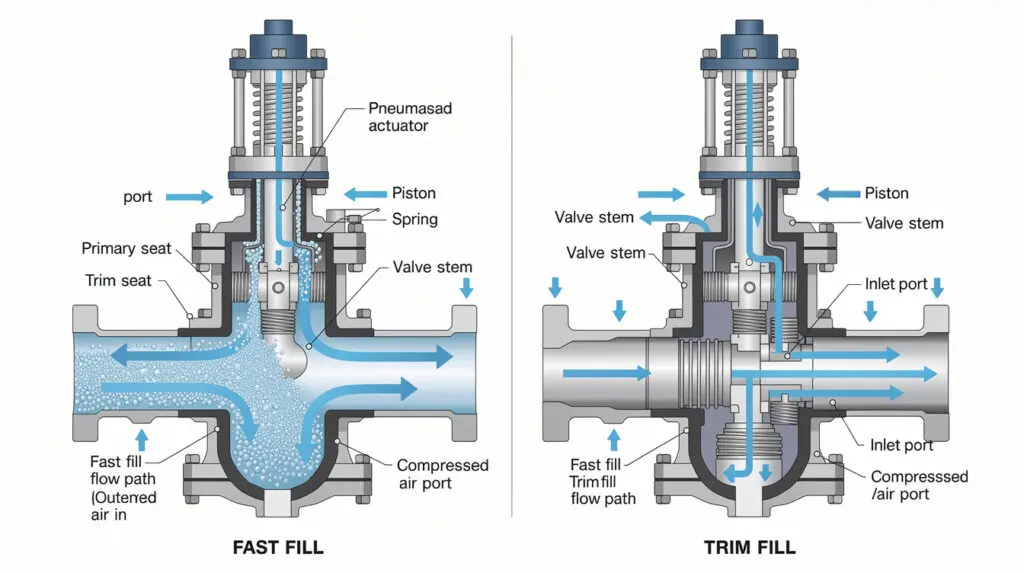
ഇത് ഉപയോഗിച്ച് ഞങ്ങൾ ഇല്ലാതാക്കുന്നു ഡ്യുവൽ-സ്റ്റേജ് ന്യൂമാറ്റിക് ആക്ച്വേറ്റഡ് വാൽവുകൾ.
ഞങ്ങളുടെ CE-136 പ്രീസെറ്റ് കൺട്രോളറുകളിൽ ലോജിക് എങ്ങനെ പ്രവർത്തിക്കുന്നുവെന്ന് ഇതാ:
- വേഗത്തിലുള്ള പൂരിപ്പിക്കൽ: വാൽവിന്റെ രണ്ട് ഘട്ടങ്ങളും പൂർണ്ണമായും തുറക്കുന്നു. സമയം ലാഭിക്കുന്നതിനായി സിസ്റ്റം പരമാവധി ഫ്ലോ റേറ്റിൽ (ഉദാ: 120 L/min) വെള്ളം വിതരണം ചെയ്യുന്നു.
- സ്ലോ / ട്രിം ഫിൽ: ബാച്ച് ലക്ഷ്യ വോളിയത്തിന്റെ 95% എത്തുമ്പോൾ, കൺട്രോളർ പ്രാഥമിക വാൽവ് ഘട്ടം അടയ്ക്കുന്നു. ഒഴുക്ക് ഒരു തുള്ളിയായി കുറയുന്നു (ഉദാ: 10 L/മിനിറ്റ്).
- അന്തിമ ഷട്ട്ഓഫ്: കൃത്യം 100%-ൽ, സെക്കൻഡറി ഘട്ടം അടയുന്നു. ഫ്ലോ റേറ്റ് ഇതിനകം കുറച്ചതിനാൽ, ലൈൻ മൊമെന്റം ഏതാണ്ട് പൂജ്യമാണ്, കൂടാതെ മെക്കാനിക്കൽ ക്ലോഷർ സമയം കുറച്ച് മില്ലി ലിറ്ററിൽ താഴെ ഓവർഷൂട്ട് മാത്രമേ ഉണ്ടാക്കൂ.
ഈ ലളിതമായ എഞ്ചിനീയറിംഗ് നടപ്പിലാക്കൽ ഓവർഷൂട്ട് ±0.5 %-യിൽ താഴെയായി നിലനിർത്തുന്നു, നിങ്ങളുടെ ഇൻവെന്ററി സംരക്ഷിക്കുകയും നിങ്ങളുടെ മാർജിനുകൾ സംരക്ഷിക്കുകയും ചെയ്യുന്നു.
ഇന്ത്യൻ വ്യാവസായിക സന്ദർഭവും അനുസരണ മാനദണ്ഡങ്ങളും
അങ്കലേശ്വർ ജിഐഡിസി അല്ലെങ്കിൽ ദഹേജിന്റെ തീരദേശ മേഖലകൾ പോലുള്ള വ്യാവസായിക കേന്ദ്രങ്ങളിൽ ഞാൻ സംവിധാനങ്ങൾ കമ്മീഷൻ ചെയ്യുമ്പോൾ, യൂറോപ്യൻ സ്പെസിഫിക്കേഷൻ ഷീറ്റുകൾ പലപ്പോഴും അവഗണിക്കുന്ന പാരിസ്ഥിതിക യാഥാർത്ഥ്യങ്ങൾ ഞാൻ കണക്കിലെടുക്കേണ്ടതുണ്ട്.
ലീഗൽ മെട്രോളജിയും OIML R117 ഉം
നിങ്ങളുടെ ബാച്ചിംഗ് സിസ്റ്റം കസ്റ്റഡി ട്രാൻസ്ഫറിനായി (ദ്രാവകം ഒരു മൂന്നാം കക്ഷിക്ക് വ്യാപ്തം അനുസരിച്ച് വിൽക്കുന്നതിന്) ഉപയോഗിക്കുകയാണെങ്കിൽ, ആ സിസ്റ്റം ഇന്ത്യയിലെ ലീഗൽ മെട്രോളജി ആക്റ്റ് പാലിക്കണം.
- നിങ്ങളുടെ മീറ്ററുകൾ OIML R117 (വെള്ളം ഒഴികെയുള്ള ദ്രാവകങ്ങൾക്കായുള്ള ഡൈനാമിക് അളക്കൽ സംവിധാനങ്ങൾ) അനുസരിച്ചായിരിക്കണം.
- എയർ എലിമിനേറ്ററുകൾ ഘടിപ്പിച്ച CE-113 അധിഷ്ഠിത കസ്റ്റഡി സ്കിഡുകൾ ഞങ്ങൾ ഉപയോഗിക്കുന്നു. എന്തുകൊണ്ട്? കാരണം നിങ്ങൾക്ക് ഒരു ഉപഭോക്താവിന് നിയമപരമായി പ്രവേശിക്കുന്ന വായു വിൽക്കാൻ കഴിയില്ല. ഒരു പമ്പ് കാവിറ്റേറ്റ് ചെയ്ത് ഫ്ലോ മീറ്ററിലൂടെ ഒരു സ്ലഗ് വായു അയച്ചാൽ, മീറ്റർ കറങ്ങുകയും ഒഴിഞ്ഞ സ്ഥലത്തിന് ഉപഭോക്താവിൽ നിന്ന് നിരക്ക് ഈടാക്കുകയും ചെയ്യും. അളക്കുന്ന ചേമ്പറിൽ എത്തുന്നതിനുമുമ്പ് എയർ എലിമിനേറ്റർ ഇത് നീക്കം ചെയ്യും.
നിനക്കറിയാമോ: ദ്രാവകത്തിന്റെ അളവ് അളക്കുന്നതിനുള്ള IS 5765 നിയന്ത്രണങ്ങൾ അനുസരിച്ച്, അംഗീകൃത കസ്റ്റഡി-ട്രാൻസ്ഫർ മീറ്ററിംഗ് സ്കിഡിന് ഒരു മെക്കാനിക്കൽ എയർ എലിമിനേറ്ററും ഒരു അപ്സ്ട്രീം സ്ട്രൈനറും ഉൾപ്പെടുത്തേണ്ടത് നിർബന്ധമാണ്.
പരിസ്ഥിതി പ്രതിരോധശേഷി
- വോൾട്ടേജ് ഏറ്റക്കുറച്ചിലുകൾ: ഗ്രാമീണ വ്യാവസായിക മേഖലകളിലെ അസ്ഥിരമായ പവർ ഗ്രിഡുകൾ സെൻസിറ്റീവ് ഇലക്ട്രോണിക്സിൽ നാശം വിതയ്ക്കുന്നു. ഒരു ബ്രൗൺഔട്ട് സമയത്ത് സ്റ്റാൻഡേർഡ് കോൺടാക്ടറുകൾ വെൽഡ് ചെയ്യുന്നത് ഞാൻ കണ്ടിട്ടുണ്ട്, ഇത് ഒരു ബാച്ചിനെ മുഴുവൻ നശിപ്പിക്കുന്നു. വോൾട്ടേജ് സ്പൈക്കുകൾ സമയത്ത് പൾസ് കറപ്ഷൻ തടയുന്നതിന് ഞങ്ങളുടെ CE-Setstop പ്രീസെറ്റ് കൗണ്ടറുകളും PLC പാനലുകളും ശക്തമായ SMPS പവർ സപ്ലൈകളും ഐസൊലേഷൻ ബാരിയറുകളും ഉപയോഗിച്ച് സംയോജിപ്പിച്ചിരിക്കുന്നു.
- നാശവും ഈർപ്പവും: തീരദേശ ഗുജറാത്തിലോ മഹാരാഷ്ട്രയിലോ, മൺസൂൺ ഈർപ്പം സാധാരണ മൈൽഡ് സ്റ്റീൽ എൻക്ലോഷറുകളെ നശിപ്പിക്കുന്നു. പെട്രോകെമിക്കൽ സൈറ്റുകൾക്കായി ഞങ്ങൾ SS-304/SS-316 എൻക്ലോഷറുകളും (ഞങ്ങളുടെ SS LPG ലിക്വിഡ് ഫ്ലോ മീറ്റർ CE-143-ൽ ഉള്ളത് പോലെ) ഫ്ലെയിംപ്രൂഫ് (Ex d) കാസ്റ്റ് അലുമിനിയം ഹൗസിംഗുകളും ഉപയോഗിക്കുന്നു.
കഠിനമായ വ്യാവസായിക പരിതസ്ഥിതികൾക്ക് അനുയോജ്യമായ ഒരു സംവിധാനം ആവശ്യമുണ്ടോ?
അപകടകരമായ മേഖലകൾക്കായി തീജ്വാലയില്ലാത്ത എക്സ് ഡി എൻക്ലോഷറുകളുള്ള സ്റ്റെയിൻലെസ് സ്റ്റീലിൽ ഞങ്ങൾ ഇഷ്ടാനുസൃത ബാച്ചിംഗ് മാനിഫോൾഡുകൾ നിർമ്മിക്കുന്നു.
ഇൻസ്റ്റാളേഷൻ & പരിപാലന യാഥാർത്ഥ്യങ്ങൾ
ഒരു ലിക്വിഡ് ബാച്ചിംഗ് സിസ്റ്റം അതിന്റെ മെയിന്റനൻസ് ഷെഡ്യൂൾ പോലെ കൃത്യമാണ്. ഇന്ത്യയിലുടനീളമുള്ള നൂറുകണക്കിന് ഇൻസ്റ്റാളേഷനുകൾക്ക് ശേഷം, ഈ ഫീൽഡിനായി ഞാൻ ഈ നാല് നോൺ-നെഗോഷ്യബിൾ നിയമങ്ങൾ നടപ്പിലാക്കുന്നു:
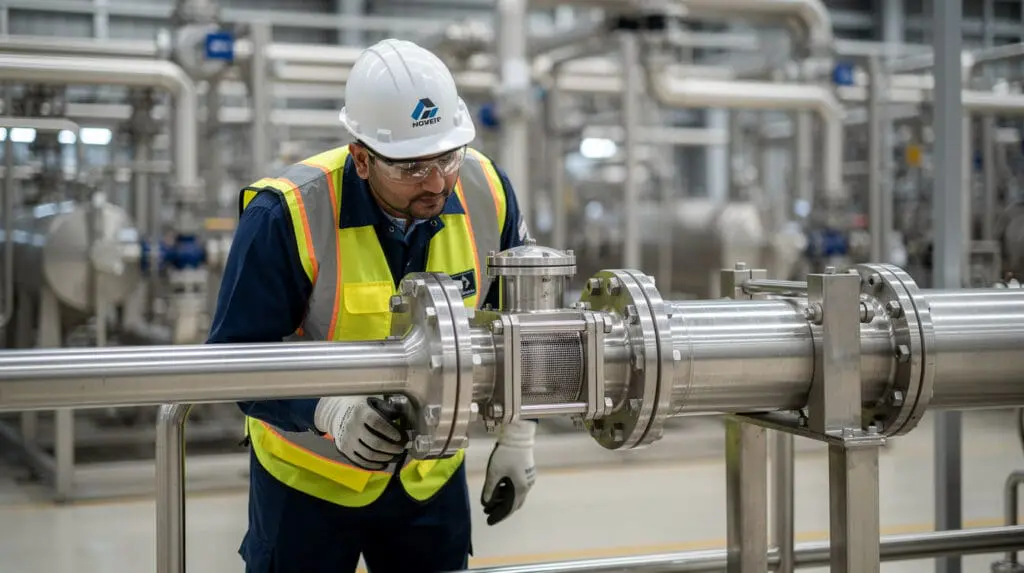
- അപ്സ്ട്രീം ഫിൽട്രേഷൻ നിർബന്ധമാണ്: ₹80,000 വിലയുള്ള ഒരു പോസിറ്റീവ് ഡിസ്പ്ലേസ്മെന്റ് മീറ്ററിന്റെ ആന്തരിക ഭാഗങ്ങൾ ശാശ്വതമായി നശിപ്പിക്കുന്ന ഒരു ചെറിയ വെൽഡിംഗ് സ്ലാഗ് ഞാൻ കണ്ടിട്ടുണ്ട്. ലൂബ് ഓയിലുകളിൽ മീറ്ററിന് മുകളിലൂടെ 40-മെഷ് സ്ട്രൈനറും, ഭാരം കുറഞ്ഞ ഇന്ധനങ്ങൾക്ക് 80-മെഷ് സ്ട്രൈനറും സ്ഥാപിക്കുക. ബാസ്ക്കറ്റ് പ്രതിമാസം വൃത്തിയാക്കുക.
- പൊരുത്തപ്പെടുന്ന പമ്പിംഗ്: നിങ്ങളുടെ മീറ്ററിനെ പട്ടിണി കിടക്കാൻ അനുവദിക്കരുത്. സിസ്റ്റം ഒരു പൊരുത്തപ്പെടുന്ന പമ്പ് ഉപയോഗിച്ച് നൽകണം. 200°C വരെയുള്ള വിസ്കോസ് ദ്രാവകങ്ങൾക്ക്, ഞങ്ങൾ ഞങ്ങളുടെ റോട്ടറി ഗിയർ ലിക്വിഡ് ട്രാൻസ്ഫർ പമ്പ് പ്രത്യേകം നിർദ്ദേശിക്കുന്നു, ഇത് കാവിറ്റേഷൻ ഇല്ലാതെ സ്ഥിരമായ ലൈൻ മർദ്ദം ഉറപ്പാക്കുന്നു.
- സ്റ്റാറ്റിക് ഗ്രൗണ്ടിംഗ്: ഉയർന്ന വേഗതയിലുള്ള ഇന്ധനങ്ങളോ ലായകങ്ങളോ ഡ്രമ്മുകളിലേക്ക് വിതരണം ചെയ്യുമ്പോൾ, സ്റ്റാറ്റിക് വൈദ്യുതി വേഗത്തിൽ അടിഞ്ഞുകൂടുന്നു. ഇത് ഒഴിവാക്കരുത്; ഒരു ലായക ഫില്ലിംഗ് ലൈനിനടുത്തുള്ള ഒരു തീപ്പൊരി സംഭവിക്കാൻ കാത്തിരിക്കുന്ന ഒരു ദുരന്തമാണ്. നിങ്ങളുടെ സ്കിഡിൽ നിയന്ത്രണ ലോജിക്കിൽ സംയോജിപ്പിച്ചിരിക്കുന്ന ഹാർഡ്-വയർഡ് സ്റ്റാറ്റിക് ഗ്രൗണ്ടിംഗ് പോയിന്റുകൾ ഉണ്ടെന്ന് ഉറപ്പാക്കുക (ഗ്രൗണ്ട് ക്ലാമ്പ് ഘടിപ്പിച്ചിട്ടില്ലെങ്കിൽ സിസ്റ്റം ബാച്ച് ചെയ്യില്ല).
- പതിവ് കാലിബ്രേഷൻ: മെക്കാനിക്കൽ ഭാഗങ്ങൾ തേയ്മാനം സംഭവിക്കുമ്പോൾ ഒരു മീറ്ററിന്റെ K-ഫാക്ടർ കാലക്രമേണ മാറുന്നു. ഒരു സർട്ടിഫൈഡ് പ്രൂവിംഗ് ടാങ്ക് ഉപയോഗിച്ച് ഒരു ദ്വി-വാർഷിക കാലിബ്രേഷൻ ഷെഡ്യൂൾ നടപ്പിലാക്കുക.
നിങ്ങളുടെ ബാച്ചിംഗ് ഇൻഫ്രാസ്ട്രക്ചറുമായി പമ്പിംഗ് സൊല്യൂഷനുകൾ സംയോജിപ്പിക്കുന്നതിനെക്കുറിച്ചുള്ള കൂടുതൽ ഉൾക്കാഴ്ചകൾക്ക്, ഞങ്ങളുടെ കാണുക ടെക്സ്റ്റൈൽ ഡൈയിംഗിനുള്ള പിപി പമ്പുകൾ: എഞ്ചിനീയറിംഗ് ഗൈഡും സവിശേഷതകളും.
പതിവ് ചോദ്യങ്ങൾ
ഒരു സ്റ്റാൻഡേർഡ് ലിക്വിഡ് ബാച്ചിംഗ് സിസ്റ്റത്തിന് എത്ര ബാച്ച് വലുപ്പങ്ങൾ കൈകാര്യം ചെയ്യാൻ കഴിയും?
ഒരു ബാച്ചിന് 5 മുതൽ 1,000 ലിറ്റർ വരെ കൈകാര്യം ചെയ്യാവുന്ന തരത്തിലാണ് ഞങ്ങൾ സാധാരണയായി ടേൺകീ സിസ്റ്റങ്ങളുടെ വലുപ്പം നിശ്ചയിക്കുന്നത്. മാനിഫോൾഡ് പൈപ്പ് വലുപ്പം ക്രമീകരിക്കുന്നതിലൂടെയും മൾട്ടി-സ്റ്റേജ് വാൽവ് ലോജിക് ഉപയോഗിക്കുന്നതിലൂടെയും, ഈ മുഴുവൻ ശ്രേണിയിലും ±0.5 %-യിൽ താഴെ ഓവർഷൂട്ട് നിലനിർത്താൻ ഞങ്ങൾക്ക് കഴിയും.
ഗിയർ ഓയിൽ, മൊളാസസ് പോലുള്ള ഉയർന്ന വിസ്കോസ് ദ്രാവകങ്ങൾ കൈകാര്യം ചെയ്യാൻ ഈ സിസ്റ്റത്തിന് കഴിയുമോ?
തീർച്ചയായും. ഞങ്ങൾ പോസിറ്റീവ് ഡിസ്പ്ലേസ്മെന്റ് (PD) മീറ്ററുകളും (CE-110/111) പൊരുത്തപ്പെടുന്ന റോട്ടറി ഗിയർ ലിക്വിഡ് ട്രാൻസ്ഫർ പമ്പുകളും ഉപയോഗിക്കുന്നു. ആന്തരിക സ്ലിപ്പേജ് കുറയുന്നതിനാൽ ഉയർന്ന വിസ്കോസിറ്റി ദ്രാവകങ്ങളിൽ (5,000 mPa·s വരെ) PD മീറ്ററുകൾ കൂടുതൽ കൃത്യമായി പ്രവർത്തിക്കുന്നു.
ഒരു ഇൻഡസ്ട്രിയൽ ബാച്ചിംഗ് കൺട്രോളർ എങ്ങനെയാണ് നമ്മുടെ പ്ലാന്റ് ERP-യുമായി ആശയവിനിമയം നടത്തുന്നത്?
ആധുനിക PLC/HMI സജ്ജീകരണങ്ങളും വിപുലമായ പ്രീസെറ്റ് കൗണ്ടറുകളും പൾസ് ഔട്ട്പുട്ടുകൾ, 4–20 mA അനലോഗ് സിഗ്നലുകൾ, ഇതർനെറ്റ്/മോഡ്ബസ് RS485 ആശയവിനിമയം എന്നിവ വാഗ്ദാനം ചെയ്യുന്നു. ഇൻവെന്ററി ട്രാക്കിംഗിനായി നിങ്ങളുടെ SCADA അല്ലെങ്കിൽ ERP സിസ്റ്റങ്ങളിലേക്ക് തത്സമയ ബാച്ച് ടെലിമെട്രി നേരിട്ട് പുഷ് ചെയ്യാൻ ഇത് നിങ്ങളെ അനുവദിക്കുന്നു.
നമുക്ക് ഒരു PLC ആവശ്യമുണ്ടോ, അതോ മുൻകൂട്ടി നിശ്ചയിച്ച ഒരു കൗണ്ടർ മതിയോ?
ഒരു ടാങ്കിലേക്കോ ഡ്രമ്മിലേക്കോ ഒരു ദ്രാവകം കൃത്യമായി വോളിയം അടിസ്ഥാനമാക്കിയാണ് നിങ്ങൾ ബാച്ച് ചെയ്യുന്നതെങ്കിൽ, ഒരു പ്രീസെറ്റ് കൗണ്ടർ (CE-136 പോലെ) വേഗതയേറിയതും വിലകുറഞ്ഞതും കൂടുതൽ കൃത്യവുമാണ്. നിർദ്ദിഷ്ട അനുപാതങ്ങൾ അനുസരിച്ച് ഒന്നിലധികം ചേരുവകൾ മിശ്രണം ചെയ്യുകയാണെങ്കിൽ, നിങ്ങൾക്ക് PLC ലോജിക് ആവശ്യമാണ്.
അപകടകരമായ പെട്രോകെമിക്കൽ മേഖലകൾക്ക് സ്കിഡ് അനുയോജ്യമാണോ?
അതെ. സോൺ 1, സോൺ 2 അപകടകരമായ പെട്രോകെമിക്കൽ സൈറ്റുകൾക്കായി PESO മാനദണ്ഡങ്ങൾ പാലിക്കുന്നതിനായി പ്രത്യേകം രൂപകൽപ്പന ചെയ്തിരിക്കുന്ന ആന്തരികമായി സുരക്ഷിതമായ തടസ്സങ്ങൾ, തീജ്വാല പ്രതിരോധശേഷിയുള്ള (Ex d) മോട്ടോറുകൾ, സ്ഫോടന പ്രതിരോധശേഷിയുള്ള ഇലക്ട്രോണിക് എൻക്ലോഷറുകൾ എന്നിവ ഞങ്ങൾ നൽകുന്നു.
അന്തിമ എഞ്ചിനീയറിംഗ് ശുപാർശ
നിങ്ങളുടെ ദ്രാവകത്തിന്റെ ഭൗതികശാസ്ത്രത്തെയും നിങ്ങളുടെ സസ്യ പരിസ്ഥിതിയുടെ യാഥാർത്ഥ്യങ്ങളെയും ബഹുമാനിക്കുന്നതിലൂടെയാണ് ശരിയായ ഓട്ടോമാറ്റിക് ലിക്വിഡ് ബാച്ചിംഗ് സിസ്റ്റം തിരഞ്ഞെടുക്കുന്നത്.
നിങ്ങൾ ഉയർന്ന അളവിലുള്ള ഡ്രം ഫില്ലിംഗ് ലൈൻ പ്രവർത്തിപ്പിക്കുകയോ ഉയർന്ന മൂല്യമുള്ള രാസവസ്തുക്കൾ കലർത്തുകയോ ചെയ്യുകയാണെങ്കിൽ, എന്റെ ഉപദേശം, ഒരു പോസിറ്റീവ് ഡിസ്പ്ലേസ്മെന്റ് ഫ്ലോ മീറ്ററും ഒരു CE-136 പ്രീസെറ്റ് കൺട്രോളറും ഒരു ഡ്യുവൽ-സ്റ്റേജ് ന്യൂമാറ്റിക് വാൽവും ചേർന്ന് നിങ്ങളുടെ സിസ്റ്റം നിർമ്മിക്കുക എന്നതാണ്.
ഈ കൃത്യമായ കോൺഫിഗറേഷൻ ഏറ്റവും ഉയർന്ന കൃത്യതയും (±0.5% സ്റ്റാൻഡേർഡ്, ±0.2% ഒപ്റ്റിമൈസ് ചെയ്തത്) നൽകുന്നു, കൂടാതെ ഓവർഷൂട്ട് കാരണം ഉൽപ്പന്ന സമ്മാനം പൂർണ്ണമായും ഒഴിവാക്കി നിക്ഷേപത്തിന് ഏറ്റവും വേഗതയേറിയ വരുമാനവും നൽകുന്നു. കൂടുതൽ വിശദമായ സ്പെസിഫിക്കേഷനുകൾക്ക്, ഞങ്ങളുടെ പരിശോധിക്കുക. ലിക്വിഡ് ബാച്ചിംഗ് സിസ്റ്റം തിരഞ്ഞെടുക്കൽ ഗൈഡും സവിശേഷതകളും അല്ലെങ്കിൽ ഞങ്ങളുടെ മൊബൈൽ കോൺഫിഗറേഷനുകൾ പര്യവേക്ഷണം ചെയ്യുക മൊബൈൽ ഇന്ധന ഡിസ്പെൻസർ വലുപ്പവും സവിശേഷതകളും: എഞ്ചിനീയർ ഗൈഡ്.
മോശം മെഷർമെന്റ് എഞ്ചിനീയറിംഗ് നിങ്ങളുടെ ലാഭക്ഷമത ചോർത്താൻ അനുവദിക്കരുത്.
ബാച്ച് ഓവർഷൂട്ട് ഒഴിവാക്കാൻ തയ്യാറാണോ?
നിങ്ങളുടെ ഫ്ലൂയിഡ് വിസ്കോസിറ്റി, ടാർഗെറ്റ് ബാച്ച് വോള്യങ്ങൾ, ലൈൻ പ്രഷർ എന്നിവ ഞങ്ങളുമായി പങ്കിടുക. ഞങ്ങളുടെ എഞ്ചിനീയർമാർ ഉറപ്പായ കൃത്യതയോടെ ഒരു ഇഷ്ടാനുസൃത സ്കിഡ് രൂപകൽപ്പന ചെയ്യും.
