
















Managing highly corrosive fluids like industrial acids, alkalis, and complex effluents is one of the most critical challenges for manufacturing facilities across India. Operational efficiency relies heavily on the continuous, leak-free performance of fluid handling equipment. For plant managers and maintenance engineers, equipment reliability means preventing hazardous chemical spills, ensuring strict operator safety, and minimizing costly unplanned downtime. This is especially true for ETPs (Effluent Treatment Plants), electroplating facilities, and bulk chemical transfer lines where harsh site conditions are the norm. Understanding how to maintain, protect, and optimize your systems—particularly by preventing mechanical seal failure—is essential to extending their service life and achieving operational peace of mind. For these demanding duties, industries rely heavily on PP Pumps.
1. What this product does
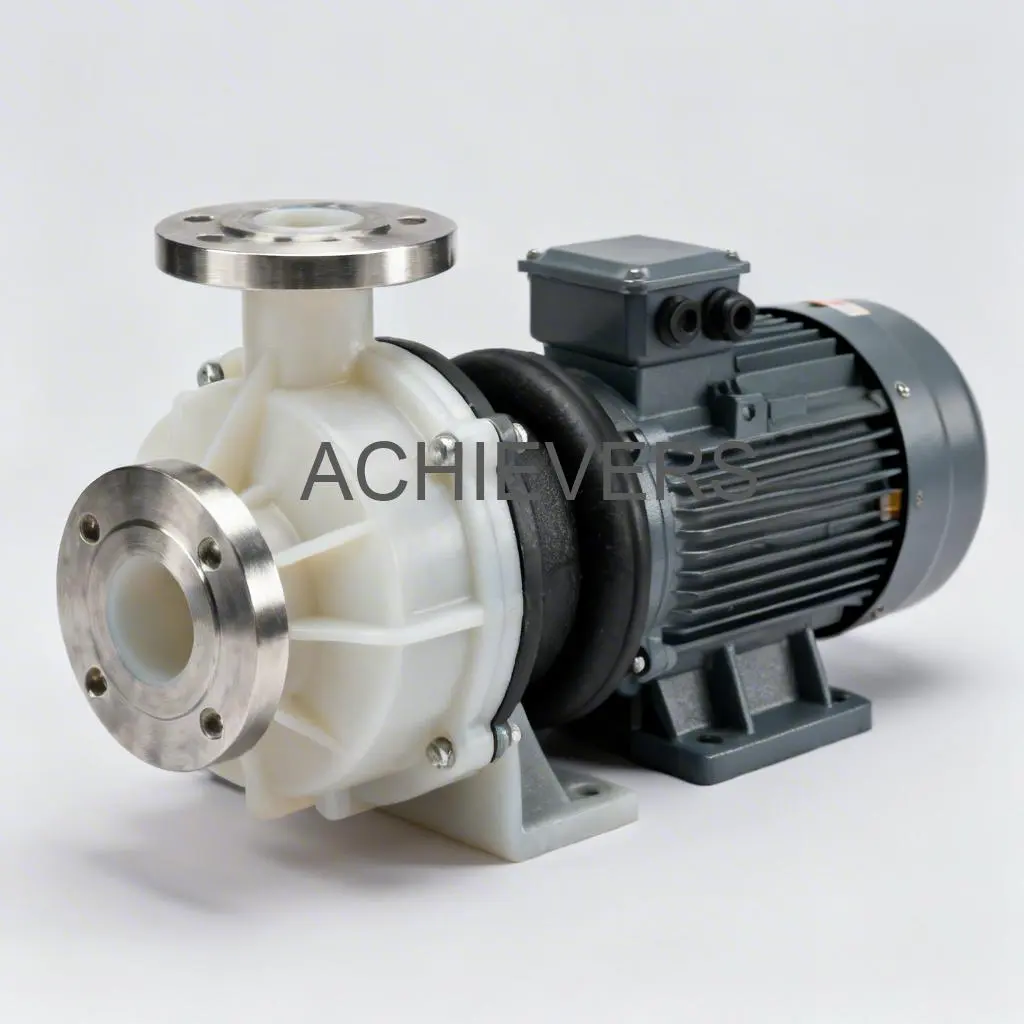
At their core, PP Pumps are specialized horizontal centrifugal pumps manufactured with high-grade, solid polypropylene casings and impellers. Unlike standard cast iron or stainless steel pumps that would rapidly degrade when exposed to aggressive chemicals, these units are specifically engineered to offer exceptional chemical resistance against a vast spectrum of corrosive industrial fluids.
These pumps operate using centrifugal force, where an AC motor drives a precisely machined polypropylene impeller inside the volute casing. As the fluid enters the suction nozzle, the rotating impeller accelerates the liquid, discharging it at high pressure. Available in both bare shaft and close-coupled monoblock configurations, these units are highly adaptable to varied industrial power setups and spatial constraints.
Key performance features include the ability to handle significant flow ranges required for continuous chemical transfer, while maintaining consistent discharge head pressures suitable for typical plant elevations. Operating temperatures for these units generally accommodate up to 70°C, making them ideal for ambient to moderately heated chemical processes. Because they handle dangerous fluids, the sealing mechanism is paramount. They utilize highly engineered mechanical seals—often utilizing PTFE, Ceramic, or Silicon Carbide faces—to prevent fluid from migrating along the rotating shaft and escaping into the environment.
2. Practical Root Causes of Leakage and Prevention Strategies
The mechanical seal is the primary defense against hazardous leaks, but it is also the most vulnerable component. Protecting your PP Pumps from catastrophic seal failure requires a deep understanding of site conditions and operating behaviors. When investigating polypropylene centrifugal pump seal failure causes, maintenance teams typically find that failures rarely stem from the pump itself, but rather from external operational factors and misapplications.
Here are the primary root causes of mechanical seal leakage and how to prevent them:
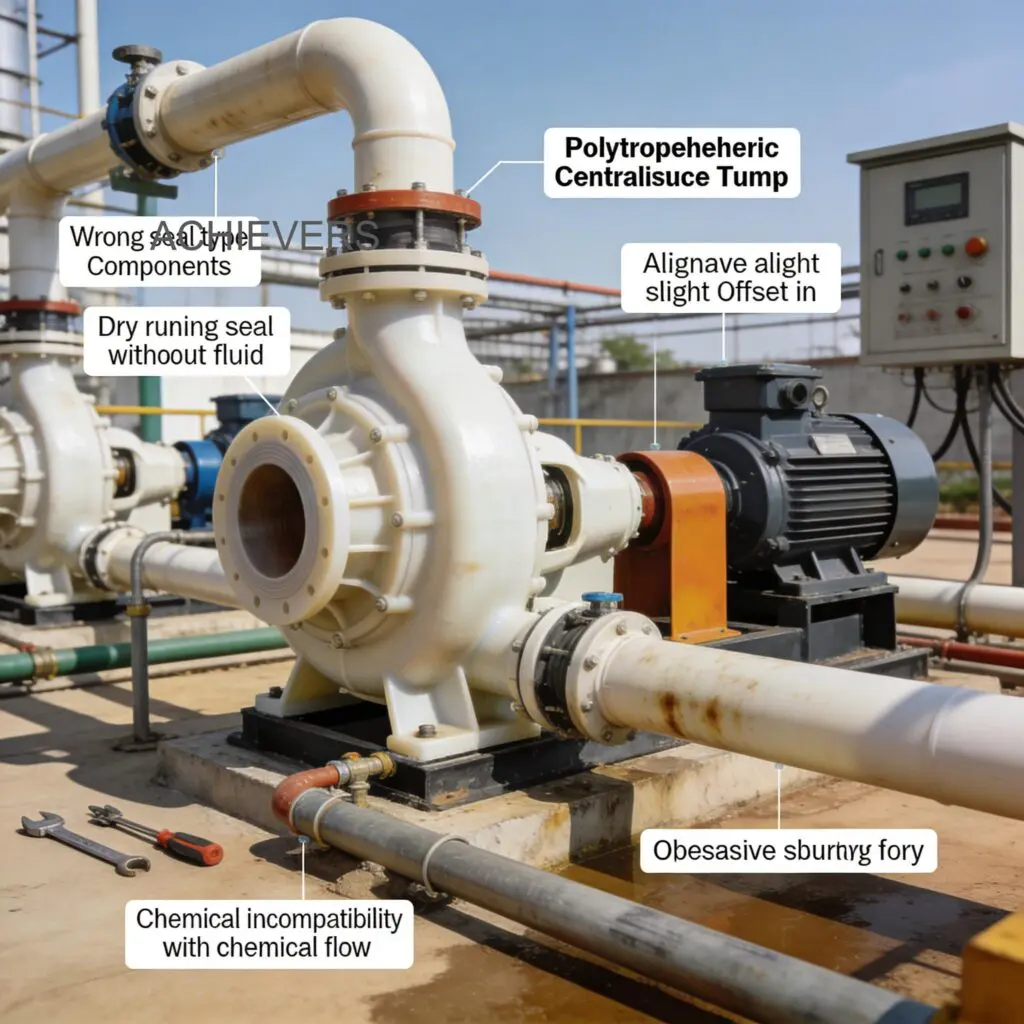
Dry Running
Mechanical seals rely on the pumped fluid to provide lubrication and cooling across the seal faces. If a pump is operated without fluid (dry running), the friction generates immense heat in seconds. Because the casing is made of thermoplastic, this extreme localized heat not only destroys the mechanical seal faces but can also melt the surrounding polypropylene housing. Prevention: Operators must ensure flooded suction before startup. Installing dry-run protection sensors or flow switches on the suction line is an essential practice in Indian plants dealing with erratic fluid supplies.
Misalignment and Vibration
If the pump and motor shafts are not perfectly aligned on the baseplate, it introduces severe radial and axial vibrations. This vibration forces the mechanical seal faces to separate momentarily or wear unevenly, leading to rapid leakage. Prevention: Laser alignment during installation and routine dial-indicator checks can entirely prevent this. Ensuring the baseplate is properly grouted absorbs ambient plant vibrations.
Abrasive Slurries
Standard ETP operations often involve suspended solids. When abrasive particles get trapped between the rotating and stationary faces of a standard seal, they score the surfaces, creating leak paths. Prevention: If handling fluids with suspended solids, plants should opt for Silicon Carbide (SiC) vs. SiC seal faces, which offer extreme hardness. Implementing external seal flushing plans (API plans) introduces a clean, compatible liquid to wash away abrasives from the seal chamber.
Chemical Incompatibility
Elastomers (O-rings and gaskets) used within the seal assembly must be compatible with the fluid. If incompatible, the O-rings will swell, harden, or dissolve, completely compromising the seal's integrity. Prevention: Carefully matching the elastomer material (such as Viton, EPDM, or Kalrez) to the specific chemical concentration and temperature is non-negotiable.
Troubleshooting Flow
Maintenance teams can utilize the following PP pump leakage troubleshooting checklist to quickly identify and isolate issues:
- Visual Inspection: Verify the exact location of the leak. Is it from the seal housing, the casing joints, or the discharge flange?
- Temperature Check: Feel the seal gland area (safely). Excessive heat indicates dry running or inadequate seal flushing.
- Vibration Analysis: Listen for abnormal noise or measure vibration. High vibration points to bearing wear, cavitation, or shaft misalignment.
- Fluid Assessment: Inspect the leaked fluid for unexpected solids or temperature spikes that exceed the pump's design limits.
- Dismantle and Inspect: If the seal is compromised, safely isolate the pump, drain the casing, and inspect the seal faces for scoring (abrasives) or the O-rings for swelling (chemical attack).
3. Selection / Configuration Guide
Proper configuration of PP Pumps ensures long-term reliability and accurate fluid management. Industrial buyers cannot simply purchase an off-the-shelf unit; the pump must be tailored to the specific hydraulic and chemical demands of the plant. One of the most critical steps is proper PP pump mechanical seal selection for acids and alkalis. Alkalis may require different elastomer backing rings compared to highly concentrated acids.
When configuring a system, consider the following selection criteria:
- Hydraulic Requirements: Calculate the required flow rate (capacity) and the total dynamic head (discharge pressure). Oversizing the pump leads to inefficiency and cavitation, while undersizing results in inadequate process flow.
- Specific Gravity and Viscosity: Heavier chemicals require larger motor horsepower to prevent overloading.
- Seal Selection: Choose internally mounted Teflon bellows seals for clean, highly corrosive chemicals, or Silicon Carbide faces for fluids with minor particulate matter.
- Mounting Configuration: Baseplate-mounted bare shaft pumps offer easier maintenance for heavy-duty continuous operations, while monoblock designs save space in cramped ETP layouts.
When generating an enquiry to a supplier, ensure you communicate the following site-specific details to receive an accurate configuration:
- Exact chemical composition and concentration percentage.
- Minimum, normal, and maximum operating temperatures.
- Presence and size of any suspended solids in the fluid.
- Suction conditions (flooded suction, suction lift, or positive pressure).
- Duty cycle (continuous 24/7 operation vs. intermittent batching).
- Required motor specifications (e.g., Flameproof/FLP motors if operating in hazardous zones).
4. Typical Applications
The versatility of PP Pumps makes them indispensable across a wide variety of heavy industries. In effluent treatment plants (ETP) and E-coating facilities, these pumps safely circulate aggressive wastewater, neutralizing chemicals, and heavy metal solutions without corroding. Electroplating units rely on them to transfer plating solutions continuously through filtration systems, where maintaining absolute chemical purity and preventing external contamination is critical.
Whether you are deploying a PP pump for HCl transfer chemical plant operations, dosing sulfuric acid, or unloading caustic soda from tanker trucks, the solid polypropylene construction ensures safety and longevity. They are also widely utilized in fume scrubber systems, where they continuously recirculate neutralizing alkalis to treat hazardous exhaust gases before they are released into the atmosphere.
5. Service, Installation, and Support
Even the best-engineered fluid handling equipment requires correct installation and ongoing support. Partnering with a reliable PP pump manufacturer in India ensures that you receive not only a robust product but also the technical backing required for successful deployment.
Installing PP Pumps correctly requires strict attention to piping design. Plant engineers must ensure that both suction and discharge piping are independently supported; pipe strain transferred to the thermoplastic pump casing is a leading cause of premature flange cracking and shaft misalignment. Suction lines should be as short and straight as possible to prevent starvation and subsequent cavitation.
Adhering to industrial PP pumps maintenance best practices guarantees minimal downtime. This includes regular bearing lubrication, periodic alignment checks, and monitoring motor amperage to detect internal wear before it causes a catastrophic failure. Many facilities benefit from Annual Maintenance Contracts (AMC), which provide routine health checks and guaranteed access to genuine OEM local spares like impellers, O-rings, and precision-calibrated mechanical seals.
Ready to improve your plant's operational uptime and prevent hazardous chemical leaks? Contact our engineering team today for a custom fluid handling solution. To help us configure the exact system for your needs, please share the product name, your required flow rate and line size, the specific industrial application, and any unique site conditions or chemical profiles you are managing. Our technical experts are ready to engineer a system built for precision, durability, and trust.
