
















For industrial plant managers, fleet operators, and maintenance engineers across India, fuel accountability is directly tied to profitability. Diesel is often one of the largest operational expenses in logistics, manufacturing, and construction. Consequently, any discrepancy in measurement—whether due to theft, leaks, or inaccurate metering—can lead to significant financial leakage.
Achieving high-precision fuel management starts with the correct equipment. However, even the highest quality Diesel Flow Meter can yield poor data if installed incorrectly. A meter acts as the cash register of your fuel line; if the environment around it is turbulent, aerated, or vibrating, the "receipt" it prints will be wrong.
This guide provides a comprehensive look at the installation requirements, piping logic, and selection criteria necessary to ensure your flow metering system delivers consistent, repeatable accuracy in demanding industrial environments.
1. What This Product Does
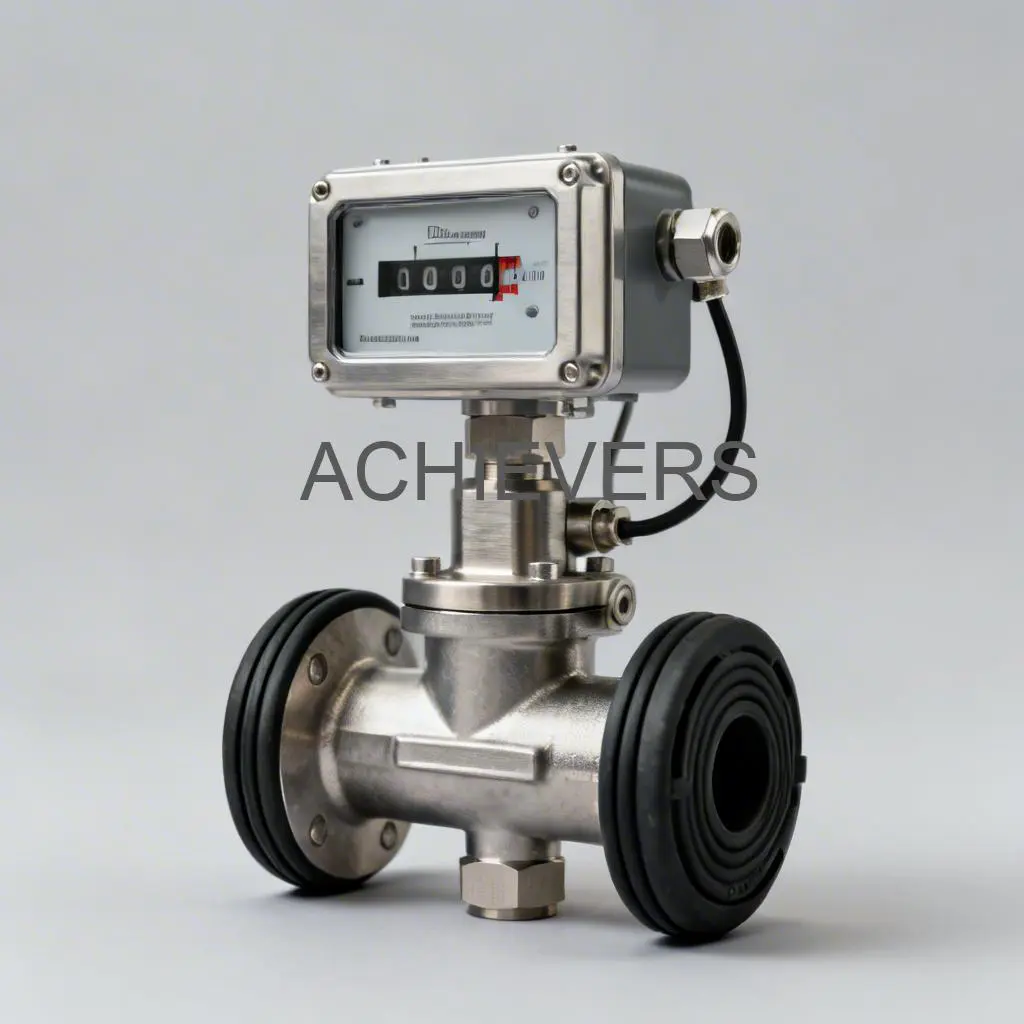
At its core, the Diesel Flow Meter is a precision instrument designed to measure the volumetric flow of diesel fuel moving through a transfer line. Unlike water meters, these devices are engineered to handle the specific viscosity and chemical properties of hydrocarbon fuels.
Chintan Engineers manufactures these meters to withstand the rigorous conditions found in Indian industries, from dusty mining sites to humid coastal refineries. These units typically utilize Positive Displacement (PD) technology or turbine mechanisms, depending on the specific model configuration, to capture flow data with high accuracy.
Key Technical Capabilities:
- Volumetric Accuracy: Designed to deliver precise readings (often within tight margins like ±0.5% or ±1%, subject to calibration) to ensure that the fuel received matches the fuel billed.
- Robust Material Construction: The meter body and internal rotors/gears are constructed from durable materials compatible with diesel, ensuring long service life even with continuous throughput.
- Versatile Readouts: Available with mechanical counters for rugged, power-free operation or digital displays for integration into automated fuel management systems (FMS).
- Flow Range Adaptability: Capable of handling various flow rates, making them suitable for everything from small generator refueling to high-speed bulk tanker unloading.
These meters are not just passive gauges; they are critical control points for inventory management, allowing facility managers to audit fuel usage and detect anomalies immediately.
2. Installation Checklist and Troubleshooting for Accuracy
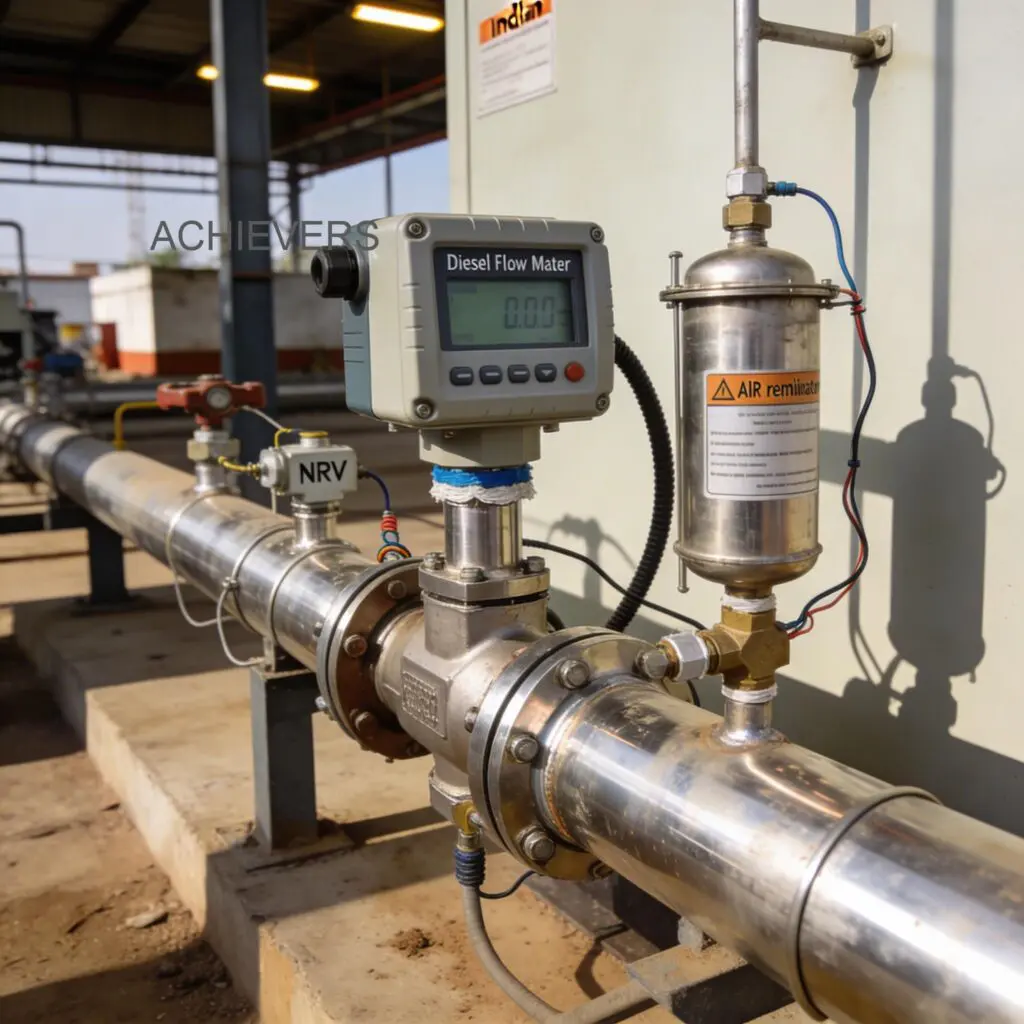
For engineers tasked with commissioning a new fuel line or retrofitting an existing one, adhering to a strict diesel flow meter installation checklist is vital. The piping layout significantly influences the performance of the meter. Below is a detailed breakdown of the mechanical and hydraulic requirements to ensure your Diesel Flow Meter performs to its factory specification.
Phase 1: The Piping Layout (Hydraulic Integrity)
1. Filtration is Mandatory (The Strainer)
The most common cause of meter failure in India is debris. Welding slag, tank rust, or sealing tape fragments can jam the precision gears of a PD meter or strip the blades of a turbine meter.
- Requirement: Always install a mesh strainer immediately upstream of the meter.
- Maintenance: The strainer basket must be accessible for regular cleaning. A clogged strainer creates a pressure drop that can cause cavitation, further damaging the meter.
2. Air Elimination (The "Phantom Fuel" Problem)
Flow meters measure volume, not mass. If air pockets or vapor bubbles pass through the meter, the mechanism will count them as fuel. This is a primary cause of "short deliveries" where the meter reads 100 liters, but only 90 liters of liquid were dispensed.
- Requirement: Install an Air Eliminator (AE) before the meter, especially in diesel flow meter piping layout strainer air eliminator configurations used for unloading tankers where air ingestion is common at the end of a batch.
3. Straight Run Requirements
While Positive Displacement meters are generally more forgiving than turbine meters regarding flow profile, turbulence is still an enemy of accuracy.
- Rule of Thumb: Aim for a straight pipe run of at least 10x pipe diameter upstream and 5x diameter downstream of the meter. This stabilizes the flow velocity profile before it hits the sensing element.
4. Non-Return Valves (NRV) and Backflow
Fluid oscillating back and forth in a pipe can cause a meter to register flow in both directions (or add to the totalizer even when flow reverses), leading to double counting.
- Requirement: Install a high-quality Non-Return Valve (NRV) downstream of the meter to ensure fluid only moves in the intended direction.
Phase 2: Mechanical and Electrical Integrity
1. Sealing and Gaskets
Ensure that gaskets used at the inlet and outlet flanges do not protrude into the flow stream. A protruding gasket creates jetting effects and turbulence that can skew readings by several percentage points.
2. Vibration Isolation
In industrial setups, pumps are often mounted on the same skid as the meter. High-frequency vibration can damage internal bearings or cause "ghost counts" in digital sensors.
- Solution: Use flexible expansion joints or anti-vibration rubber pads to isolate the meter body from pump vibration.
3. Grounding and Static Safety
Diesel is a flowing hydrocarbon that generates static electricity.
- Requirement: The meter body must be properly grounded to the site’s earthing grid to prevent static buildup, which is a fire hazard and can fry digital pulse output electronics.
Phase 3: Troubleshooting Inaccurate Readings
Even with a good layout, site conditions can change. Here is a guide to diesel flow meter troubleshooting inaccurate readings:
- Symptom: Meter reads higher than actual dispensed amount (Over-reading).
- Cause: Air entrapment. Check the suction line of the pump for leaks or verify the air eliminator is functioning.
- Cause: Vibration triggering the sensor when no flow is present.
- Symptom: Meter reads lower than actual (Under-reading).
- Cause: "Blow-by" due to wear. If the internal gears are worn from abrasive fuel, liquid slips past without being measured.
- Cause: High viscosity. If the fuel is extremely cold and viscous, it might affect the pressure drop and slippage factor (though PD meters handle viscosity well).
- Cause: Clogged strainer restricting flow, leading to fluid bypass if a relief valve is triggered.
- Symptom: Fluctuating or Erratic Flow Rate.
- Cause: Cavitation. The pump is starving for fuel, creating vapor bubbles that collapse and spike the meter readings. Check suction lift and strainer cleanliness.
3. Selection and Configuration Guide
Choosing the right meter is just as important as installing it correctly. As a leading diesel flow meter supplier Ahmedabad Gujarat, we see many mismatched specifications. When selecting a meter, consider the following parameters to ensure diesel flow meter for fuel transfer line accuracy:
1. Flow Rate Sizing (Not Line Size)
Do not buy a 2-inch meter just because you have a 2-inch pipe. Buy the meter based on your flow rate (LPM/LPH).
- Oversizing: Using a large meter for a trickle flow will result in the fluid slipping past the gears without registering (under-reading).
- Undersizing: Pushing too much flow through a small meter causes excessive pressure drop and rapid wear of the internal components.
- Best Practice: Select a meter where your normal operating flow falls between 30% and 70% of the meter’s maximum range.
2. Display and Output Options
- Mechanical Register: Best for remote sites, mining trucks, or areas without reliable power. Simple, reset-able totalizers.
- Digital/Pulse Output: Required for connecting to PLCs, SCADA, or Fuel Management Systems. Ensure you specify the pulse weight (e.g., 10 pulses per liter) required for your controller.
3. Material Compatibility and Pressure
Standard diesel meters usually feature aluminum or cast iron bodies. However, if the environment is corrosive (e.g., offshore rigs or chemical plants), inquire about specialized coatings or materials.
- Pressure Rating: Ensure the meter’s PN rating exceeds the maximum pressure your pump can generate, including dead-head pressure.
Checklist for Enquiry
When contacting diesel flow meter manufacturers in India, have this data ready:
- Fluid: (Diesel, Bio-diesel, Kerosene?)
- Min/Max Flow Rate: (e.g., 20 LPM to 120 LPM)
- Operating Pressure: (e.g., 3 Bar)
- Temperature: (Ambient or heated?)
- Connection Type: (Flanged or Threaded?)
- Preferred Output: (Mechanical Counter or 4-20mA/Pulse)
4. Typical Applications
The versatility of the Diesel Flow Meter makes it a staple in various Indian sectors. Reliable measurement is required wherever fuel changes custody or is consumed by high-value assets.
- Fleet Refueling: Transport companies use these meters on dispensing pumps to track exactly how much fuel goes into each truck, reducing pilferage.
- Generator (DG) Sets: Monitoring fuel consumption in real-time allows facility managers to calculate the efficiency (CPCB norms) of power generation and detect engine health issues (e.g., sudden spikes in consumption).
- Bulk Transfer and Unloading: Installed at the inlet of storage tanks to verify the volume delivered by third-party tankers. This is the primary defense against short-supply fraud.
- Construction and Mining: Mobile bowingers (refueling trucks) equipped with rugged mechanical meters to fuel excavators and dumpers in the field.
- Industrial Burners/Boilers: Measuring fuel input to furnaces in textile, ceramic, and steel industries to calculate production costs per unit of energy.
5. Service, Installation, and Support
Buying from a reputable diesel flow meter supplier Ahmedabad Gujarat like Chintan Engineers ensures you get more than just a box of hardware. We believe in end-to-end support, which is critical for how to install positive displacement diesel flow meter systems correctly.
Calibration is Key
Over time, mechanical wear can cause a meter to drift. Calibration—comparing the meter’s reading against a certified prover tank—should be performed:
- Immediately upon installation.
- Annually as part of preventive maintenance.
- Whenever internal parts are replaced.
Local Expertise Matters
Imported meters often lack local spare parts support. Our meters are backed by locally available components, ensuring that if a rotor wears out or a seal fails, your operation isn't halted for weeks waiting for imports. We provide guidance on AMC (Annual Maintenance Contracts) to keep your metering infrastructure certified and accurate.
Reliability in fuel measurement requires a partnership between precision engineering and correct site application. By following the installation protocols outlined above and selecting the right hardware, you can turn your fuel lines from a cost center into a managed asset.
Ready to secure your fuel inventory?
Contact Chintan Engineers to discuss your specific flow metering needs. Whether you need a simple mechanical unit for a DG set or a digital system for a fleet depot, our engineering team will help you configure the perfect solution.
- Product: Diesel Flow Meter
- Applications: Refueling, Transfer, Bulk Unloading
- Support: Calibration, Spares, and Technical Consultation
