
















A 1% calibration drift on a 5,000-litre-per-day diesel throughput costs your operation exactly ₹1,35,000 per month in untracked fuel at current prices. Over a year, that is ₹16.2 lakhs evaporated into thin air. If you manage fuel depots, mining fleet operations, or refinery custody transfer points without compliant, legally sealed flow meters, you aren't just leaking profit—you are likely operating outside the framework of Indian legal metrology.
As a flow measurement engineer who has spent 22 years designing and calibrating systems from ONGC refineries to remote GIDC industrial estates, I routinely see procurement managers authorize the purchase of cheap, uncertified flow meters to save ₹30,000 upfront. Six months later, they are fighting inventory reconciliation errors that dwarf the equipment cost tenfold.
Let me be blunt: a non-approved meter in a commercial fuel transaction is a massive legal and financial liability. To guarantee exact fuel accounting, you have to understand how the Legal Metrology Act, OIML R117 guidelines, and BIS certifications dictate flow meter selection in India. I'm going to break down the engineering reality behind these standards.
In This Article
- The Legal Framework: BIS and Legal Metrology Act Demystified
- OIML R117 Requirements for Dynamic Measuring Systems
- Selecting Compliant Diesel Flow Meters: The Specs That Matter
- Indian Industrial Context: Surviving GIDC Dust and Monsoon Humidity
- TCO and ROI: The True Cost of Non-Compliance
- Installation, Sealing, and Proving
- Frequently Asked Questions
- Final Engineering Recommendation
The Legal Framework: BIS and Legal Metrology Act Demystified
In India, any measuring instrument used for commercial transactions, custody transfer, or industrial fuel allocation falls under the jurisdiction of the Legal Metrology Act, 2009. The framework is strictly enforced by the Department of Legal Metrology, which derives its technical parameters from the Bureau of Indian Standards (BIS) and the International Organization of Legal Metrology (OIML).
When we discuss Indian diesel flow meter compliance, three intersecting mandates rule the floor:
- Legal Metrology Model Approval: Before a flow meter can be stamped and sealed by a local Weights and Measures inspector, the base model must have approval from the Director of Legal Metrology, Government of India.
- BIS Standard for Flow Meter: IS 14883 specifies the requirements for measuring systems for liquids other than water. It outlines the non-negotiable testing protocols for endurance, accuracy limits, and environmental resilience.
- OIML R117 Compliance: OIML R117 is the international bedrock for dynamic measuring systems for liquids. Indian metrology heavily mirrors R117, categorizing meters into accuracy classes based on their application.
Warning: Using unapproved meters for inter-company billing or retail fuel dispensing violates Section 24 of the Legal Metrology Act, 2009. Penalties include severe fines, seizure of equipment, and operational shutdowns. Always mandate Model Approval certificates during procurement.
OIML R117 Requirements for Dynamic Measuring Systems
To grasp what makes a meter legally verifiable, look directly at OIML R117 flow meter guidelines. OIML classifies meters by the fluid they measure and their operational criticality.
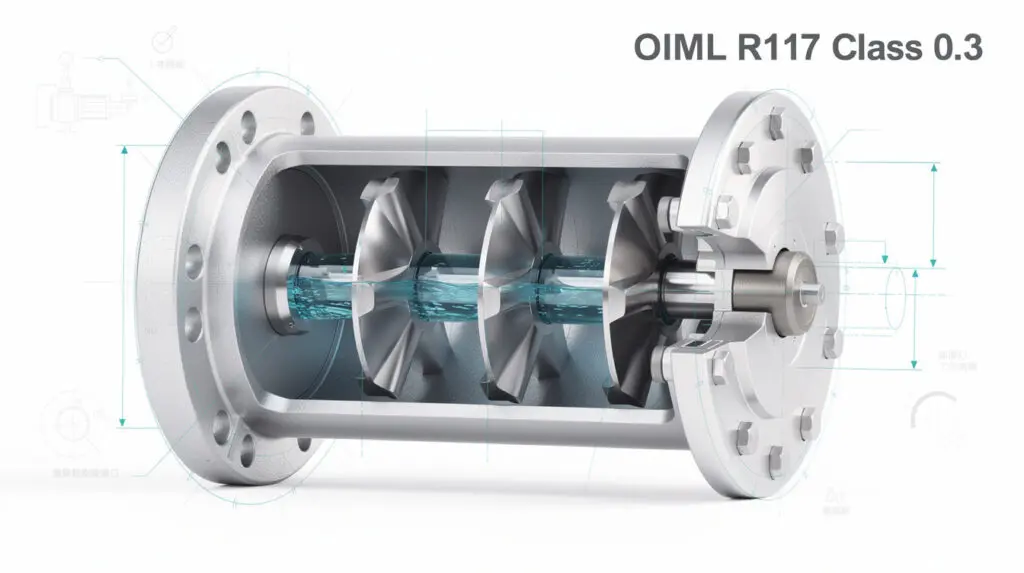
For diesel and light oils, the system typically must meet Class 0.3 or Class 0.5 requirements. This dictates not just the meter's standalone accuracy, but the Maximum Permissible Error (MPE) of the entire measuring system, including air eliminators, strainers, and preset valves.
I've calibrated enough turbine meters to know they don't belong anywhere near viscous fuels. (Frankly, seeing a turbine meter spec'd for a heavy diesel line is an amateur mistake). A turbine rotor relies on kinetic energy, meaning as fluid viscosity changes with temperature—like during a chilly Gujarat winter morning versus a 45°C summer afternoon—the rotor's slip factor alters the reading. To meet OIML R117 accuracy classes for diesel, you inherently need Positive Displacement (PD) technology.
This is exactly why we engineered the CE-113 High Accuracy Transfer Meter as a PD unit. PD meters divide the liquid into specific volumetric segments. Temperature shifts do not alter the volume of the measuring chamber, allowing these meters to hold an accuracy of ±0.2% across vast viscosity ranges.
Pro Tip: OIML R117 mandates that any meter drawing fuel from a tank under negative pressure or pumping conditions must have a mechanical or electronic air eliminator upstream of the measuring chamber. Metering air as fuel is the most common cause of legal metrology audit failures.
Selecting Compliant Diesel Flow Meters: The Specs That Matter
I see generic "high accuracy" requests on tenders all the time. It means nothing without the math and hardware to back it up. Legal metrology demands specific configurations designed to prevent tampering and ensure verifiable repeatability.
We built the Chintan Engineers lineup specifically to address these stringent metrological requirements. Here is a technical breakdown of compliant hardware:
| Model | Measuring Principle | Accuracy | Flow Envelope | Output / Display | Best Application |
| :— | :— | :— | :— | :— | :— |
| CE-113 | Positive Displacement (Rotary Vane) | ±0.2% | 25 – 1,300 L/min | Mechanical Register, Printer, Pulser | Bulk custody transfer, ticketing, OIML Class 0.3 compliance |
| CE-105 | Positive Displacement (Digital) | ±0.2% | Line-size dependent | LCD, Pulse, 4-20mA | High-accuracy digital SCADA integration |
| CE-110 | Mechanical PD | ±0.5% | 20 – 300 L/min | Mechanical Counter | Standard fuel depots needing rugged registers |
| CE-102 | Digital LCD PD | ±0.5% | 7 – 40 L/min | LCD Totalizer | Light duty dispensing and internal tracking |
The Custody Transfer Standard: CE-113
If you are handling true custody transfer, the CE-113 is engineered with aluminium and Viton construction, rated for 10 BAR pressure. It features a calibrator mechanism adjustable down to 0.2% accuracy. Crucially, it incorporates physical lead-wire sealing points on the calibration adjustment cover. Without these sealing points, a government inspector cannot legally stamp the meter, rendering it useless for commercial billing.
Are your depot meters legally verifiable?
Upgrade to custody-transfer grade positive displacement meters featuring ±0.2% accuracy and secure metrology sealing points.
Indian Industrial Context: Surviving GIDC Dust and Monsoon Humidity
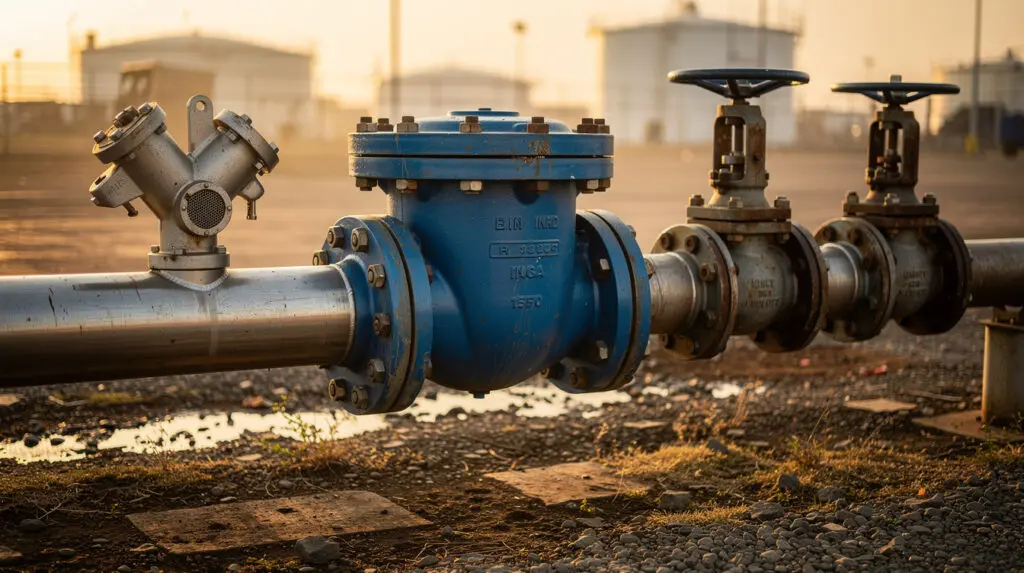
Procuring a meter that passes a pristine lab test in Germany is very different from installing that same meter in a Dahej chemical port or a dusty mining site in Odisha.
In India, flow meters face extreme grid voltage fluctuations, heavy particulate ingress, and the corrosive humidity of monsoons. When the Legal Metrology inspector tests your meter in the field, it must perform exactly as it did on day one.
Power Grid Resilience
Many digital meters lose their calibration K-factor during severe brownouts. We routinely deal with 415V three-phase lines that dip and spike unpredictably. This is why models like the CE-111 Digital PD Meter utilize non-volatile memory and battery-backed electronics. If you are integrating this into a larger automated system, review our Liquid Batching System Price: 5-Year TCO Analysis to understand the long-term cost of electronic failures.
Particulate Matter and Filtration
Indian diesel supply chains unfortunately suffer from high particulate contamination. A 0.2% accuracy PD meter operates with micron-level clearances between the rotor and the housing. I cannot stress this enough: install an 80-mesh upstream strainer. If you don't, rust from older MS storage tanks will score the chamber walls. Once scored, fluid slips past the rotor, the meter under-reads, and your compliance certificate becomes void.
Did You Know: Thermal Expansion Facts: Diesel expands by approximately 0.083% for every 1°C rise in temperature. In the Indian summer, a 20°C temperature swing between night and day alters the volume of a 10,000L delivery by roughly 83 litres. Compliant systems must either measure mass (Coriolis) or utilize Automatic Temperature Compensation (ATC) algorithms.
TCO and ROI: The True Cost of Non-Compliance
Let's crunch the Total Cost of Ownership (TCO) numbers. I've run this calculation for dozens of fleet operators. Assume you are dispensing 10,000 litres of diesel daily to an internal fleet or contractor network. Diesel currently sits at roughly ₹90 per litre.
Scenario A: The Uncertified Turbine Meter
- Capital Expenditure: ₹15,000
- Error Rate due to viscosity slip and wear: 1.5% under-registration
- Daily lost fuel volume: 150 Litres
- Daily financial loss: ₹13,500
- Monthly financial loss: ₹4,05,000
Scenario B: The CE-113 Custody Transfer Meter
- Capital Expenditure: ₹65,000 (approximate, with strainer and air eliminator)
- Maximum Permissible Error (OIML compliant): 0.2%
- Daily tracked variance: 20 Litres
- Daily financial variance: ₹1,800
- Monthly financial variance: ₹54,000
The ROI on upgrading to a legally compliant, precision PD meter is realized in exactly 4 days.
Installation, Sealing, and Proving
I've seen perfectly good BIS-approved meters fail a metrology inspection because a piping contractor ignored basic fluid dynamics. Based on thousands of field installations, here is the protocol you must follow:
- Hydraulic Profile: Ensure a minimum of 10x pipe diameter straight run upstream and 5x downstream, even for PD meters. This prevents turbulent cavitations that can introduce air into the chamber.
- Air Elimination: Position the air eliminator at the highest point before the meter inlet. Ensure the vent pipe routes safely back to the storage tank.
- Proving: Proving must be done using a volumetric prover can that is itself certified by Legal Metrology. You cannot calibrate a meter by pumping fuel into an uncalibrated drum and guessing the volume. If your dispensing system starts acting erratically, consult our Diesel Dispenser Troubleshooting Guide for Engineers before breaking the metrology seal.
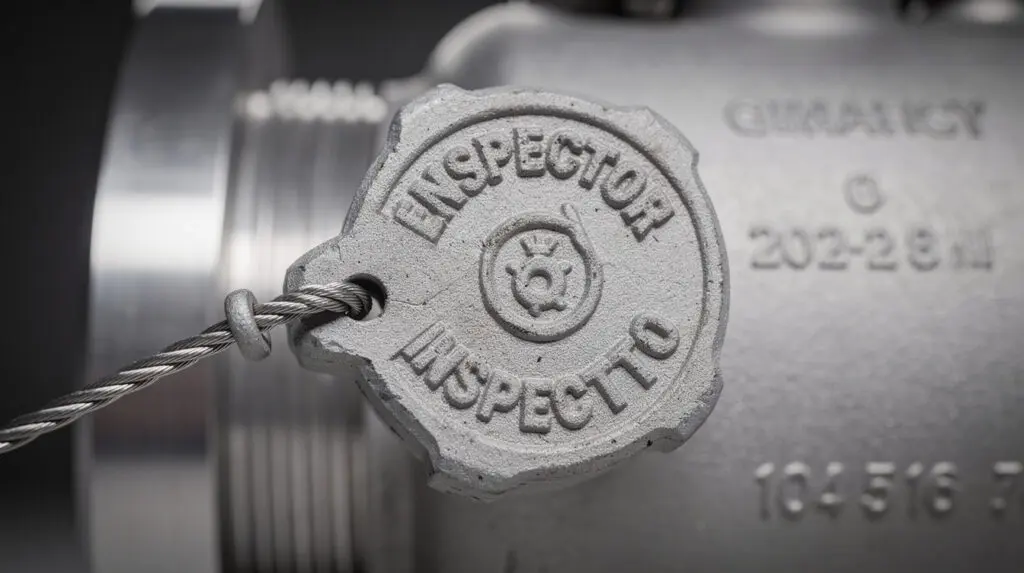
- Sealing: Once calibrated, the inspector will thread a lead wire through the calibrator dial, the mechanical register mounting bolts, and the main housing. Never break this seal without an inspector present, or you risk immediate legal action.
Need assistance with metrology-compliant skid design?
Chintan Engineers designs complete dispensing skids complete with air elimination, strainers, and sealing nodes ready for immediate Legal Metrology inspection.
Frequently Asked Questions
What is the difference between BIS and Legal Metrology for flow meters?
BIS (Bureau of Indian Standards) dictates the engineering and manufacturing standards (like IS 14883) for the meter's endurance and accuracy limits. Legal Metrology is the government enforcement body that uses those standards to certify, stamp, and regulate meters used in commercial transactions to prevent fraud.
Can I use a digital turbine meter for diesel custody transfer?
No. And I will fight procurement teams on this every time. Turbine meters suffer from varying slip factors when fluid viscosity changes due to temperature. They cannot maintain the ±0.2% accuracy over the required flow range mandated by OIML R117 Class 0.3 for viscous custody transfer. You must use Positive Displacement meters.
How often does a diesel flow meter require legal stamping in India?
Under the Legal Metrology Rules, flow meters used for fuel dispensing and custody transfer generally require re-verification and stamping annually. However, if the metrology seal is broken for maintenance, it must be re-calibrated and re-stamped immediately before being put back into commercial use.
Do I need an air eliminator for internal fleet fuel tracking?
Yes. Pumping air is the fastest way to lose your inventory reconciliation. Without it, as your storage tank runs low, the pump will pull air. The meter will read that air as fuel, ruining your internal data and masking potential fuel theft.
What output is required for a compliant SCADA integration?
For automated systems, use a meter like the CE-105 that offers dual outputs—a secure local digital display that cannot be tampered with, alongside a pulse or 4-20mA output directed to your PLC. The local display acts as the legally verifiable master totalizer.
Final Engineering Recommendation
Procuring flow meters based solely on lowest upfront capital cost is an engineering failure that guarantees long-term financial losses. Fuel is simply too expensive, and the legal penalties for non-compliance are too severe, to rely on uncertified equipment.
Based on 22 years of field data, here is what I recommend for your operation: If you are conducting inter-departmental billing, selling fuel to contractors, or managing high-volume depot transfers, specify the Chintan CE-113 High Accuracy Transfer Meter.
Copy and paste these exact bullet points into your next RFQ:
- Positive Displacement measurement principle.
- ±0.2% standalone accuracy with a built-in calibration adjustment wheel.
- Predrilled metrology sealing points on the register and calibrator.
- Integrated upstream strainers and mechanical air elimination.
Do not compromise on these four parameters. A legally compliant meter pays for itself within the first week of operation by capturing the fuel you didn't even know you were losing.
Stop losing fuel to uncalibrated measurement.
Equip your operation with Chintan Engineers' legally compliant Positive Displacement meters. Built for Indian conditions, engineered for absolute accuracy.
