
















For industrial plants, fleet logistics hubs, and remote construction sites across India, fuel is one of the highest operational expenses. Managing diesel, petrol, or specialty fluids requires high-precision metering and reliable delivery systems. However, even the most robustly engineered Fuel Dispenser will experience component wear, calibration drift, and flow degradation if left unmaintained. In demanding Indian site conditions—characterized by high ambient temperatures, heavy dust loads, monsoon humidity, and inconsistent power supply—unplanned equipment failure results in halted operations and massive financial losses.
Consider the economics of fuel shrinkage: an undetected calibration drift of just 1% on a daily throughput of 5,000 liters results in 50 liters of unaccounted fuel per day. At standard Indian diesel prices, that translates to over ₹1,30,000 in untracked fuel costs per month. Implementing a rigorous, technically sound Fuel Dispenser maintenance guide is not just a standard operating procedure; it is a critical strategy for asset protection, loss prevention, and compliance with the Legal Metrology Act.
This guide provides a comprehensive preventive maintenance framework for industrial operators. It covers critical component care, step-by-step diagnostic procedures, and engineered solutions to mitigate the impact of harsh environmental conditions on your fueling infrastructure.
In This Article
1. Product Overview and Critical Wear Components
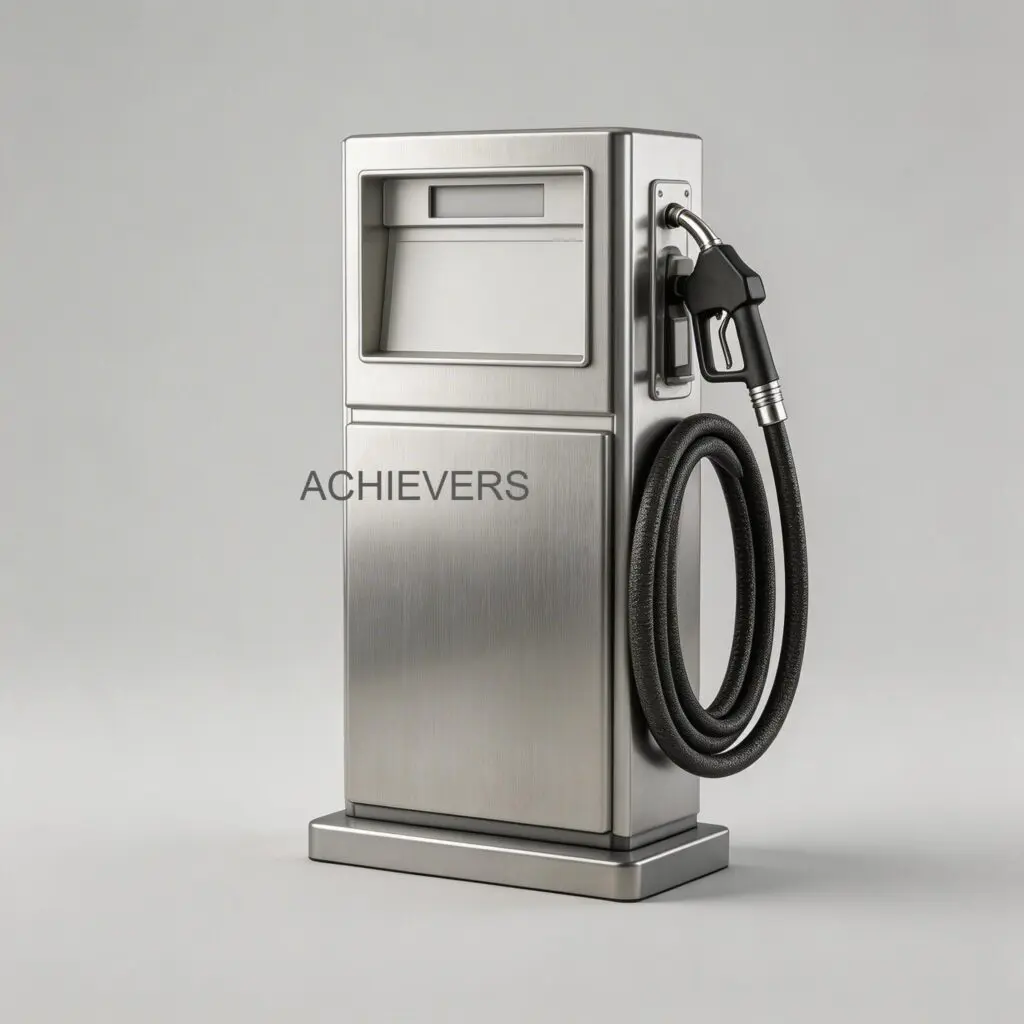
To properly maintain a Fuel Dispenser, operators must understand the electromechanical architecture of the system. Industrial dispensing units, such as those manufactured by Chintan Engineers, combine high-torque pumping mechanisms with precision positive displacement (PDP) or oval gear meters, regulated by digital microprocessors and heavy-duty contactors.
The core of an industrial Fuel Dispenser typically involves a 12/24V DC motor for mobile trolley kits (like the CE-130) or a robust 220V/440V AC motor for stationary units (like the heavy-duty CE-217). These motors drive rotary vane pumps or gear pumps that generate flow rates ranging from 20 to 110 L/min.
While these systems are built for endurance, specific mechanical and electrical components are considered "consumable" or "high-wear" and require scheduled intervention:
- Rotary Vane Pump Blades: Carbon or synthetic vanes continuously slide against the pump stator. Contaminated diesel or abrasive particles accelerate vane wear, reducing suction lift and flow rate.
- Positive Displacement (PDP) Meters: Internal pistons or oval gears rely on ultra-tight tolerances to measure fluid volumetrically. Wear here directly causes accuracy drift beyond the standard ±0.5% (or ±0.2% on high-accuracy CE-204 models).
- Filtration and Strainers: Indian fuel supply chains often introduce particulate matter, rust from storage tanks, and water ingress. Y-strainers and internal micron filters bear the brunt of this contamination.
- Delivery Hoses and Auto Shut-Off Nozzles: Constant UV exposure, physical dragging, and high-pressure pulsing deteriorate anti-static hoses. The venturi mechanisms inside auto shut-off nozzles can clog, disabling the safety shut-off feature and causing spills.
- Electrical Contactors and Relays: Voltage fluctuations inherent in Indian power grids (often dropping below 180V or surging above 250V on single-phase lines) cause relay chatter, carbon buildup on contactors, and eventual motor failure.
For mobile applications, such as a Mobile Fuel Dispenser mounted on a mining bowser, extreme vibration also threatens electronic display connections and grounding wires.
2. Preventive Maintenance Schedule
A structured preventive maintenance checklist for Fuel Dispenser accuracy and safety ensures that minor wear does not escalate into catastrophic failure. This schedule assumes a standard industrial duty cycle (approx. 2,000 to 5,000 liters dispensed daily) in a typical Indian manufacturing or logistics environment.
| Maintenance Task | Frequency | Responsible Personnel | Est. Time | Notes & Tolerances |
| :— | :— | :— | :— | :— |
| Visual Leak Inspection | Daily | Pump Operator | 5 mins | Inspect hose joints, nozzle swivels, and pump base for weeping fluid. Report immediately. |
| Nozzle Auto Shut-Off Test | Daily | Pump Operator | 2 mins | Test venturi action by dispensing into a calibrated test can. Nozzle must click off instantly when fuel covers the tip. |
| Y-Strainer / Mesh Filter Cleaning | Weekly | Maintenance Tech | 15 mins | Isolate supply valve before opening. Wash stainless steel mesh with clean solvent. Blow dry with compressed air. |
| Hose & Swivel Inspection | Weekly | Maintenance Tech | 5 mins | Check for UV cracking, bulges, or crushed sections. Ensure 360-degree rotation on nozzle swivels. |
| Earthing / Grounding Verification | Monthly | Electrical Tech | 10 mins | Measure earth pit resistance. Must be strictly below 2 Ohms per PESO regulations to prevent static discharge fires. |
| Motor Current (Amperage) Check | Monthly | Electrical Tech | 10 mins | Use a clamp meter. High amps indicate a clogged filter, bearing wear, or tight pump rotor. Compare against motor nameplate. |
| Volumetric Calibration Check | Monthly | Metrology/QC Tech | 30 mins | Dispense into a certified 20L or 50L proving measure. Tolerance is ±0.5% (±100ml per 20L). Adjust via preset controller if needed. |
| Internal Filter Element Replacement | Bi-Annually | Maintenance Tech | 20 mins | Replace 10-micron or 30-micron spin-on or cartridge filters. Do not attempt to wash paper-element filters. |
| Rotary Vane Inspection | Annually | Mechanical Eng. | 60 mins | Open pump faceplate. Measure vane length and check stator for grooving. Replace carbon vanes if worn beyond manufacturer limits. |
| Electrical Terminal Tightening | Annually | Electrical Tech | 20 mins | Vibration loosens AC/DC connections. Torque all contactor, motor, and display PCB terminals to prevent arcing. |
3. Step-by-Step Procedures for Key Tasks
Industrial operations require standardized Standard Operating Procedures (SOPs) to ensure maintenance is performed safely and consistently. Below are two of the most critical procedures for maintaining dispenser health.
Procedure 1: Strainer and Filter Cleaning
Clogged filters are the leading cause of pump cavitation, premature vane wear, and sluggish flow rates. In industrial plants dealing with bulk diesel storage, this must be a strict weekly protocol.
- Isolate Power and Fluid: Switch off the main electrical isolator supplying the dispenser. Close the main gate valve or ball valve on the suction line from the underground/overhead tank.
- Relieve Line Pressure: Squeeze the dispensing nozzle into a safe container to relieve any residual hydrostatic pressure in the delivery hose.
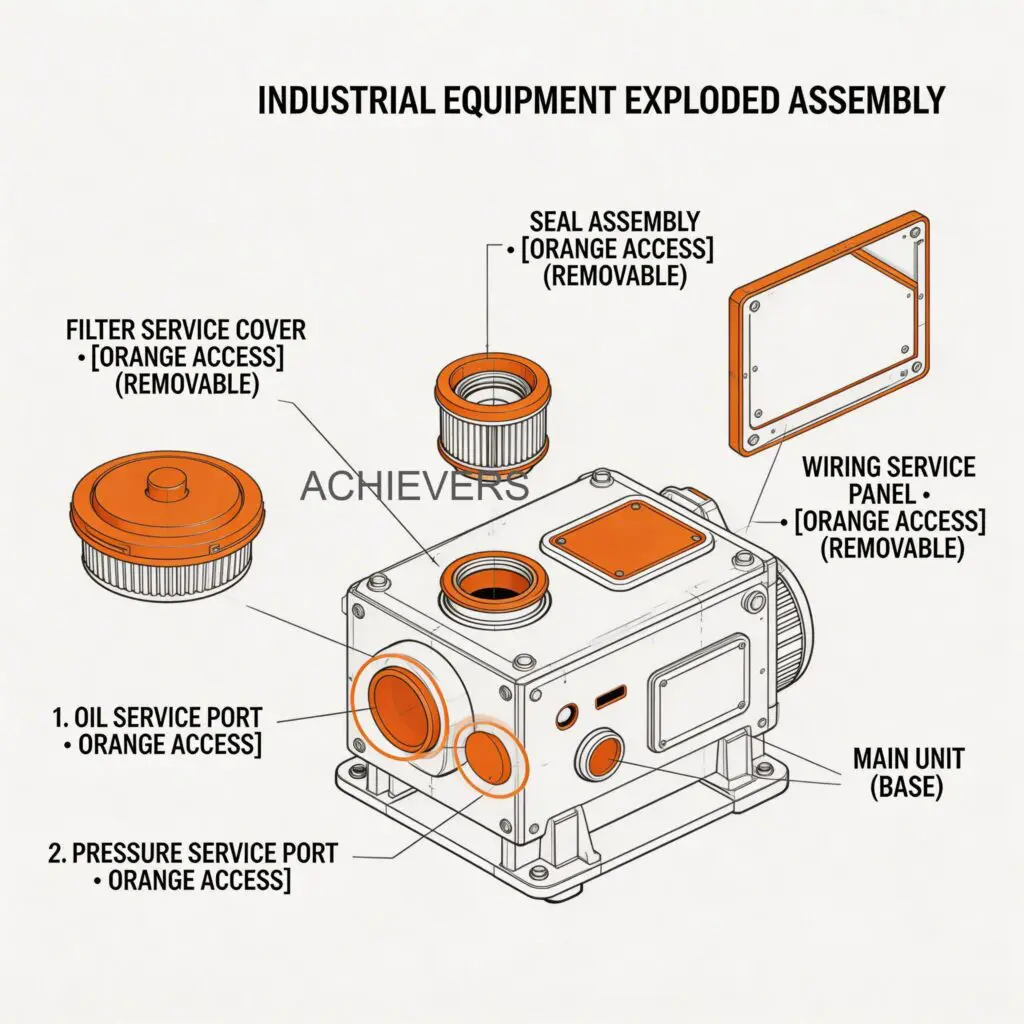
- Locate the Strainer: Identify the Y-strainer housing (usually located on the inlet side of the rotary pump) or the spin-on filter housing.
- Open the Housing: Using the appropriate spanner or strap wrench, carefully unthread the strainer cap or filter bowl. Keep a drip tray underneath to catch residual fuel.
- Extract the Mesh/Element: Remove the stainless steel mesh cylinder or internal filter element. Inspect the housing interior for heavy sludge, rust flakes, or water pooling.
- Clean or Replace: If it is a stainless steel Y-strainer mesh, wash it thoroughly in clean kerosene or a specialized parts-cleaning solvent. Use a soft nylon brush to clear the pores, then blow it out with low-pressure compressed air (from the inside out). If it is a paper micron filter, discard it and prepare a new one.
- Inspect O-Rings: Examine the cap O-ring or flat gasket for flattening, cuts, or chemical swelling. Replace the seal if compromised to prevent air ingress on the suction side.
- Reassemble and Prime: Insert the cleaned mesh or new filter. Apply a thin film of clean oil to the O-ring and tighten the cap securely.
- Restore and Bleed: Open the main suction valve. Turn on the power. If your system requires manual priming, follow the manufacturer's bleeding procedure. Dispense 5-10 liters into a test can to purge any trapped air before returning to regular service.
Procedure 2: Calibration Drift Check and Adjustment
Accurate fuel accounting relies entirely on the precision of the Diesel Flow Meter or PDP meter inside your dispenser. Wear, temperature fluctuations, and flow rate variations can cause minor drifts.
- Prepare the Proving Measure: Ensure you have a Legal Metrology certified, dent-free 20-liter or 50-liter volumetric proving can with a readable sight glass and graduated scale. Place it on a perfectly level surface near the dispenser.
- Pre-Wet the Measure: Dispense fuel into the measure up to the zero mark, then empty it according to the prescribed drain time (usually 30 seconds after the main flow stops). This coats the inside of the can, ensuring the actual test volume is not artificially low due to liquid clinging to dry walls.
- Execute the Test Run: Set the dispenser preset to exactly 20.00 (or 50.00) liters. Dispense at the maximum normal flow rate by fully engaging the nozzle trigger.
- Allow for Settling: Once the dispenser stops automatically, wait 10-15 seconds for fuel foam to dissipate and the liquid level in the sight glass to stabilize.
- Read the Meniscus: Check the liquid level against the graduated scale. Note the exact over-delivery (plus) or under-delivery (minus) in milliliters.
- Calculate the Error: If the dispenser delivered 20 liters on the display, but the can shows 19.90 liters, the unit is under-delivering by 100ml. The accuracy is within ±0.5%, which is standard. If the error exceeds acceptable plant limits (e.g., ±50ml for high-precision auditing on the CE-204), adjustment is required.
- Adjust the Calibration: For mechanical meters, turn the calibration adjustment screw (usually located under a lead seal plate) clockwise or counter-clockwise according to the service manual. For digital controllers, access the secure calibration menu via the keypad (requires admin PIN) and adjust the pulse-per-liter factor or K-factor.
- Verify and Seal: Perform a second test run to confirm the adjustment. Once accuracy is verified, re-apply anti-tamper seals to comply with internal audits and Legal Metrology requirements.
4. On-Site Spare Parts to Stock
Procurement heads must realize that relying solely on OEM dispatch for critical wear parts can result in 48 to 72 hours of downtime. In a high-volume logistics hub, this is unacceptable. A comprehensive Fuel Dispenser spare parts and service support strategy requires holding a local inventory of high-turnover consumables.
Below is the recommended stocking list for a standard industrial setup operating 2-3 dispensing units:
| Part Description | Component Type | Recommended Qty (per 3 units) | When to Replace |
| :— | :— | :— | :— |
| Stainless Steel Y-Strainer Mesh | Filtration | 2 | If mesh is torn, crushed, or irreparably clogged with asphaltine. |
| Spin-On Fuel Filter (10 Micron) | Filtration | 6 | Every 3-6 months, or immediately if flow rate drops by >20%. |
| Auto Shut-Off Nozzle (1-inch) | Delivery | 1 | If venturi fails, trigger lock breaks, or swivel leaks. |
| Anti-Static Delivery Hose (5m) | Delivery | 1 | If outer jacket cracks, bulges appear, or fittings weep under pressure. |
| Carbon Vane Kit | Pump Internals | 1 set | When pump loses suction lift or motor amp draw fluctuates heavily. |
| O-Ring and Seal Kit | Meter/Valves | 2 sets | During any internal maintenance or if weeping is detected at joints. |
| Thermal Printer Paper Rolls | Electronics | 10 rolls | Keep stocked for CE-204 models to maintain audit trails. |
5. Diagnosing Maintenance-Related Failures
A vital aspect of industrial Fuel Dispenser calibration and filter maintenance is the ability of site engineers to diagnose issues rapidly. Not every fault requires an external technician. Most breakdowns are directly correlated to missed preventive maintenance.
| Failure Symptom | Missed Maintenance Task | Corrective Action & Diagnosis |
| :— | :— | :— |
| Pump motor hums but does not rotate. | Filter cleaning; visual inspection. | Debris has bypassed the filter and jammed the pump rotor, or phase-loss has occurred. Disconnect power, manually turn motor shaft. If stuck, rebuild pump. |
| Flow rate is excessively sluggish (<20 L/min). | Filter replacement; vane inspection. | Severely clogged suction strainer or worn carbon vanes. Check suction vacuum. Clean strainer and inspect pump internals. |
| Fuel leaks from the nozzle tip when off. | Visual inspection; nozzle cleaning. | Debris caught in the nozzle's main poppet valve seat. Replace the nozzle or disassemble to clean the valve seat. |
| Digital display flickers or resets during pumping. | Earthing/Grounding check; terminal tightening. | Static discharge traveling up the hose due to broken anti-static wire, or loose 220V power terminals. Verify earth pit <2 Ohms. |
| Dispenser continues pumping past preset batch. | Solenoid valve maintenance. | Dirt or rust particles preventing the dual-stage solenoid valve from closing. Open solenoid manifold and clean the diaphragm. |
| Meter registers volume, but no fluid flows. | Leak check (suction side). | Massive air leak on the suction line. The meter is measuring drawn air, not liquid. Check all suction joints, O-rings, and tank non-return valves (NRV). |

6. Extending Service Life in Indian Conditions
Operating industrial fluid handling equipment in India presents unique environmental challenges. An effective Fuel Dispenser AMC schedule in India must account for the following site-specific stressors:
High Ambient Temperatures and Heat
In regions like Rajasthan, Gujarat, and central India, summer temperatures frequently exceed 45°C. Direct sunlight on the dispenser cabinet acts as an oven.
- Impact: Diesel expands thermally, affecting volumetric accuracy. Electronic PCBs can overheat, causing erratic display behavior. Vapor lock can occur in suction lines.
- Solution: Install a basic canopy or sunshade over the fueling island. Ensure the dispenser’s ventilation louvers are clear of dirt. Perform calibration proving during the early morning when fuel temperatures are stable.
Dust and Particulate Matter
Mining sites, cement plants, and road construction corridors expose equipment to heavy airborne dust.
- Impact: Fine dust penetrates standard IP-rated enclosures, settling on contactors and printer mechanisms. Dust entering the nozzle spout gets pushed directly into vehicle tanks.
- Solution: Specify weatherproof and dust-proof enclosures. Keep the nozzle securely holstered in the boot switch when not in use. Use a specialized nozzle cover bag for highly dusty environments like coal mines.
Power Quality and Voltage Variations
Industrial estates often suffer from severe voltage dips, voltage spikes, and phase imbalances.
- Impact: A 220V motor running at 180V will draw excessive amperage, overheating the stator windings. Contactor coils will "chatter," causing arcing and premature failure.
- Solution: Never connect a commercial dispenser directly to raw grid power without protection. Install an industrial-grade automatic voltage regulator (AVR) or a dedicated MCCB panel with over/under-voltage relays and phase loss protection.
Monsoon Humidity and Water Contamination
During the Indian monsoon, heavy rains lead to water ingress in underground storage tanks (USTs) and condensation in above-ground tanks.
- Impact: Water pumped through the dispenser will rust the internal steel components of the mechanical meter and cause massive damage to modern common-rail diesel engines in the fleet. Extreme humidity also causes thermal printer paper to jam.
- Solution: Utilize water-absorbing particulate filters (water coalescers/separators) before the pump inlet. Apply water-finding paste to the storage tank dipstick weekly. Keep the internal cabinet doors tightly sealed to protect PCBs from condensation.
Adulterated or Contaminated Fuel
It is not uncommon for industrial diesel deliveries to contain suspended rust, asphaltines, or chemical adulterants.
- Impact: Harsh chemicals can swell standard NBR (Nitrile) O-rings, leading to internal leaks and pressure loss.
- Solution: If handling varying fluid qualities, ensure the dispenser is built with Viton or PTFE seals (such as custom configurations in the CE-215 model). Maintain a strict two-stage filtration approach: bulk filtration at the storage tank discharge, followed by the dispenser's internal micro-filter.
FAQ
Q: How often must a commercial Fuel Dispenser be officially calibrated in India?
A: Under the Legal Metrology Act, any dispensing unit used for commercial transactions must be stamped and verified annually by the local Weights & Measures department. For internal captive use (like a factory fleet), bi-annual internal proving is highly recommended to prevent fuel shrinkage.
Q: We experience frequent motor burnouts. What is the most likely cause?
A: In Indian industrial setups, this is rarely a manufacturing defect. It is almost always caused by operating on low voltage (which spikes amperage) or a severely clogged suction strainer causing the motor to work against a massive vacuum. Install under-voltage relays and clean filters weekly.
Q: Does a Fuel Dispenser AMC (Annual Maintenance Contract) cover spare parts?
A: Standard AMC contracts typically cover scheduled preventive maintenance visits, calibration checks, and labor for emergency breakdowns. Consumables (filters, hoses, nozzles, carbon vanes) are usually billed as per actual consumption unless a comprehensive AMC is specifically negotiated.
Q: Can we pump petrol and diesel through the same dispensing unit?
A: Technically, the internal pumps and meters can handle both, but doing so is extremely dangerous and violates PESO safety regulations. Petrol requires strict flameproof (Ex/FLP) motors, specific anti-static hoses, and vapor recovery systems. You must dedicate a dispenser to a single fuel type to prevent cross-contamination and explosion risks.
Q: What is the difference in maintaining a mobile bowser dispenser versus a stationary one?
A: Mobile units powered by 12V/24V DC batteries (like the CE-130 or CE-202) face extreme vibration. Maintenance must focus heavily on checking battery terminal tightness, inspecting mounting bolts for structural fatigue, and ensuring the grounding strap dragging from the truck chassis to the earth is intact.
Q: Why does the auto shut-off nozzle keep clicking off before the tank is full?
A: The venturi sensing hole at the tip of the nozzle is likely blocked by dirt or fuel residue, or the flow rate of the pump is set too high, causing blowback from the vehicle's filler neck. Clean the nozzle tip and ensure the hose isn't kinked.
Q: Our meter is drifting beyond ±1.0% every few months. What causes rapid calibration loss?
A: Rapid drift in positive displacement meters is typically caused by highly abrasive fuel (sand/rust bypassing a torn filter) scoring the internal piston walls, or thermal expansion issues where proving is done during a hot afternoon and actual dispensing occurs in cold mornings. Check your filtration integrity immediately.
Ensuring accurate fuel management requires the right combination of robust equipment and proactive engineering oversight. Whether you are dealing with abrasive dust at a mining site or voltage fluctuations in an industrial park, your dispensing infrastructure needs to be configured correctly from day one. If you are experiencing high maintenance downtime, excessive calibration drift, or require an upgrade to an audited, digital fueling system, contact our technical team. Request a customized proposal by sharing your desired flow rate, fluid type, and site power conditions, and we will engineer a solution built to endure your operational environment.
