
















In the competitive landscape of Indian manufacturing and logistics, fluid management is not just about moving liquid from point A to point B; it is about accountability, cost control, and operational efficiency. Whether you are managing a fleet of transport vehicles, monitoring fuel consumption in diesel generators, or overseeing batching processes in a chemical plant, the accuracy of your measurement data is paramount. This is where high-quality Oil Flow Meters play a critical role.
However, even the most precise engineering solution can fail if deployed incorrectly. Industrial environments in India often present harsh challenges—varying temperatures, dust, vibration, and inconsistent power supplies. For plant managers and maintenance engineers, understanding the nuances of industrial oil flow measurement is essential to prevent downtime and financial loss. A minor installation error can lead to significant cumulative variances in reading, affecting your bottom line.
This guide explores the specific capabilities of our Oil Flow Meters and details the critical mistakes to avoid during installation to ensure your systems deliver the reliability and accuracy they were engineered to provide.
1. Precision Engineering for Industrial Fluid Management
Our Oil Flow Meters are designed to meet the rigorous demands of the Indian industrial sector. Engineered for fuel management, flow measurement, and fluid handling, these devices are the result of over 15 years of expertise in industrial flow systems. Unlike generic meters that may falter under continuous use, our products are built for durability and long-term value in demanding sectors such as logistics, manufacturing, and energy.
These meters are characterized by quality workmanship and are built to perform under tough conditions. A key feature of our manufacturing process is accurate calibration; every unit is verified and certified to ensure consistency before it leaves the factory. This commitment to precision makes them ideal for applications requiring strict inventory control and batch monitoring.
Key technical attributes include:
- High-Performance Design: tailored for diesel dispensing and industrial oil flow applications.
- Precision Calibration: ensuring repeat accuracy and linearity in flow readings.
- Robust Construction: engineered to withstand the mechanical stresses of industrial environments.
- Versatility: suitable for integration into broader batching systems or standalone dispensing units.
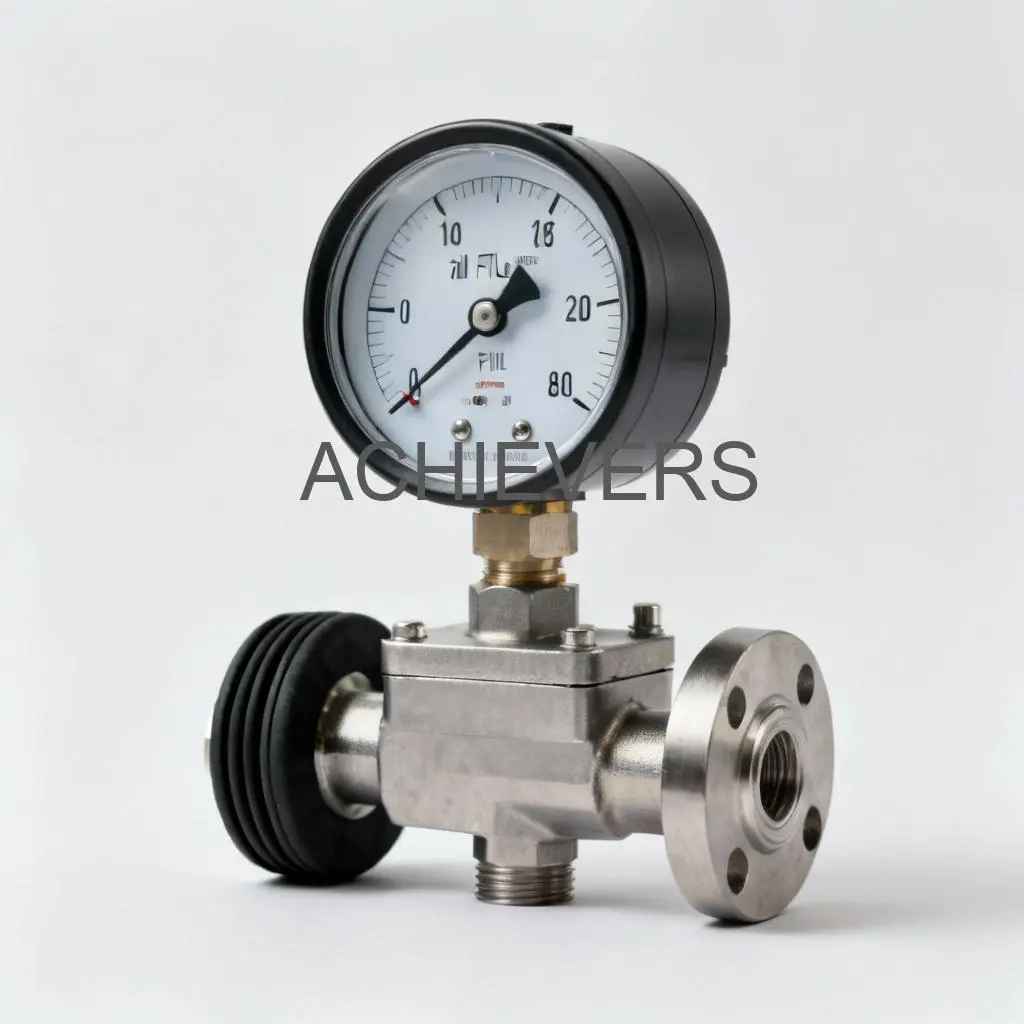
2. Top 5 Installation Mistakes to Avoid with Industrial Oil Flow Meters in India
This blog post will guide industrial users, maintenance engineers, and procurement teams in India on how to properly install oil flow meters for optimal accuracy and longevity. It focuses on common errors in mounting, flow direction, compatibility, and environment-related issues that can affect meter performance in real-world industrial applications.
As one of the leading oil flow meter suppliers in India, we frequently encounter sites where excellent hardware yields poor data simply due to installation oversights. Avoiding these five common mistakes will ensure your proper oil flow meter setup delivers the precision you paid for.
Mistake #1: Neglecting Upstream Filtration
One of the most common causes of oil flow meter accuracy issues and mechanical failure is debris. Industrial oil and diesel lines in India can often carry sediment, rust from older storage tanks, or metal shavings from new piping work.
- The Error: Installing the meter directly into the line without a strainer or filter.
- The Consequence: Particles can jam the internal gears or rotors, leading to immediate stoppage or gradual wear that destroys accuracy.
- The Fix: Always install a suitable mesh strainer upstream of the meter. Regular cleaning of this strainer is part of essential maintenance.
Mistake #2: Disregarding Flow Profile and Orientation
While positive displacement meters are generally more forgiving than turbine meters regarding straight pipe runs, flow profile still matters.
- The Error: Installing the meter immediately after a sharp bend, a partially open valve, or a pump outlet without sufficient spacing, or mounting the meter with the dial/display facing the wrong way (e.g., upside down where air pockets might trap).
- The Consequence: Turbulence and air cavitation can cause the meter to "read" air as oil, resulting in over-reading (ghost flow).
- The Fix: Ensure the meter is installed in a section of pipe that remains full of liquid at all times. Avoid high points in the piping where air accumulates.
Mistake #3: Ignoring Vibration and Pipe Stress
In many heavy industries, piping systems are subject to significant vibration from pumps or heavy machinery.
- The Error: Bolting the oil flow meters into a pipeline that is misaligned or vibrating heavily without support.
- The Consequence: Mechanical stress is transferred to the meter body, which can distort the measuring chamber or damage the electronic sensors/counters.
- The Fix: Use proper pipe supports on both the inlet and outlet sides of the meter. Use flexible connections if extreme vibration is present to isolate the measuring instrument.
Mistake #4: Incorrect Flow Sizing (Oversizing or Undersizing)
Procurement teams sometimes buy a meter based on the pipe size (e.g., "We have a 2-inch pipe, so we need a 2-inch meter") rather than the actual flow rate.
- The Error: Operating a meter below its minimum flow rate or above its maximum capacity.
- The Consequence:
- Undersizing (Flow too high): Excessive pressure drop and rapid wear of internal components.
- Oversizing (Flow too low): The fluid may slip past the internal gears without registering, leading to significant under-reading.
- The Fix: Size the meter based on your system's operational flow rate (LPM/GPM), not just the pipe diameter.
Mistake #5: Failing to Verify Fluid Compatibility
Industrial oils vary in viscosity and chemical composition.
- The Error: Using a standard meter calibrated for diesel on a high-viscosity gear oil line without recalibration or checking material compatibility.
- The Consequence: Viscosity changes affect the "slippage" factor in the meter, altering the calibration factor. Chemical incompatibility can cause seals to swell or degrade.
- The Fix: Communicate the exact fluid properties (viscosity, temperature, type) to us during the selection phase.
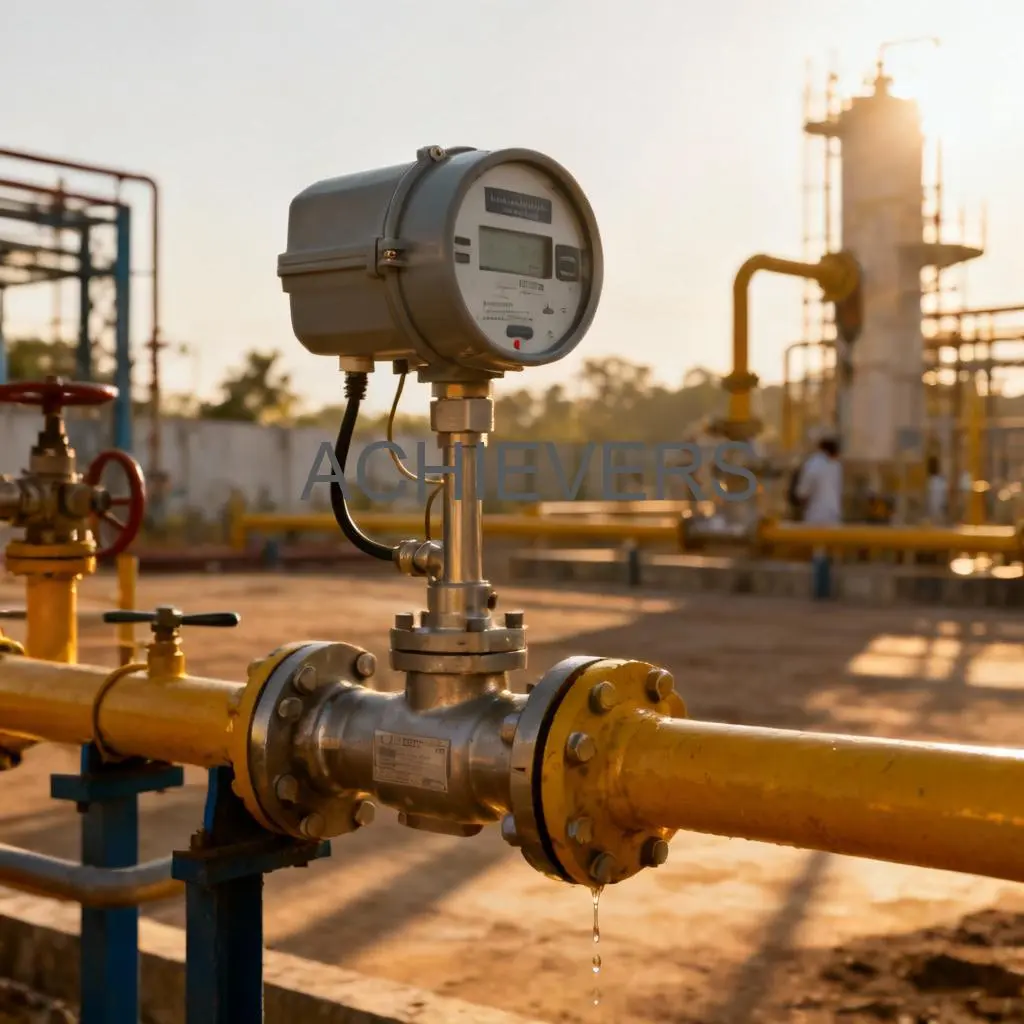
3. Selection and Configuration Guide
Choosing the right device is the first step in learning how to install oil flow meter correctly. At Chintan Engineers, we believe in a consultative approach. To ensure you get a solution "Built to perform under any condition," consider the following factors before ordering:
Technical Parameters to Define:
- Fluid Type & Viscosity: Is it Diesel, Kerosene, Lube Oil, or Heavy Furnace Oil? Higher viscosity fluids often require larger clearances or specific calibration factors.
- Flow Rate Range: Determine your minimum and maximum operating flow. The meter operates most accurately in the middle 60-70% of its range.
- Operating Pressure & Temperature: Ensure the meter body and seals are rated for your system's maximum pump pressure and fluid temperature.
- Readout Requirement: Do you need a mechanical register (for hazardous areas or sites without power) or a digital display with pulse output for remote monitoring?
Installation Environment:
- Indoor vs. Outdoor: Outdoor installations in India require UV protection and IP-rated enclosures for digital counters.
- Space Constraints: Ensure there is physical room for the required strainers and isolation valves.
4. Typical Applications
Our oil flow meters are utilized across a broad spectrum of Indian industries. Leveraging our 15+ years of expertise, we have deployed these solutions in:
- Logistics and Fleet Management: Monitoring fuel dispensing for trucks and heavy earthmovers to prevent pilferage and track efficiency.
- Manufacturing Plants: Measuring fuel input for boilers, furnaces, and diesel generators (DG sets) to calculate energy costs accurately.
- Chemical and Processing Industries: Precise batching of industrial oils and additives into mixing tanks.
- Energy Sector: Critical flow measurement for power generation auxiliary systems.
These applications demand distinct configurations—what works for a gravity-fed diesel tank may not work for a high-pressure lubrication pump. Our "End-to-End Solutions" approach ensures the meter selected fits the specific application perfectly.
5. Service, Installation, and Support
Even the best hardware requires support. At Chintan Engineers, we stand by our promise of "Enduring Support – From installation to maintenance and AMC."
Installation Best Practices:
- Professional Commissioning: We recommend having technical experts oversee the initial setup to verify flow direction, calibration, and leak-free connections.
- Calibration Services: Over time, mechanical wear can cause slight drift in readings. We provide accurate calibration services, verified and certified for consistency, ensuring your process remains compliant.
- Transparent Communication: Our support comes with no hidden costs. Whether you need guidance on installation tips for oil flow meters or require spare parts, our team provides clear, honest advice.
The Value of AMC:
For critical infrastructure, an Annual Maintenance Contract (AMC) ensures that your flow meters are cleaned, calibrated, and inspected regularly. This proactive approach minimizes the risk of sudden failure and ensures your data remains trustworthy year after year.
Call to Action
Don't let installation errors compromise your fluid management system. Ensure accuracy, reliability, and longevity by choosing the right equipment and the right partner.
Contact Chintan Engineers today to discuss your specific requirements. Whether you need a single replacement unit or a complete fuel management system, our experts are ready to assist.
When you contact us, please have the following details ready for a rapid quote:
- Product: Oil Flow Meters
- Fluid Name & Viscosity: (e.g., Diesel, Gear Oil)
- Flow Rate: (Min/Max in LPM)
- Line Size: (Inches/mm)
- Application: (e.g., Boiler feed, Truck loading)
Driven by Innovation. Powered by Engineering. Let us help you measure with precision.
