
















In the diverse landscape of Indian manufacturing—ranging from pharmaceutical hubs in Gujarat to textile units in Maharashtra and dairy cooperatives across the nation—fluid handling is the circulatory system of the plant. For engineers and plant managers, the integrity of this system relies heavily on the equipment chosen to move process fluids. When dealing with corrosive chemicals, food-grade liquids, or high-purity water, standard cast iron pumps simply cannot survive. This is where SS Pumps become the critical standard for reliability and hygiene.
However, simply specifying "Stainless Steel" is rarely enough. The difference between a pump that lasts ten years and one that fails in six months often lies in the specific grade of metallurgy, the type of sealing system employed, and the compatibility of internal elastomers. For industrial buyers, understanding these nuances is essential to prevent leakage, contamination, and costly unplanned downtime.
As leading SS pump manufacturers in India, we understand that selecting the right pump is a balance of chemistry, physics, and operational economics. This guide delves into the technical criteria for selecting the correct metallurgy and sealing arrangements for our SS Pumps, ensuring your operations run smoothly whether you are handling aggressive acids or pasteurized milk.
1. What This Product Does: Engineering Precision in Fluid Transfer
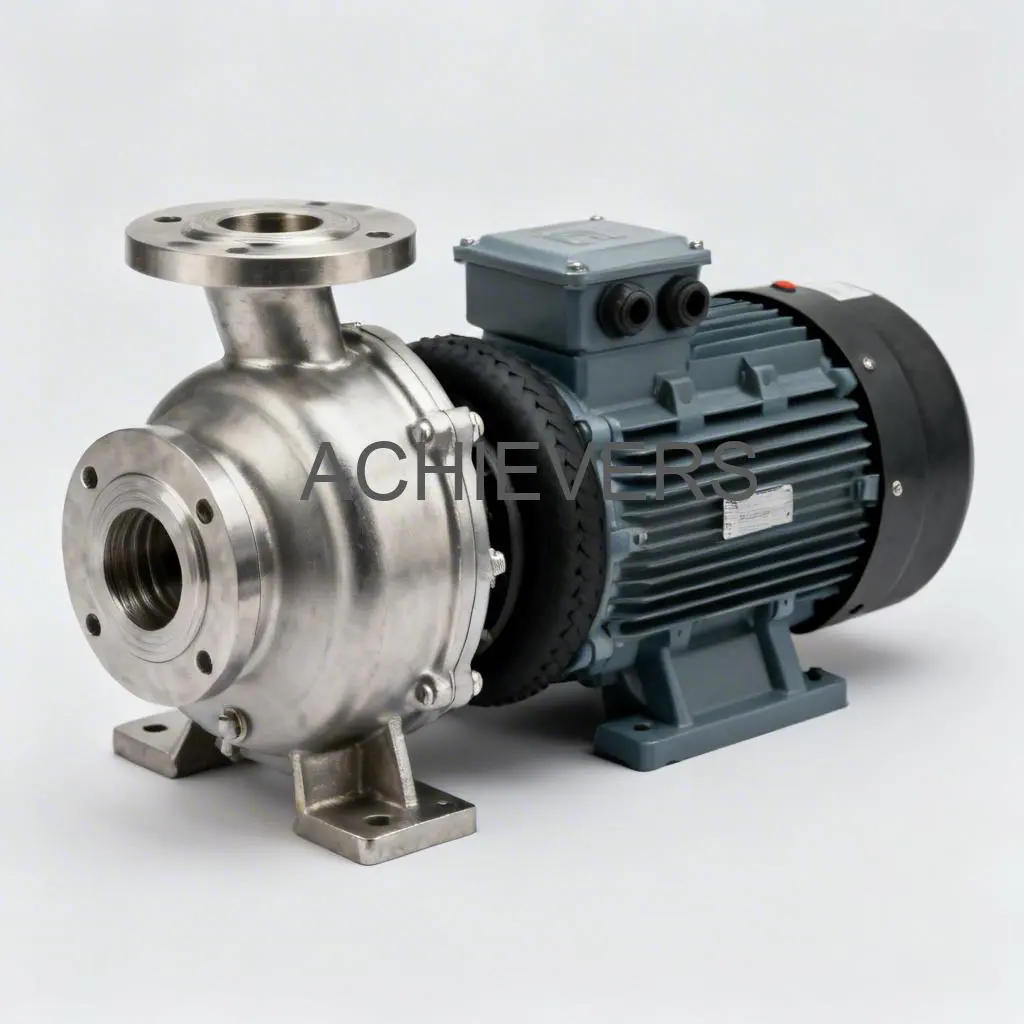
At its core, the SS Pumps range offered by Chintan Engineers is designed for the transfer of liquids where chemical resistance and hygiene are non-negotiable. Unlike general-purpose water pumps, these units are engineered using high-grade stainless steel (typically SS304 or SS316) for all wetted parts—including the casing, impeller, backplate, and shaft.
These pumps typically operate on a centrifugal principle. An electric motor drives an impeller within the stainless steel casing, creating a vacuum at the suction eye and flinging the fluid outward to the discharge point using centrifugal force. The use of stainless steel ensures that the pump does not react with the fluid, maintaining the purity of the product and the structural integrity of the pump housing.
Key Technical Specifications & Features:
- Material of Construction (MOC): All wetted parts are crafted from corrosion-resistant Stainless Steel (SS-304 / SS-316).
- Design Construction: Available in Monoblock (motor and pump on a single shaft) or Coupled (pump and motor connected via coupling) designs, offering flexibility for space and maintenance preferences.
- Corrosion Resistance: specifically engineered to withstand acidic, alkaline, and saline environments that would corrode cast iron or mild steel instantly.
- Hygiene Standards: Smooth internal finishes prevent bacterial growth, making them suitable for food, dairy, and beverage applications.
- Operating Range: Engineered to handle a wide range of flow rates and head pressures suitable for transfer, loading/unloading, and circulation duties.
2. Metallurgy and Seal Selection: The Engineer’s Guide
Choosing the right pump goes beyond flow rate and head pressure. The chemical properties of the fluid dictate the survivability of the pump. Below is a comprehensive guide on how Indian plant buyers should navigate stainless steel pumps material selection SS304 vs SS316, seal configurations, and elastomers.
Metallurgy: SS304 vs. SS316
The base material of the pump casing and impeller is the first line of defense against corrosion.
- SS304 (CF8):
- Best For: Food and dairy applications (milk, whey), treated water (RO water, DM water), mild chemicals, and organic solvents.
- Why Choose It: It offers excellent resistance to oxidation and corrosion in standard environments. It is the cost-effective standard for hygiene-critical applications where aggressive chemical attack is not a concern.
- SS316 (CF8M):
- Best For: Pharmaceutical injectables, aggressive acids (phosphoric, acetic), alkalis, salty environments (brine), and high-temperature CIP loops.
- Why Choose It: SS316 contains Molybdenum (2-3%), which drastically improves resistance to pitting corrosion, particularly from chlorides and industrial solvents. If your plant is near the coast or handles chemically aggressive fluids, SS316 is the mandatory choice to extend the asset's lifecycle.
Sealing Systems: Containing the Fluid
The shaft seal is often the most vulnerable part of a centrifugal pump. Selecting the wrong seal type is the leading cause of leakage in chemical plants.
- Gland Packing:
- Usage: Simple water transfer or non-hazardous fluids where slight leakage (for lubrication) is acceptable.
- Pros/Cons: Cheap and easy to maintain, but not suitable for expensive, toxic, or hygienic fluids due to leakage.
- Single Mechanical Seal:
- Usage: The industry standard for SS pumps mechanical seal selection for chemical plants and dairy units.
- Mechanism: Two flat faces (one stationary, one rotating) slide against each other to create a leak-proof seal.
- Face Materials: Carbon vs. Ceramic (water/mild fluids), Silicon Carbide vs. Silicon Carbide (abrasive fluids/slurries), Tungsten Carbide (high pressure).
- Double Mechanical Seal:
- Usage: Required for toxic, crystallizing, or highly viscous fluids (e.g., paints, adhesives, hazardous acids). It often requires a barrier fluid system to cool and lubricate the seal faces.
Elastomers: The Hidden Critical Component
O-rings and gaskets within the SS Pumps might seem minor, but if they melt or crack due to chemical incompatibility, the pump will fail.
- Nitrile (NBR): Good for oils and water; poor for acids.
- EPDM: Excellent for hot water, steam, and dilute acids; vital for stainless steel pumps for dairy CIP applications India because it withstands the steam sterilization process. Not suitable for oils.
- Viton (FKM): The go-to for strong acids and high temperatures.
- PTFE (Teflon): Almost universal chemical resistance but less elastic; used as a coating or gasket material for extreme chemical applications.
The Practical Checklist for Corrosion and Failure Prevention
Use this checklist before finalizing your order to improve the total cost of ownership:
- Fluid Chemistry: Have you checked the pH and chloride content? (High chlorides = SS316).
- Temperature: Is the fluid temp above 80°C? If yes, ensure elastomers (Viton/EPDM) and seal faces are rated for heat.
- Solids Content: Are there suspended solids? If yes, you need hard-faced mechanical seals (SiC/SiC) to prevent scratching.
- Cleaning Protocols: Do you use Caustic Soda or Nitric Acid for CIP? Ensure the seal design can handle the thermal shock of SIP (Steam-in-Place).
- Viscosity: Is the fluid thick like syrup or thin like water? This affects the motor power and impeller sizing.
3. Selection and Configuration Guide
When inquiring with SS pump suppliers Ahmedabad Gujarat or anywhere in India, providing vague requirements leads to suboptimal quotes. To ensure you receive a pump configured for maximum efficiency and longevity, follow this configuration structure.
Sizing the Performance
- Flow Rate (Q): Defined in Liters Per Minute (LPM) or Cubic Meters per Hour (m³/hr). Calculate your peak requirement, not just the average.
- Total Head (H): This is not just the vertical height. You must calculate friction losses in your piping, bends, and valves. Undersizing head leads to low flow; oversizing leads to cavitation and vibration.
- NPSH (Net Positive Suction Head): Critical for hot fluids or suction-lift scenarios. Ensure the Available NPSH (site) is greater than the Required NPSH (pump) to prevent cavitation, which destroys impellers.
Motor and Mounting Configuration
- Monoblock vs. Coupled:
- Monoblock: Compact, easier alignment, lower cost. Ideal for clean fluids and standard temperatures.
- Coupled: Separate pump and motor on a baseplate. Easier to repair (motor can be replaced without opening the pump) and better for high temperatures as heat doesn't transfer directly to the motor bearings.
- Motor Protection: For chemical plants, specify TEFC (Totally Enclosed Fan Cooled) motors. For hazardous areas (solvents, fuels), Flame Proof (FLP) motors are a mandatory safety compliance.
Essential Data to Communicate to Suppliers
When contacting us for a quote, please provide:
- Fluid Name and Concentration (e.g., Sulfuric Acid 10%).
- Operating Temperature and Specific Gravity.
- Required Flow Rate and Discharge Pressure.
- Suction Condition (Flooded suction or lifting from a pit).
- Nature of duty (Continuous 24/7 or Intermittent batch).
Using an industrial stainless steel pump selection checklist like this ensures that the engineering team can select the precise impeller trim and motor power for your needs.
4. Typical Applications
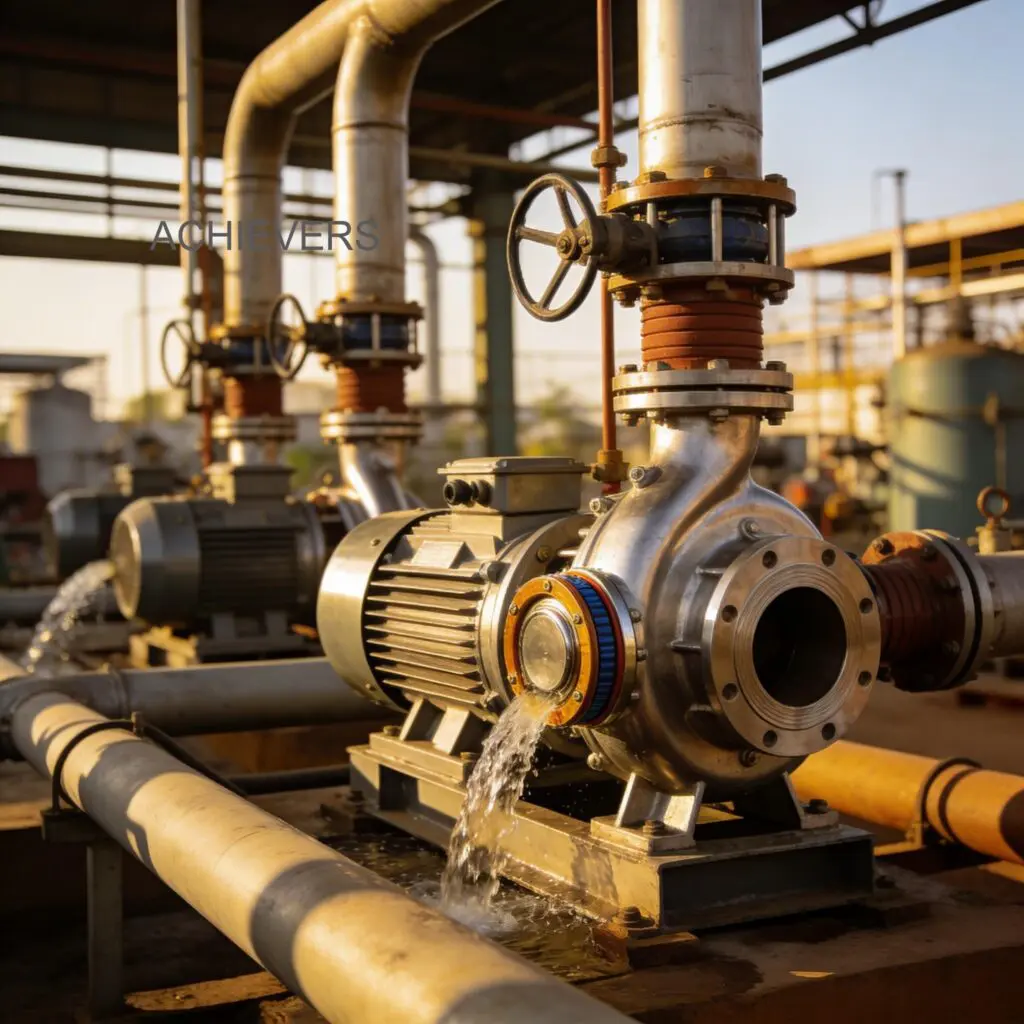
SS Pumps are ubiquitous in industries where purity and durability are paramount. Based on the design capabilities, here are the primary applications where these pumps excel:
- Pharmaceutical & Bio-Pharma: Transfer of purified water (WFI), solvents, and syrup formulations. The pumps ensure zero contamination from rust or metal leaching.
- Food, Dairy & Beverage: Handling milk, fruit juices, edible oils, and soft drinks. The SS construction supports rigorous CIP (Clean-In-Place) cycles using hot water and alkali detergents.
- Chemical Processing: Loading and unloading of tankers, transfer of acids, alkalis, and solvents in reactor loops. SS316 is the standard here for safety.
- Water Treatment: Feed pumps for RO membranes, DM plants, and softening plants where the water is "hungry" (aggressive) and would corrode carbon steel.
- Textile Processing: Pumping dyes, bleaching agents, and sizing chemicals which are often corrosive and hot.
- Distilleries & Breweries: Transfer of alcohol, wort, and spent grain wash.
5. Service, Installation, and Support
Even the highest quality SS Pumps require correct installation to perform. Chintan Engineers advises all clients to focus on the following during deployment:
Installation Best Practices:
- Baseplate Levelling: Ensure the pump is mounted on a rigid, flat foundation. Misalignment in coupled pumps is the #1 cause of bearing and seal failure.
- Pipe Stress: Do not force piping to meet the pump flanges. Pipes should be independently supported so their weight does not rest on the pump casing.
- Dry Run Protection: Mechanical seals rely on the fluid for lubrication. Never run the pump dry. We recommend installing dry-run protection sensors for critical applications.
Maintenance and AMC:
We stand for enduring support. While stainless steel is durable, wear parts like mechanical seals and bearings are consumables.
- Spare Parts: Always keep a "Start-up Kit" (Seal kit, O-rings, Impeller key) on-site to minimize downtime.
- Calibration & Testing: Every pump leaving our facility undergoes rigorous testing for head, flow, and power consumption.
- Local Support: As established manufacturers, we provide end-to-end support from commissioning to Annual Maintenance Contracts (AMC), ensuring that your plant achieves maximum uptime.
Correct Configuration Matters
Selecting the wrong pump material or seal can lead to hazardous leaks and expensive production halts. Ensure your facility is equipped with SS Pumps designed specifically for your fluid chemistry and operational demands.
Contact Chintan Engineers today to configure the right solution.
Please have the following details ready for a precise technical proposal:
- Fluid Name & Properties: (Chemical composition, temperature, viscosity)
- Performance Metrics: (Required Flow Rate & Head)
- Application Type: (Transfer, Circulation, Injection, Loading)
