
















For fleet managers, construction site supervisors, and logistics operators in India, the efficiency of fuel management is often the difference between profit and loss. Managing diesel inventory on remote sites—whether for mining excavators, road construction machinery, or captive power generators—presents unique challenges. You cannot easily move heavy machinery to a petrol pump; the pump must come to the machinery. This necessity drives the demand for reliable mobile refueling solutions. However, simply mounting a barrel and a hand pump on a truck is no longer sufficient for modern operations that require accountability, speed, and clean fuel.
To achieve operational precision, industries are increasingly deploying the Mobile Fuel Dispenser. This engineered solution transforms a standard vehicle or storage tank into a smart, accurate, and safe refueling station. But not all dispensers are created equal. Selecting the right specifications regarding flow rates, voltage, filtration, and automation is critical to ensuring your mobile bowser or trolley system performs reliably under the harsh environmental conditions found across India.
1. What this product does
The Mobile Fuel Dispenser is a compact, integrated fluid handling system designed specifically for the transfer, measurement, and control of diesel fuel in mobile applications. Unlike simple transfer pumps which merely move fluid, a dispenser is engineered to provide custody-transfer levels of accuracy and control.
At its core, the unit typically integrates several critical sub-assemblies into a robust, weather-resistant enclosure. These include a high-efficiency vane or gear pump, a precision positive displacement (PD) flow meter, a filtration unit, and a nozzle assembly. The system is designed to operate on power sources readily available on mobile platforms, such as 12V DC or 24V DC vehicle batteries, though 220V AC options are available for stationary skid applications.
Key Technical Capabilities:
- Integrated Metering: The unit features a high-accuracy flow meter (often oval gear or piston type) that ensures every drop dispensed is accounted for. This is essential for reconciling fuel purchases with consumption.
- Preset Control: Advanced models include a digital preset controller. This allows the operator to key in a specific volume (e.g., 50 liters) or a monetary value. The system pumps exactly that amount and shuts off automatically via a solenoid valve, eliminating manual error and spillage.
- Robust Construction: Built to withstand vibration and dust—common in off-road bowser applications—the casing is typically powder-coated steel or stainless steel to resist corrosion.
- Suction and Delivery: The pump is designed for self-priming capabilities, ensuring it can draw fuel from the tank belly even when the fluid level is low.
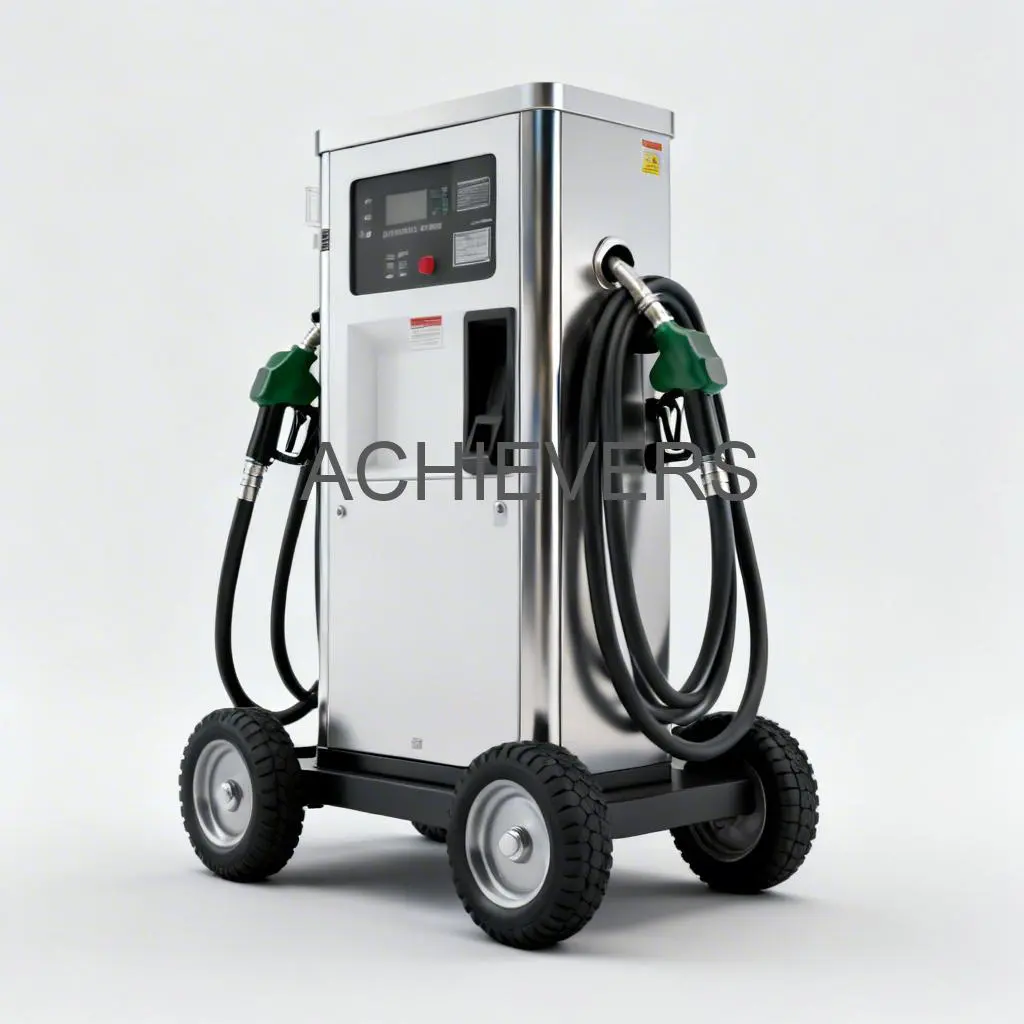
2. Converting a Bowser or Trolley into a Smart Fueling Point
When you are looking to commission a mobile fuel dispenser for fleet refueling in India, you are essentially building a mobile petrol pump. The goal is to convert a basic bowser, pickup truck, or towable trolley into a highly capable dispensing unit. This conversion requires careful attention to the "balance of plant"—the components that support the Mobile Fuel Dispenser to ensure it delivers clean fuel quickly and accurately.
The following criteria are essential when specifying the system components for your mobile setup.
Flow Rate vs. Duty Cycle
Speed is often the first request from fleet managers. "How fast can I fill a 400-liter tank?" is a common question. However, in mobile applications, higher flow rates must be balanced against the power source.
- Standard Duty: For refilling smaller equipment (DG sets, light trucks), a flow rate of 40–60 LPM (Liters Per Minute) is standard. These pumps draw moderate amperage and are compatible with standard vehicle alternators.
- Heavy Duty: For mining dump trucks or large excavators, you may require 80–120 LPM. High-flow DC pumps generate significant heat and draw high current. It is vital to check the duty cycle (the time a pump can run before needing to cool down). A continuous duty cycle is preferred for bowsers that fill multiple vehicles back-to-back.
Filtration and Water Separation
Fuel quality in remote Indian sites can be compromised by dust ingress and condensation inside storage tanks. Injecting dirty or watery diesel into modern Common Rail Diesel (CRD) engines can cause catastrophic injector failure.
- Mobile fuel dispenser filtration and water separator selection is non-negotiable. You should specify a dual-stage filtration system on the suction side of the dispenser.
- Stage 1: A coarse strainer (Y-strainer) to catch large debris (welding slag, rust).
- Stage 2: A 10-micron or 30-micron water separating filter. This ensures that the fuel passing through your expensive flow meter and into the asset is clean and dry.
Hose Reel Management
A loose hose is a safety hazard and a wear point. Dragging a hose across a quarry floor destroys it quickly.
- Length: A 10 to 15-meter retractable hose reel is ideal for reaching equipment parked at awkward angles or varying heights.
- Diameter: The Internal Diameter (ID) of the hose dictates flow. A 3/4" hose is fine for 40 LPM, but if you upgrade to a high-flow diesel mobile fuel dispenser with preset controller and hose reel, you must upgrade to a 1" ID hose. Using a narrow hose on a high-flow pump creates backpressure, reducing speed and overheating the motor.
Preset Controls and Automation
The shift from manual levers to digital presets is the biggest upgrade for a mobile trolley. A preset controller allows the driver to set the quantity and focus on the nozzle placement rather than watching a spinning dial.
- Safety: The automatic shut-off prevents overfilling, which is an environmental hazard and a financial loss.
- Theft Prevention: Digital controllers often come with password protection, ensuring only authorized personnel can activate the pump.
Add-ons: Printers and Telemetry
To close the loop on accountability, specify a ticket printer. This provides a physical receipt for every transaction, which the receiver must sign. For advanced fleets, GSM/telemetry integration allows the dispenser to beam transaction data directly to the cloud, giving the head office real-time visibility on fuel levels.
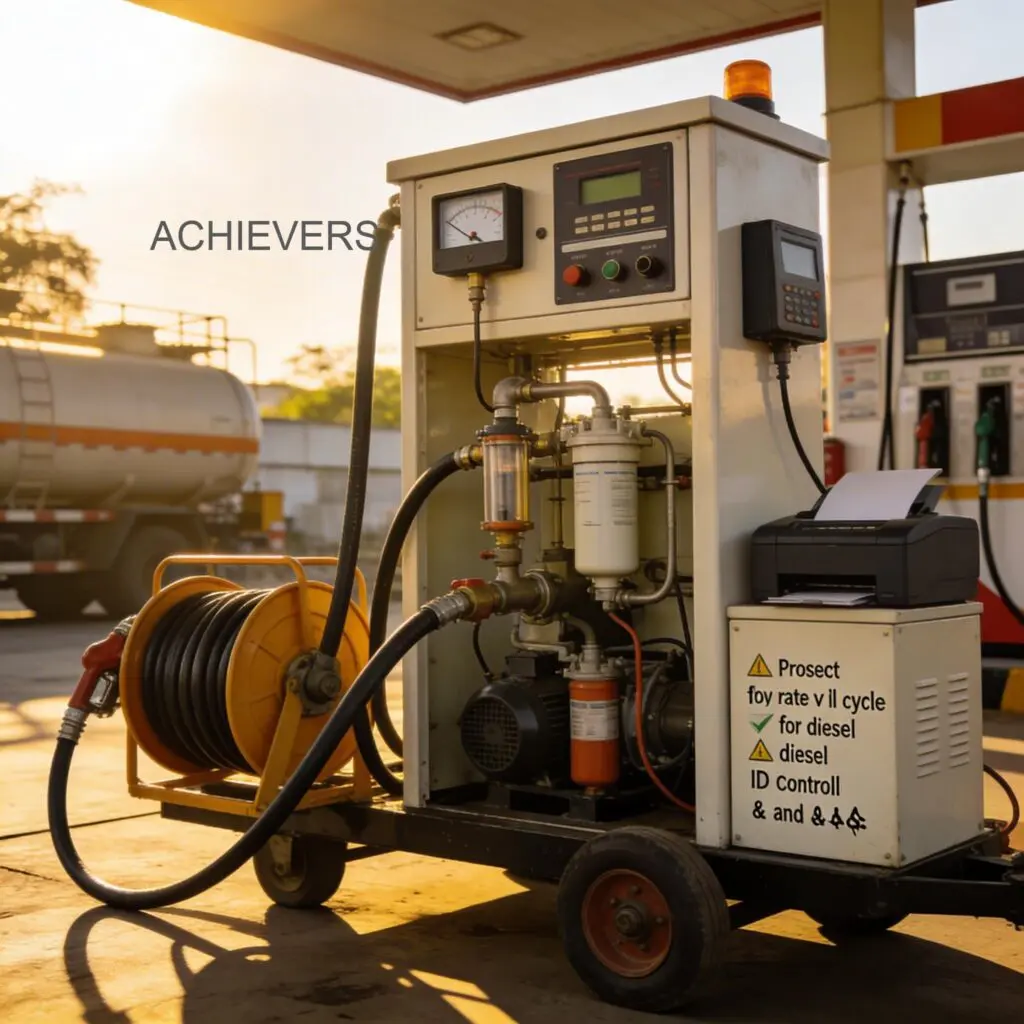
3. Selection and Configuration Guide
Choosing the correct mobile fuel dispenser involves more than just picking a pump; it involves configuring a kit that matches your vehicle and your workflow. As a leading mobile fuel dispenser kit manufacturer in India, we recommend following this selection logic to ensure compatibility and performance.
Step 1: Determine the Power Source
- 12V DC: Ideal for pickup trucks (e.g., Bolero, Tata Yodha) and small trolleys.
- 24V DC: Best for larger trucks (Ashok Leyland, Tata chassis) which typically have 24V electrical systems.
- 220V AC: Required if the dispenser is mounted on a skid powered by a site generator or mains power.
Step 2: Define the Metering Requirement
- Mechanical Utility: If you only need a rough estimate for internal transfers, a mechanical nutating disc meter may suffice.
- Electronic Precision: For accounting, billing, or precise consumption monitoring, specify an electronic oval gear meter with +/- 0.5% accuracy. This is crucial for detecting pilferage.
Step 3: Select the Automation Level
- Basic: Pump + Switch + Mechanical Meter.
- Standard: Pump + Digital Meter + Manual Nozzle.
- Advanced: Pump + Preset Controller + Solenoid Valve + Auto-Shutoff Nozzle + Printer.
Step 4: Assess the Environment
- If the vehicle operates in coal mines or hazardous zones, check if "Flame Proof" (FLP) motors and electricals are mandatory for your compliance. Standard mobile dispensers are generally weather-proof (IP54/IP55) but not necessarily explosion-proof unless specified.
4. Typical Applications
The versatility of the mobile fuel dispenser makes it a staple across various heavy industries in India.
- Construction and Infrastructure Projects:
Road building involves pavers, rollers, and graders spread across kilometers. A mobile fuel dispenser specification guide for bowser and trolley systems is particularly useful here, as a dedicated fuel trolley towed by a tractor can service the entire fleet during lunch breaks, maximizing uptime.
- Mining and Earthmoving:
Excavators and dumpers in open-cast mines consume hundreds of liters daily. Bringing them to the surface for fuel burns production time. Mobile dispensers mounted on robust 4×4 trucks deliver fuel directly to the pit, often requiring high-flow systems (100+ LPM) to minimize downtime.
- Agriculture and Estates:
Large tea estates and mechanized farms utilize tractors and harvesters far from the central depot. A trailer-mounted dispenser ensures these assets remain in the field during peak harvest windows.
- DG Set Refueling:
Facilities management companies use mobile dispensers to top up diesel generators at telecom towers, hospitals, and commercial complexes. The accuracy of the dispenser is vital here for billing clients based on precise liters delivered.
5. Service, Installation, and Support
Even the most robust equipment requires proper installation to function correctly. When installing a mobile fuel dispenser, electrical grounding is paramount. DC motors can draw significant current; undersized wiring will lead to voltage drop, causing the pump to run slow or the motor to burn out. Always use cables with the gauge recommended by the manufacturer.
Maintenance Best Practices:
- Filter Changes: In Indian conditions, filters should be checked weekly. A clogged filter is the number one cause of pump cavitation and reduced flow rate.
- Calibration: Over time, mechanical wear or changes in fluid viscosity can affect meter accuracy. It is recommended to perform a volumetric calibration check every 6 to 12 months using a certified proving can.
- Vibration Damping: Ensure the dispenser unit is mounted on rubber dampers if installed on a truck chassis. Constant road vibration can loosen internal electrical connections if the unit is hard-mounted to the frame.
Choosing a supplier that offers end-to-end solutions, from manufacturing to Annual Maintenance Contracts (AMC), ensures that your mobile dispensing infrastructure remains operational. At Chintan Engineers, we ensure every unit is bench-tested and calibrated before dispatch, providing you with a "plug-and-play" solution backed by readily available spares.
Get the Right Configuration
Don't leave your fuel management to guesswork. To get a system that fits your specific vehicle and flow requirements, contact our engineering team. Let us know your available voltage (12V/24V), desired flow rate, and whether you need printer capabilities. We will help you configure the ideal mobile dispensing solution for your site.
