
















For industries operating in remote locations—such as highway construction, mining, and large-scale agriculture—fuel management is often the single largest operational challenge. When heavy machinery runs dry, the cost isn’t just the price of diesel; it is the expensive downtime of idle excavators, cranes, and dumpers. To maintain continuous operations, site managers across India are increasingly moving away from manual handling and jerry cans toward professional fluid transfer solutions.
At the heart of this efficiency shift is the Mobile Fuel Dispenser. Designed to bring the fuel station to the vehicle, these systems ensure that diesel is dispensed quickly, accurately, and safely, regardless of how remote the site might be. For procurement managers and engineers, however, selecting the right unit goes beyond just buying a pump. It requires understanding flow dynamics, power availability, and the specific rigors of Indian industrial environments.
1. What the Mobile Fuel Dispenser Does
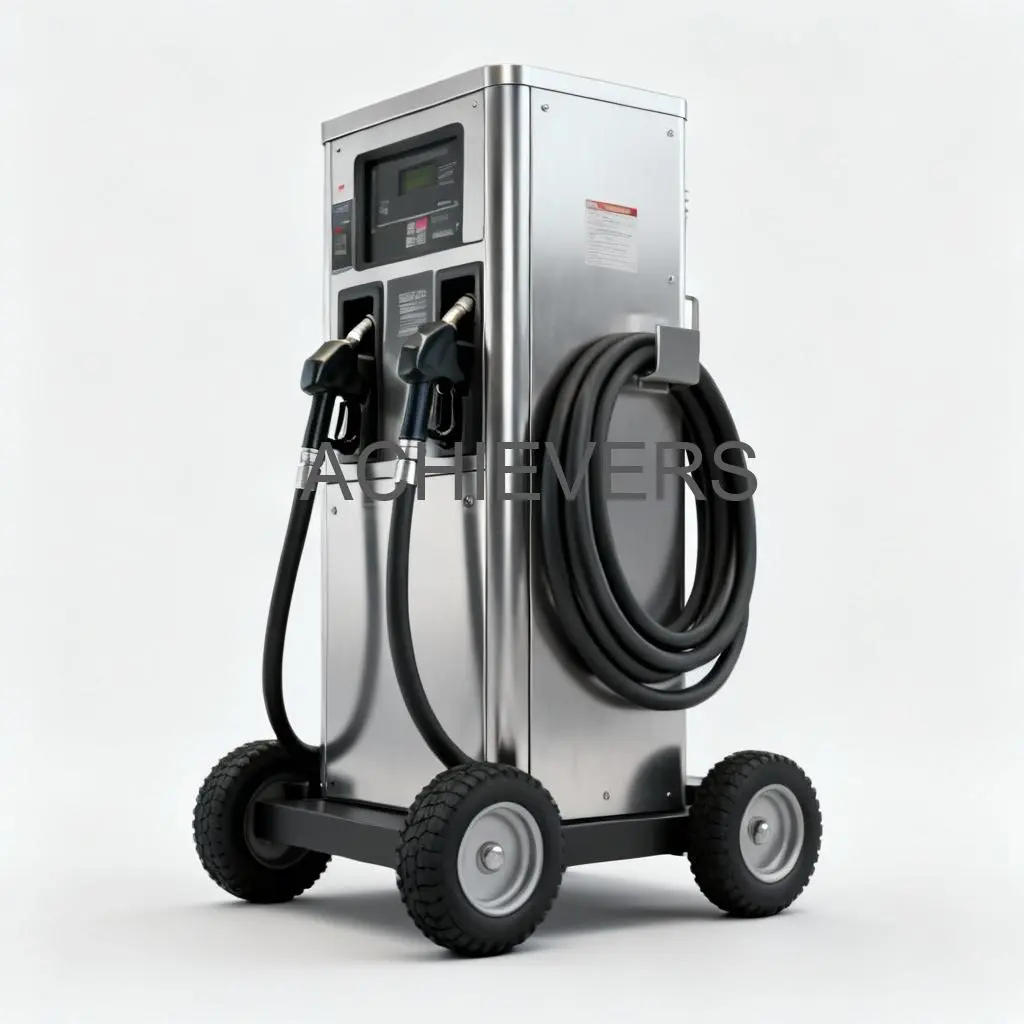
The Mobile Fuel Dispenser is a compact, integrated fluid handling system engineered to transfer diesel from a mobile storage tank (such as a bowser or a pickup-mounted barrel) directly into the fuel tank of heavy equipment. Unlike simple transfer pumps, a complete dispensing unit is designed not just for movement, but for management and accountability.
Based on the engineering standards maintained by Chintan Engineers, these units typically combine several critical components into a robust housing or frame:
- Positive Displacement Pump: The core mechanism that creates the suction and flow required to move diesel efficiently, even when priming from a depth.
- Precision Flow Meter: An integrated metering unit (mechanical or digital) that tracks the exact volume dispensed. This is crucial for reconciling inventory and preventing theft.
- Filtration System: Many configurations include strainers or filters to ensure that contaminants—common in remote site fuel storage—do not enter the expensive injection systems of modern machinery.
- Dispensing Nozzle: Usually equipped with an automatic shut-off feature to prevent spillage and environmental contamination.
- Flexible Hose: Reinforced rubber hoses designed to withstand dragging across rough terrain and exposure to sunlight.
The primary function of this equipment is to provide a reliable on-site mobile fueling system that replicates the speed and accuracy of a retail petrol pump, but in a ruggedized format suitable for off-road applications. By integrating flow measurement with high-performance pumping, these dispensers allow fleet managers to track exactly how much fuel goes into every asset.
2. Evaluating Dispensers for Construction and Remote Sites
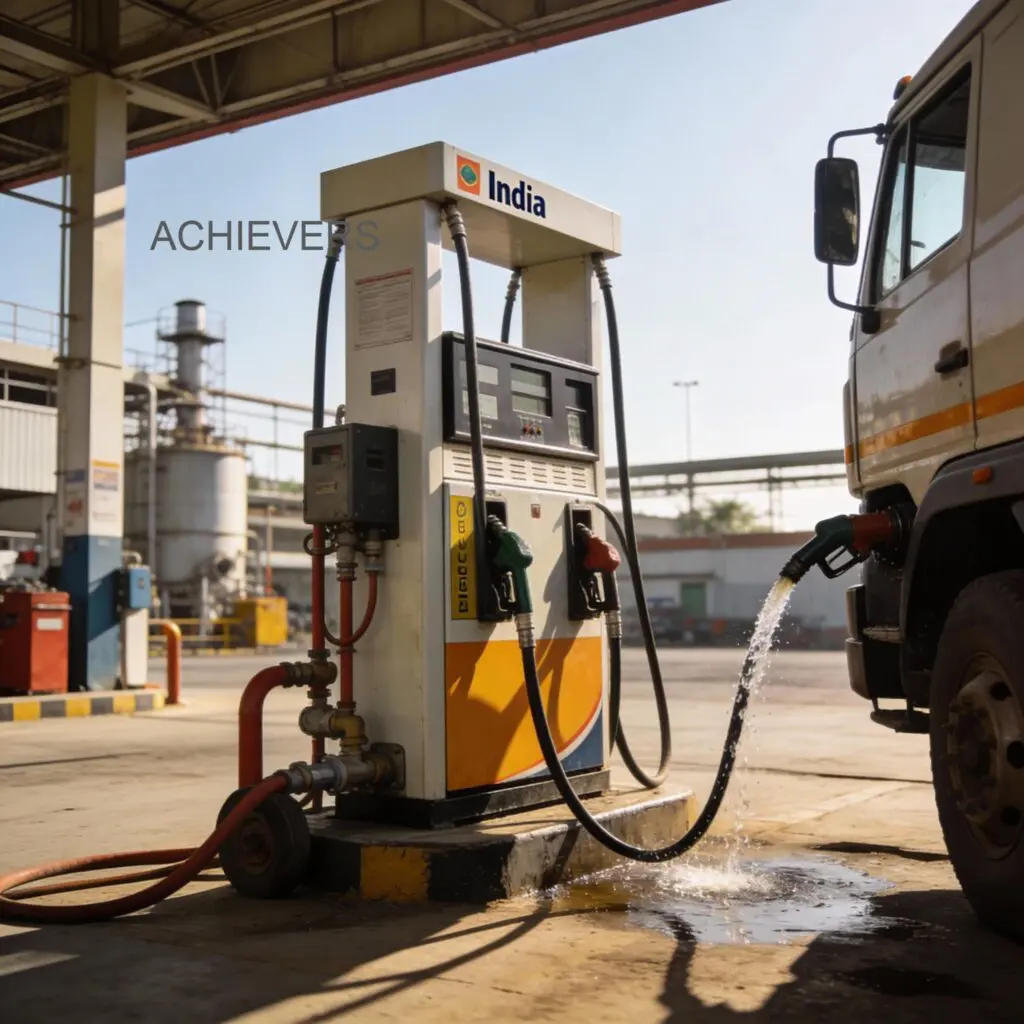
Industrial buyers, especially those in construction and mining, must evaluate equipment based on the harsh realities of their specific job sites. A generic pump might work in a factory, but a mobile fuel dispenser for remote sites faces dust, heat, vibration, and unstable power supplies.
This section guides decision-makers on comparing configurations to ensure the selected equipment can withstand Indian site conditions.
Power Configuration: DC vs. AC
One of the first decisions a buyer must make involves the power source.
- DC (12V/24V): This is the standard for a true vehicle-mounted fuel dispenser in India. These units connect directly to the battery of the service truck or the machinery itself. They are ideal for "roving" fuel trucks that travel between stationary assets (like generators or crushers). The advantage is total mobility; the disadvantage is that they draw heavily on batteries, requiring the vehicle engine to be running during prolonged dispensing.
- AC (220V/440V): If the dispenser is mounted on a skid at a semi-permanent site office or near a DG set, an AC version provides consistent power without worrying about battery voltage drop. However, it tethers the dispensing point to a location with mains power or a generator.
Mounting and Portability
The physical form factor determines how the unit integrates into your logistics workflow.
- Wall/Tank Mount: These are compact plates or cabinets designed to be bolted directly onto a static tank or a mobile bowser.
- Box/Cabinet Type: Enclosed units offer better protection against dust and rain, which is a critical fuel dispenser selection guide criterion for mining areas where dust is pervasive.
- Trolley Mount: For workshops, a mobile fuel dispenser mounted on a trolley allows a technician to wheel the unit between vehicles.
Accuracy and Calibration needs
In construction, fuel pilferage is a significant concern. A simple transfer pump without a meter invites theft. However, the meter must be accurate. As noted in the company profile, Chintan Engineers emphasizes accurate calibration. For a diesel dispenser for construction equipment, a mechanical meter is often preferred for its robustness, whereas a digital meter offers higher precision but requires battery maintenance.
Flow Capacity Considerations
Time is money on a construction site. A standard 40 LPM (Liters Per Minute) pump is sufficient for filling a tractor or a small pickup. However, filling a 500-liter tank on a large excavator or a mining dumper with a 40 LPM pump takes over 12 minutes—too long during a shift change. High-capacity mobile dispensers offering 60 to 80 LPM are recommended for heavy earthmoving machinery to minimize downtime.
3. Selection and Configuration Guide
When contacting mobile fuel dispenser manufacturers in India, clarity in your requirements ensures you receive a system that performs optimally. Mis-specifying the duty cycle or flow rate is a common error that leads to premature motor burnout or operational delays.
Use the following criteria to configure the right solution for your project:
Step 1: define the "Fluid to Asset" Workflow
- Source: Where is the fuel coming from? (200L Barrel, 1000L IBC Tank, or a 6KL Bowser).
- Distance: How long does the hose need to be? (Standard is 4 meters, but large excavators may need 6-10 meters. Note: Longer hoses reduce flow rate due to friction loss).
- Lift: Is the pump mounted above the tank (suction lift) or below it (flooded suction)?
Step 2: Select the Right Duty Cycle
Most DC-powered mobile pumps have a "duty cycle," often rated at 30 minutes on / 30 minutes off to prevent overheating.
- Intermittent Use: If you are fueling one machine at a time with breaks in between, standard duty motors are cost-effective.
- Continuous Use: If you are fueling a line of 10 trucks in a row, you need a heavy-duty continuous rating or a specialized thermal cooling design.
Checklist for Procurement
When sending an enquiry, ensure you discuss these specifics:
- Voltage: 12V DC, 24V DC, or 220V AC.
- Meter Type: Mechanical (resettable totalizer) or Digital (electronic precision).
- Nozzle: Manual or Automatic shut-off (Auto is safer to prevent overflow).
- Media: Confirm the unit is for Diesel (Petrol requires different explosion-proof ratings).
- Environment: Mention if the unit will be exposed to rain or extreme dust (requires higher IP protection).
4. Typical Applications
The versatility of the Mobile Fuel Dispenser makes it a staple across various heavy industries in India. Based on the robust design capabilities of Chintan Engineers, these units are typically deployed in:
- Infrastructure and Road Building: Used on service trucks to refuel pavers, rollers, and graders along long stretches of highway where petrol pumps are inaccessible.
- Mining and Quarrying: Essential for refueling dumpers and crushers deep inside mines where moving the machinery to a fuel station is inefficient.
- Logistics and Fleet Yards: Used for "wet hosing" fleets at night, allowing trucks to be fueled while parked so they are ready for the morning shift.
- Agriculture: Large-scale farms use these dispensers to transfer fuel from storage barrels to tractors and harvesters in the field.
- Power Generation: Managing fuel delivery to remote DG sets (Diesel Generators) at telecom towers or industrial plants.
5. Service, Installation, and Support
Even the most rugged mobile fuel dispenser requires proper installation and maintenance to ensure longevity. Chintan Engineers highlights "End-to-End Solutions" and "Enduring Support," which is critical for equipment that operates in harsh environments.
Installation Best Practices:
- Suction Leaks: The number one cause of "low flow" or "no flow" is a loose connection on the suction side. Air enters the line, and the pump cavitates. Always use thread sealant and tight clamps.
- Electrical Cabling: For DC units, using thin wires over long distances causes voltage drop, making the motor run slow and hot. Always use the recommended wire gauge.
- Filtration: Indian diesel can sometimes contain sediment or water. Installing a pre-filter before the pump significantly extends the life of the pump vanes and the meter.
The Value of Local Support:
Imported pumps often lack spare parts support in India. Choosing a domestic manufacturer ensures access to repair kits, replacement vanes, and calibration services. As mentioned in the company’s promise, "accurate calibration" is verified for consistency, which is vital for internal auditing of fuel consumption. Regular Annual Maintenance Contracts (AMC) can further prevent unexpected breakdowns during critical project phases.
Conclusion
Selecting the right dispensing equipment is a balance between speed, portability, and durability. By understanding your power constraints and flow requirements, you can choose a system that turns fuel management from a headache into a streamlined process.
For a configuration that matches your specific site conditions—whether you need a high-speed 12V unit for a mining truck or an AC unit for a yard—reach out to the technical team at Chintan Engineers. Provide your flow rate requirements, power source availability, and application type to get a precision-engineered solution tailored to your needs.
