
















Managing a fleet or an industrial worksite in India comes with a distinct set of challenges—dust, heat, fluctuating power supplies, and the constant pressure to maintain operational uptime. Among these challenges, fuel management remains a critical priority. Diesel is often one of the largest operating expenses for logistics companies, mining sites, and construction projects. Consequently, the equipment used to dispense and monitor this fuel is not just an accessory; it is a vital asset for cost control and efficiency.
For site managers and engineers, investing in a reliable Diesel Dispenser is the first step toward securing fuel inventory. However, even the highest quality equipment requires correct installation to perform optimally. A poorly installed unit can lead to metering inaccuracies, pump cavitation, frequent breakdowns, or safety hazards. This guide focuses on the technical nuances of setting up these systems in Indian industrial environments, ensuring that your operations remain safe, compliant, and accurate from the moment the pump is switched on.
1. What This Product Does: Precision and Durability Combined
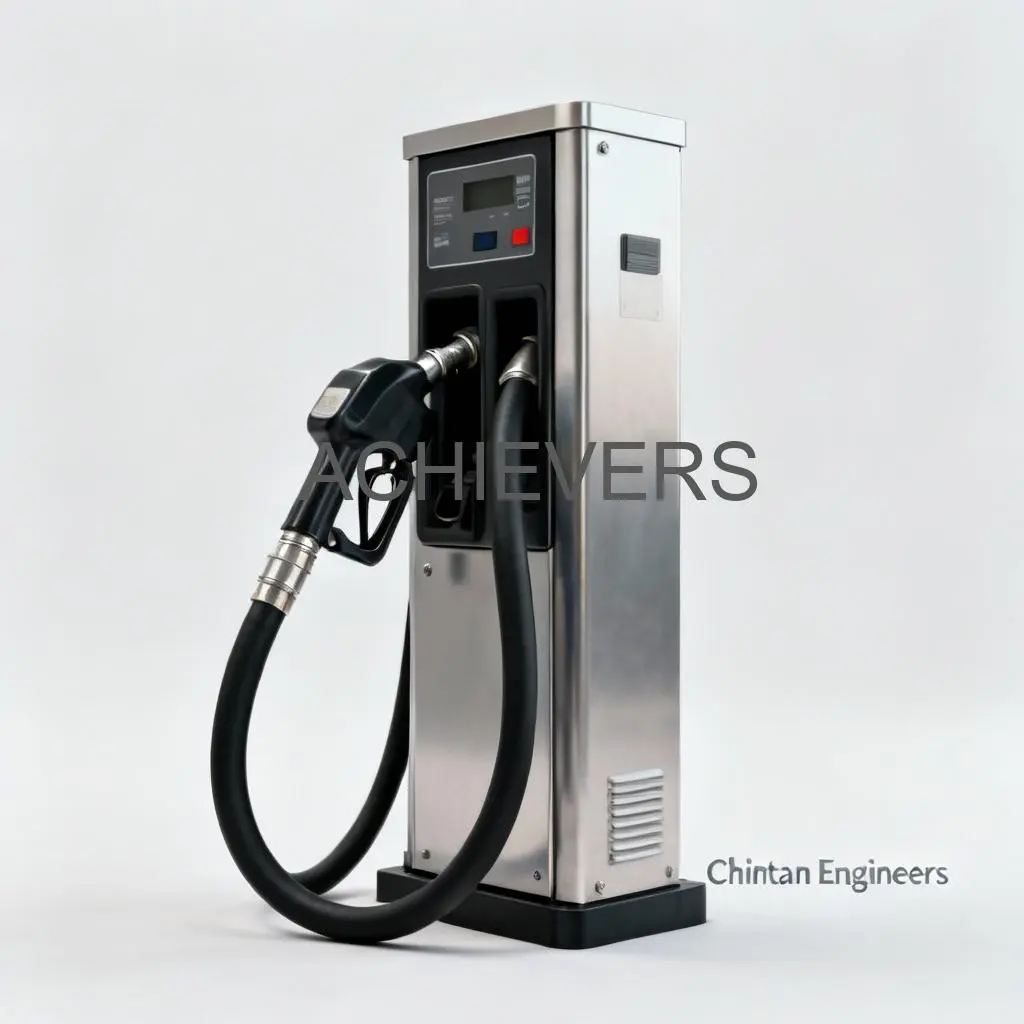
The Diesel Dispenser by Chintan Engineers is an integrated fluid handling system designed specifically for the transfer and measurement of diesel fuel in non-retail, industrial, and fleet applications. Unlike standard pumps that simply move fluid, this system is engineered to provide accountability and flow control.
Based on the core engineering principles of our group, this product integrates several critical components into a robust housing built to withstand harsh environmental conditions. The primary function is to draw diesel from an underground or above-ground storage tank and dispense it into vehicles or machinery with high volumetric accuracy.
Key Technical Features and Specifications:
- Integrated Pumping Unit: The system typically features a high-performance suction pump capable of self-priming, ensuring consistent flow rates even when the storage tank is at a lower elevation.
- Precision Flow Metering: At the heart of the dispenser is a calibrated flow meter. This component ensures that every liter dispensed is accounted for, providing the accuracy required for inventory reconciliation.
- Rugged Construction: Recognizing the demands of Indian industrial sites, the casing and internal components are manufactured for durability, protecting the mechanism from dust, moisture, and impact.
- Dispensing Hardware: The unit comes equipped with a delivery hose and a dispensing nozzle (often with an automatic shut-off feature) to prevent spillage and ensure safe refueling operations.
- Calibration Capability: The system allows for calibration adjustments, ensuring that accuracy can be maintained over years of service despite wear or changes in fluid viscosity due to temperature.
This equipment serves as the bridge between bulk fuel storage and your fleet, acting as the primary checkpoint for fuel consumption data.
2. Installation and Commissioning Checklist for Worksites
This blog provides a detailed installation and commissioning checklist for diesel dispensers, helping fleet operators, contractors, and industrial site managers in India ensure safe, accurate, and hassle-free deployment. It covers location planning, power requirements, nozzle calibration, and compliance tips to optimise performance from day one.
Installing a Diesel Dispenser is a multi-disciplinary task involving civil, mechanical, and electrical engineering best practices. Following a structured checklist helps prevent common "start-up" issues such as air locks, leaks, or electrical faults.
Phase 1: Site Selection and Civil Works
Before the equipment arrives, the physical location must be prepped.
- Accessibility: Ensure the dispenser is located where vehicles can approach easily without complex maneuvering. For fleet yards, a "drive-through" layout is preferable to a "reverse-in" layout to minimize accident risks.
- Foundation: The dispenser must be mounted on a rigid, level concrete island. This protects the unit from vehicle impact and keeps it above ground-level water accumulation during the monsoon season.
- Shade and Shelter: While industrial dispensers are weather-resistant, installing a canopy extends the life of the display electronics and hoses by protecting them from direct UV exposure and heavy rain.
Phase 2: Piping and Mechanical Setup
The suction line is often the source of 80% of dispensing issues.
- Suction Lift: Minimize the vertical distance between the tank bottom and the pump inlet. Excessive suction lift can cause cavitation, which damages the pump and reduces accuracy.
- Check Valves: Install a high-quality foot valve or check valve at the suction inlet in the tank. This maintains the prime, ensuring fuel flows immediately when the pump starts.
- Filtration: A crucial step for diesel fueling system for fleet operations is filtration. Install a strainer or mesh filter on the suction side to catch large debris (welding slag, tank rust) before it enters the pump.
- Pipe Sizing: Ensure the suction pipe diameter matches or exceeds the pump inlet size. restrictively small pipes increase friction loss and strain the motor.
Phase 3: Electrical Connections and Earthing
Electrical safety is paramount when handling flammable fuels.
- Voltage Stability: Industrial sites in India often face voltage fluctuations. Ensure the power supply matches the motor specifications (Single Phase or Three Phase). Installing a voltage stabilizer is recommended for sites with unstable grids.
- Explosion-Proof Compliance: All wiring entering the dispenser area should be run through flame-proof conduits. Junction boxes must be certified for hazardous areas.
- Earthing (Grounding): Static electricity is a silent hazard. The dispenser body, the motor, and the storage tank must be properly earthed. Good earthing dissipates static charges generated during the high-speed flow of diesel.
Phase 4: Commissioning and Calibration
Once mechanically and electrically connected, the commissioning phase begins.
- Priming: Before running the motor, ensure the pump chamber is primed with diesel to lubricate the internal vanes or gears. Running a pump dry can cause immediate damage.
- Leak Testing: Pressurize the system and check all joints, flanges, and threaded connections for weeping or drips.
- Calibration Verification: Using a certified 10-liter or 20-liter proving measure, dispense fuel and compare the physical volume against the digital or mechanical counter. If there is a discrepancy, adjust the calibration mechanism as per the manual until the error is within acceptable limits (typically +/- 0.5% or better).
3. Selection and Configuration Guide
Choosing the right diesel dispenser requires analyzing your specific operational data. One size does not fit all, especially when comparing a small backup generator setup to a bustling transport hub.
Determining Flow Rate Requirements
- Standard Flow (40-50 LPM): Ideal for cars, light commercial vehicles (LCVs), and small generators. This flow rate prevents "splash back" in smaller fuel tanks.
- High Flow (70-90+ LPM): Essential for heavy trucks, mining dumpers, and large excavators. High-flow systems reduce the downtime of expensive machinery by filling large tanks (300L+) in minutes rather than quarters of an hour.
Power Source Selection
- AC Mains (230V/415V): The standard for fixed installations at depots and factories. It offers consistent power for high-duty cycles.
- DC Power (12V/24V): Necessary for mobile dispensing carts or service trucks that travel to remote worksites where grid power is unavailable. These are powered directly by the vehicle battery.
Metering and Display Options
- Mechanical Counters: Preferred in remote, harsh environments where electronics might fail due to extreme heat or lack of clean power. They are simple, robust, and easy to repair.
- Digital Displays: Essential for modern fleet management. They offer better readability and can often be integrated with fuel management systems for automated record-keeping.
4. Typical Applications in Industry
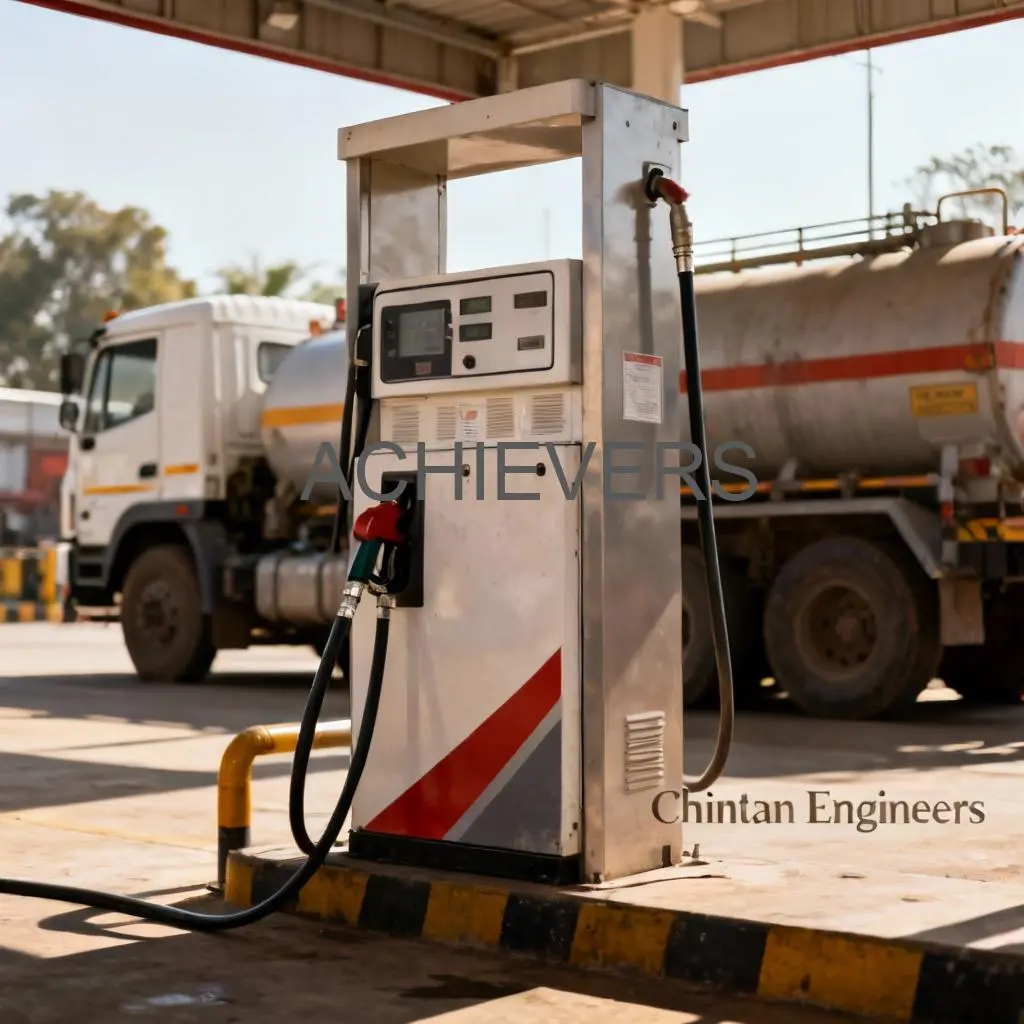
The versatility of the industrial diesel dispenser allows it to serve various sectors across the Indian economy.
1. Logistics and Transport Hubs
For trucking companies, fuel is liquid cash. Installing a private industrial diesel dispenser setup allows fleet owners to buy fuel at wholesale rates and monitor exactly how much fuel goes into each truck, reducing theft and pilferage significantly.
2. Construction and Infrastructure Projects
Road building and real estate projects utilize heavy earthmovers that cannot travel to petrol pumps. On-site dispensing setups ensure that excavators, loaders, and cranes are refueled during breaks, maximizing working hours.
3. Manufacturing and Energy
Factories with large backup diesel generators (DG sets) require reliable refueling systems. A fixed dispenser ensures that day tanks are filled safely and accurately, ensuring readiness for power outages.
4. Mining Operations
Mines are perhaps the most demanding environments. Diesel dispenser manufacturers in India like Chintan Engineers design systems that can handle the dust and vibration typical of mining sites while delivering high volumes of fuel to massive dump trucks.
5. Service, Installation, and Support
Even the most robust hardware requires care. At Chintan Engineers, we believe that fuel dispenser installation best practices extend beyond the initial setup into the lifecycle of the product.
The Importance of AMC and Calibration
Over time, mechanical wear and tear can affect the accuracy of the flow meter. A regular Annual Maintenance Contract (AMC) ensures that:
- Filters are cleaned or replaced to maintain flow speed.
- Calibration is checked against certified measures to prevent inventory loss.
- Hoses and nozzles are inspected for cracks or leaks, preventing environmental hazards.
Genuine Spares
Using genuine components for repairs is non-negotiable. Generic seals or vanes may not withstand the chemical properties of diesel or the pressure of the system, leading to premature failure. We ensure that our clients have access to original spares to keep their systems running like new.
Expert Support
As mentioned in our company philosophy, we stand for "Enduring Support." Whether it is troubleshooting a priming issue over the phone or sending a technician for on-site commissioning, our commitment is to ensure your fuel management system works as hard as you do.
Call to Action
Stop losing money to inaccurate fueling and inefficient operations. Ensure your fleet gets the exact fuel it needs with a system built for Indian industrial conditions.
To configure the right dispensing solution for your site, contact Chintan Engineers today. Please be ready to share the following details so we can assist you faster:
- Product: Diesel Dispenser
- Required Flow Rate: (e.g., Standard or High Flow)
- Application: (e.g., Fleet yard, Mobile truck, Factory DG set)
- Power Source: (AC or DC)
Optimize your fuel management with engineering you can trust.
