
















In the modern Indian industrial landscape, energy costs represent one of the largest operational expenditures. For plant managers and process engineers, accurate tracking of diesel and heavy fuel oil is no longer just about inventory management—it is about cost control, theft prevention, and efficiency optimization. While manual dip-stick readings were once the norm, today’s smart factories require real-time data integration. This brings us to the critical role of the Fuel Flow Meter, a precision instrument designed to interface seamlessly with automation systems.
Integrating a fuel flow meter into a PLC (Programmable Logic Controller) or SCADA (Supervisory Control and Data Acquisition) system is not as simple as connecting two wires. It requires a deep understanding of signal types, electrical noise, and proper mechanical sizing. Whether you are monitoring fuel consumption on large DG sets, managing boiler feeds, or overseeing fleet refueling, selecting the right instrumentation is paramount to getting trustworthy data.
1. What the Fuel Flow Meter Does
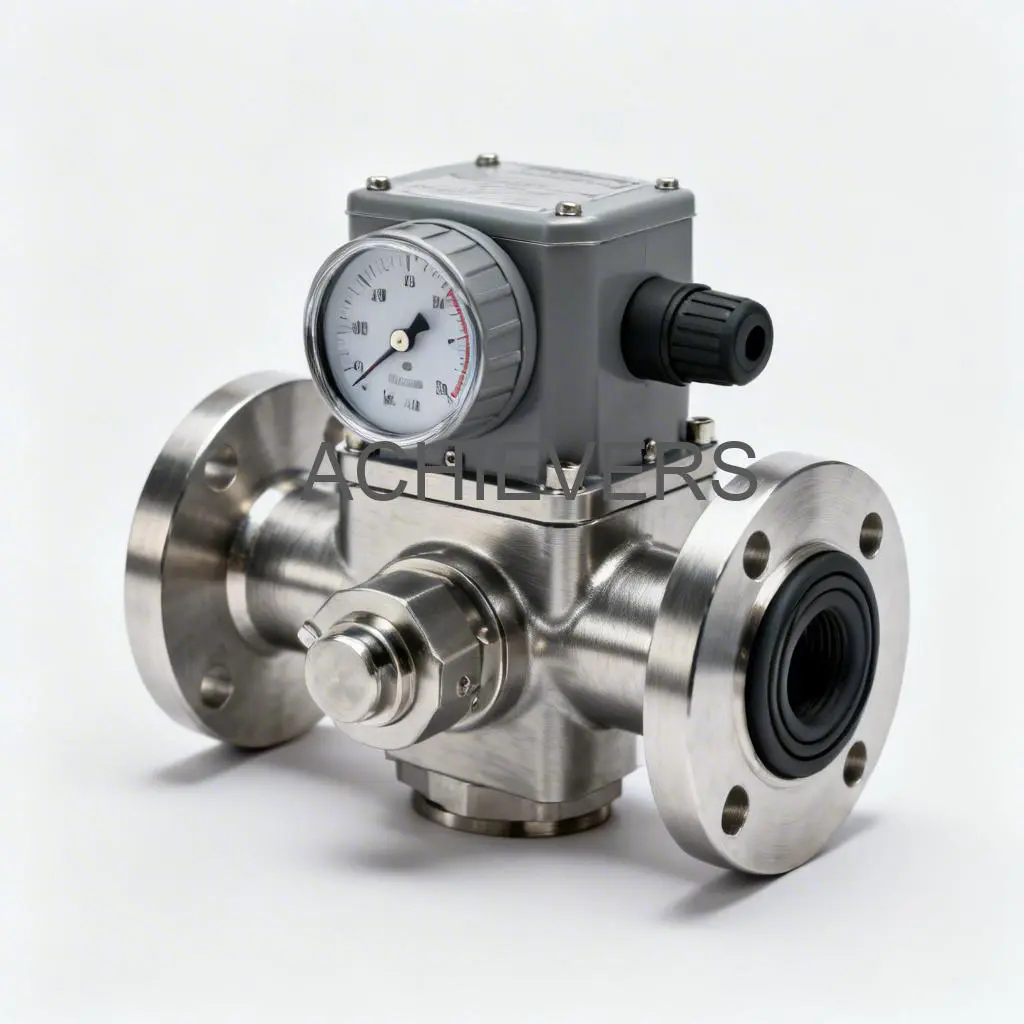
At its core, the Fuel Flow Meter manufactured by Chintan Engineers is a high-precision positive displacement (PD) instrument. Unlike turbine meters or inferential devices that can struggle with viscosity changes or low flow rates, our PD meters utilize oval gear technology. This mechanism ensures that a specific, fixed volume of fluid is passed through the chamber with every rotation, providing exceptional accuracy and repeatability.
These meters are engineered specifically for the rigorous conditions found in Indian industries. They are robust, capable of handling varying viscosities—from light diesel (HSD) to heavier furnace oils—and are built to withstand the vibration and temperature fluctuations common in plant environments.
Key Technical Capabilities:
- Measurement Principle: Positive Displacement (Oval Gear) for volumetric accuracy.
- Flow Range: Available in various capacities to suit applications ranging from small generators to high-volume loading gantries.
- Accuracy: High precision (typically ±0.5% or better), which is critical for custody transfer and tight consumption monitoring.
- Material Construction: durable body materials compatible with petroleum products, ensuring long service life without corrosion or seal degradation.
- Display: Options for mechanical registers for standalone use or digital displays with electronic outputs.
The primary advantage of this design is its immunity to flow profile disturbances. Unlike other flow measurement technologies that require long straight runs of pipe before and after the meter, the oval gear design can be installed in tighter spaces, making it ideal for skid-mounted systems and compact generator rooms.
2. Signal Integration for PLC and SCADA Systems
When the goal is automation, the mechanical accuracy of the meter must be translated into a reliable electrical signal. This is where many installation projects face challenges. Specifying an industrial fuel flow meter with totalizer and pulse output is the first step, but understanding how that signal behaves is what ensures successful integration.
Choosing the Right Output: Pulse vs. 4–20 mA
For most diesel monitoring applications, you will encounter two primary output types. Selecting the correct one depends on your specific data logging requirements.
1. Pulse Output (Digital Signal)
This is the most common method for volumetric totalizing. The meter generates a discrete electrical pulse for every unit of volume that passes through (e.g., 1 pulse = 0.1 liters or 1 pulse = 1 liter).
- Advantage: It is a direct volume measurement. There is no conversion error between the flow rate and total volume.
- Wiring for PLC: High-speed counter inputs are often required on the PLC side if the flow rate is high.
- Application: Ideal for batching, total consumption logging, and billing reconciliation.
2. 4–20 mA (Analog Signal)
This standard industrial loop signal represents the instantaneous flow rate.
- Advantage: Easier to integrate into standard analog input cards on DCS or legacy PLCs. It provides real-time "speed" of the fluid.
- Disadvantage: To get total volume, the PLC must integrate this rate over time, which can introduce calculation errors if the scan time is slow or the flow is pulsating.
- Application: Best for process control, pump speed regulation, and real-time flow monitoring.
Critical Wiring Practices for Indian Industrial Sites
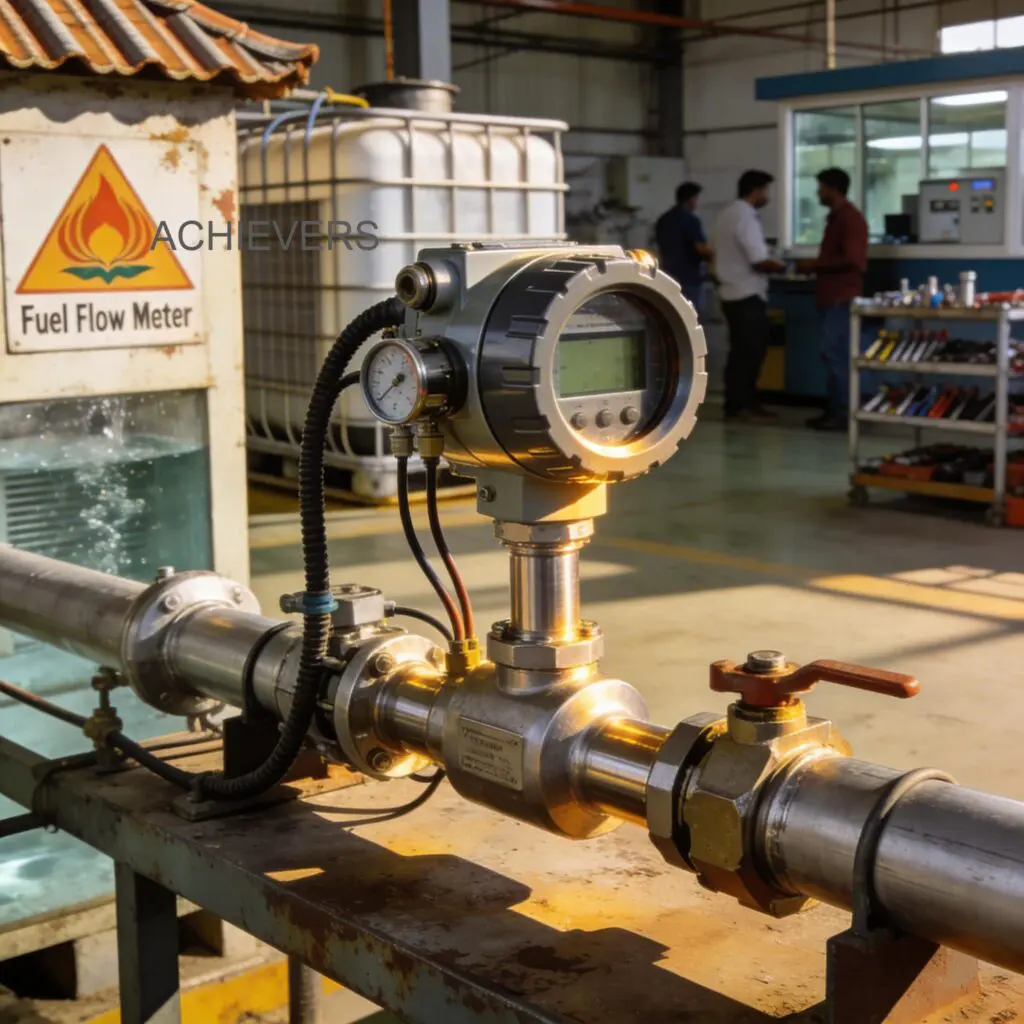
Integrating a fuel flow meter pulse output wiring for PLC requires strict adherence to electrical best practices to avoid "ghost counting" or signal loss. Indian industrial environments are often electrically noisy due to the proximity of VFDs (Variable Frequency Drives), heavy motors, and switchgear.
Cable Selection and Routing:
Never run instrument signal cables in the same tray as high-voltage power cables. The electromagnetic interference (EMI) from power lines can induce false pulses in the flow meter cable. Even when no fuel is flowing, the PLC might register counts, leading to massive reconciliation errors. Always use twisted-pair shielded cables (e.g., 0.5 sq mm or 0.75 sq mm copper).
Grounding and Shielding:
Improper grounding is the number one cause of 4-20 mA fuel flow meter for diesel consumption monitoring failure.
- The Rule: Connect the cable shield to the ground at one end only (usually the PLC/panel side).
- The Risk: If you ground the shield at both the field instrument and the control panel, you create a "ground loop." Current will flow through the shield due to potential differences between the two ground points, corrupting the signal.
Signal Conditioners:
For long cable runs (over 100 meters), the voltage drop or signal degradation can be an issue. Using an isolated signal conditioner or a repeater can ensure the pulse or analog signal reaches the SCADA system crisp and clear.
3. Selection and Configuration Guide
To ensure you receive the correct Fuel Flow Meter for your facility, you must move beyond simply asking for a "2-inch flow meter." Sizing a flow meter based on line size is a common mistake that leads to poor accuracy. If a 2-inch pipe carries a flow rate that is at the very bottom of a 2-inch meter's range, the meter may not register the flow accurately (slippage). Conversely, undersizing creates dangerous pressure drops.
Step-by-Step Selection Criteria:
- Determine Flow Rate (Not Pipe Size):
- Calculate the minimum and maximum flow rates in Liters Per Minute (LPM) or Cubic Meters per Hour (m³/hr).
- Select a meter model where your normal operating flow falls within the middle 60% of the meter’s range.
- Define the Fluid Properties:
- Viscosity: Diesel is relatively thin, while furnace oil is thick. High viscosity affects the pressure drop across the meter.
- Temperature: Verify the operating temperature, as this affects the expansion of the mechanical gears and the rating of the electronic sensors.
- Specify Integration Requirements:
- Do you need a local display (totalizer) for the field operator plus a signal for the control room?
- What is the input voltage available for the sensor (12V DC, 24V DC, or 230V AC)?
- Do you require an explosion-proof (Ex-proof) enclosure for a hazardous zone (Zone 1 or Zone 2)?
Checklist for Supplier Enquiry:
- Fluid Name and Viscosity
- Min/Max Flow Rate
- Operating Pressure and Temperature
- Required Output (Pulse, 4-20mA, Modbus, etc.)
- Connection Type (Flanged ANSI/DIN, Threaded BSP/NPT)
4. Typical Applications in Indian Industry
The versatility of the Fuel Flow Meter makes it a staple across various sectors. As premier fuel flow meter suppliers in India, Chintan Engineers sees these units deployed in critical infrastructure projects and private manufacturing alike.
Diesel Generator (DG) Monitoring:
This is the most prevalent application. By installing flow meters on both the supply and return lines of a DG set (differential measurement), plant managers can monitor exact fuel consumption. This data is vital for calculating the cost per unit (kWh) of power generated and detecting engine efficiency drops.
Boiler and Furnace Feed:
In textile, chemical, and pharmaceutical plants, boilers consume massive amounts of furnace oil or LDO. A fuel flow meter for SCADA integration India allows for real-time tracking of fuel-to-steam ratios, helping engineers optimize combustion efficiency and reduce carbon footprints.
Fuel Dispensing and Logistics:
For logistics companies maintaining their own fleet, internal fuel dispensing pumps utilize these meters to log exactly how much fuel is dispensed into each truck. This creates an audit trail that virtually eliminates pilferage at the pump.
Batching and Blending:
In chemical and paint manufacturing, precise volumes of solvents or hydrocarbon-based additives must be added to a mix. The pulse output from the flow meter can trigger a solenoid valve to close exactly when the target volume is reached, automating the batching process.
5. Service, Installation, and Support
Even the highest quality hardware requires proper installation to function correctly. A flow meter is a precision instrument, not a simple pipe fitting.
Filtration is Non-Negotiable:
Oval gear meters have tight mechanical tolerances to ensure accuracy. If debris, welding slag, or rust from the tank enters the measuring chamber, it can jam the gears. Always install a suitable mesh strainer (filter) immediately upstream of the flow meter. For diesel, a mesh size of 40 to 80 is typically recommended.
Calibration and AMC:
Over time, mechanical wear or changes in fluid properties can cause slight drifts in accuracy. While our meters are calibrated before leaving the factory, periodic verification is a best practice, especially for ISO-certified plants.
The Local Advantage:
Imported meters often come with long lead times for spares or repairs. Choosing a domestic manufacturer like Chintan Engineers ensures you have access to technical experts who understand local site conditions. We offer end-to-end support, from selecting the right fuel flow meter to guidance on PLC wiring and troubleshooting signal issues. Our commitment to transparent communication means we help you solve the grounding and noise issues that other suppliers might ignore.
Summary
Specifying a flow meter for automation goes beyond the mechanical hardware; it involves ensuring the "data" flows as smoothly as the fuel. By selecting the right output signal, adhering to strict shielding and grounding protocols, and sizing the meter based on flow dynamics rather than pipe diameter, you can achieve near-perfect visibility into your fuel consumption.
Ready to automate your fuel monitoring?
Don't leave your accuracy to chance. Contact our engineering team with your flow rates, application details, and site requirements, and let us configure the perfect measurement solution for your plant.
