
















Selecting the correct pumping equipment is one of the most critical decisions for facility managers and process engineers in India’s industrial landscape. Whether you are managing a chemical processing plant in Gujarat, a textile dyeing unit, or a municipal water treatment facility, the reliability of your fluid handling system hinges on the pump’s compatibility with the process. Incorrect sizing is not just a minor inconvenience; it leads to energy inefficiency, frequent mechanical seal failures, cavitation, and unexpected downtime.
For industries handling corrosive liquids, hygienic fluids, or water supply, Stainless Steel (SS) pumps are the standard for durability and chemical resistance. However, simply choosing a pump based on pipe size or replacing an old unit with "something similar" is a recipe for operational failure. To ensure longevity and performance, buyers must understand the engineering physics behind flow, head, and power consumption.
This guide provides a technical walkthrough on how to size and select SS Pumps for Indian industrial applications, ensuring your operations remain efficient, safe, and cost-effective.
1. What Are SS Pumps and Why Are They Essential?
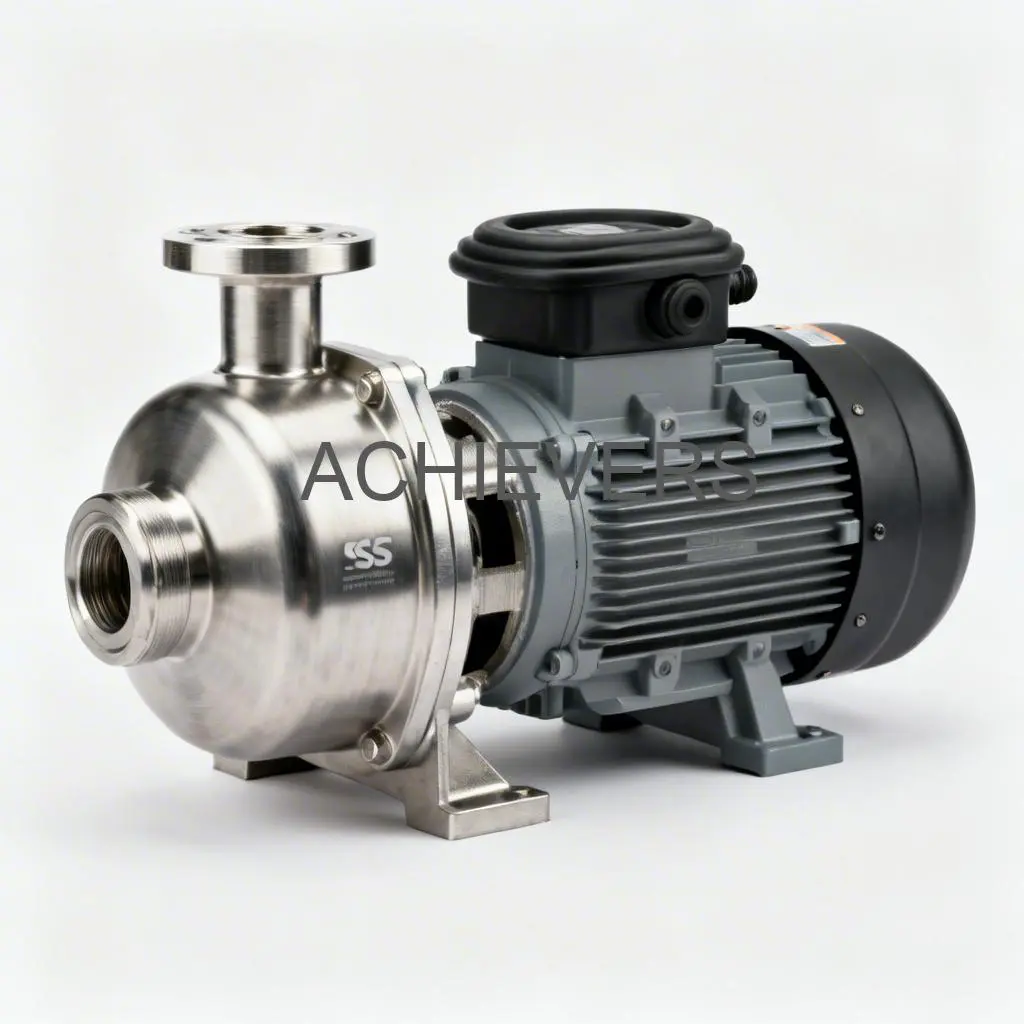
In the realm of industrial fluid handling, "SS Pumps" generally refer to centrifugal pumps constructed from high-grade stainless steel (typically SS 304 or SS 316). Unlike cast iron pumps, which are prone to rust and chemical attack, stainless steel offers superior resistance to corrosion, oxidation, and aggressive solvents.
Based on the engineering standards maintained by Chintan Engineers, SS Pumps are designed to deliver precise flow rates while maintaining structural integrity under pressure. These pumps utilize a rotating impeller to increase the velocity of the fluid, which is then converted into pressure energy (head) by the pump casing (volute).
Key Technical Characteristics:
- Material Construction: Primarily SS 316 (CF8M) for high corrosion resistance against acids and alkalis, or SS 304 (CF8) for water and less aggressive fluids.
- Design variants: Available in Monoblock designs (where the motor and pump share a shaft/housing for compactness) or Bare Shaft configurations (coupled via a flexible coupling to a standard motor).
- Sealing: Equipped with specialized mechanical seals (Carbon/Ceramic, SiC/SiC, or TC/TC) to prevent leakage of hazardous fluids.
- Surface Finish: High-quality casting and machining ensure smooth internal surfaces, reducing friction losses and improving hydraulic efficiency.
These pumps are the workhorses for transfer applications where fluid purity and equipment longevity are non-negotiable.
2. A Step-by-Step Sizing Method for Stainless Steel Pumps
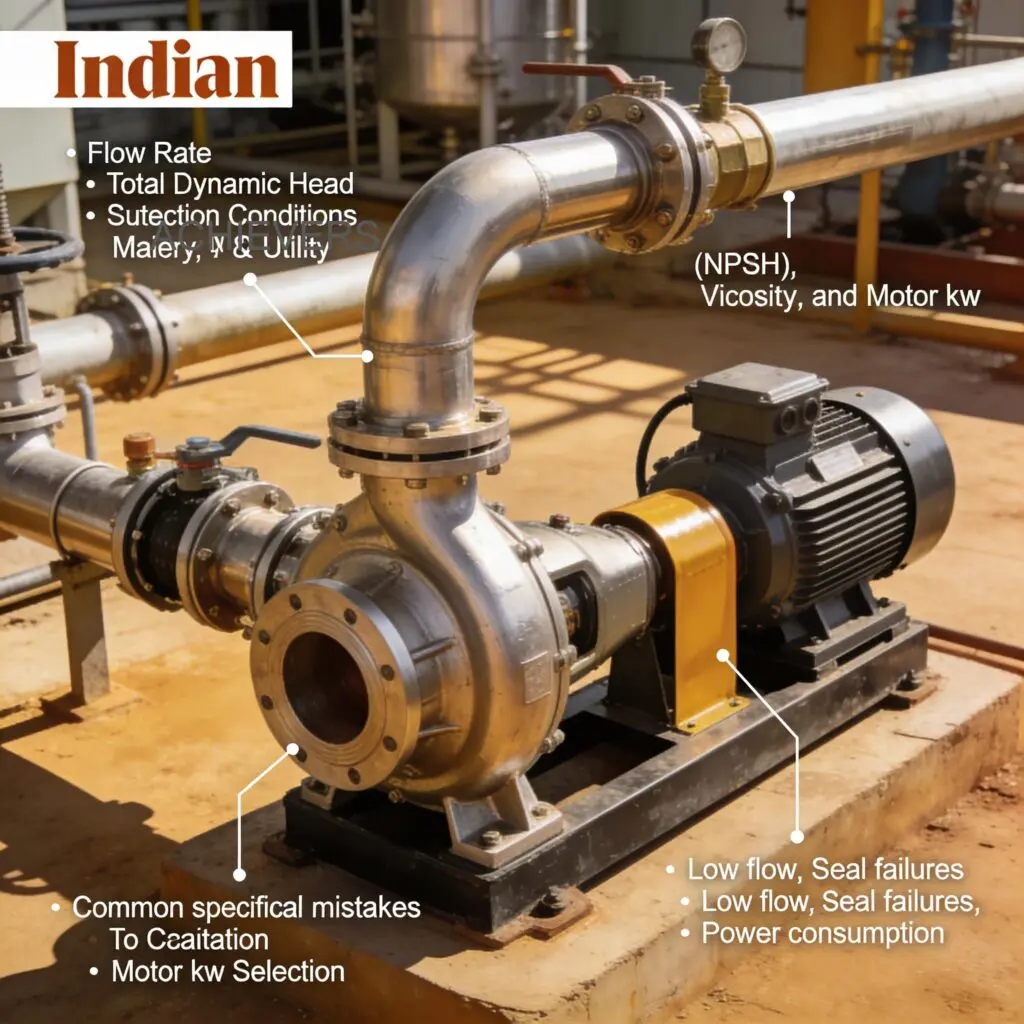
Sizing a pump correctly requires more than just guessing the horsepower. It involves a systematic calculation of the system curve and matching it to the pump’s performance curve. This section serves as a comprehensive stainless steel pumps sizing guide for engineers and procurement managers.
Step 1: Define the Flow Rate (Q)
The flow rate is the volume of fluid required to be moved per unit of time. In India, this is typically measured in Cubic Meters per Hour (m³/hr) or Liters per Minute (LPM).
- Continuous vs. Batch: Determine if the process requires a constant flow (e.g., cooling tower circulation) or intermittent batch transfer (e.g., tanker unloading).
- Peak Demand: Size for the maximum required flow, but avoid excessive safety margins (oversizing), which forces the pump to operate to the left of its Best Efficiency Point (BEP), causing vibration and shaft deflection.
Step 2: Calculate Total Dynamic Head (TDH)
Head is not just the vertical height; it is the total energy required to move the fluid. Neglecting friction losses is a common error in SS pumps flow head NPSH calculation.
Formula: TDH = Static Head + Friction Head + Pressure Head
- Static Head: The vertical distance from the fluid surface in the suction tank to the discharge point.
- Friction Head: The pressure loss caused by liquid flowing through pipes, elbows, valves, and strainers. This depends on pipe diameter, length, and fluid viscosity.
- Pressure Head: Any additional pressure required at the discharge point (e.g., spraying through a nozzle or feeding a pressurized boiler).
Step 3: Check Net Positive Suction Head (NPSH)
Cavitation is the silent killer of centrifugal pumps. It occurs when the pressure at the pump suction drops below the vapor pressure of the liquid, causing bubbles to form and violently collapse, damaging the impeller.
To prevent this, NPSHa (Available) must be greater than NPSHr (Required).
- NPSHr: Provided by the manufacturer’s curve.
- NPSHa: Calculated based on atmospheric pressure, static suction lift, friction losses in the suction line, and vapor pressure.
- Critical Note: If you are pumping hot water or volatile chemicals, the vapor pressure increases, significantly reducing the available NPSH. You may need to elevate the supply tank or lower the pump.
Step 4: Fluid Properties and Viscosity
Standard water pumps are rated for a specific gravity (SG) of 1.0 and a viscosity of 1 cP.
- Specific Gravity: If you are pumping sulfuric acid (SG > 1.8), the motor requires significantly more torque.
- Viscosity: As viscosity increases (e.g., oils, syrups), pump capacity and head decrease, while power draw increases. Standard centrifugal SS Pumps are generally suitable for viscosities up to 500-600 cP. Above this, positive displacement pumps might be required.
Step 5: Motor Power Selection
Determining how to select motor kW for SS centrifugal pump applications is a function of hydraulic power and efficiency.
Formula for Brake Horsepower (BHP):
BHP = (Q x H x SG) / (3960 x Pump Efficiency)
(Note: Constants change if using metric units).
In metric units (kW):
kW = (Q [m3/hr] x H [m] x SG) / (367 x Pump Efficiency)
Safety Margin: Always add a safety margin to the calculated shaft power to select the standard motor rating:
- For small motors (< 2 kW): Add ~20-25%
- For medium motors (2-15 kW): Add ~15%
- For large motors (> 15 kW): Add ~10%
Common Specification Mistakes
- Ignoring Specific Gravity: Using a standard motor for a heavy liquid like brine or acid will trip the overload or burn the winding.
- Undersizing Suction Lines: Using a suction pipe smaller than the pump inlet increases friction and leads to cavitation.
- Variable Frequency Drive (VFD) Misuse: Running a standard pump at very low speeds without checking motor cooling can lead to overheating.
3. Selection and Configuration Guide
Once the hydraulic parameters (Flow and Head) are calculated, the next step is configuring the physical attributes of the pump. This ensures compatibility with the specific industrial environment.
Material Selection (Metallurgy)
- SS 304 (CF8): Suitable for raw water, treated water, mild chemicals, and food applications where high corrosion resistance isn't critical.
- SS 316 (CF8M): The industry standard for stainless steel pump for chemical process plants India. It contains Molybdenum, which provides resistance to chlorides, acids, and high temperatures.
- SS 316L: Low carbon version for welding applications or extremely high-purity pharmaceutical water loops (WFI).
Sealing Systems
The mechanical seal is the most vulnerable part of a pump.
- Carbon/Ceramic: Standard for clean water.
- SiC/SiC (Silicon Carbide): Required for abrasive fluids or dirty water.
- TC/TC (Tungsten Carbide): For extreme durability.
- Seal Material: Ensure elastomers (O-rings) are compatible. Use Viton for acids/oils, EPDM for hot water/steam, and PTFE (Teflon) for aggressive solvents.
Mounting and Drive
- Monoblock: Space-saving and eliminates alignment issues. Ideal for OEM skids and compact machinery.
- Back Pull-Out (Coupled): Allows the rotating assembly to be removed for maintenance without disturbing the piping. Preferred for heavy-duty industrial maintenance regimes.
4. Typical Applications in Indian Industry
The versatility of SS Pumps makes them ubiquitous across various sectors. Chintan Engineers caters to a wide spectrum of these applications, leveraging robust design and precision engineering.
Chemical and Pharmaceutical Processing
In the chemical corridor of Gujarat and beyond, these pumps handle aggressive media such as solvents, acids, alkalis, and reactor feeds. The primary requirement here is material traceability and leak-free sealing to ensure safety and environmental compliance.
Industrial Water Supply and Cooling
For SS monoblock pump selection for water supply and cooling tower applications, efficiency is key. These pumps circulate water through heat exchangers and chillers. Stainless steel is increasingly preferred over cast iron here to prevent rust contamination in the cooling loop, which can foul expensive heat exchanger plates.
Food and Beverage (Dairy)
Hygiene is paramount. SS pumps with smooth internal finishes prevent bacterial growth. They are used for milk transfer, juice processing, and CIP (Clean-In-Place) systems where the pump circulates cleaning agents at high velocity.
Textile and Dyeing
The textile industry requires pumps that can handle hot water mixed with dyes and bleaching agents. SS 316 pumps withstand the corrosive nature of the dye bath and the high temperatures involved in the process.
Water Treatment (RO/DM Plants)
Reverse Osmosis and Demineralization plants require high-pressure feed pumps. SS pumps are essential here because demineralized water is "hungry" and highly aggressive toward mild steel or cast iron, stripping ions and causing rapid corrosion.
5. Service, Installation, and Support
Even the best-engineered pump will fail if installed incorrectly. As leading SS pump manufacturers in India, Chintan Engineers emphasizes the importance of correct installation and lifecycle support.
Installation Best Practices
- Foundation: Ensure the pump is mounted on a rigid, flat foundation to absorb vibration.
- Piping Alignment: Never force piping to meet the pump flanges. Pipe stress causes casing distortion and seal failure.
- Priming: Centrifugal pumps (unless self-priming) must be filled with liquid before starting. Running dry destroys the mechanical seal in seconds.
The Importance of Local Support
Sourcing industrial SS pumps Ahmedabad or from reputable domestic manufacturers ensures access to spare parts (impellers, seals, shafts) and technical expertise. Relying on obscure imported brands often leads to weeks of downtime waiting for a simple seal kit.
Calibration and Testing
Quality manufacturers provide pumps that are tested and calibrated. Ensure your supplier can provide performance curves and hydrostatic test certificates to verify that the pump meets the specific duty point required by your process.
Summary
Sizing a stainless steel pump is a convergence of hydraulic calculation and material science. By accurately defining your flow and head, calculating NPSH, understanding fluid properties, and selecting the right motor kW, you can ensure a system that runs efficiently for years. Avoiding common pitfalls like oversizing or ignoring specific gravity is crucial for operational uptime.
At Chintan Engineers, we combine decades of manufacturing expertise with a commitment to precision. Whether you need a robust solution for a chemical plant or a hygienic pump for a dairy line, our engineering team is ready to assist you in selecting the perfect configuration for your specific needs.
Get Your Pump Sizing Right Today
Don't leave your process efficiency to chance. Contact our technical team with your requirements:
- Product Name: SS Pumps
- Required Flow & Head:
- Fluid Name & Properties: (Temperature, Viscosity, SG)
- Application/Industry:
Let us engineer the precise solution for your facility.
