
















Handling corrosive fluids like Hydrochloric Acid (HCl), Sulfuric Acid (H2SO4), and Caustic Soda requires equipment that goes beyond standard operational capabilities. For plant engineers and procurement teams in the Indian chemical sector, the challenge isn't just moving liquid from point A to point B—it is doing so without incurring frequent breakdowns, leaks, or safety hazards caused by corrosion. Metallic pumps often fail rapidly in these environments, leading to costly downtime and frequent replacements.
This is where PP Pumps (Polypropylene Pumps) become the industry standard for cost-effective and reliable fluid transfer. Designed specifically to withstand aggressive chemical attack, these pumps offer an ideal balance of chemical inertness, mechanical strength, and operational efficiency. However, selecting the correct pump requires more than just matching inlet and outlet sizes; it demands a deep understanding of fluid properties and site conditions.
1. What Are PP Pumps and How Do They Work?
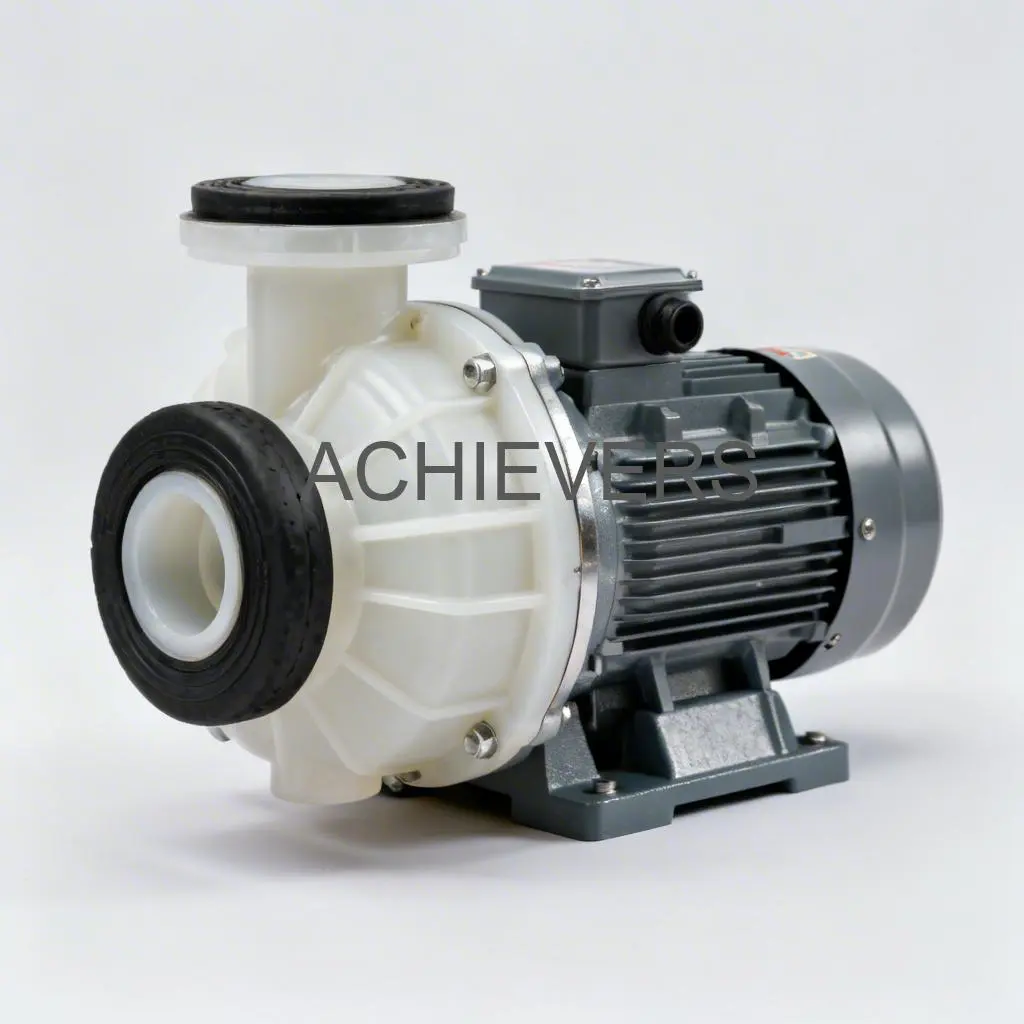
PP Pumps are specialized centrifugal pumps constructed primarily from Polypropylene, a high-grade thermoplastic known for its exceptional resistance to a wide range of acids and alkalis. Unlike metal pumps that rely on expensive liners or exotic alloys to resist corrosion, the wetted parts of these pumps—including the volute casing, impeller, and back plate—are molded directly from solid Polypropylene.
Key Technical Features
Based on standard engineering designs utilized by leading manufacturers, these pumps generally feature:
- Corrosion-Resistant Construction: The pump casing and impeller are made from high-quality Polypropylene (PP), ensuring compatibility with corrosive chemicals that would rapidly degrade cast iron or stainless steel.
- Centrifugal Action: They utilize a rotating impeller to generate flow and pressure, making them suitable for continuous duty transfer applications.
- Shaft Protection: To prevent the corrosive fluid from contacting the metal drive shaft, these pumps typically employ a shaft sleeve (often made of ceramic, glass, or compatible plastic) ensuring that no metal parts are exposed to the pumped medium.
- Operating Range: Polypropylene is typically rated for temperatures up to 70°C to 80°C, covering the vast majority of acid pickling, effluent treatment, and chemical transfer applications in India.
These pumps serve as the workhorse for industries handling hazardous liquids, offering a leak-free and durable solution when maintained correctly.
2. Matching Fluid Chemistry and Site Conditions to Pump Design
Selecting the right PP Pumps is not a "one-size-fits-all" process. This post helps plant engineers and purchase teams choose the right PP pumps for corrosive chemical transfer by matching fluid chemistry, temperature, solids, and duty cycle to pump construction, impeller type, and sealing options. It also covers common specification mistakes (wrong MOC, seal selection, NPSH/cavitation risk) that increase downtime and lifecycle cost in Indian site conditions.
Fluid Chemistry and Temperature Limits
The most critical factor in selection is the chemical compatibility relative to temperature. While a polypropylene centrifugal pump for acid transfer is excellent for Hydrochloric Acid (33%) at ambient temperatures, its structural integrity decreases as temperatures rise.
- Acids (HCl, H2SO4): PP performs exceptionally well up to 60°C–70°C.
- Alkalis (Caustic Soda): PP is highly resistant to caustic solutions used in scrubbing and neutralization.
- Solvents: Caution is needed, as some organic solvents can soften PP.
If your process temperature exceeds 80°C, PP may structurally weaken, and alternative materials like PVDF might be required. However, for the majority of cold to warm acid transfer tasks, PP remains the most economical and robust choice.
Solids Handling and Impeller Selection
Chemical effluents often contain suspended solids or sludge.
- Semi-Open Impellers: These are preferred for industrial PP pumps for corrosive fluid handling India where fluids might contain small amounts of sludge or crystals. They are less likely to clog than closed impellers.
- Closed Impellers: Best for clean fluids where maximum efficiency and head generation are required.
Sealing Options: PP Pump Mechanical Seal vs Gland Packing
The sealing mechanism is often the primary point of failure if selected incorrectly.
- Mechanical Seals: The standard for hazardous chemicals. They offer zero leakage. For abrasive fluids (like lime slurry), hard-face seal materials (Silicon Carbide vs Silicon Carbide) are essential to prevent premature wear.
- Gland Packing: Rarely recommended for dangerous acids due to inherent leakage required for lubrication, which poses safety risks. Mechanical seals are the preferred choice for safety and compliance in modern Indian plants.
Common Specification Mistakes
- Ignoring NPSH Available: In hot Indian summers, the vapor pressure of volatile acids increases. If the pump is located too high above the fluid level (suction lift), cavitation can destroy the impeller. Always calculate Net Positive Suction Head (NPSH) carefully.
- Dry Running: PP pumps rely on the fluid to cool the mechanical seal. Running dry, even for seconds, can melt seal faces. Installing a power monitor or level switch is a crucial safeguard.
3. Selection and Configuration Guide
To ensure you procure a PP pump that delivers long-term value, buyers should gather specific data before approaching a PP pump manufacturer in India.
1. Define the Duty Point
- Flow Rate (Q): Measured in cubic meters per hour (m³/hr) or Liters per Minute (LPM). Avoid oversizing, as throttling a centrifugal pump too much can cause vibration and seal failure.
- Total Head (H): This is not just vertical height but includes friction losses in pipes, bends, and valves. For viscous fluids (like concentrated Sulfuric Acid), friction losses are higher.
2. Determine Material of Construction (MOC)
- Casing/Impeller: Polypropylene (PP) is standard.
- Shaft Sleeve: Ceramic or Glass-filled Teflon (GFT) depending on the chemical.
- Seal Faces: Carbon/Ceramic for clean water/mild chemicals; SiC/SiC (Silicon Carbide) for abrasive chemicals or dirty water.
- Elastomers (O-Rings): Viton is standard for acids; EPDM may be better for certain alkalis.
3. Motor and Drive Specifications
- Power: Ensure the motor has a safety margin (usually 10-20%) over the absorbed power at the duty point.
- Protection: In chemical plants, TEFC (Totally Enclosed Fan Cooled) motors with IP55 protection are standard to prevent corrosion of internal motor components.
- Speed: 1440 RPM (4-pole) pumps typically last longer and run quieter than 2900 RPM (2-pole) pumps, though 2-pole pumps are smaller and cheaper for high-head applications.
4. Typical Applications in Indian Industry
PP pumps are ubiquitous across various sectors due to their versatility. As a PP pump selection guide for ETP and chemical plants, we identify the following core applications where these pumps excel:
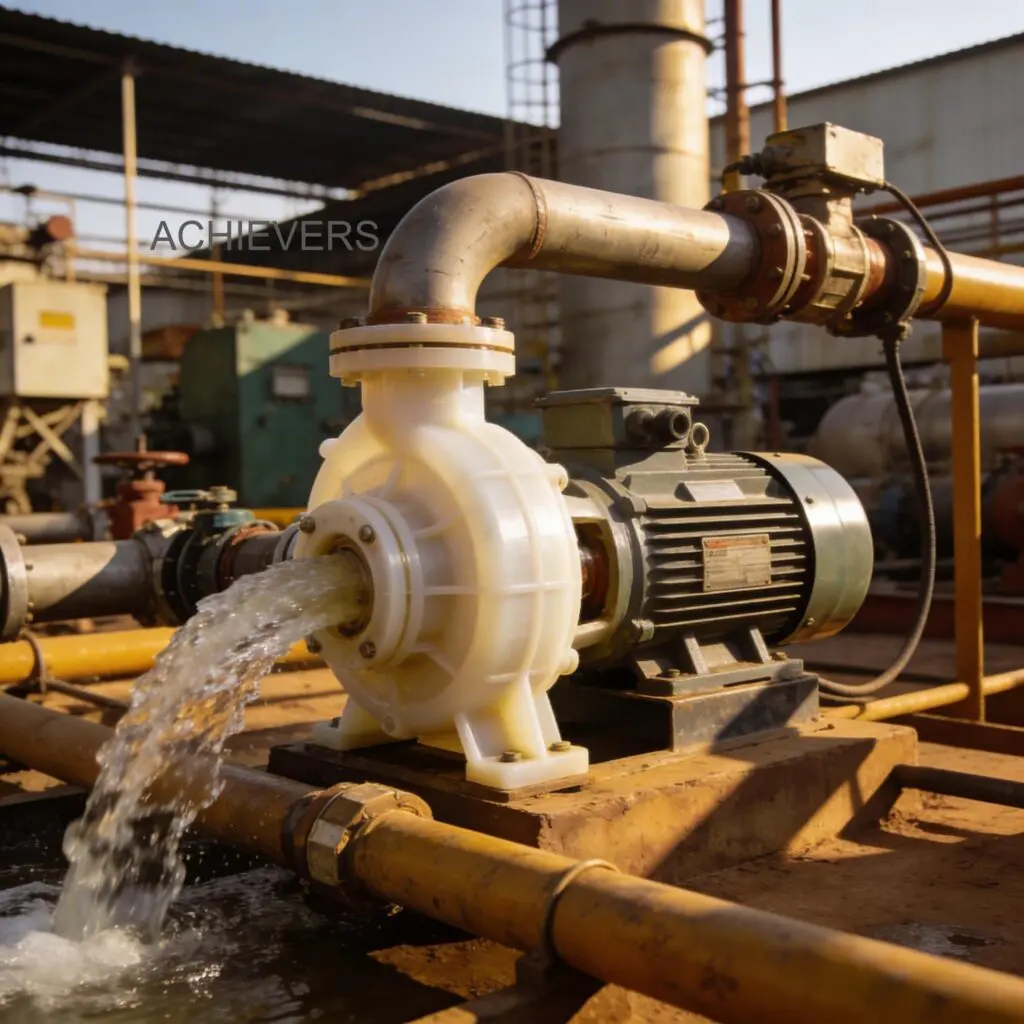
- Effluent Treatment Plants (ETP): Transferring acidic or alkaline wastewater from collection tanks to neutralization pits.
- Acid Pickling Lines: Circulation of Hydrochloric or Sulfuric acid in steel rolling mills to remove oxide scales.
- Scrubber Systems: Recirculating caustic soda or water in fume scrubbers to neutralize harmful exhaust gases.
- Chemical Loading/Unloading: transferring bulk chemicals from tankers to storage vessels.
- Electroplating: Filtration and transfer of plating solutions (nickel, chrome, copper electrolytes) where metal contamination must be avoided.
- Dye and Pigment Industry: Handling intermediate chemicals and colorants that are corrosive to metals.
In every case, the PP pump for HCl and caustic soda handling acts as the critical heartbeat of the process, ensuring continuous operation without corrosion-related stoppages.
5. Service, Installation, and Support
Even the highest quality pump will fail if installed incorrectly. Long-term reliability relies on precise installation and regular maintenance.
Installation Best Practices
- Foundation: Pumps must be grouted on a level concrete foundation to absorb vibration.
- Pipe Strain: Piping should be independently supported. Never use the PP pump casing to support the weight of the piping, as plastic can deform under stress, leading to misalignment and casing cracks.
- Alignment: Proper alignment between the motor and pump shaft is critical to prevent coupling wear and bearing failure.
Support and Spares
Working with a reputable manufacturer ensures access to "End-to-End Solutions," from manufacturing to installation and AMC.
- Spare Parts: Keep a stock of essential spares such as mechanical seals, impellers, and O-rings. Local availability reduces downtime significantly compared to waiting for imported components.
- AMC (Annual Maintenance Contracts): Regular inspection of seal condition, vibration analysis, and motor health extends the asset's life.
By choosing a partner known for trusted expertise and quality workmanship, you ensure that your fluid handling systems are backed by rigorous testing and genuine components.
Get the Right Configuration for Your Plant
Selecting the correct pump requires analyzing your specific chemical, temperature, and head requirements. Do not leave your process uptime to chance.
Contact our technical team today with the following details:
- Fluid Name & Concentration: (e.g., 33% HCl)
- Operating Temperature: (e.g., Ambient, 60°C)
- Required Flow Rate & Head: (e.g., 10 m³/hr @ 15 meters)
- Solid Content: (e.g., Clean fluid or 2% sludge)
We will engineer the precise solution for your facility.
