
















In the demanding landscape of Indian industrial operations, fuel management is more than just logistics—it is a critical cost center. For construction sites, mining operations, and logistics fleets, the ability to refuel vehicles and heavy machinery on-site is essential for maintaining uptime. However, the reliability of this process depends entirely on the condition of your equipment. A neglected dispensing unit can lead to inaccurate measurements, fuel theft, contamination, and costly downtime.
To ensure your operations run smoothly, maintaining your dispensing equipment is just as important as maintaining the vehicles they service. Whether you are operating a dedicated fuel bowser or a skid-mounted unit on a pickup, a structured maintenance routine is the key to longevity and accuracy. As one of the leading mobile fuel dispenser manufacturers in India, Chintan Engineers understands that equipment must withstand heat, dust, and vibration while delivering precise measurements every time.
1. What this product does
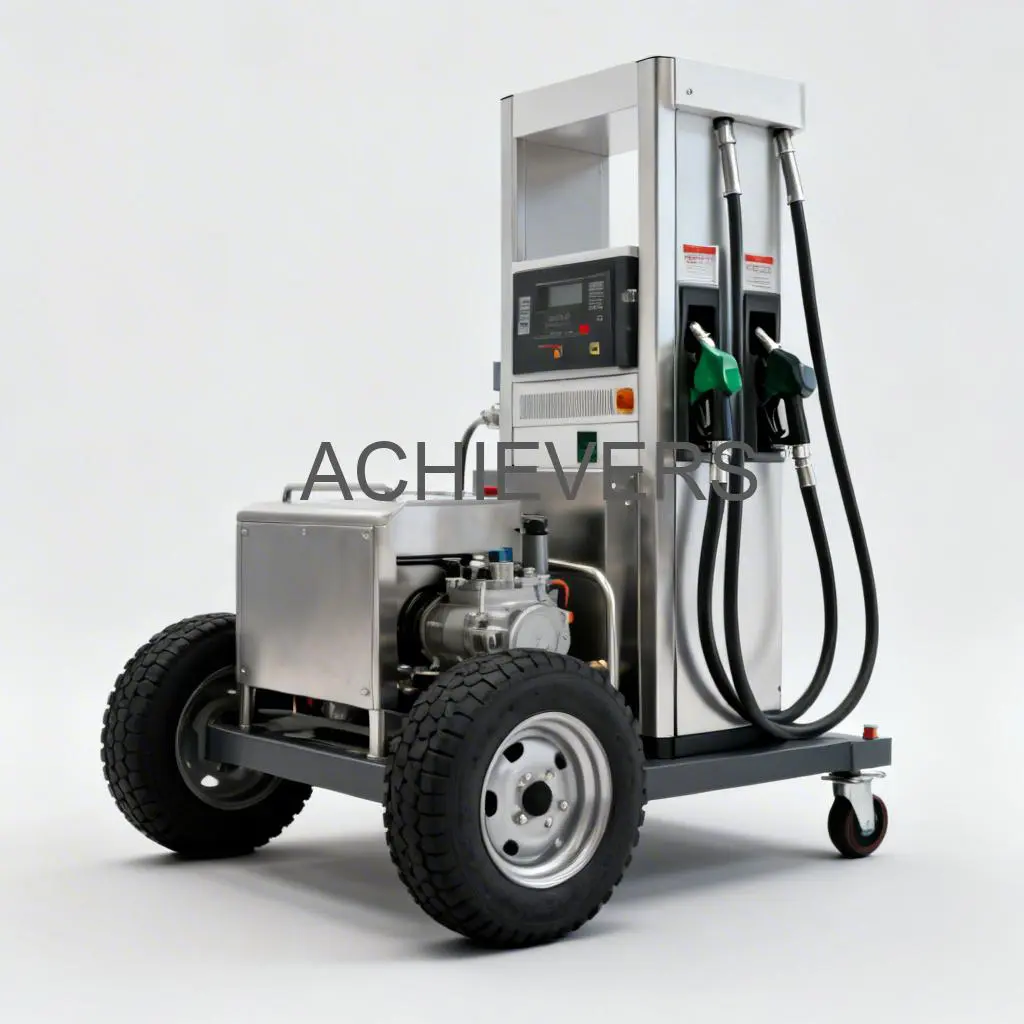
The Mobile Fuel Dispenser is a compact, engineered solution designed to dispense, measure, and monitor fuel (primarily diesel) in non-retail, industrial environments. Unlike stationary pumps found at petrol pumps, these units are ruggedized for mobility. They are typically installed on fuel bowsers, mobile trolley skids, or service pickup trucks to bring fuel directly to earthmovers, generators, and fleet vehicles.
At its core, the system integrates several critical components into a single, cohesive unit:
- Pumping Unit: robust pumps (often DC-powered for mobility or AC for skid systems) capable of handling various flow rates to match the refueling speed required by heavy machinery.
- Flow Metering: High-precision positive displacement or turbine meters that ensure accurate volumetric measurement of every liter dispensed.
- Filtration System: Integrated strainers and filters to remove particulate matter and water, protecting the engines of the receiving vehicles.
- Dispensing Interface: Heavy-duty hoses and auto-shutoff nozzles designed to prevent spillage and withstand rough handling.
- Control & Display: Mechanical or digital counters that display flow rate and total volume, often with options for transaction logging.
These dispensers are engineered to provide "petrol pump" accuracy in remote locations, ensuring that fleet managers have total visibility over fuel consumption.
2. Preventive maintenance schedule for mobile fuel dispensers
For fleet and site maintenance teams, a reactive approach—fixing things only when they break—is a recipe for operational disaster. Given the harsh site conditions in India, including high ambient temperatures and dusty environments, a preventive maintenance checklist for mobile fuel dispenser units is mandatory.
This schedule covers the critical aspects of the Mobile Fuel Dispenser, ensuring that your mobile assets remain reliable and accurate.
Daily Checks: Visual Inspection and Safety
Before the bowser or service truck begins its rounds, the operator should perform a visual check.
- Leak Detection: Walk around the skid or cabinet. Check for any wet spots or diesel smell around pipe joints, the pump seal, and the meter flange. Even a "weeping" leak can introduce air into the system, affecting accuracy.
- Nozzle Condition: Inspect the nozzle spout for deformation. A bent spout can cause the auto-shutoff mechanism to fail, leading to spills.
- Hose Integrity: Unwind the hose slightly. Check for cuts, abrasions, or kinks. In mobile applications, hoses often rub against truck chassis or ground surfaces, leading to premature wear.
Weekly Service: Filtration and Power
- Filter Maintenance: Fuel quality in remote sites can be variable. The mobile diesel dispenser filter replacement and hose reel service routine should be prioritized. Check the pressure differential across the filter. If flow rate drops noticeably, the filter element is likely clogged with sludge or particulate matter. Replace spin-on filters or clean reusable strainers immediately to prevent pump cavitation.
- DC Power Health: For 12V/24V DC units, check the battery connections. Loose or corroded terminals cause voltage drops, which leads to the motor overheating and running at lower RPMs, significantly reducing flow rate. Ensure cables are tight and free of sulfate buildup.
Monthly Maintenance: Calibration and Mechanicals
- Calibration Verification: Over time, mechanical wear or vibration can cause slight drift in measurement accuracy. A standard mobile fuel dispenser calibration procedure involves dispensing fuel into a certified 5-liter, 10-liter, or 20-liter calibrated test measure (can).
- Prime the system to remove air.
- Dispense exactly 10 liters into the test jar.
- Compare the digital/mechanical reading on the dispenser with the actual level in the jar.
- If the variance exceeds the acceptable error margin (typically +/- 0.5% or 1%), adjust the calibration screw or digital factor according to the manufacturer’s manual.
- Belt and Drive Check: If the unit is belt-driven, check tension. Loose belts slip under load, causing erratic flow.
- Lubrication: Grease any moving parts on the hose reel swivel to ensure smooth retraction and extension.
Record Keeping: The Logbook
Maintenance is only effective if tracked. Keep a logbook for every Mobile Fuel Dispenser in your fleet. Record the date of filter changes, calibration results, and any parts replaced. This data helps in predicting component life and planning procurement of spares.
3. Selection and configuration guide
Choosing the right Mobile Fuel Dispenser requires a clear understanding of your specific refueling needs. Industrial buyers often make the mistake of undersizing the pump or ignoring the mounting requirements. Here is how to configure a system that delivers value.
Flow Rate and Capacity
- Standard Duty (40-60 LPM): Ideal for refueling pickup trucks, cars, and small gensets.
- Heavy Duty (70-120+ LPM): Required for large excavators, mining dumpers, and high-capacity diesel bowsers. A higher flow rate reduces the time the dispensing vehicle spends at each asset, increasing overall fleet efficiency.
Power Options
- 12V/24V DC: The most common choice for mobile fuel dispenser for bowser and pickup trucks. These draw power directly from the vehicle’s battery. Ensure your vehicle’s alternator can handle the load.
- 230V/415V AC: Best suited for skid-mounted units that will be placed on a trolley and plugged into a site generator or mains power.
Metering and Controls
- Mechanical Counters: Robust, weather-resistant, and simple. Best for harsh mining environments where electronics might fail due to heat or vibration.
- Digital Systems: Offer higher precision and features like totalizers that cannot be reset easily. Essential if you need strict inventory control.
Material Compatibility
Ensure the internal seals and materials are compatible with the fluid. While diesel is standard, if you are dispensing bio-diesel or specific industrial oils, the seals (Viton vs. Nitrile) must be selected accordingly to prevent swelling and leaks.
4. Typical applications
The versatility of the Mobile Fuel Dispenser makes it a staple across various sectors in India.
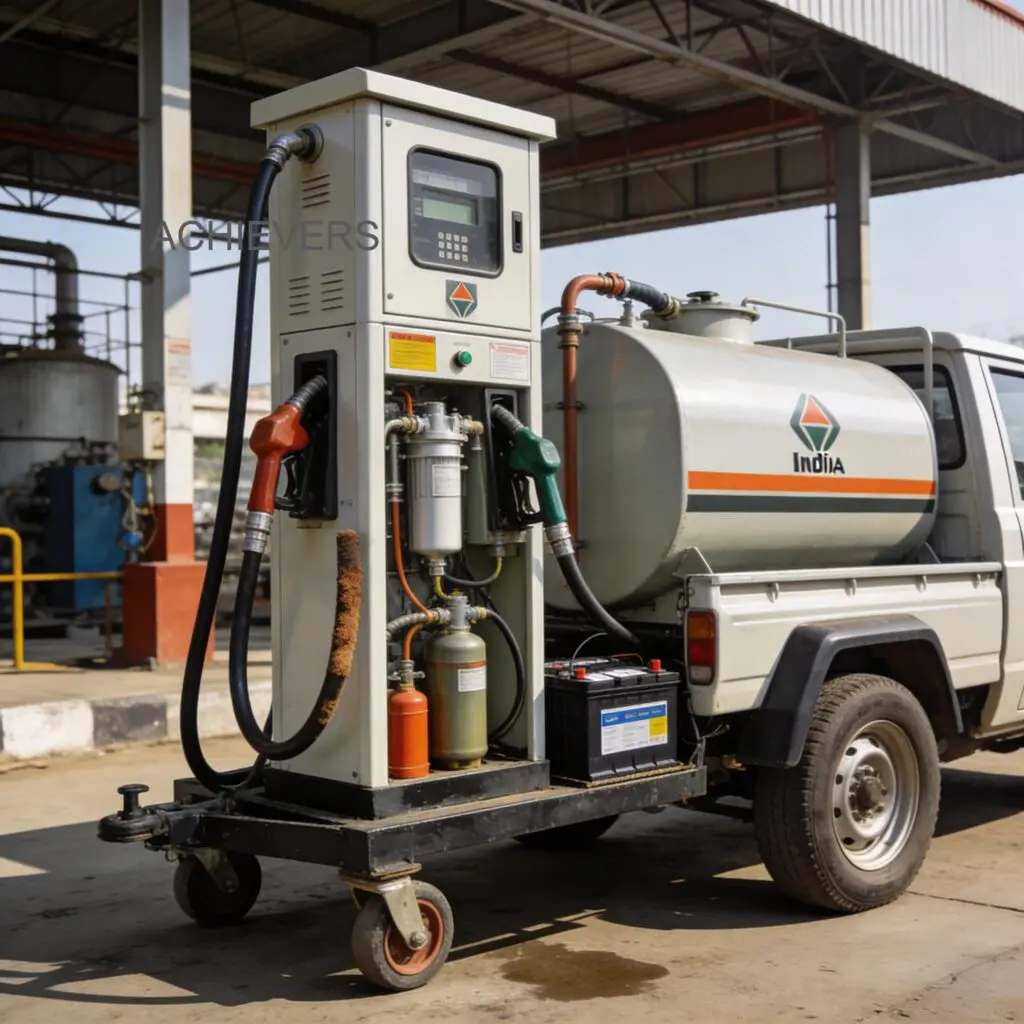
- Mobile Bowser Trucks: The most common application. The dispenser is mounted in the rear cabinet of a tank truck, allowing it to travel to stationary equipment.
- Service Pickup Trucks: Compact dispensers mounted on small skids in the back of pickups (like the Tata Yodha or Mahindra Bolero pickup) for agile refueling in narrow construction zones.
- Construction & Infrastructure: Used to fuel cranes, pile drivers, and concrete mixers that cannot leave the site.
- Mining Operations: High-flow units are essential here to fill massive dump trucks quickly during shift changes to minimize queue times.
- Agriculture: Mounted on tractor trolleys to refuel harvesters and irrigation pumps in the field.
5. Service, installation, and support
Even the best-engineered product requires professional installation and support. Improper installation—such as using undersized suction pipes or failing to install a foot valve—is the leading cause of pump failure.
Installation Best Practices
- Suction Lift: Keep the pump as close to the tank level as possible. Excessive suction lift strains the motor and reduces flow.
- Vibration Isolation: When mounting on a vehicle chassis, use rubber vibration dampers. Indian roads are rough; direct metal-to-metal mounting can cause cracks in the casing or pipework over time.
- Electrical Safety: Always use a fuse or circuit breaker close to the power source to protect the DC motor from short circuits.
AMC and Service Support
For long-term reliability, engaging in an Annual Maintenance Contract (AMC) is highly recommended. Mobile fuel dispenser AMC and service support India is a critical service offering from Chintan Engineers. Our support ensures that you have access to genuine spares—rotors, vanes, seals, and PCBs—that fit perfectly. Unlike generic trading companies, a manufacturer-backed service guarantees that calibration is verified against master standards and that repairs restore the unit to factory specs.
Local support means reduced downtime. When a dispenser fails at a remote project site, waiting weeks for imported parts is not an option. We prioritize accessible spares and technical guidance to get your fuel systems back online immediately.
—
Ready to optimize your fleet fueling?
Ensure your mobile refueling operations are precise, safe, and efficient. Contact Chintan Engineers to configure the right dispensing solution for your needs. Please provide the following details for an accurate recommendation:
- Desired flow rate (LPM).
- Power source (12V DC, 24V DC, or AC).
- Vehicle or mounting type (Bowser, Pickup, or Trolley).
- Fluid type (Diesel, Bio-diesel, etc.).
