
















For fleet operators, logistics companies, and industrial facilities across India, fuel is one of the highest recurring operational expenses. Managing this critical resource requires more than just installing equipment; it demands continuous precision, absolute reliability, and zero tolerance for leakage or miscalculation. A well-maintained Diesel Dispenser is the frontline defense against fuel pilferage, inaccurate batching, and costly operational downtime.
Operating in Indian site conditions—which often involve high ambient temperatures, heavy dust ingress, monsoon moisture, and unpredictable power fluctuations—can accelerate the wear and tear on dispensing equipment. Without a structured approach to upkeep, even the most robust systems can suffer from calibration drift, clogged filters, and degraded motor performance. By implementing a strict maintenance protocol, industrial plant managers and fleet supervisors can protect their investment, extend the lifespan of their equipment, and ensure that every drop of fuel is accurately recorded and dispensed.
1. What This Product Does
At its core, an industrial Diesel Dispenser is a fully integrated fuel management system designed to transfer, measure, and control the flow of diesel into vehicles, generators, or secondary storage tanks. Unlike basic transfer pumps, these dispensers are engineered for precision fuel handling, combining high-performance pumping mechanisms with highly accurate flow meters to deliver exact batching and reconciliation capabilities.
Key specifications and functional components of these robust systems generally include:
- Pumping Unit: Equipped with heavy-duty rotary vane or gear pumps, capable of delivering consistent flow rates (typically ranging from standard 40-60 LPM to high-flow 80-150 LPM variants for heavy machinery).
- Metering and Accuracy: Utilizing positive displacement or precision turbine flow meters, these systems offer exceptional accuracy. Displays are available in high-visibility digital formats for precise readouts or robust mechanical registers for rugged, off-grid environments.
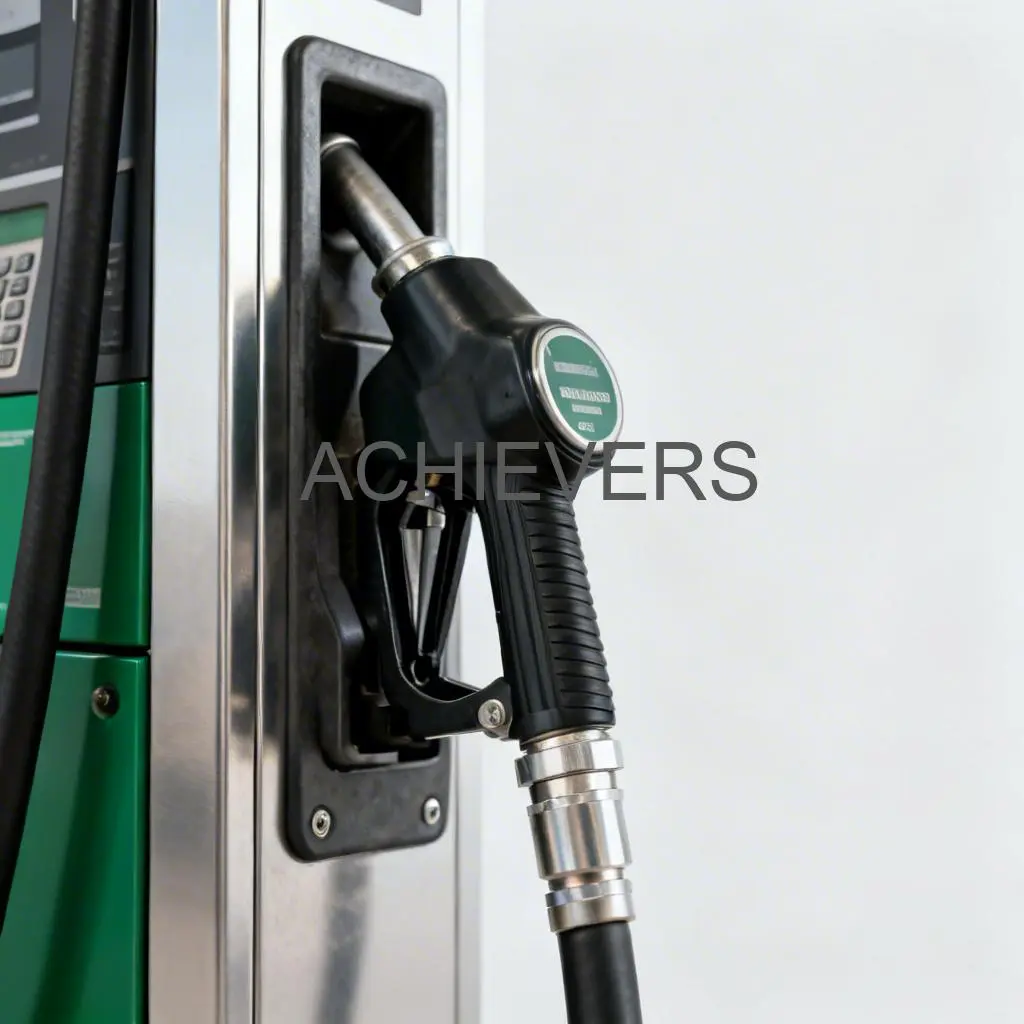
- Delivery Infrastructure: Fitted with durable, anti-static rubber hoses and auto-shutoff nozzles to prevent overfilling, spills, and operator error during dispensing.
- Power Configurations: Available in multiple power variants, including 220V AC for stationary plant installations and 12V/24V DC for mobile bowsers and remote site operations.
- Chassis and Build: Housed in weather-resistant, powder-coated enclosures designed to withstand harsh industrial environments, protecting internal electronics and mechanical parts from environmental degradation.
2. Structuring an AMC and Preventive Maintenance Routine
To maximize the ROI on your Diesel Dispenser, establishing a rigorous Annual Maintenance Contract (AMC) and an internal preventive routine is mandatory. Indian industrial sites present unique challenges—from severe dust clogging internal strainers to voltage spikes wearing out electrical motors. A comprehensive routine protects metering accuracy, eliminates unexpected downtime, and dramatically extends the life of hoses, nozzles, and internal motors.
Below is a practical approach to structuring your preventive maintenance for diesel dispenser in fleet yard environments, alongside a comprehensive diesel dispenser maintenance checklist.
Daily Operator Checks (Visual and Functional)
- Hose and Nozzle Inspection: Check the delivery hose for bulges, cracks, or deep abrasions. Ensure the auto-shutoff nozzle latch operates smoothly and that there is no weeping fuel at the swivel joint.
- Display and Readout: Verify that the digital or mechanical display resets to zero perfectly before every transaction.
- General Housekeeping: Wipe down the exterior cabinet to prevent dust accumulation near ventilation louvers and the nozzle boot.
Weekly Maintenance Checks
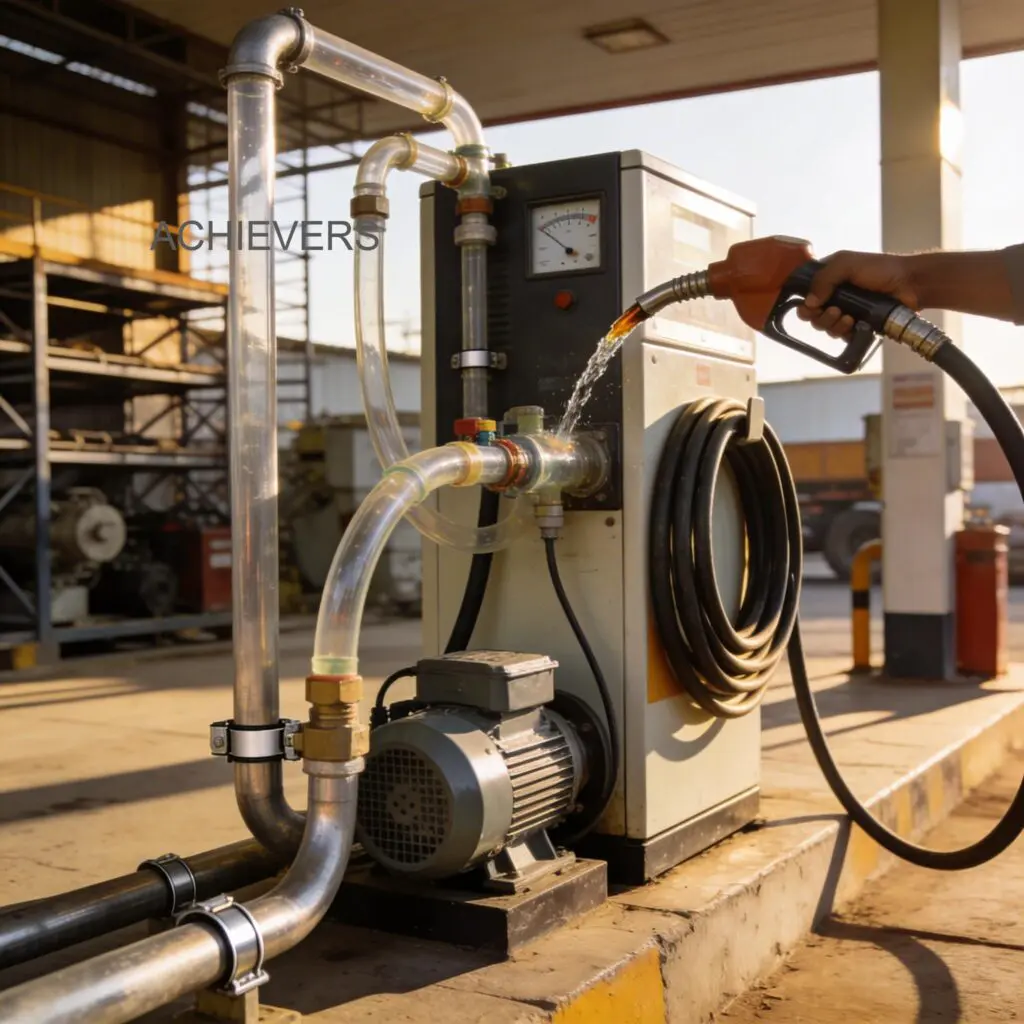
- Leakage and Pressure Audit: Inspect all internal piping, flange connections, and the pump housing. Address any early signs of seepage immediately. If operators report slow fueling, prioritize industrial diesel dispenser troubleshooting low flow leakage. Low flow is often the first symptom of a clogged internal strainer or a failing bypass valve.
- Filter and Strainer Cleaning: Clean the inline Y-strainer or suction filter. Debris from bulk storage tanks frequently clogs these filters, straining the motor and reducing flow rates.
- Electrical Connections: Ensure grounding/earthing wires remain securely fastened to prevent static buildup during dispensing.
Monthly and Quarterly AMC Interventions
A robust diesel dispenser AMC schedule India requires trained technicians to perform deeper system audits:
- Motor and Pump Servicing: Check motor current draw (amperage) to ensure it is running within rated parameters. Inspect pump vanes for wear and replace if the flow rate has permanently dropped.
- Calibration Verification: Perform volumetric testing using a certified 10-liter or 20-liter proving measure. If the dispensed volume does not match the display, the flow meter must be recalibrated. Proper diesel dispenser calibration and accuracy maintenance is critical to preventing inventory discrepancies.
- Deep Cleaning: Open the main enclosure, clean the electronic control boards with contact cleaner, and check for any moisture ingress or pest damage.
Record-Keeping for Audits and Internal Control
Preventive maintenance is only as good as its documentation. For internal fuel control and financial audits, plant managers must maintain detailed logbooks. Record the exact date of filter changes, note the "before" and "after" variance during calibration checks, and log all replaced components. This historical data helps predict when a pump or meter is nearing the end of its lifecycle, allowing for proactive replacement rather than reactive emergency repairs.
3. Selection and Configuration Guide
Choosing the right Diesel Dispenser requires aligning the equipment's specifications with your specific site conditions, daily dispensing volume, and required level of automation. A mismatch can lead to chronic motor burnout or agonizingly slow fueling times for heavy vehicles. Industrial buyers should communicate their exact operational parameters to their supplier to ensure the correct configuration.
When specifying your requirements, focus on these two critical categories:
1. Sizing, Flow, and Power Capabilities
- Flow Rate Requirements: Select standard flow (40-60 LPM) for standard commercial vehicles (LCVs), or high-flow models (80-150 LPM) for heavy earth-moving equipment, mining dumpers, and large diesel locomotives.
- Power Supply Variations: Choose 220V AC models for fixed, grid-connected installations inside factory premises. For mobile fuel bowsers or off-grid remote construction sites, specify 12V or 24V DC battery-operated models.
- Motor Duty Cycle: Inform the supplier if the dispenser will be running continuously for hours (requiring continuous-duty motors) or used for short, intermittent top-ups (standard duty cycle).
2. Metering, Controls, and Enclosure
- Metering Technology: Decide between rugged mechanical flow meters (ideal for extremely dusty, harsh environments with no power reliability) and precision digital flow meters (required for exact batching and data logging).
- Batching and Automation: If fuel rationing is required, specify units with preset batching features. This allows operators to input a specific volume (e.g., 50 liters), and the machine will automatically stop the pump once that volume is reached.
- Mounting Configuration: Determine whether you require a wall-mounted unit, a tank-mounted skid setup, or a standalone pedestal enclosure.
4. Typical Industrial Applications
The versatility and ruggedness of a high-quality Diesel Dispenser make it a critical asset across various heavy-duty sectors in India.
- Logistics and Fleet Fueling: Large transport companies utilize these dispensers in their private yards to refuel their fleets accurately. It speeds up turnaround times and ensures that fuel consumption per vehicle is strictly monitored.
- Construction and Earthmoving: On massive infrastructure sites, diesel must be distributed efficiently to excavators, cranes, and bulldozers. Mobile dispensers mounted on bowsers handle this heavy daily demand in high-dust environments.
- Manufacturing and Processing Plants: Factories rely heavily on backup Diesel Generator (DG) sets. Dispensers ensure these critical generators are fueled safely and precisely, without the mess and hazard of manual bucket-transfer methods.
- Mining Operations: High-capacity dispensing systems are used to rapidly refuel massive mining haul trucks, where every minute of fueling downtime equates to lost productivity.
5. Service, Installation, and Support
The lifecycle performance of any industrial fluid handling equipment depends heavily on how it is installed and supported. Proper site preparation is critical. Dispensers should be mounted on perfectly level concrete plinths, shielded by a weather canopy where possible, and properly earthed to prevent static hazards and electrical shorts.
Beyond installation, partnering with an experienced manufacturer that offers comprehensive post-sales support is vital. Factory calibration verifies that the meter reads perfectly before dispatch, but local service availability ensures it stays that way. Sourcing reliable diesel filling machine service and spares India ensures that when a nozzle breaks, a filter clogs, or a digital display malfunctions, the component can be swapped out within hours, not weeks. Choosing a supplier that provides transparent communication, genuine internal components, and dedicated AMC packages guarantees that your fuel management system remains a highly accurate, leak-free asset for years to come.
*
Ensure Accuracy and Reliability for Your Site
Investing in the right fuel management infrastructure requires precision engineering and expert guidance. To receive a customized proposal or maintenance consultation, contact the technical team at Chintan Engineers. Please share your required product name, expected flow rates, specific industrial application, and site power conditions, and our experts will configure the optimal solution for your operational needs.
