
















A 1% calibration drift on a 5,000-liter-per-day diesel throughput costs your operation exactly ₹1.35 lakhs every single month in untracked fuel. By the end of a fiscal year, that is over ₹16 lakhs vanished from your balance sheet.
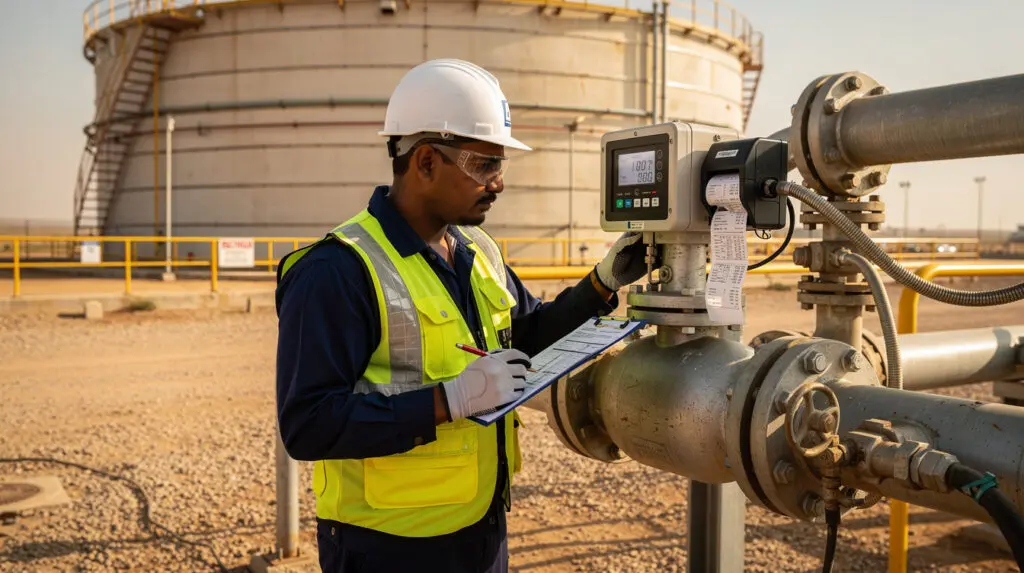
I am Vikram Desai, and over my 22 years at Chintan Engineers, I have designed, installed, and calibrated over 5,000 flow measurement systems. From the sprawling ONGC refineries to dusty fleet depots in rural Gujarat, I see procurement teams make the same critical mistake over and over: they evaluate the fuel flow meter price in India based purely on initial capital expenditure (CAPEX). In doing so, they entirely ignore the crushing weight of operational expenditure (OPEX) driven by poor accuracy, seal degradation, and frequent recalibration.
Why does this happen? Because when you are dispensing high-value hydrocarbons, a flow meter is often treated as just another plumbing fitting. I argue it should be treated as a cash register. Here, I'll break down the digital fuel meter life cycle cost over a standard 5-year operational window, analyzing how positive displacement technology, Legal Metrology Act compliance, and harsh Indian environmental factors dictate your true return on investment.
In This Article
- The CAPEX vs. OPEX Illusion in Fuel Flow Measurement
- The Silent ROI Killers: Viscosity, Seal Wear, and Fluid Dynamics
- Calibration Cycles and The Legal Metrology Act
- Meter Selection Guide: The 5-Year TCO Matrix
- Indian Industrial Context: Dust, Humidity, and Voltage
- Installation & Commissioning Best Practices
- Frequently Asked Questions
- Final Thoughts on Flow Measurement ROI
The CAPEX vs. OPEX Illusion in Fuel Flow Measurement
The most expensive flow meter you will ever buy is the cheap one.
Let's look at the actual math. A basic, unbranded mechanical flow meter might cost ₹15,000 upfront. A high-accuracy positive displacement (PD) meter—like the CE-113 models we engineer to OIML R117 standards with ±0.2% accuracy—obviously requires a higher initial investment. However, assessing the fuel flow meter price in India stops being a simple CAPEX discussion the moment fluid hits the line.
Take a mining operation running a fleet of earthmovers, for example. If you use a lower-tier turbine meter (±1.0% accuracy) instead of a high-accuracy PD meter (±0.2% accuracy), the 0.8% accuracy gap on a 10,000L daily transfer equals 80 liters of untracked diesel daily. At ₹90 per liter, you are bleeding ₹7,200 every single day.
Within a month, that "expensive" CE-113 meter has completely paid for itself. Over a 5-year cycle, the digital fuel meter life cycle cost of the precision unit remains virtually flat, while the cheap meter incurs exponentially higher costs through lost inventory and mechanical breakdowns.
Pro Tip: I tell every procurement manager to build a fuel flow meter ROI calculator spreadsheet before issuing a PO. Factor in your daily volume, fuel cost per liter, and the accuracy tolerance of the meter. The math always justifies investing in ±0.2% custody-transfer accuracy for bulk transfers.
The Silent ROI Killers: Viscosity, Seal Wear, and Fluid Dynamics
I have calibrated enough turbine meters in the field to know exactly where and how they fail. While turbine rotors are excellent for clean, low-viscosity water applications, they struggle under the variable viscosities of modern industrial fuels.
Viscosity and Slippage
When you measure diesel, biodiesel blends (B20), or lubricants, the fluid's viscosity shifts with the ambient temperature. On a cold December morning in North India, diesel is thicker; in the peak of May, it thins out considerably.
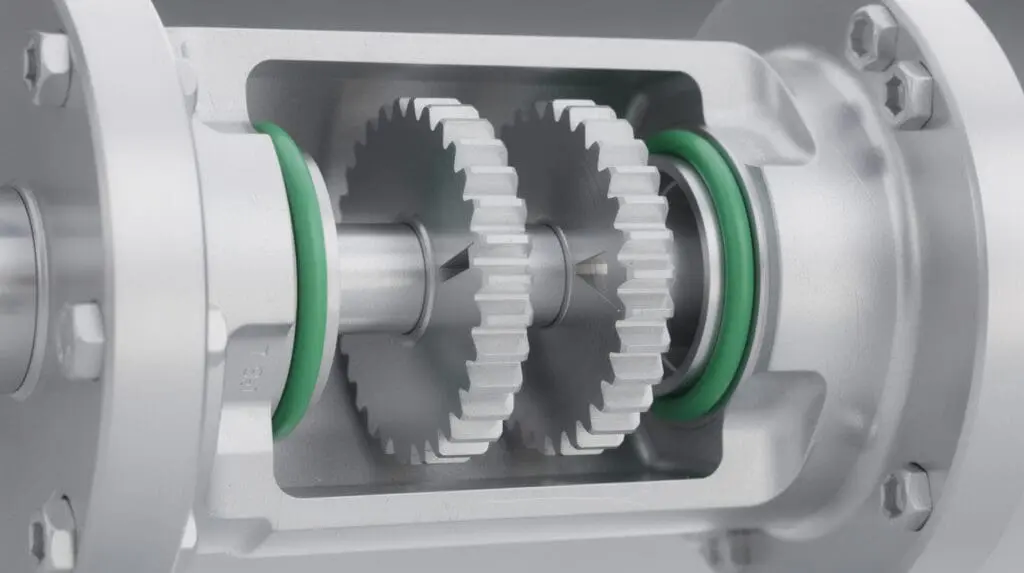
Turbine meters invariably suffer from "slippage"—fluid passing the rotor without turning it—when this viscosity changes. Positive Displacement (PD) meters, such as our CE-113 and CE-105 series, don't guess. They mechanically isolate and count precise volumetric packets of fluid. Whether you are pumping 1 mm²/s light naphtha or thicker diesel, a high-accuracy PD meter maintains its ±0.2% tolerance because it relies on volumetric displacement rather than fluid velocity.
Elastomer Degradation
Industrial flow meter maintenance cost is heavily tied to seal failures. Indian operations are increasingly utilizing biodiesel blends and ethanol-doped petrol. Standard nitrile (Buna-N) seals swell and degrade rapidly when exposed to these biofuels.
That is exactly why my team at Chintan Engineers specifies Viton (FKM) elastomers for all our CE-series digital fuel meters handling modern fuels. A Viton seal costs marginally more at the manufacturing stage, but it prevents a ₹25,000 emergency maintenance call—and 48 hours of downtime—when a degraded Buna seal inevitably blows out under 10 BAR of line pressure.
Warning: Never specify a flow meter without confirming the elastomer compatibility with your specific fuel chemistry. Using standard Buna seals with biodiesel blends will result in catastrophic O-ring swell, jammed rotors, and total loss of measurement accuracy within 6 months.
Calibration Cycles and The Legal Metrology Act
In India, any fuel meter used for custody transfer—meaning money changes hands based on the volume dispensed—must comply with the Legal Metrology Act and relevant BIS standards like IS 14883 and IS 5765.
Compliance requires regular calibration and lead sealing by the Weights and Measures department. Your industrial flow meter maintenance cost will skyrocket if your meter cannot hold its calibration curve between these mandated checks.
The K-Factor Drift
Cheap meters suffer from rapid K-factor drift. (The K-factor is the number of pulses generated per liter of fluid). As cheap mechanical gears wear down due to poor metallurgy or a lack of lubrication—a common issue with ultra-low sulfur diesel—the meter reads slower than the actual flow. Ultimately, you end up giving away free fuel. I've seen meters drift by 3% in a matter of months just from mechanical wear.
This is why the CE-106 High Accuracy Digital Fuel Flow Meter utilizes a micro-adjustable calibrator to lock in ±0.2% custody accuracy. During commissioning, we use volumetric prover cans (traceable to national standards) to fine-tune the calibration. Because the CE-106 uses a robust aluminum PD chamber, gear wear is virtually non-existent, meaning your K-factor remains locked tight for years, drastically reducing recalibration interventions.
Tired of giving away untracked fuel due to calibration drift?
Upgrade to the CE-106 High Accuracy Digital Fuel Flow Meter, engineered for ±0.2% precision and long-term calibration stability in harsh environments.
Meter Selection Guide: The 5-Year TCO Matrix
Selecting the correct meter architecture is the absolute foundation of flow measurement ROI. Based on field data from over 5,000 installations, here is how our primary models stack up when analyzing long-term total cost of ownership.
| Model | Measurement Tech | Accuracy | Key Specs | 5-Year TCO Profile | Ideal Industrial Application |
| :— | :— | :— | :— | :— | :— |
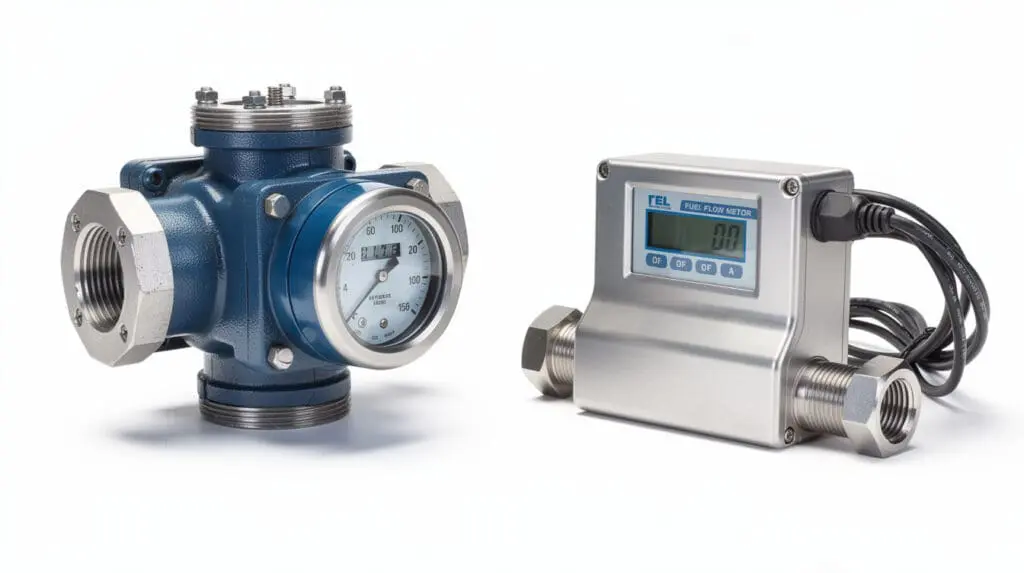
| CE-110 | Mechanical PD | ±0.5% | 20–300 L/min, Reset + Cumulative Counter | Low CAPEX, Medium OPEX | Basic depot fueling, rural truck stops needing rugged mechanical registers. |
| CE-113 | High Accuracy PD | ±0.2% | 25–1300 L/min, 10 BAR, Viton Seals | Medium CAPEX, Low OPEX | Bulk loading gantries, custody transfer, ticket printing stations. |
| CE-106 | Digital PD | ±0.2% | 10 BAR, Pulse/Printer Output | Medium CAPEX, Low OPEX | Engine fuel consumption monitoring, PLC integration. |
| CE-210 | Turbine/Helical | ±0.5/1% | 5–10,000 L/h, 4–20 mA, Pulse | Low CAPEX, High OPEX (if misused) | Chemical dosing, continuous process lines with low viscosity. |
| CE-212 | Piston PD | ±0.2% | 5–60 L/min, 4-piston micro-accurate | High CAPEX, Ultra-Low OPEX | Preset batching systems, integrated fuel dispensers. |
For high-volume fleet operations, integrating a high-accuracy meter directly into a comprehensive dispensing system yields the best data integrity. I often recommend reviewing our Mobile Fuel Dispensers: Specs, Sizing & ROI guide to understand how meters like the CE-212 integrate with skid-mounted electronics for end-to-end accountability.
Indian Industrial Context: Dust, Humidity, and Voltage
European and American spec sheets look fantastic in a climate-controlled laboratory. But try installing that same delicate flow meter in a GIDC industrial estate during the July monsoon, or expose it to the abrasive dust of a cement plant in Rajasthan, and watch it fail within weeks.
Managing Power Fluctuations
Digital flow meters require stable power for their PLCs and pulse transmitters. Indian industrial grids frequently experience aggressive voltage spikes and sags. We designed models like the CE-111 Digital Flow Meter with battery-backed electronics specifically to ensure that if the grid drops out mid-batch, the LCD totalizer retains the exact volumetric count. You never lose your transaction data.
The Threat of Entrained Air
In high-temperature Indian environments, vapor lock and entrained air in the fuel lines are persistent enemies. I cannot stress this enough: a flow meter cannot distinguish between a liter of diesel and a liter of air; it will happily measure both, charging you for empty volume.
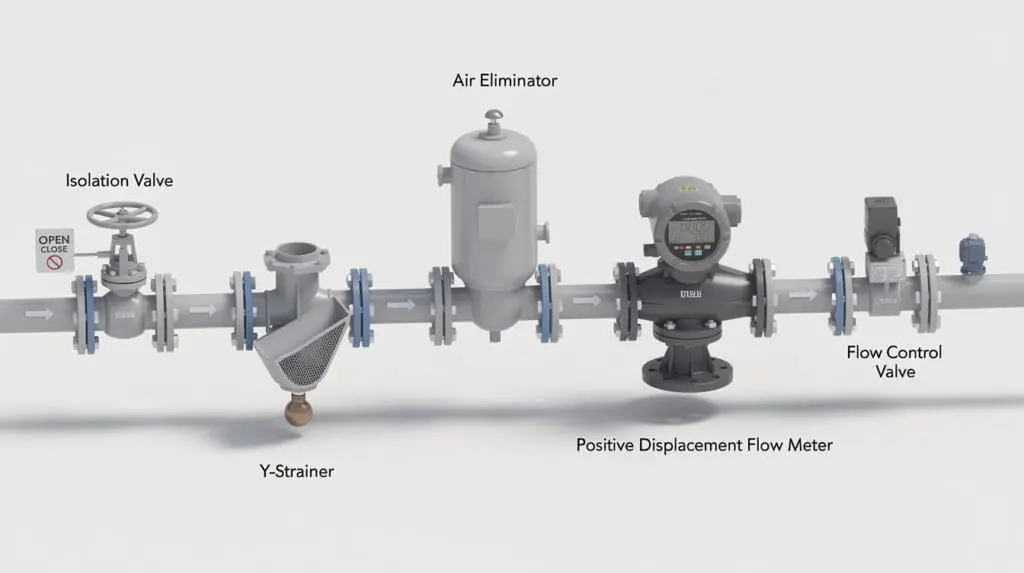
For bulk transfer applications like those required in Automated vs Manual Drum Filling: ROI & Price in India, we mandate the installation of an air eliminator and strainer upstream of the CE-113 meter. The strainer catches pipe scale and rust (a very common issue in aging Indian storage tanks), while the air eliminator vents entrained gases before they hit the measurement chamber. Skipping the air eliminator is the absolute fastest way to ruin your ±0.2% accuracy guarantee.
Did You Know: Entrained air can cause measurement errors exceeding 15% in high-speed bulk pumping applications. In Indian summer temperatures, diesel vaporization in suction lines makes upstream air eliminators mandatory for custody transfer.
Installation & Commissioning Best Practices
Even the finest CE-115 High Accuracy Fuel Flow Meter will deliver garbage data if installed incorrectly. My commissioning teams follow strict protocols based on ISO flow measurement standards to prevent this.
- Upstream Filtration: Never install a PD meter without an upstream Y-strainer or basket strainer. For diesel, a 60-mesh to 100-mesh screen is mandatory to protect the machined gears from welding slag and tank scale.
- Straight Pipe Runs: While PD meters are far less sensitive to flow profile turbulence than turbine meters, we still recommend a minimum of 5x pipe diameters of straight run upstream to stabilize the flow velocity.
- Horizontal vs. Vertical Alignment: Ensure the meter's rotor shafts remain completely horizontal. If mounted incorrectly, the weight of the rotors causes uneven bearing wear, significantly accelerating K-factor drift.
- Signal Grounding: For meters utilizing 4-20 mA or pulse outputs (like the CE-210), proper earth grounding is critical. Unshielded cables running parallel to high-voltage pump motors will suffer from electromagnetic interference (EMI), causing the PLC to count phantom pulses.
Planning a complex fuel management integration?
Our engineering team can help you design the perfect flow measurement skid with integrated air elimination, filtration, and remote telemetry.
Frequently Asked Questions
What is the average digital fuel meter life cycle cost over 5 years?
If you invest in a high-quality PD meter (CAPEX ~₹35,000 to ₹75,000 depending on flow rate), your primary OPEX will be annual calibration proving (₹5,000-₹10,000/year) and a potential seal replacement around year three. The 5-year TCO is exceptionally low compared to the cost of a 0.5% daily fuel loss from uncalibrated, cheaper alternatives.
Can these flow meters handle biodiesel (B20/B100) or blended fuels?
Yes, but you must specify Viton (FKM) seals during ordering. Standard Buna-N seals will swell and fail when exposed to the methoxides and varied chemical profiles of biodiesel. Models like the CE-113 with Viton seals handle biodiesel effortlessly due to their viscosity-independent PD mechanics.
Why does my flow meter read higher than the actual volume delivered?
Nine times out of ten, this is caused by entrained air in the system. The meter is measuring both the liquid fuel and the air bubbles. You must install an air eliminator upstream of the meter. Additionally, check your suction side piping for tiny vacuum leaks that could be pulling air into the pump.
Do you supply outputs for remote monitoring and SCADA integration?
Yes. The CE-106, CE-111, and CE-210 models offer combinations of pulse outputs, 4-20mA analog signals, and RS485/Modbus. These integrate seamlessly into batching PLCs, preset controllers, or our CE-216 remote GSM/LoRa telemetry kits for unmanned depot monitoring.
What is the difference between ±0.5% and ±0.2% accuracy practically?
On a 10,000-liter transfer, a ±0.5% meter has an allowable error window of 50 liters. A ±0.2% meter cuts that error window down to just 20 liters. In custody transfer applications where you are billing a client, that ±0.2% accuracy isn't just a nice-to-have; it's a strict legal and financial requirement under metrology standards.
Final Thoughts on Flow Measurement ROI
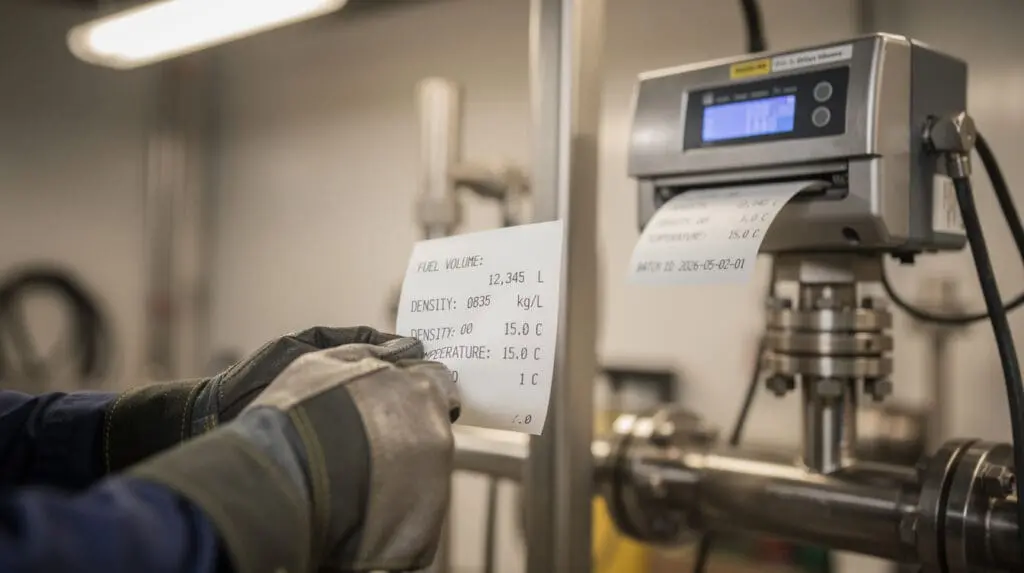
Ultimately, measuring fuel is measuring money. The field data is indisputable: relying on cheap, viscosity-dependent turbine meters for critical industrial fueling virtually guarantees heavy financial losses through accuracy drift, seal failure, and slippage.
When calculating the true fuel flow meter ROI, you must factor in the sheer volume of fuel passing through the line over 5 years. By investing in custody-transfer grade positive displacement meters—equipped with the correct elastomers, air elimination, and rugged electronics—you lock in your accuracy at ±0.2%.
Don't let procurement save ₹20,000 on a CAPEX budget only to cost your operations ₹16 Lakhs a year in untracked fuel. Specify the right technology upfront, protect it with proper filtration, and mandate rigorous calibration cycles.
Stop losing money to inaccurate fuel measurement.
Upgrade your industrial fueling operations with Chintan Engineers' range of high-accuracy positive displacement flow meters.
