
















Indian chemical, pharmaceutical, and petrochemical plants are rapidly upgrading their fluid handling infrastructure to eliminate manual errors, prevent hazardous spills, and reduce product giveaway. However, when specifying a Liquid Batching System, plant managers, project engineers, and procurement heads frequently hit a critical roadblock during the Front-End Engineering Design (FEED) stage: determining the optimal physical layout. The debate typically centers on choosing between a pre-engineered skid-mounted layout and a traditional fixed-install integration. Making the wrong choice can lead to delayed commissioning, cost overruns, and severe maintenance bottlenecks, especially in demanding Indian site conditions characterized by extreme heat, heavy monsoon humidity, space constraints, and strict regulatory frameworks like PESO (Petroleum and Explosives Safety Organization) and Legal Metrology.
This highly detailed engineering guide objectively compares the skid-mounted vs fixed-install liquid batching system comparison across capital expenditure (capex), footprint constraints, maintenance accessibility, safety compliance, and future expansion capabilities. Whether you are upgrading a lube oil drum filling station in Gujarat, establishing a multi-stream chemical blending facility in Maharashtra, or setting up a diesel dispensing depot in Tamil Nadu, understanding how a Liquid Batching System interacts with your plant's infrastructure is essential. We will analyze both layouts to help you match your batching accuracy and throughput requirements to real-world operational environments, ensuring you request the right industrial liquid batching system quotation India.
In This Article
1. Overview of Liquid Batching System Family
At its core, a Liquid Batching System is an automated fluid metering and control assembly designed to measure, mix, and dispense industrial liquids with high precision. These systems eliminate the inaccuracies of manual valve operation and dipstick measurements. Using closed-loop control logic, the system continuously monitors the flow rate and totalized volume, automatically shutting off pneumatically actuated valves the millisecond the target preset volume is reached.
Standard configurations deliver a volumetric accuracy of ±0.5% using CE-110/111 Positive Displacement (PD) meters or CE-210 turbine sensors. For critical custody transfer applications, high-tier models utilizing CE-113-based architecture achieve an exceptional ±0.2% accuracy. The systems handle flow capacities ranging from 5 to 120 L/min per stream, making them highly versatile for automotive assembly lines, chemical mixing, and drum/tote filling.
When engineers choose liquid batching system layout for drum filling and blending, they are essentially deciding how these core components—meters, preset controllers, pumps, valves, and filtration—will be physically packaged and deployed on-site:
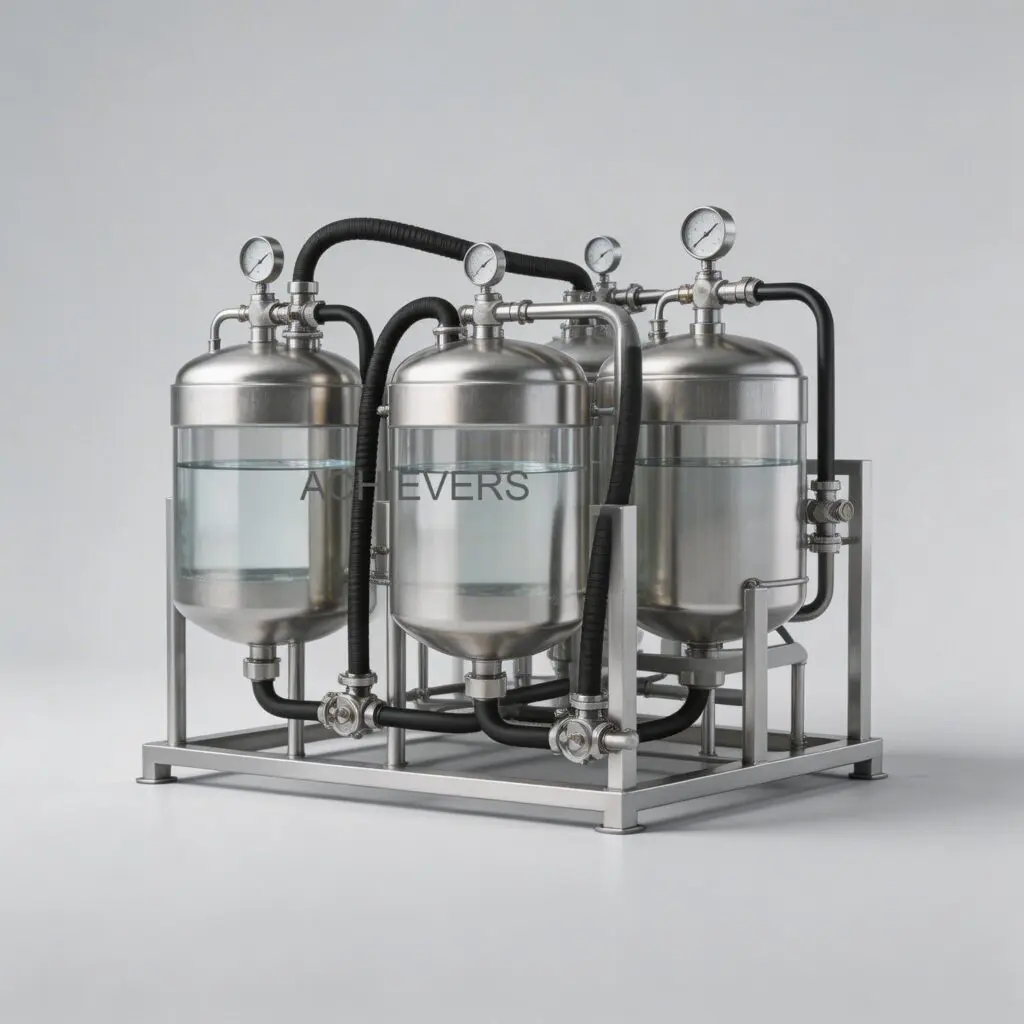
Skid-Mounted Systems: In this layout, the entire batching architecture is pre-assembled, piped, wired, and tested at the manufacturer's facility. The components are mounted on a rigid, structural steel base frame (the skid). It operates as a plug-and-play unit; once it arrives at the plant, site engineers only need to connect the main fluid inlet, fluid outlet, power supply (typically 220 V AC single-phase for control), and compressed air for the pneumatic valves.
Fixed-Install Systems: In this traditional approach, the batching components are shipped loose or in modular sub-assemblies. Plant personnel or mechanical contractors must physically mount the Fuel Flow Meter, controllers, and piping directly onto existing plant infrastructure, walls, or custom-built civil foundations. The piping manifolds, electrical conduit routing, and system integration are entirely fabricated and executed on-site.
2. Head-to-Head Specification Comparison
To make an informed engineering decision, buyers must understand how the physical layout impacts the performance and integration of the core specifications. While the internal components (like the CE-Setstop preset counter or rotary vane pumps) remain identical, the system architecture dictates how those components perform under Indian industrial stresses.
| Feature/Specification | Skid-Mounted Layout | Fixed-Install Layout | Technical Impact on Indian Sites |
| — | — | — | — |
| Flow Capacity Per Stream | 5 – 120 L/min (Standardized manifolds) | 5 – 120 L/min (Custom manifolds possible) | Skids provide optimized, friction-tested pipe runs to ensure rated flow. Fixed installs risk pressure drops if on-site piping incorporates too many elbows. |
| System Accuracy | ±0.5% to ±0.2% (CE-113-based custody) | ±0.5% to ±0.2% (Dependent on piping stress) | Factory skids guarantee accuracy via isolated meter mounts. Fixed installs can transfer pipe strain to the PD meter housing, distorting rotors and degrading accuracy over time. |
| Fluid Viscosity Range | Up to 5,000 mPa·s | Up to 5,000 mPa·s | High-viscosity fluids (like heavy gear oils) require localized heating. Skids can easily integrate heat tracing; fixed installs require extensive field insulation work. |
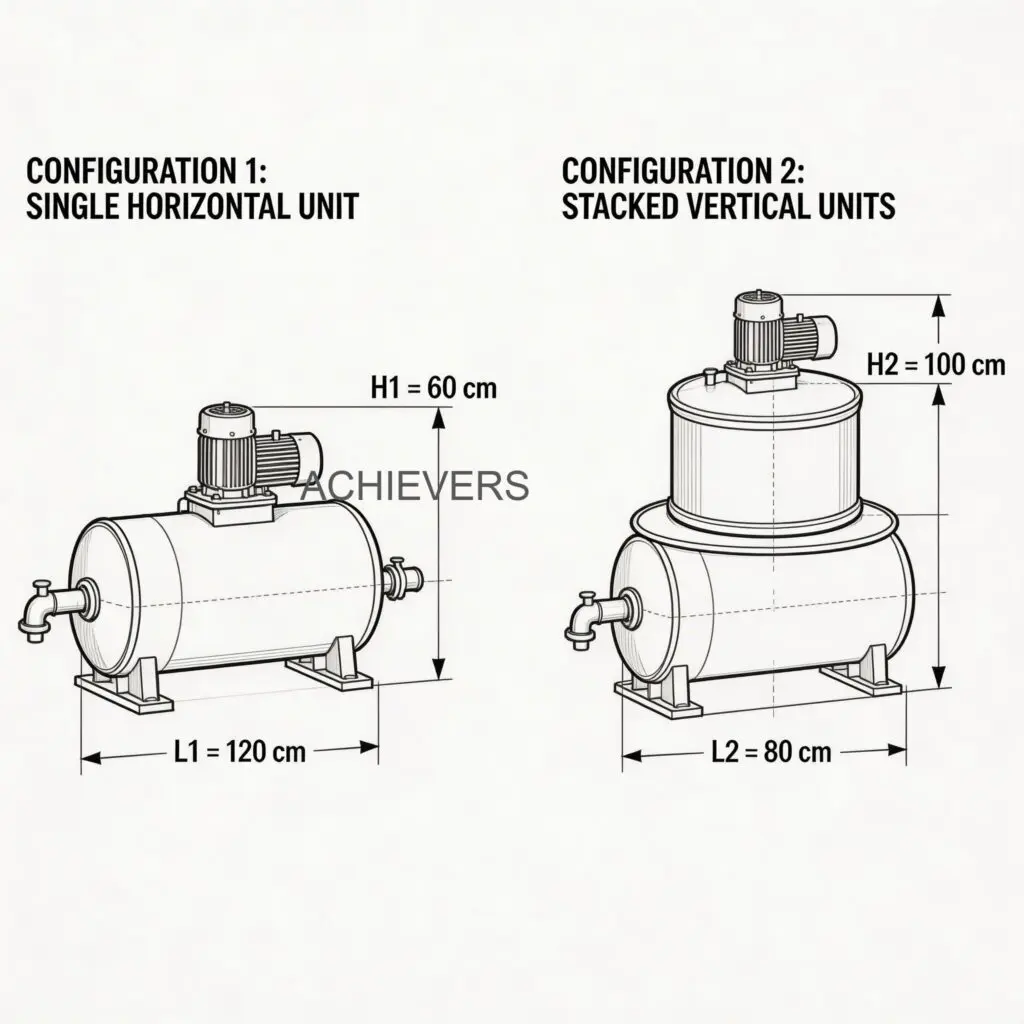
| Footprint & Space | Highly compact, stacked 3D design | Variable, generally spread across linear 2D space | Skids save floor space in crowded brownfield plants. Fixed installs adapt better to highly irregular, non-rectangular wall spaces. |
| Valve Actuation | Pre-piped pneumatic dual-stage valves | Field-piped pneumatic dual-stage valves | Skids include dedicated air manifolds and regulators, ensuring consistent fast-fill/trim modes without overshoot. |
| Safety & Filtration | Integrated inline strainers & air eliminators | Separate inline strainers & air eliminators | Skids prevent air entrainment before the meter through optimized vertical placement of air eliminators, crucial for accurate dispensing. |
| Electrical Compliance | Single-point pre-wired junction box | Point-to-point field wiring required | Skids drastically reduce field wiring errors. For Zone 1/Zone 2 hazardous areas, flameproof panels and IS barriers are pre-certified as an assembly. |
| Data Connectivity | Pre-configured PLC/HMI or CE-Setstop | Field-configured PLC/HMI integration | Skids arrive ready for Ethernet/Modbus SCADA integration. Fixed installs require extensive loop checking for 4–20 mA and pulse outputs. |
3. Application Comparison Table
Different industrial operations dictate specific layout choices. Indian site conditions—such as heavy particulate contamination in diesel, high ambient temperatures causing fluid expansion, and aggressive monsoons—further influence whether a packaged skid or a customized fixed installation is appropriate.
| Application Scenario | Recommended Option | Technical Justification & Site Reason |
| — | — | — |
| High Viscosity Lube Oil Drum Filling | Skid-Mounted | Viscous fluids require gear pumps matched perfectly to the PD meter's pressure drop. Skids ensure the pump, meter, and dual-stage valves are hydraulically balanced at the factory. |
| Corrosive Specialty Chemicals | Fixed-Install | When using highly aggressive chemicals requiring specialized SS Pumps, a fixed install allows wider spacing between components to prevent localized corrosion and fumes from affecting sensitive HMI electronics. |
| Outdoor Petroleum Depot (Harsh Weather) | Skid-Mounted | Skids can be supplied with heavy-duty IP65/IP67 customized weather canopies and localized drainage pans, protecting critical CE-110/111 meters from monsoon rain and dust. |
| Hazardous Area (Zone 1/Zone 2) | Skid-Mounted | Gaining PESO certification for a factory-built, flameproof skid assembly is significantly faster than certifying a scattered fixed installation constructed on-site with field welds. |
| High-Accuracy Custody Transfer (±0.2%) | Skid-Mounted | Legal Metrology compliance requires strict calibration. A skid arrives with a Factory Acceptance Test (FAT) certificate proving accuracy under controlled conditions, minimizing site variables. |
| Remote SCADA Monitoring via Ethernet | Skid-Mounted | Centralized skid control panels house the PLC, HMIs, ticket printers, and network switches in one clean enclosure, simplifying ERP and MES dashboard integration. |
| Mobile or Re-deployable Use | Skid-Mounted | Mining sites, rental yards, and temporary construction projects require systems that can be lifted via forklift or crane and relocated as the project advances. Fixed installs cannot be moved without destructive dismantling. |
| Space-Constrained Brownfield Expansions | Fixed-Install | If a plant has zero available floor space but has robust structural walls, fixed components can be vertically integrated into existing racks, bypassing the need for a dedicated structural footprint. |
4. Total Cost Comparison
Procurement teams must evaluate beyond the initial capital expenditure (capex). The total cost of ownership (TCO) includes engineering hours, mechanical contractor fees, downtime during commissioning, and long-term maintenance overheads. When requesting an industrial liquid batching system quotation India, buyers should consider these realistic lifecycle costs.
| Cost Component | Skid-Mounted Layout (Estimated Range) | Fixed-Install Layout (Estimated Range) | Financial Impact & Best For |
| — | — | — | — |
| Base Purchase Price (Capex) | ₹3,50,000 – ₹9,50,000 | ₹1,50,000 – ₹5,00,000 | Fixed installs appear cheaper on paper because you are buying loose components. Skids cost more upfront due to the steel frame, engineering, pipefitting, and factory labor. |
| Site Installation & Civil Works | ₹20,000 – ₹50,000 | ₹1,00,000 – ₹3,00,000 | Skids require basic leveling and anchor bolts. Fixed installs require massive hidden costs: hiring welders, routing cable trays, civil foundations, and extended plant downtime. |
| Commissioning Time | 1 to 3 Days | 2 to 4 Weeks | Skids arrive with PLC logic pre-written and valves timed. Fixed installs require engineers to write logic, perform loop checks, and eliminate pipeline leaks on-site. |
| Annual Maintenance Strategy | Predictable (Accessible components) | Variable (Dependent on routing) | Skids feature maintenance-friendly layouts with strategically placed isolation valves. Fixed installs often bury components behind other pipes, doubling labor time for simple strainer cleanings. |
| Expected Asset Life | 10 – 15 Years | 7 – 12 Years | Skids isolate sensitive meters from plant vibrations. Fixed installs often suffer premature bearing wear in turbine meters due to transmitted pipeline stress and hydraulic hammering. |
Standard Operating Procedure: 6-Step Installation & Commissioning Process for Indian Plants
To ensure your liquid batching system specifications and supplier guidelines are fully realized on-site, a rigorous commissioning protocol is mandatory. Regardless of whether you select a skid or fixed layout, Indian site conditions demand strict adherence to this 6-step engineering procedure to guarantee the stated ±0.5% or ±0.2% accuracy.
- Pre-Installation Site Assessment and Civil Preparation: Verify the dynamic load-bearing capacity of the concrete foundation. For skid units, ensure the pad is leveled to within 3 mm over a 3-meter span to prevent structural twisting that could misalign the rotary vane pumps. For fixed systems, verify structural integrity of wall mounts.
- Equipment Positioning and Mechanical Anchoring: Position the skid using designated lifting lugs, strictly avoiding pressure on the piping manifold. Anchor the base using chemical fasteners. For fixed systems, mount the positive displacement or turbine meters horizontally, ensuring upstream and downstream straight-pipe requirements are met (critical for CE-210 turbine sensors).
- Piping Integration and Stress Relieving: Connect the main plant supply headers to the batching system inlets. Crucial step: Ensure all connecting piping is independently supported using spring hangers or rigid pipe shoes. Never use the batching system's internal pump flanges or meter housings to support the weight of external plant piping, as this will distort the internal rotors and destroy calibration.
- Electrical, Grounding, and IS Barrier Termination: Terminate the 220 V AC single-phase control power. In chemical and petrochemical environments, establish a dedicated earth pit with a resistance of less than 1 Ohm. Connect static grounding clamps to the drum/tote filling station to dissipate static charges generated by high-velocity fluid flow. Terminate all Intrinsically Safe (IS) barriers for Zone 1/Zone 2 installations.
- PLC/SCADA Integration and Loop Testing: Power up the CE-Setstop preset controller or HMI. Perform a dry loop test: simulate a batch start command from the ERP/MES system and verify that the output signals trigger the correct pneumatic solenoids. Verify pulse, 4–20 mA, and RS485/Modbus telemetry outputs to the central control room.
- Wet Commissioning, Valve Tuning, and Calibration Verification: Introduce the actual process fluid. Purge all air from the system using the integrated air eliminators (air passing through a meter will be counted as liquid, causing severe inaccuracies). Run a series of test batches into a certified proving tank. Adjust the fast-fill and slow-trim timing on the pneumatically actuated valves to ensure the system shuts off exactly at the target volume without overshoot. Lock the calibration seal per Legal Metrology requirements.
5. Decision Guide: Which One for Your Plant?
Choosing the right layout requires analyzing your operational bottlenecks, plant infrastructure, and fluid properties. Below is a detailed engineering guide evaluating 8 distinct scenarios common in the Indian industrial landscape.
1. Greenfield Petrochemical Depots
Recommendation: Skid-Mounted
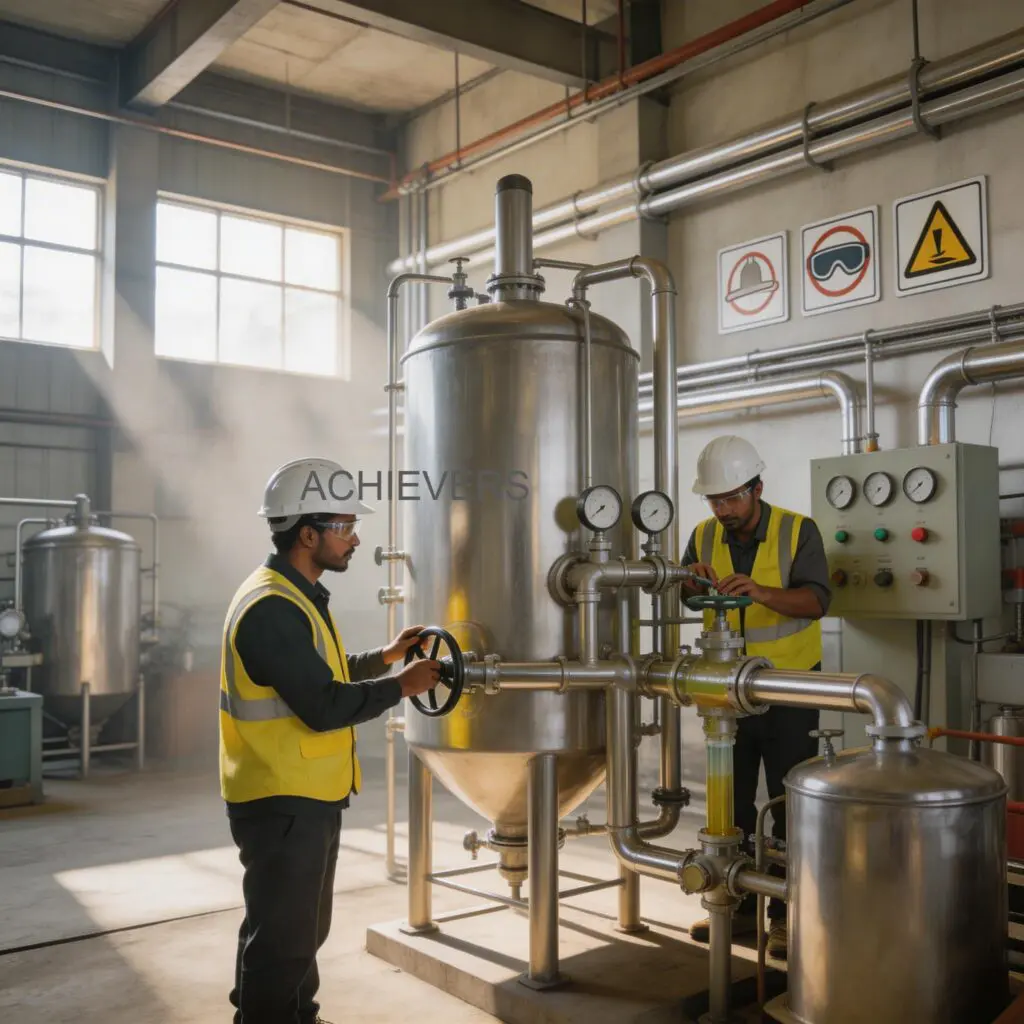
When building a new facility from the ground up, project timelines are critical. Pre-engineered skids arrive with complete P&ID documentation, Factory Acceptance Test (FAT) results, and PESO-compliant flameproof certifications. This allows EPC (Engineering, Procurement, and Construction) contractors to simply drop the unit into place, connect the headers, and move on. Attempting to build a fixed-install system from loose components in a greenfield site introduces unnecessary schedule risks, multi-vendor coordination headaches, and potential non-compliance during final safety audits.
2. Brownfield FMCG and Food Processing Plants
Recommendation: Fixed-Install
Many older Indian food processing and FMCG plants suffer from extreme space limitations, with complex webs of existing stainless steel piping, conveyors, and walkways. Dropping a 2×2 meter structural skid into these environments is often physically impossible. A fixed-install layout allows engineers to mount the sanitary pumps on the floor, route the hygienic turbine meters along existing vertical pipe racks, and place the preset controllers on a convenient operator wall, maximizing the use of limited 3D space.
3. Automotive Assembly Lines (Gearbox Filling)
Recommendation: Skid-Mounted
Modern automotive manufacturing requires rapid cycle times and absolute repeatability to fill reservoirs, gearboxes, and engine blocks. A multi-stream skid can house independent gear pumps, inline filtration, and dual-stage valves for transmission fluid, brake fluid, and engine oil in one compact station adjacent to the assembly line. The integrated PLC logic coordinates seamlessly with the conveyor system, delivering exact preset volumes at high speeds without splashing or overshoot.
4. Lube Oil Drum Filling Stations
Recommendation: Skid-Mounted
Lubricants and heavy oils (up to 5,000 mPa·s) experience significant viscosity changes depending on ambient Indian temperatures. The pressure drops across the piping system vary drastically between a cold winter morning in Delhi and a hot summer afternoon. Skids are hydraulically engineered with minimized, mathematically calculated pipe runs to ensure the rotary vane or gear pumps maintain constant volumetric efficiency and keep the CE-110/111 PD meters operating within their optimal accuracy curve regardless of fluid temperature.
5. Corrosive Chemical Blending (Pharma/Agrochemicals)
Recommendation: Fixed-Install (with material upgrades)
Handling aggressive media like sulfuric acid, sodium hypochlorite, or complex agrochemical solvents requires highly specialized wetted parts. While skids can be built from exotic alloys or PP/PVDF, corrosive environments often benefit from a dispersed fixed-installation. This keeps heavy, vibrating pumps isolated from delicate metering electronics, and ensures that minor acidic leaks at flange joints do not cascade down onto expensive PLC enclosures or structural steel bases.
6. Captive Power Generation (Genset Fueling)
Recommendation: Skid-Mounted
Large-scale manufacturing plants, data centers, and hospitals in India rely on massive diesel generator farms to combat power quality issues and grid fluctuations. A single integrated fuel batching skid can manage the automated transfer of diesel from underground bulk storage to multiple day tanks located near the gensets. The skid houses the inline strainers to handle contaminated fuel, the PD meters for consumption tracking, and the automated valves to prevent day tank overflow—all controlled by a single, reliable panel.
7. Rental Yards and Mobile Depot Operations
Recommendation: Skid-Mounted
For construction companies, mining operators, and equipment rental businesses, infrastructure is temporary. A skid-mounted batching system acts as a mobile asset. Built on a heavy-duty frame with integrated forklift pockets and lifting eyes, the entire system can be loaded onto a flatbed truck, transported to a new highway construction site or mining quarry, and made operational within hours. Fixed installations offer zero mobility and represent a sunk cost when a site closes.
8. Custody Transfer and Legal Metrology Mandates
Recommendation: Skid-Mounted
When liquids change ownership (e.g., selling fuel, solvents, or edible oils to third parties), the Indian Legal Metrology Act mandates stringent accuracy (±0.2%) and tamper-proof operations. Skid systems are far superior for custody transfer. The manufacturer can lock the calibration of the CE-113 meters, seal the air eliminators, and certify the entire sub-assembly at the factory. Furthermore, the skid integrates directly with ticket printers to generate legal receipts for every batch, ensuring total digital traceability and transparent communication with zero false claims.
FAQ
Q: What batch sizes can a standard system handle?
A: Typical systems are designed to accurately cover batches ranging from 5 to 1,000 litres. The multi-stage pneumatic valve logic controls the flow profile, running at high speed for the bulk of the transfer and trimming down to a slow flow at the end, which keeps volumetric overshoot below ±0.5%.
Q: Can the system handle multiple different fluids simultaneously?
A: Yes. Skids can be engineered with custom manifolds that include dedicated positive displacement meters and valves for each individual fluid stream. Alternatively, for less critical applications, shared headers can be utilized with automated air-purging and flushing cycles between different product batches.
Q: Are these systems compliant with Indian regulations for hazardous locations?
A: Absolutely. For petrochemical sites, refineries, and solvent blending plants, systems can be equipped with PESO-certified flameproof (Ex-d) motors, intrinsically safe (Ex-i) barriers for all sensor wiring, and stainless steel manifolds to ensure total safety in Zone 1 and Zone 2 environments.
Q: How frequently should the positive displacement meters be calibrated in Indian conditions?
A: Calibration frequency depends heavily on fluid purity and daily throughput. For clean fluids, an annual calibration check is standard. However, if dispensing Indian diesel with high suspended particulate matter or hard water solutions that cause scaling, bi-annual checks and regular cleaning of the integrated Y-strainers are highly recommended to maintain ±0.5% accuracy.
Q: Can batches be automatically logged to our plant's ERP or SAP system?
A: Yes. Modern controllers provide a wide array of data connectivity options. Pulse outputs, 4–20 mA analog signals, and Ethernet/RS485 Modbus communications seamlessly feed real-time batch data, flow rates, and alarms to central PLC, SCADA, or MES dashboards. Local ticket printers can also capture physical receipts.
Q: Which layout is better for highly viscous fluids like 5,000 mPa·s gear oil?
A: A skid-mounted layout is highly recommended for viscous fluids. Skids allow for factory-matched pairing of high-torque gear pumps with the metering units, minimized friction losses through optimized short pipe runs, and easy integration of thermal heat-tracing jackets if required.
Q: Do you supply the necessary pumps as part of the skid package?
A: Yes, every skid system ships as a complete turnkey solution. It includes the matched pump (rotary vane, gear, or centrifugal depending on viscosity), all inline filtration, air eliminators, and connecting piping, meaning it drops into your process with minimal on-site mechanical fabrication.
Ready to engineer a precise, reliable, and leak-proof fluid handling solution for your facility? Contact our technical team today to request a liquid batching system consultation. Please share your specific fluid properties, kinematic viscosity, target batch volumes, preferred layout, and plant automation goals, and we will configure a system tailored exactly to your operational constraints.
