
















Handling corrosive chemicals in Indian manufacturing facilities requires a high degree of reliability, precision, and safety. Process fluids like concentrated acids, harsh alkalis, and complex industrial effluents demand robust equipment to maintain uptime and ensure operational efficiency. In demanding site conditions—often characterized by high ambient temperatures, continuous duty cycles, and abrasive environments—selecting the right fluid transfer equipment is vital to prevent costly leaks, unplanned downtime, and hazardous chemical spills. Among the most critical decisions plant engineers and procurement teams make is specifying the correct fluid handling system. Proper sizing and selection of PP Pumps ensure safe, consistent, and energy-efficient transfer of aggressive chemicals across a wide range of industrial applications.
In This Article
1. What this product does
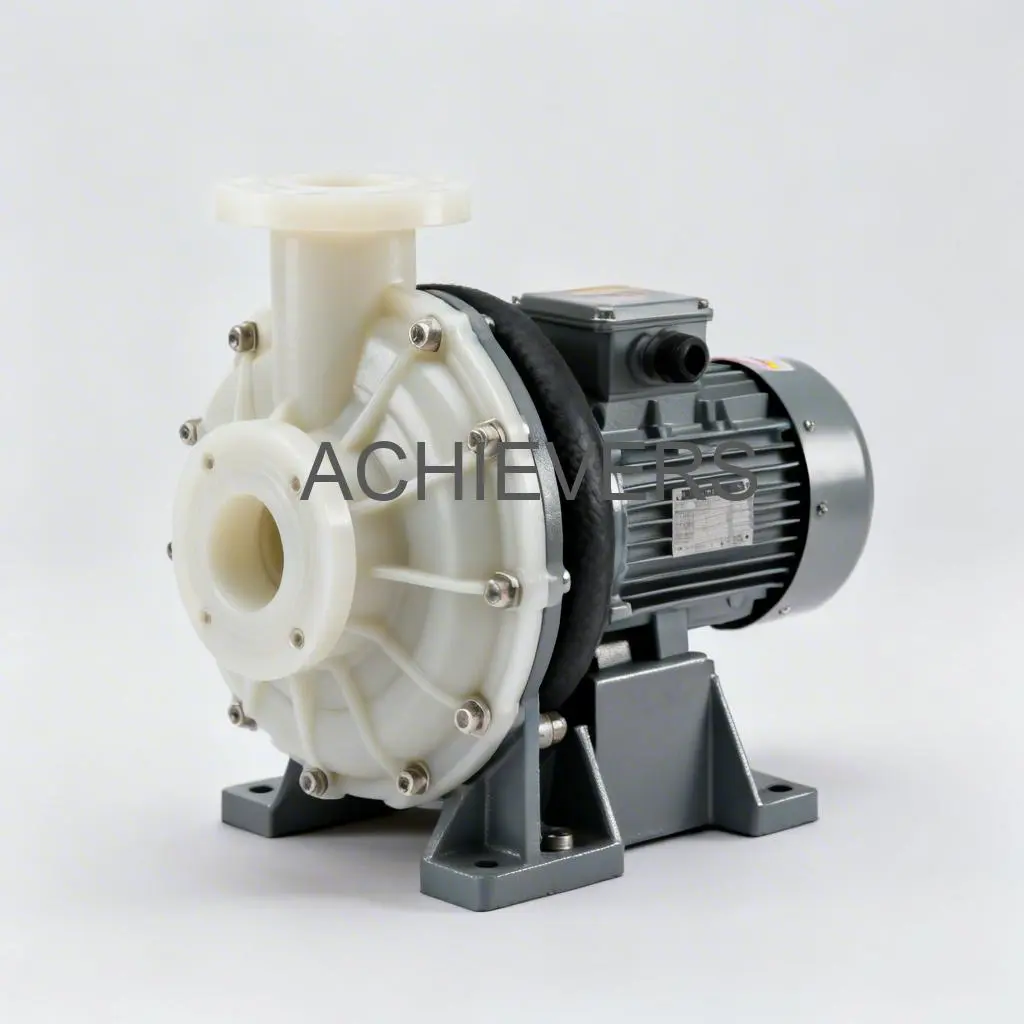
At their core, PP Pumps are engineered to handle the most aggressive and corrosive fluids where standard metallic pumps would rapidly degrade. These centrifugal pumps are manufactured using high-grade Polypropylene (PP), a thermoplastic polymer renowned for its exceptional chemical resistance. In these systems, every wetted component—including the volute casing, the dynamically balanced impeller, and the backplate—is molded or machined from solid polypropylene. To ensure absolute isolation of the fluid from metallic parts, the drive shaft is completely encased in a protective PP or PTFE sleeve.
These pumps operate on the centrifugal principle, converting rotational kinetic energy from the motor into hydrodynamic energy to move the chemical fluid. Available in various flow capacities and discharge pressures, they are typically driven by standard TEFC (Totally Enclosed Fan Cooled) AC motors operating at either 1440 RPM or 2900 RPM depending on the required head and flow profile. To prevent highly corrosive fluids from leaking along the shaft, they are equipped with advanced sealing mechanisms, most commonly externally mounted PTFE bellows mechanical seals with high-purity ceramic and carbon faces. For specific slurry or effluent applications, gland packing options are also utilized. By utilizing heavy-duty baseplates, anti-vibration mountings, and highly accurate impellers, these pumps provide smooth, continuous flow with minimal pulsation, ensuring long-term value and operational reliability in tough industrial environments.
2. Practical Sizing Method for Chemical Transfer
Mastering PP pump sizing for chemical transfer is essential for maintaining plant efficiency and safety. When determining the exact specifications for PP Pumps, the sizing process goes far beyond just picking a desired flow rate. Indian plant engineers must systematically calculate total dynamic head, account for specific piping friction, evaluate suction conditions, and properly match the impeller and motor to the chemical's specific gravity. Failing to do so leads to under-sizing (resulting in low flow and process bottlenecks) or over-sizing (causing severe cavitation, blown mechanical seals, and unnecessarily high power consumption).
Calculating Total Dynamic Head (TDH)
TDH is the total equivalent height that a fluid is to be pumped, taking into account friction losses in the pipe.
TDH = Static Suction Lift (or Drop) + Static Discharge Head + Friction Head Loss + Velocity Head.
When pumping corrosive fluids, you must know how to calculate head loss for polypropylene pump systems specifically. Because these pumps are often connected to PVC, CPVC, or HDPE piping, the internal friction factor is lower than that of aged steel pipes. Engineers typically use the Hazen-Williams formula or Darcy-Weisbach equation to calculate the friction head, carefully adding the equivalent pipe lengths for every elbow, tee, isolation valve, and non-return valve in the discharge line. Underestimating friction loss leads to selecting a pump that cannot overcome the system resistance, resulting in dramatically reduced flow.
Evaluating Suction Conditions and NPSH
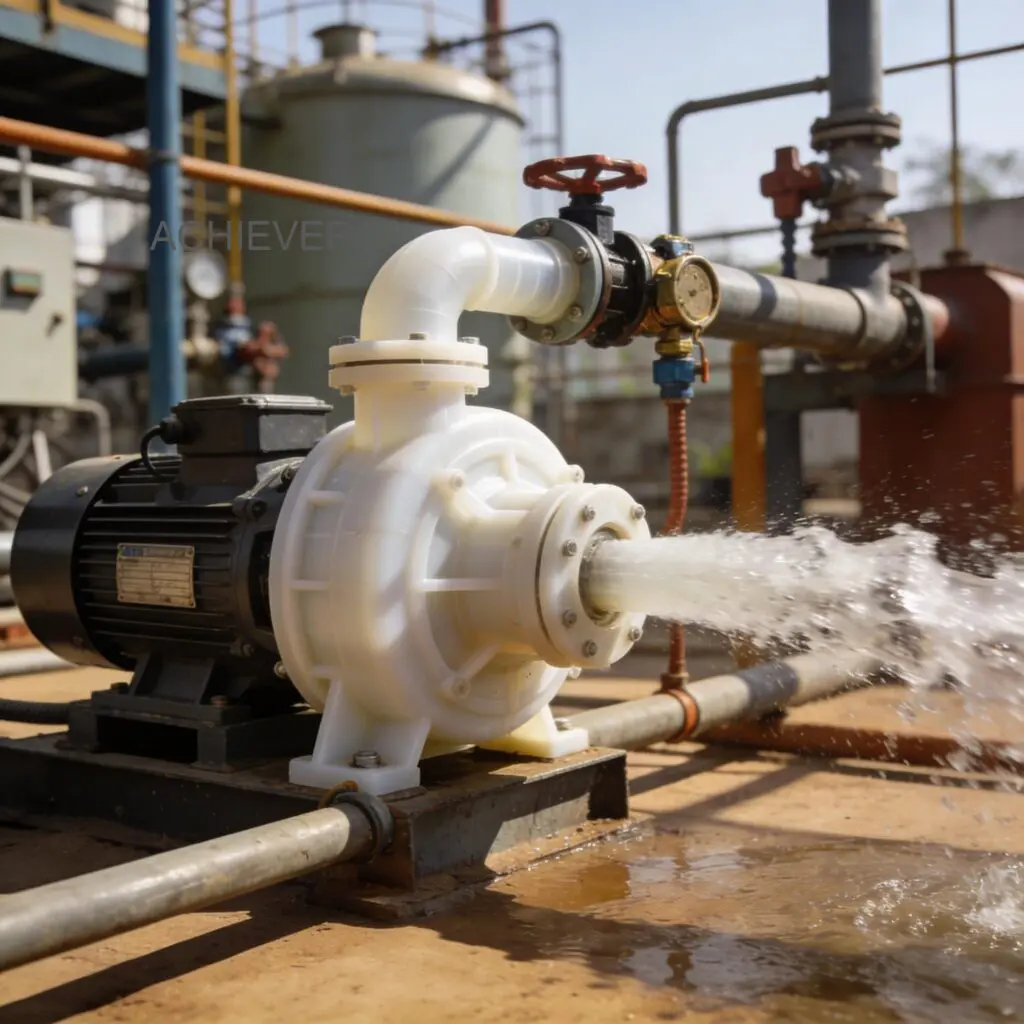
Corrosive chemical transfer often involves pulling fluids from underground sumps, effluent pits, or chemical storage tanks. To prevent cavitation—a destructive phenomenon where fluid vaporizes and collapses inside the impeller—the Net Positive Suction Head Available (NPSHa) in your system must be strictly greater than the Net Positive Suction Head Required (NPSHr) by the pump. For volatile chemicals like Hydrochloric Acid (HCl), the vapor pressure at high Indian summer temperatures must be factored into the NPSHa calculation. Ensuring flooded suction or maintaining minimal suction lift is the best way to protect the pump's impeller and mechanical seals from cavitation damage.
Impeller and Motor Selection Based on Specific Gravity
The most common mistake in chemical pump sizing is ignoring the fluid's specific gravity (SG) and viscosity. Water has an SG of 1.0. However, if you are transferring 98% Sulfuric Acid (SG of approximately 1.84), the fluid is 84% heavier than water. While the centrifugal pump will produce the same head in meters regardless of the fluid, it requires significantly more Brake Horsepower (BHP) to move the heavier chemical.
BHP = (Flow Rate × TDH × Specific Gravity) / (3960 × Pump Efficiency).
If PP Pumps are configured with motors sized only for water, the motor will rapidly overheat and trip when pumping heavy acids. Plant engineers must ensure the motor is rated to handle the maximum specific gravity of the fluid across the entire performance curve. Furthermore, the impeller diameter must be precisely trimmed at the factory to hit the exact duty point, preventing the pump from running off its curve and drawing excessive current.
3. Selection and Configuration Guide
Configuring PP Pumps requires a thorough understanding of both the process requirements and the physical constraints of the installation site. Industrial buyers must look beyond initial capital cost and focus on the total cost of ownership, matching the pump’s materials, sealing arrangements, and drive systems to the specific aggressive media being handled.
Proper PP pump selection for ETP and electroplating lines requires plant managers to evaluate the following key criteria:
- Fluid Temperature: Polypropylene is highly chemically resistant but has temperature limitations. Ensure the maximum operating temperature does not exceed 70°C to 80°C (depending on the exact PP grade). For higher temperatures, alternate materials like PVDF may be required.
- Sealing Configuration: Select an externally mounted PTFE bellows mechanical seal for clean, highly corrosive acids. If the fluid contains suspended solids, slurries, or metallic flakes (common in ETPs), consider double mechanical seals with a flushing plan or specially engineered gland packing.
- Specific Gravity and Viscosity: This dictates the motor size (kW/HP). Always select a motor with a 15% to 20% safety margin above the calculated maximum BHP.
- Operating Speed: Choose 1440 RPM for continuous, heavy-duty applications or abrasive fluids to minimize wear on the casing and seals. Use 2900 RPM for high-head, intermittent transfer duties.
To ensure your supplier engineers the exact solution for your needs, your procurement and engineering teams should provide a comprehensive RFQ (Request for Quotation). When contacting a manufacturer, always communicate the following details clearly:
- Exact chemical composition and concentration percentages.
- Required flow rate (Capacity in m³/hr or LPM).
- Calculated Total Dynamic Head (TDH in meters).
- Maximum and minimum operating temperatures.
- Specific gravity and viscosity of the fluid at operating temperature.
- Suction conditions (flooded suction, negative suction lift, or positive pressure).
- Presence of any suspended solids or abrasives (size and percentage).
4. Typical Applications
The versatility of PP Pumps makes them indispensable across a wide array of industrial sectors. One of the most common applications is as a PP pump for acid transfer in chemical plants, where these units safely move bulk volumes of Hydrochloric Acid, Sulfuric Acid, Nitric Acid, and Caustic Soda from storage tanks to day tanks or process reactors. Because the entirely non-metallic wetted construction prevents any iron contamination, they are ideal for maintaining the purity of the chemical being transferred.
In the steel and metal processing industries, they are highly relied upon for pickling lines and scrubbers. During the pickling process, steel is submerged in hot acid baths to remove impurities; these pumps continuously circulate the corrosive bath fluid to maintain uniform temperature and concentration. Similarly, in exhaust air scrubbers, they circulate neutralizing chemical solutions to treat toxic fumes before they are released into the atmosphere. They also serve as the standard industrial polypropylene pump for corrosive liquids in Effluent Treatment Plants (ETP) and dosing lines, successfully handling raw, aggressive wastewater, neutralizing agents, and coagulants with long-term reliability.
5. Service, Installation, and Support
As a trusted PP pump manufacturer in India, Chintan Engineers understands that the lifespan of a chemical pump is heavily dependent on correct installation and proactive maintenance. Installing PP Pumps correctly requires strict adherence to piping and alignment standards. Because polypropylene is a thermoplastic, it cannot withstand the heavy mechanical stress that cast iron can. Therefore, all suction and discharge piping must be independently supported. Piping should never rest its weight on the pump flanges, as this pipe strain can distort the casing, causing immediate mechanical seal failure or impeller rubbing.
Furthermore, baseplates must be perfectly leveled and grouted, and the coupling between the motor and pump must be laser-aligned to prevent vibration. Every unit manufactured is backed by rigorous factory testing and accurate calibration to guarantee it meets the published performance curves before dispatch. With a commitment to transparent communication and enduring support, industrial clients benefit from nationwide reach. From initial capacity sizing and site commissioning to providing genuine spare parts and comprehensive Annual Maintenance Contracts (AMC), end-to-end support ensures your chemical handling operations run safely and continuously without hidden costs or false claims.
To ensure your chemical transfer system is configured perfectly for your specific site conditions, reach out to our technical team today. Share your required flow rate, discharge head, chemical application, and site parameters, and our engineers will help you select the precise PP Pumps to optimize your process and protect your operational uptime.
