
















Managing fuel costs is one of the most critical operational challenges for fleet owners, logistics companies, and industrial plant managers in India. With diesel prices fluctuating and comprising a massive percentage of operational overheads, even minor discrepancies in fueling can lead to significant financial losses over time. Whether it is theft (pilferage), spillage, or simple calibration drift, the lack of a precision fueling system is a risk few businesses can afford.
For captive fleet owners and industrial sites, the solution lies in deploying a robust, high-accuracy Diesel Dispenser. Unlike standard retail pumps used at petrol stations, industrial diesel dispensers are engineered specifically for the rugged conditions of private fleet yards, construction sites, and mining depots. They provide the perfect balance between high flow rates for rapid refueling and precise metering for inventory control. However, a common dilemma arises during procurement: should you opt for a mechanical counter system or upgrade to a digital, preset-enabled unit?
This guide explores the technical distinctions between these configurations, helping you determine the right equipment for your site’s power availability, auditing requirements, and operator skill levels.
In This Article
1. What is the Industrial Diesel Dispenser?
In the context of industrial fluid management, a Diesel Dispenser is a specialized pumping and metering unit designed to transfer diesel from a storage tank (underground or above-ground) into a vehicle or equipment tank while recording the exact volume dispensed.
These units are distinct from simple transfer pumps because they integrate four critical subsystems into a single housing or skid:
- The Pump: Typically a self-priming rotary vane or gear pump capable of handling diesel fuel efficiently.
- The Meter: A high-precision flow meter (often Positive Displacement or PD type) that measures volume with an accuracy class typically ranging from ±0.5% to ±1.0%.
- The Display/Counter: The interface that shows the operator how much fuel has been dispensed (Mechanical or Digital).
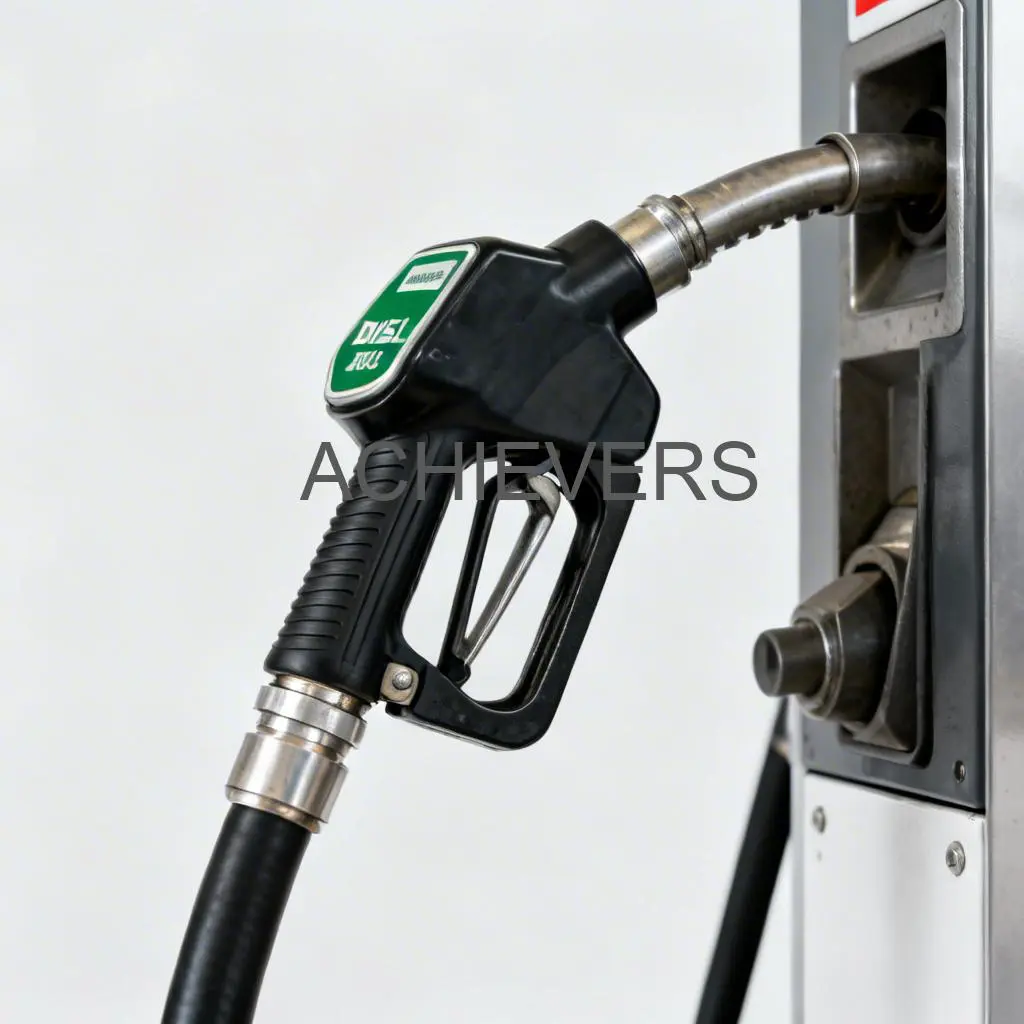
- The Delivery System: Includes an anti-static delivery hose and an auto-shutoff nozzle to prevent overfilling and spillage.
Designed for the Indian market, these dispensers are built to withstand harsh environmental factors such as dust, heat, and humidity. They are available in various voltage configurations to suit both fixed depots (AC power) and mobile bowsers (DC power). By integrating filtration and air elimination, the dispenser ensures that your engines receive clean fuel and your records reflect only liquid diesel, not air pockets.
2. Mechanical vs. Digital: Choosing the Right Technology
When selecting a Diesel Dispenser for your facility, the primary decision point often revolves around the display and control mechanism. Both mechanical and digital systems have their place in the industry, but they serve different operational philosophies.
The Case for Mechanical Diesel Dispensers
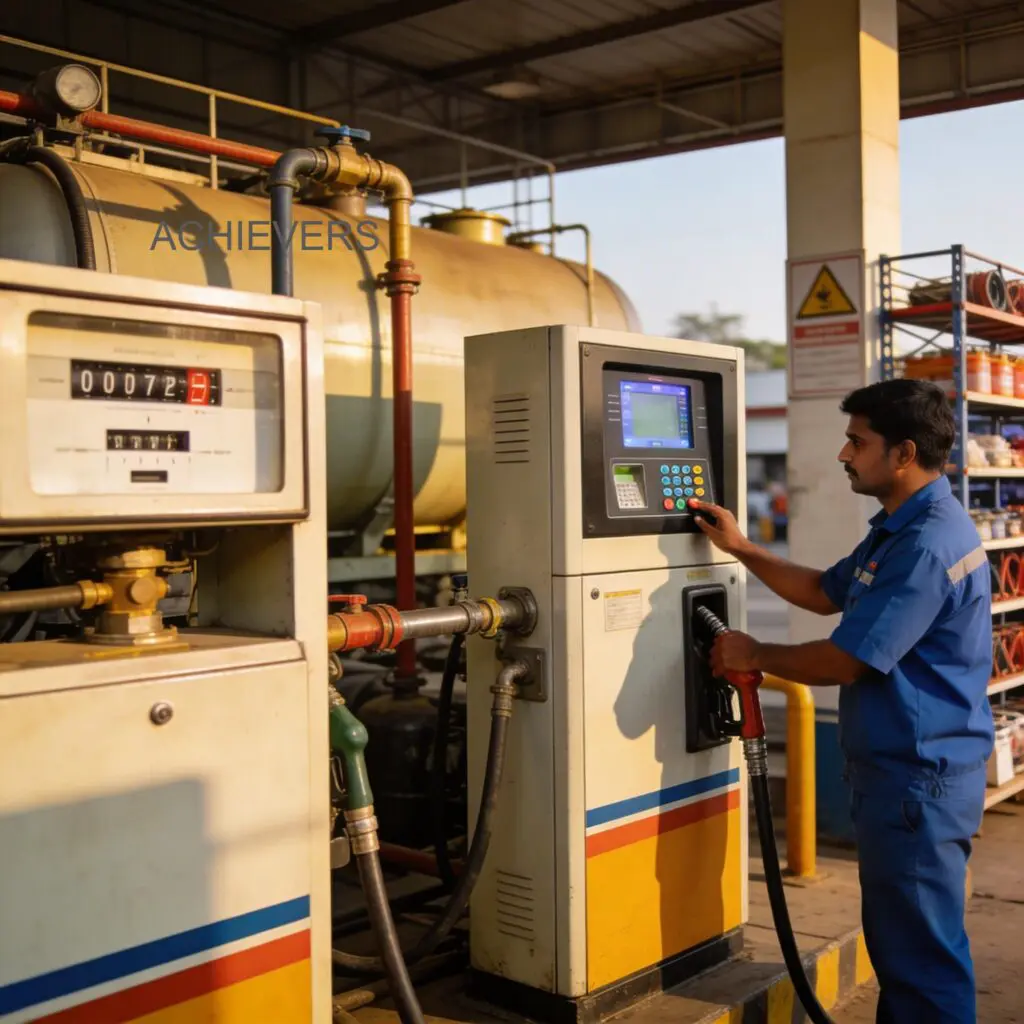
A mechanical diesel dispenser relies on a purely physical gear-train mechanism to count the volume of fuel passing through the flow meter. The display typically features a 3 or 4-digit resettable counter (for the current fill) and a 6, 7, or 8-digit non-resettable totalizer (for lifetime tracking).
When to choose Mechanical:
- Harsh Environments: Mechanical counters are incredibly robust. They are not susceptible to screen fading in direct sunlight, nor do they have sensitive electronics that might fail in extremely dusty or humid mining environments.
- Unstable Power Conditions: In remote Indian construction sites where power supply is erratic or relies on generators, a mechanical display (which is driven by the flow of fluid, not electricity) ensures you can still read the meter even if the pump is being driven by a temporary DC source or manual override.
- Simplicity: For operators who are not tech-savvy, the "reset and fill" nature of a mechanical counter reduces training time and operator error.
- Cost-Effectiveness: Generally, mechanical units have a lower initial purchase price and lower maintenance costs since there are no circuit boards or keypads to replace.
The Case for Digital and Preset Diesel Dispensers
A digital dispenser uses electronic sensors (pulse transmitters) within the flow meter to send data to a microprocessor. This allows for an LED/LCD display and enables advanced features like "Preset" functionality. A preset diesel dispenser for fleet depot applications allows the operator to type in a specific volume (e.g., "50 Liters") or price on a keypad. The system dispenses exactly that amount and triggers a solenoid valve to shut off the flow automatically.
When to choose Digital/Preset:
- Inventory Accuracy: If you require tight control over fuel inventory, digital calibration is generally finer than mechanical calibration. The ability to calibrate the meter electronically allows for better linearity correction across different flow rates.
- Prevention of Pilferage: The "Preset" feature is a massive deterrent to theft. Operators cannot "top off" or squeeze the handle to slightly overfill a tank. The machine stops exactly where instructed.
- Data and Reporting: Digital dispensers can often be paired with printers or Fuel Management Systems (FMS). This allows fleet managers to print a ticket for every transaction, detailing the date, time, and liters filled—crucial for reconciling driver logs against tank levels.
- Standardized Filling: For fleets where vehicles have known tank capacities, preset filling ensures consistency and prevents spillage caused by manual shut-off delays.
The Verdict on Accuracy
While both systems can be calibrated, the mechanical vs digital diesel dispenser debate often settles on "repeatability." Digital systems tend to offer better repeatable accuracy over long periods because they eliminate the mechanical wear and tear associated with gear trains in the counter assembly. However, a well-maintained mechanical unit from a reputable diesel dispenser manufacturer in India will still meet the necessary industrial accuracy standards (typically ±1%).
3. Selection and Configuration Guide
Once you have decided between mechanical and digital interfaces, there are several other technical parameters you must define to configure the correct diesel dispenser for your site. Industrial buyers should communicate the following details during the enquiry phase to ensure the system matches the application.
Flow Rate Requirements
The speed of refueling impacts your fleet's downtime.
- Standard Flow (40–60 LPM): Ideal for cars, light commercial vehicles (LCVs), and small gensets. This prevents "blowback" or foaming in smaller filler necks.
- High Flow (80–120 LPM): Essential for heavy trucks, buses, mining excavators, and dumpers. Filling a 300-liter tank at 40 LPM takes over 7 minutes; at 120 LPM, it takes roughly 2.5 minutes.
Power Supply Configuration
Your site's infrastructure dictates the motor type.
- AC Versions (230V Single Phase / 415V Three Phase): Standard for fixed fueling islands in transport depots or factory premises.
- DC Versions (12V / 24V): These are critical for mobile fueling browsers. The dispenser runs off the vehicle's battery, allowing you to refuel heavy earthmovers right at the digging site where mains power is unavailable.
Essential Checklist for Buyers
When requesting a quote, clarify these points to get an accurate diesel dispenser price in India:
- Mounting: Do you need a wall-mounted unit, a tank-mounted unit, or a standalone pedestal (skid) type?
- Filtration: Indian diesel can sometimes contain particulate matter. Ask for an integrated strainer or an additional external filter to protect the flow meter.
- Nozzle Type: Always insist on an Automatic Shut-off Nozzle. Manual nozzles rely on the operator paying attention, which is the leading cause of fuel spillage on industrial sites.
- Hose Length: Standard length is usually 4 meters. If you are fueling large equipment where the tank is high up or hard to reach, request a 6-meter or 10-meter hose with a hose reel.
4. Typical Industrial Applications
The versatility of the diesel dispenser makes it a staple across various sectors in the Indian industrial landscape. It is not limited to just transport companies but is vital anywhere diesel engines are the prime movers.
Transport & Logistics Yards
This is the most common application. Large transport companies install fixed dispensers to fuel their trucks in-house. This allows them to buy diesel in bulk (saving costs) and monitor exactly how much fuel goes into each truck, preventing the common "highway theft" associated with fueling at unsecured stops.
Construction & Infrastructure Projects
Road building and real estate projects utilize cranes, excavators, and loaders that consume hundreds of liters daily. A DC-powered dispenser mounted on a mobile fuel truck ensures these machines are refueled during breaks without leaving the construction zone, maximizing asset utilization.
Mining & Quarrying
Mines operate in aggressive environments with heavy dust. Here, high-flow mechanical dispensers are preferred. They are mounted on service trucks that visit crushers and dumpers deep in the quarry. The equipment is built to handle the vibration and dust exposure typical of mining operations.
Manufacturing & Genset Refueling
Factories rely on backup diesel generators (DG Sets) for power continuity. A stationary dispenser connected to the bulk storage tank allows for safe, measured transfer of fuel to the DG day tanks, ensuring power is available during outages without manual bucket filling.
5. Service, Installation, and Support
Investing in a high-quality dispenser is only half the battle; maintaining its diesel dispenser accuracy and calibration is the other. Even the most robust flow meter can drift over time due to mechanical wear or changes in fluid properties.
Calibration Matters
In India, fuel is expensive. A dispenser with a calibration error of just 1% can result in a loss of 10 liters for every 1,000 liters dispensed. Over a month, this adds up to significant revenue leakage. It is recommended to verify calibration using a certified proving can (a standard 5L, 10L, or 20L measure) at least once every three months, or more frequently for high-volume sites.
Installation Best Practices
- Suction Lift: Ensure the pump is not trying to lift fuel higher than its rated suction capacity (usually 3-5 meters). Excessive suction strain causes cavitation, which damages the pump and ruins meter accuracy.
- Electrical Safety: For AC units, ensure proper earthing. Diesel fumes are flammable; loose connections or sparks can be catastrophic.
- Air Elimination: Ensure the suction line is airtight. Air entering the system will spin the meter, causing it to register "air" as fuel, leading to false readings (phantom flow).
The Value of Local Support
Choosing a domestic manufacturer like Chintan Engineers ensures you have access to spare parts (vanes, seals, circuit boards) and technical expertise. Imported units often face downtime due to the unavailability of specific components. With a nationwide reach and a commitment to end-to-end solutions—from manufacturing to AMC—you ensure that your fueling operations never grind to a halt.
Precision is Profit
Whether you choose a rugged mechanical unit for a remote mining site or a sophisticated preset digital system for a busy fleet depot, the goal remains the same: accountability. By moving away from manual estimation and buckets to a professional dispensing system, you regain control over your fuel expenses.
To ensure you select the right configuration for your specific flow rate and power requirements, reach out to the engineering team. Provide your site details—application, estimated daily volume, and power availability—and get a solution engineered for precision, durability, and trust.
