
















Efficient fuel management is no longer a luxury for industrial operations in India; it is a critical necessity. With rising fuel costs and the constant challenge of reconciliation between purchasing records and actual consumption, plant managers and engineers require precise instrumentation. Whether managing a fleet of trucks, monitoring diesel generator (DG) sets, or overseeing large-scale bulk transfers, the accuracy of your measurement data is the foundation of operational control.
However, selecting the hardware is only half the battle. The true value of a Diesel Flow Meter lies in how it communicates that data to your operators or control systems. In the diverse and often harsh industrial environments found across India—from the humid coasts of Gujarat to dusty mining sites in the interior—the choice between a mechanical register, a pulse output, or an analog 4–20 mA signal can determine the success or failure of your fuel management system.
As one of the leading diesel flow meter manufacturers in Ahmedabad India, Chintan Engineers understands that "precision" is not just about the mechanics of the meter; it is about the integrity of the data it provides. This guide explores the technical nuances of selecting the right output configuration to ensure your fuel data is accurate, reliable, and actionable.
In This Article
1. What this product does
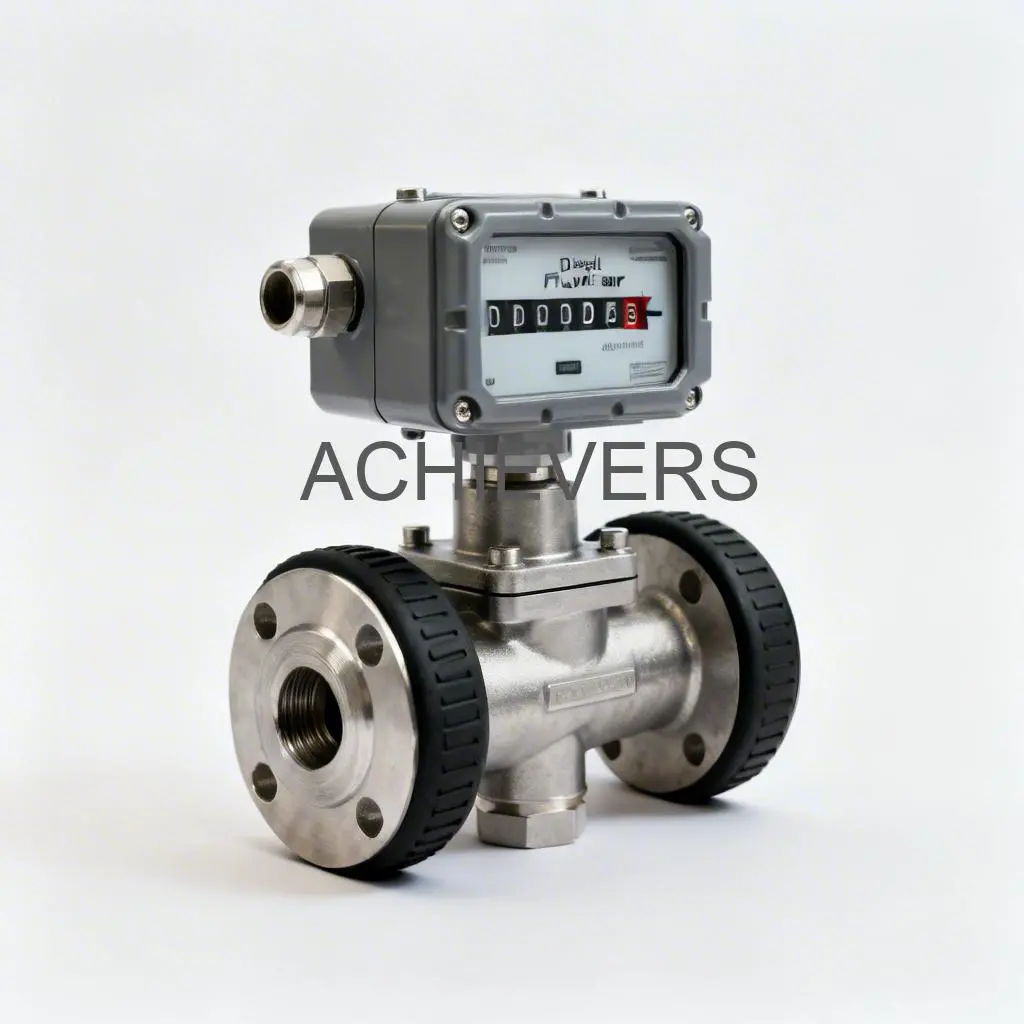
The Diesel Flow Meter engineered by our team is a precision instrument designed specifically for the volumetric measurement of diesel, kerosene, and similar fuels. Unlike general-purpose water meters which may corrode or fail under the viscosity and chemical properties of hydrocarbons, these meters are built with robust materials suited for industrial fluid handling.
At its core, the device utilizes a positive displacement or velocity-based mechanism (depending on the specific flow range and model variant selected) to capture flow data with high repeatability. These units are designed to withstand the rigors of continuous industrial use, offering distinct advantages such as:
- High Accuracy: Essential for custody transfer and precise batching, minimizing "phantom" fuel losses.
- Robust Construction: Casings and internal rotors designed to resist wear from particulate matter often found in industrial diesel supplies.
- Versatile Flow Ranges: Capable of handling everything from low-flow generator consumption to high-speed bulk unloading.
- Multiple Readout Options: Available with mechanical registers for standalone use or digital electronics for integration.
These meters are not just standalone units; they are vital components in broader systems involving pumps, batch controllers, and filtration units. Backed by over 15 years of expertise in industrial flow and dispensing systems, our meters undergo rigorous testing and calibration to ensure consistency from the moment of installation.
2. Choosing the Right Output Signal for Your System
Selecting the correct output signal is an engineering decision that impacts your PLC programming, cabling costs, noise immunity, and operator workflow. When integrating a Diesel Flow Meter into a site automation plan, you must weigh the complexity of the control system against the environmental realities of the site.
Mechanical Registers: Simplicity and Independence
For many remote sites, construction yards, or mobile tanker delivery systems, a mechanical totalizer vs digital diesel flow meter debate is easily won by the mechanical option.
- No Power Required: Mechanical registers operate purely on the kinetic energy of the fluid. This is ideal for hazardous zones or remote areas where running power cables is expensive or impossible.
- Operator-Friendly: The large, rotating digits are easy for drivers and non-technical staff to read. There are no menus to navigate and no electronics to fail due to voltage spikes or lightning strikes.
- The Trade-off: You cannot easily transmit this data to a SCADA system. It requires manual logging, which introduces human error.
Pulse Output: The Standard for PLCs and Batching
If you are automating a process, such as a diesel flow meter pulse output for PLC integration, this is often the most direct method.
- How it Works: The meter generates a digital pulse for every unit of volume (e.g., 10 pulses per liter). This is typically an Open Collector (NPN/PNP) or Reed Switch signal.
- The K-Factor Criticality: To use a pulse meter effectively, your PLC or batch controller must be programmed with the correct "K-Factor" (pulses per liter). Diesel flow meter calibration and K-factor settings are inextricably linked. If the meter wears over time or fluid viscosity changes significantly due to temperature, the K-factor may drift. High-quality digital meters allow for linearization, where different K-factors are applied at different flow rates to maintain high accuracy across the curve.
- Signal Noise: In Indian industrial plants, electrical noise (EMI) from Variable Frequency Drives (VFDs) or heavy motors is common. Pulse signals traveling over long distances can pick up "ghost pulses," leading to inflated readings. Shielded twisted-pair cables are mandatory here.
4–20 mA Output: Long-Distance Reliability
For continuous monitoring in a SCADA system or when cable runs exceed 50–100 meters, a diesel flow meter 4-20 mA output selection is superior.
- Noise Immunity: The current loop signal is far more resistant to electrical noise than voltage pulses.
- Flow Rate vs. Totalization: While 4-20 mA is excellent for monitoring real-time flow rate (Liters per Minute), calculating total volume requires the PLC to integrate the signal over time. This calculation can introduce slight integration errors compared to the absolute count of a pulse meter. Therefore, 4-20 mA is best for process control (flow regulation) rather than precise custody transfer or billing.
Integration with Fuel Skids
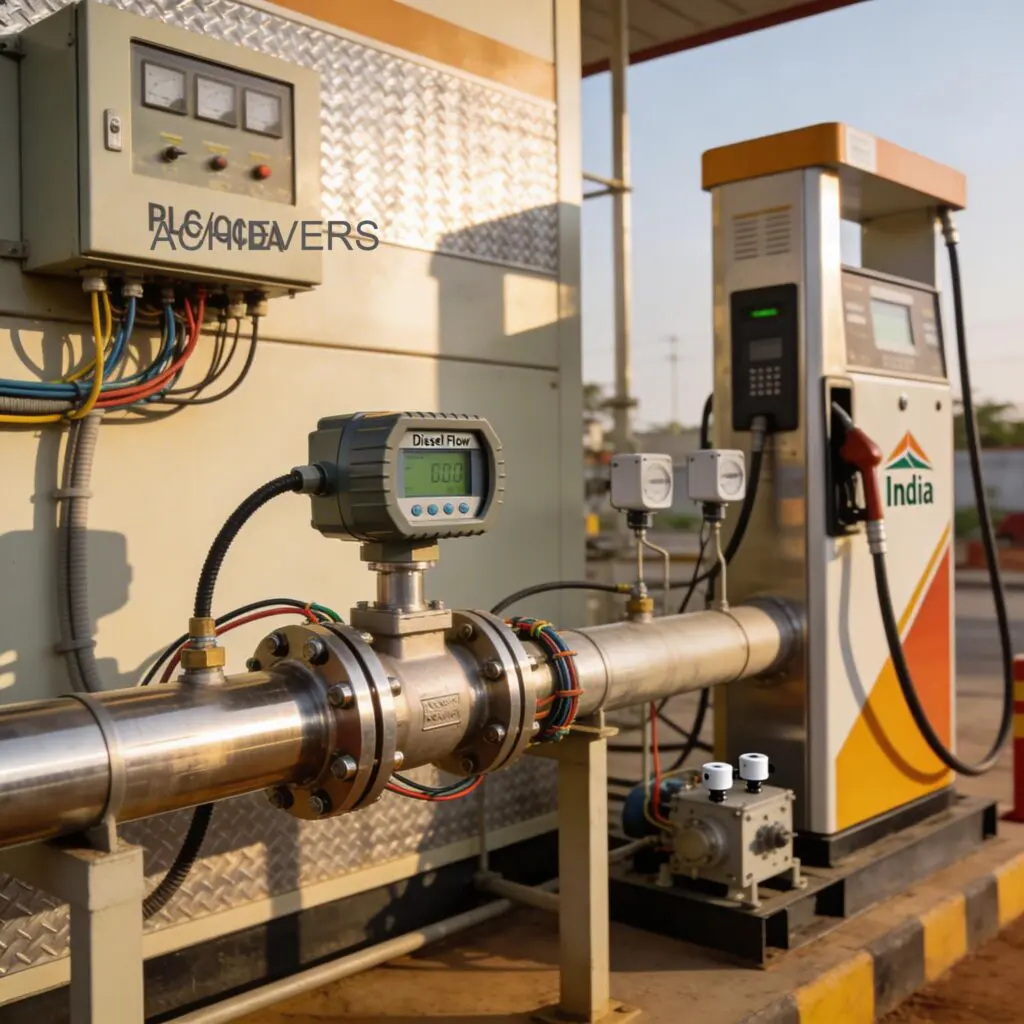
When designing a diesel flow meter for fuel transfer skids India, the output choice often depends on the skid's controller. Dedicated batch controllers usually prefer high-speed pulse inputs for precise valve closure. Conversely, if the skid is reporting to a central plant DCS, the engineers might prefer Modbus (RS485) or 4-20 mA to minimize I/O count.
3. Selection and Configuration Guide
To ensure you receive a diesel flow meter that performs reliably for years, you must move beyond just asking for "a 1-inch meter." The internal mechanics and output electronics must match your specific hydraulic conditions.
Key Selection Criteria:
- Flow Rate Matching: Never size a meter based solely on pipe size. A 2-inch pipe might carry flow rates that are too low for a 2-inch turbine meter to register accurately. always select based on the minimum and maximum flow rate (LPM or LPH).
- Fluid Viscosity & Temperature: Diesel viscosity changes with temperature. In colder regions of Northern India, diesel thickens, which can affect the pressure drop across the meter. Ensure the meter is rated for the worst-case viscosity scenario.
- Pressure Drop: Ensure your pump has enough head pressure to push the fluid through the meter, especially if you are using a positive displacement meter which creates resistance.
Configuration Checklist:
- Mounting Orientation: Can the meter be installed vertically, or must it be horizontal? This affects the choice of bearing systems and display orientation.
- Filtration: Diesel in industrial storage tanks often contains sludge or rust. A strainer (typically 40–80 mesh) is non-negotiable upstream of the meter to prevent rotor jamming.
- Power Supply: For digital units, confirm if you have 24V DC, 230V AC, or if you require a battery-powered unit.
4. Typical Applications
Our diesel flow meters are engineered to serve a wide array of sectors, delivering value wherever fuel is moved or consumed.
- Diesel Generator (DG) Monitoring: In factories and commercial complexes, fuel theft and efficiency monitoring are major concerns. Installing flow meters on the feed and return lines of DG sets provides net consumption data, helping facility managers identify efficiency drops or pilferage immediately.
- Bulk Fuel Unloading: Manufacturing plants often receive diesel in 10,000 to 20,000-liter tankers. A high-capacity flow meter at the unloading bay ensures that the quantity paid for matches the quantity received, often revealing discrepancies that save lakhs of rupees annually.
- Mobile Refueling Browers: Mining and construction sites utilize mobile tankers to refuel excavators and dumpers. Mechanical or battery-operated digital meters are standard here to track dispensing per vehicle.
- Boiler and Burner Feed: Textile and chemical industries rely on boilers for steam. Accurate fuel measurement is essential for calculating the efficiency of the boiler and the cost of steam production per kilogram.
- Batching Systems: For industries that use diesel or kerosene as an ingredient in chemical blending, pulse-output meters linked to automated valves ensure precise recipe adherence.
5. Service, Installation, and Support
Even the most robust hardware requires proper installation to function correctly. At Chintan Engineers, we emphasize that the lifespan of a diesel flow meter is directly related to the quality of the installation and ongoing support.
Installation Best Practices for Indian Sites:
- Air Elimination: Air pockets are the enemy of accuracy. If a pump sucks air, the flow meter will measure it as fuel. We recommend installing air eliminators, especially for unloading applications.
- Vibration Isolation: Heavy industrial pumps cause vibration. Meters should be supported independently or connected via flexible couplings to prevent mechanical stress on the housing.
- Calibration: Over time, mechanical wear can shift the accuracy curve. Periodic calibration (checking the K-factor against a known master measure) is vital. We provide calibration certification verified for consistency, ensuring your audits and reports are compliant.
Why Local Support Matters:
Imported meters often become scrap when a single electronic board fails due to a lack of spares. We provide end-to-end solutions, from manufacturing to AMC (Annual Maintenance Contracts). Our commitment to transparent communication means you have access to technical experts who can troubleshoot signal issues or mechanical jams over the phone or on-site, ensuring minimal downtime for your operations.
Get the Right Configuration for Your Plant
Don't leave your fuel management to chance or generic specifications. To ensure you select the correct diesel flow meter output for your PLC or monitoring system, consult with our engineering team.
When you contact us, please provide:
- Fluid details: (Diesel, Kerosene, LDO, etc.)
- Flow rate: (Min and Max in LPM/LPH)
- Line size: (Inches/mm)
- Output requirement: (Mechanical, Pulse, or 4-20 mA)
- Operating pressure and temperature
We will help you engineer a solution that delivers precision, durability, and trust.
