
















In the demanding landscape of Indian manufacturing and processing industries, equipment reliability is the cornerstone of operational efficiency. For facilities handling corrosive chemicals, hygienic fluids, or high-temperature liquids, the integrity of the fluid handling system is non-negotiable. At the heart of these systems lies the pump. While selecting high-quality SS Pumps is the first step toward a robust process line, the longevity and performance of that equipment are dictated largely by the installation quality.
Improper installation of stainless steel pumps, particularly in high-pressure applications, is a leading cause of premature seal failure, bearing fatigue, and excessive vibration. For plant engineers and maintenance managers, understanding the nuances of foundation preparation, alignment, and piping configuration is essential to minimize downtime and maintain safety standards. This article explores the technical prerequisites for installing stainless steel pumps to ensure they deliver the precision and durability Chintan Engineers is known for.
In This Article
1. What Are SS Pumps and Why Are They Critical?
SS Pumps are specialized fluid handling devices constructed primarily from high-grade stainless steel (typically grades 304 or 316). Unlike cast iron or carbon steel alternatives, these pumps are engineered to resist oxidation and chemical attack, making them indispensable for industries requiring high purity or handling aggressive media.
Based on standard industrial configurations provided by leading SS pump manufacturers in India, these units are designed to deliver consistent flow rates under varying pressure conditions. The construction focuses on minimizing fluid contamination and resisting the wear and tear caused by abrasive or corrosive fluids.
Key Technical Features:
- Material Construction: High-grade Stainless Steel (SS 304/316) for wetted parts, ensuring resistance to rust, acids, and alkalis.
- Corrosion Resistance: specifically designed for challenging environments where standard pumps would degrade rapidly.
- Hygienic Design: Smooth internal surfaces prevent bacterial growth and particle accumulation, essential for food grade or pharma applications.
- Durability: Robust casing and impeller design capable of withstanding thermal shock and high operating pressures.
- Versatility: Suitable for a wide range of viscosities and temperatures, depending on the specific motor and seal configuration.
These pumps are engineered not just for moving fluid, but for maintaining the integrity of the process. Whether deployed in a chemical plant in Gujarat or a pharmaceutical facility in Hyderabad, the primary goal is consistent performance without frequent maintenance interventions.
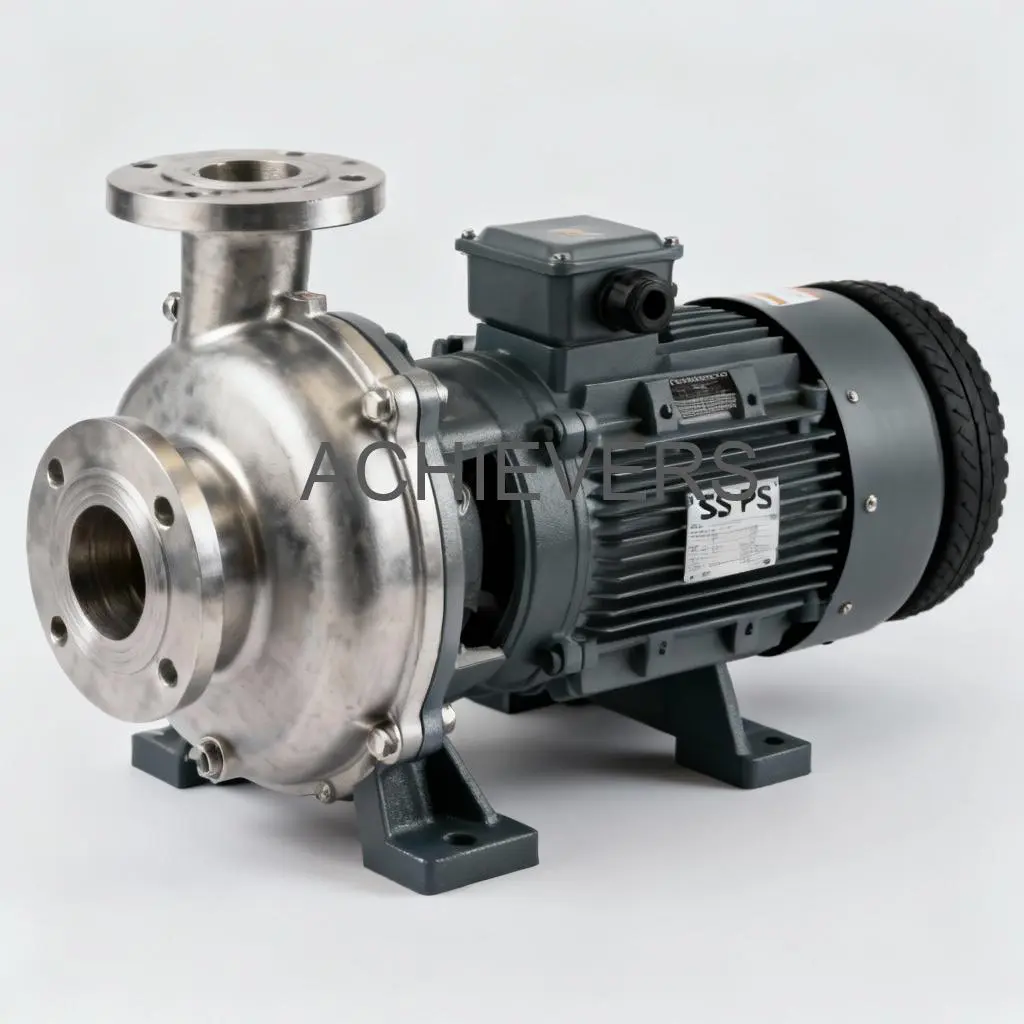
2. Key Considerations for Installing SS Pumps in High-Pressure Industrial Applications
This section serves as a high-pressure SS pump setup guide for engineers and project heads. Installing stainless steel pumps in high-pressure environments requires strict adherence to mechanical standards. The forces exerted on the pump casing and the internal components are significant; therefore, the installation must neutralize external stresses to prevent catastrophic failure.
Foundation and Baseplate Rigidity
The foundation is the anchor of your pumping system. For high-pressure applications, a simple concrete pad is often insufficient if not leveled and grouted correctly.
- Mass Ratio: The concrete foundation should ideally have a mass 3 to 5 times that of the pump assembly to absorb vibration effectively.
- Leveling: The baseplate must be leveled to within 0.05 mm per meter. using shims near the anchor bolts prevents the baseplate from springing or warping when bolts are tightened.
- Grouting: After leveling, the baseplate should be filled with non-shrink grout. This eliminates void spaces that could act as resonance chambers, amplifying vibration during high-speed operation.
Precision Alignment
Misalignment is the enemy of SS Pumps. Even the most robust stainless steel pump cannot withstand the radial loads generated by angular or parallel misalignment between the motor and the pump shaft.
- Laser Alignment: For high-pressure systems, visual alignment is inadequate. Laser alignment tools should be used to achieve tolerances within 0.05 mm or better.
- Thermal Growth: If the pump handles high-temperature fluids (e.g., boiler feed or hot chemical transfer), engineers must calculate the thermal expansion of the SS casing. The alignment must be set "cold" with a specific offset so that it aligns perfectly once the system reaches operating temperature.
Piping Stress and Support
A common error in industrial stainless steel pump installation is forcing piping to meet the pump flanges. This introduces "pipe strain," which distorts the pump casing.
- Independent Support: Suction and discharge piping must be supported independently of the pump. The pump should never support the weight of the pipe.
- Flange Alignment: Flange faces should be parallel and bolt holes aligned before any fasteners are inserted. If you have to use a lever to align the holes, the pipe strain is too high.
- Expansion Joints: In high-pressure and thermal cycling applications, stainless steel bellows or expansion joints are crucial to absorb thermal growth and hydraulic shock, protecting the pump nozzle from stress.
Sealing Options for High Pressure
The shaft seal is the most vulnerable component in a high-pressure setup.
- Mechanical Seals: Standard packing is rarely suitable for high-pressure SS applications. Balanced mechanical seals are preferred as they hydraulically balance the closing forces on the seal faces, reducing wear and heat generation.
- Flush Plans: For chemical process SS pumps India, utilizing an API flush plan (such as Plan 11 or Plan 53) ensures the seal faces remain lubricated and cool, flushing away particulates that could score the seal faces.
Net Positive Suction Head (NPSH)
High-pressure output often distracts from suction conditions. If the Available NPSH (NPSHa) does not exceed the Required NPSH (NPSHr) by a safe margin (typically 0.5 to 1 meter), the pump will cavitate. Cavitation causes pitting on stainless steel impellers and severe vibration, destroying the pump from the inside out. Ensure the suction line is sized correctly and friction losses are minimized.
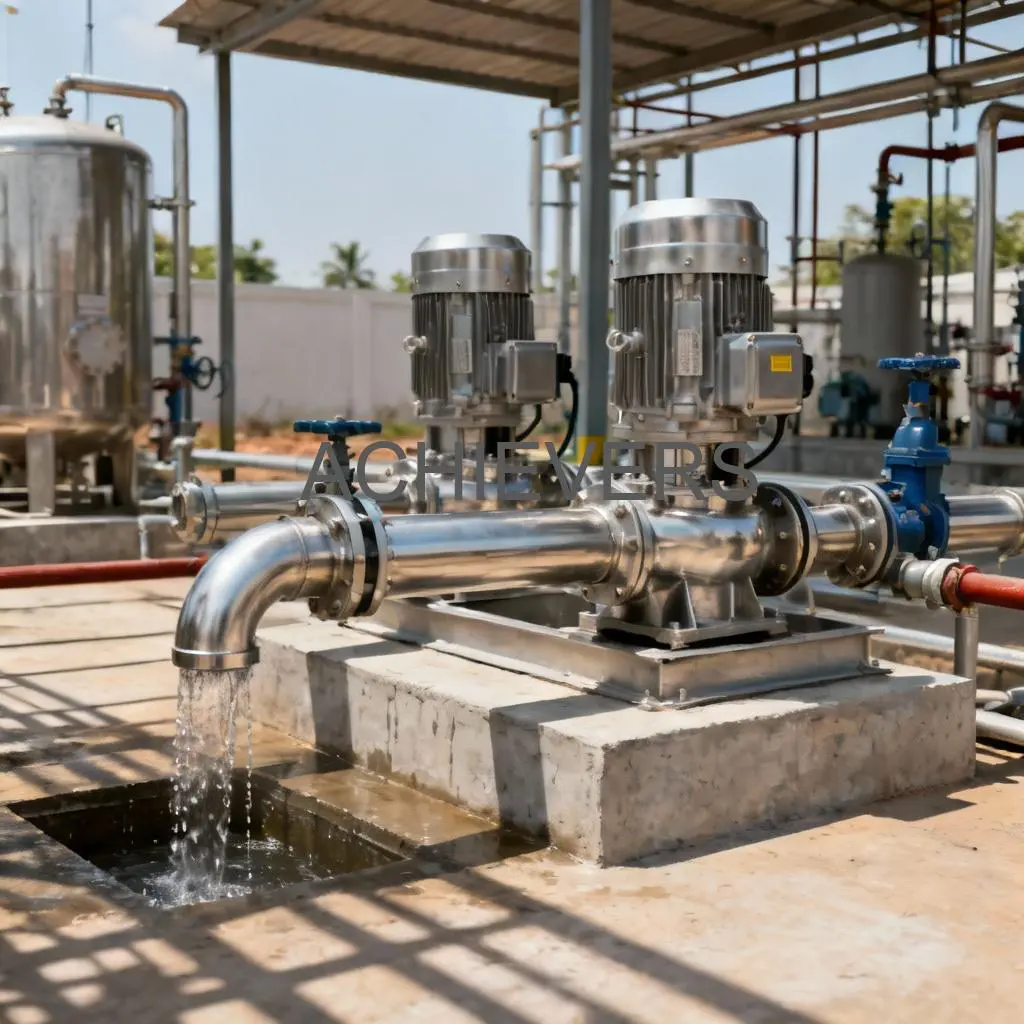
3. Selection and Configuration Guide
Selecting the correct unit goes beyond just matching the pipe size. As experienced SS pump manufacturers in India, we recommend a thorough evaluation of the process parameters to configure the pump correctly.
Determining Capacity and Head
- Flow Rate: Determine the required flow in cubic meters per hour (m³/hr) or Liters Per Minute (LPM). Oversizing the pump "just in case" forces it to operate on the far left of its curve, causing recirculation and vibration.
- Total Dynamic Head (TDH): Calculate not just the vertical lift but also the friction losses in the piping, valves, and heat exchangers. In high-pressure applications, system resistance curves are critical.
Material Compatibility
While "Stainless Steel" is the broad category, the specific grade matters:
- SS 304: Suitable for water, mild chemicals, and general industrial applications.
- SS 316 / 316L: Essential for aggressive acids, chlorides, pharmaceuticals, and food products due to higher molybdenum content which improves corrosion resistance.
Configuration Checklist for Buyers
When inquiring about SS Pumps, providing the following data ensures you receive an optimized solution:
- Fluid Properties: Name, concentration, specific gravity, viscosity, and temperature.
- Operating Duty: Continuous (24/7) or intermittent batching.
- Drive Type: Direct coupled, belt drive, or variable frequency drive (VFD) compatible.
- Site Conditions: Ambient temperature, hazardous area classification (flameproof motor requirements), and available power supply.
4. Typical Applications
The versatility of SS Pumps allows them to serve a multitude of sectors across the Indian industrial landscape. Their ability to maintain fluid purity and resist corrosion makes them the standard choice for several critical applications.
Chemical and Petrochemical Processing
In the chemical sector, pumps must handle aggressive solvents, acids, and alkalis. Stainless steel ensures that the pump casing does not corrode and contaminate the chemical batch. High-pressure SS pumps are often used for reactor feed systems, solvent transfer, and circulation through heat exchangers.
Food and Beverage Industry
Hygiene is paramount in food processing. SS pumps with polished internals are used to transfer milk, juices, syrups, and potable water. They are designed to be Cleaned-In-Place (CIP), ensuring no residue remains to harbor bacteria between batches.
Water Treatment and RO Plants
Reverse Osmosis (RO) plants require high-pressure feed pumps to force water through semi-permeable membranes. The corrosive nature of brine or brackish water demands the durability of stainless steel to prevent rust formation that could foul expensive membrane elements.
Pharmaceutical Manufacturing
Pharma applications require the highest level of sterility. SS pumps transfer purified water (PW), water for injection (WFI), and various liquid medications. The non-reactive nature of SS 316L is critical to meeting FDA and GMP validation standards.
Industrial Washing and Cleaning
High-pressure cleaning systems for tanks, crates, and automotive parts rely on SS pumps to deliver hot water and detergent solutions at high velocity. The material withstands the thermal shock and chemical detergents used in these cleaning cycles.
5. Service, Installation, and Support
Even the best-engineered pump requires proper maintenance to sustain its performance. Following a stainless steel pump installation checklist is the first step, but ongoing care is equally important.
Installation Best Practices
- Pre-Start Checks: Always rotate the pump shaft by hand before commissioning to ensure it turns freely. Check that the direction of rotation matches the arrow on the casing.
- Priming: Never run a stainless steel pump dry. Ensure the casing is fully flooded and vented of air before starting the motor. Dry running can destroy mechanical seals in seconds.
- Alignment Verification: Re-check alignment after the piping is connected and again after the pump has reached operating temperature (hot alignment).
Maintenance and AMC
Regular maintenance prevents minor issues from becoming major failures.
- Seal Inspection: Monitor mechanical seals for leakage. A slow drip indicates seal face wear.
- Lubrication: Follow the manufacturer's schedule for bearing lubrication. Over-greasing is just as harmful as under-greasing.
- Vibration Analysis: Periodic vibration monitoring can detect bearing faults or misalignment months before a failure occurs.
Chintan Engineers supports clients with end-to-end solutions, from the initial manufacturing to on-site installation and Annual Maintenance Contracts (AMC). Our commitment to quality workmanship means that every pump is calibrated and tested before it leaves our facility. We ensure that genuine spare parts—impellers, shafts, and seal kits—are readily available to minimize downtime for our clients across India.
Contact Us for Precision Pumping Solutions
Selecting and installing the right stainless steel pump is a critical decision that impacts your plant's productivity and safety. Do not leave your process efficiency to chance.
At Chintan Engineers, we combine over a decade of engineering expertise with innovative manufacturing to deliver solutions tailored to your specific pressure and flow requirements.
Get a quote or technical consultation today:
- Specify your needs: Flow rate, Pressure, and Fluid characteristics.
- Consult our experts: Let us help you select the ideal material grade and seal plan.
- Secure your operations: Benefit from our robust warranty and nationwide support.
Visit our product page to learn more about our range of SS Pumps and how we can support your industrial operations.
