
















In the demanding landscape of Indian industrial manufacturing, the handling of corrosive fluids, acids, and effluents requires equipment that offers more than just hydraulic power—it demands absolute chemical resilience. For plant managers and maintenance engineers, the challenge lies not only in selecting the right pump but in ensuring its longevity through correct installation and rigorous maintenance protocols.
Polypropylene (PP) has established itself as the material of choice for these aggressive environments, offering a robust alternative to expensive super-alloys. However, the performance of these non-metallic pumps is heavily dependent on how they are commissioned and maintained. Downtime in a chemical process or an Effluent Treatment Plant (ETP) can lead to compliance issues and production losses. Therefore, understanding the engineering nuances of PP Pumps is essential for ensuring operational efficiency and safety.
In This Article
1. Engineered for Corrosion Resistance and Durability
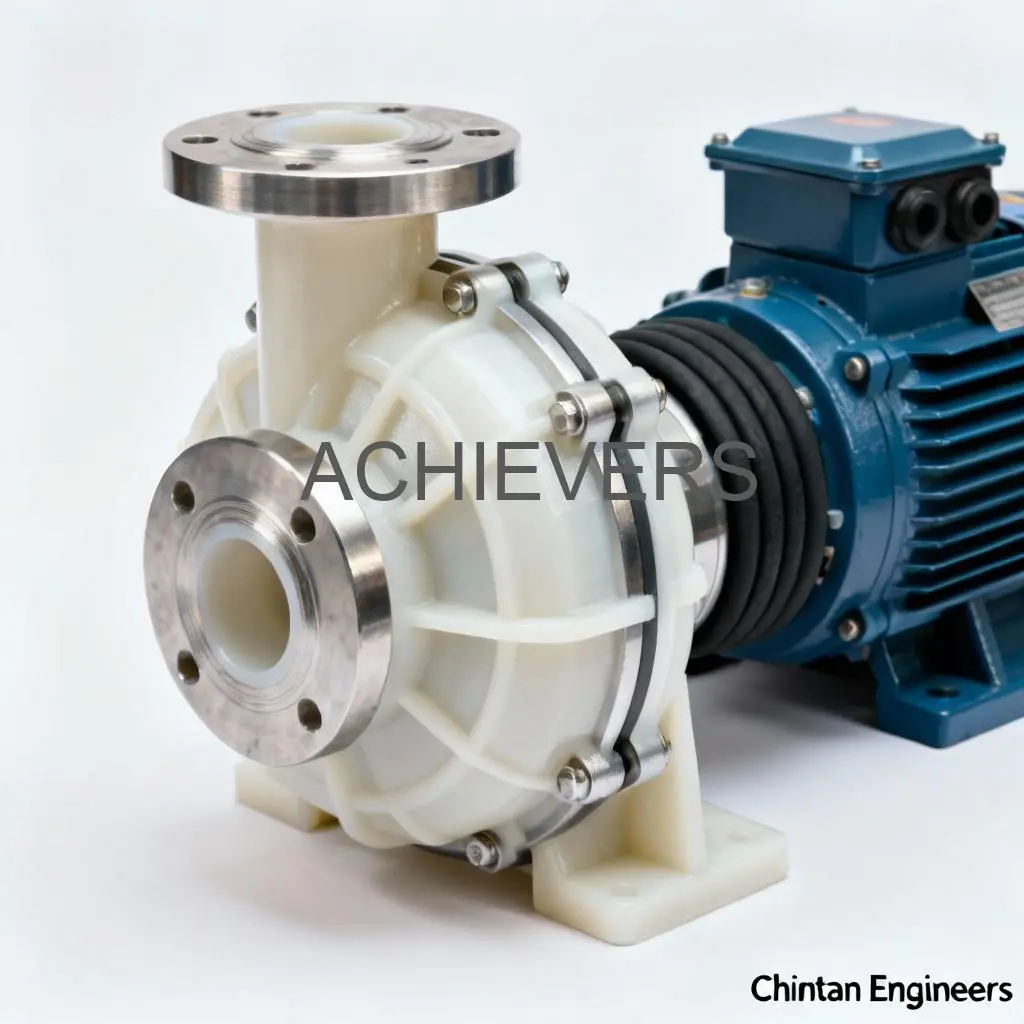
The PP Pumps manufactured by Chintan Engineers are specialized fluid handling solutions designed to withstand the harsh nature of industrial chemicals. Unlike standard cast iron or mild steel pumps, which are susceptible to rapid oxidation and erosion when in contact with acidic or alkaline fluids, these pumps are constructed using high-grade polypropylene. This thermoplastic polymer is chemically inert to a vast spectrum of corrosive media, making it the ideal barrier between the fluid and the environment.
At the core of these pumps is a design philosophy focused on reliability and long-term value. The wetted parts—typically the casing, impeller, and backplate—are molded from solid polypropylene, ensuring that the structural integrity of the pump remains uncompromised even under continuous exposure to aggressive liquids.
Key Technical Characteristics
Based on our engineering standards, these industrial polypropylene pumps are built to perform in conditions where metal pumps fail.
- Material Integrity: The use of pure polypropylene ensures excellent resistance to hydrochloric acid, sulfuric acid, caustics, and plating solutions.
- Hydraulic Efficiency: Precision-molded impellers are balanced to deliver consistent flow and pressure, minimizing energy consumption while maximizing throughput.
- Robust Construction: Designed for industrial environments, the casing and housing are reinforced to withstand mechanical stress and vibration, aligning with our commitment to quality workmanship.
- Versatility: These pumps are adaptable to various drive configurations and sealing arrangements, making them suitable for diverse fluid viscosities and specific gravities encountered in Indian industries.
2. Installation and Maintenance Best Practices for Chemical and ETP Applications
This guide serves as a technical resource for the proper deployment of PP Pumps in corrosive chemical handling and effluent treatment applications. While the equipment is engineered for durability, the non-metallic nature of the pump end requires specific attention during installation to prevent mechanical stress and ensure leak-free operation.
Pre-Installation and Foundation
The longevity of PP pump manufacturers in India often cite improper foundation as a leading cause of premature failure. A rigid, flat foundation is non-negotiable.
- Leveling: The pump baseplate must be grouted on a level concrete surface. Use shims near the foundation bolts to ensure the base is perfectly horizontal before tightening.
- Vibration Damping: In ETP applications where pumps may handle sludge or slurries, vibration can be significant. Installing anti-vibration pads can protect the polypropylene casing from stress fatigue.
Piping Stress and Alignment
One of the most critical aspects of effluent treatment plant PP pump installation is piping alignment. Polypropylene, while tough, does not have the ductility of metal.
- Independent Support: Suction and discharge piping must be supported independently of the pump. The pump casing should never act as a load-bearing member for the piping system.
- Expansion Joints: In applications involving temperature fluctuations, thermal expansion of plastic piping can exert massive force on the pump nozzle. Use bellows or expansion joints to isolate the pump from these stresses.
- Alignment: Misalignment between the motor and the pump shaft leads to radial loading on the mechanical seal and bearings. Laser alignment or precision dial indicator methods should be used to ensure the coupling is within tolerance.
Operational Care and Maintenance
Routine maintenance of PP chemical pumps is far more cost-effective than breakdown repairs.
- Dry Run Protection: PP pumps, especially those with mechanical seals, must never run dry. The friction heat generated can melt the plastic components and destroy the seal faces within seconds. Installing a dry-run protection sensor or a power monitor is highly recommended.
- Impeller Clearance: Over time, especially when pumping fluids with suspended solids in ETPs, the wear ring or impeller clearance may increase. Periodic inspection and adjustment of this clearance restore hydraulic efficiency.
- Seal Inspection: The mechanical seal is the heart of the leak-prevention system. Check for any signs of crystallization or weeping at the seal gland. For hazardous chemicals, a double mechanical seal with a thermosyphon pot may be necessary to ensure zero leakage.
3. Selection and Configuration Guide
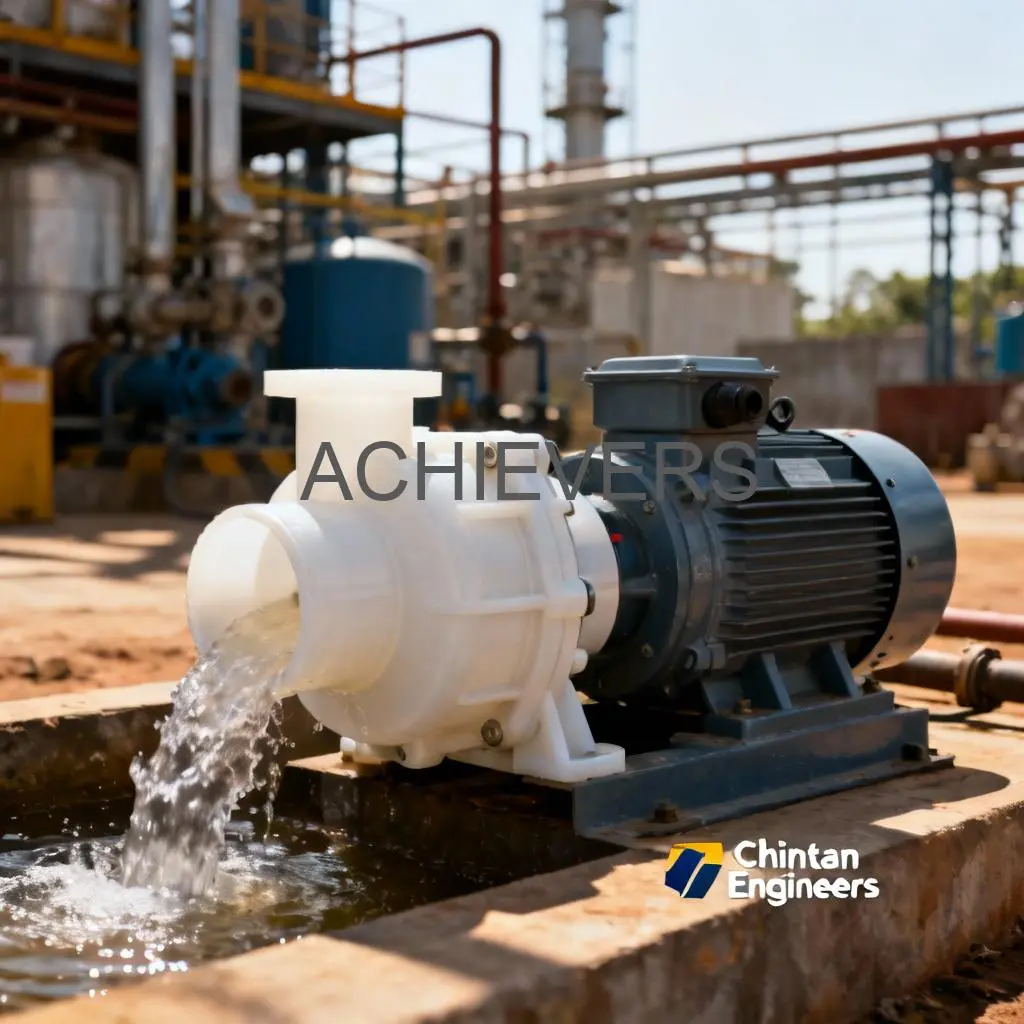
Choosing the correct configuration of PP Pumps is pivotal for process safety and efficiency. Industrial buyers must look beyond just flow rate and consider the chemical properties of the fluid.
Determining Capacity and Head
- Flow Rate: Calculate the required flow in cubic meters per hour (m³/hr) or liters per minute (LPM). Ensure the pump operates near its Best Efficiency Point (BEP) to reduce vibration and wear.
- Total Dynamic Head (TDH): accurate calculation of friction losses in plastic piping is essential. Undersizing the head can result in low flow, while oversizing can lead to cavitation and motor overload.
Material and Seal Selection
When sourcing from corrosion-resistant pumps India suppliers, communicate the exact chemical composition.
- Temperature Constraints: Polypropylene typically handles temperatures up to 70°C–80°C. For higher temperatures, alternative materials like PVDF might be discussed during the enquiry phase.
- Specific Gravity: Chemicals like concentrated sulfuric acid have a high specific gravity (up to 1.8). The motor power must be upsized accordingly to prevent tripping.
- Seal Type:
- Single Mechanical Seal: Suitable for clean, non-crystallizing acids.
- Double Mechanical Seal: Essential for toxic, abrasive, or crystallizing fluids.
- Gland Packing: Generally avoided in modern chemical pumps due to leakage concerns but used in some water applications.
Configuration Checklist for Buyers
When contacting the manufacturer, have the following details ready:
- Fluid Name and Concentration: (e.g., 30% Hydrochloric Acid).
- Operating Temperature: Minimum and maximum expected values.
- Suction Condition: Flooded suction or suction lift (self-priming requirement).
- Solids Content: Percentage and particle size of any suspended solids.
4. Typical Applications in Indian Industry
The versatility of PP Pumps makes them ubiquitous across various sectors. Chintan Engineers leverages decades of expertise to supply these pumps for a wide range of critical functions.
Chemical Processing and Transfer
In chemical manufacturing hubs across Gujarat and Maharashtra, PP pumps for chemical industry are the standard for loading and unloading tankers, reactor feed, and transfer between storage tanks. They effectively handle aggressive fluids like Hydrochloric Acid (HCl), Sulfuric Acid (H₂SO₄), Caustic Soda, and Nitric Acid without the risk of metallic contamination or corrosion.
Effluent Treatment Plants (ETP)
Industrial wastewater often contains a cocktail of acidic and alkaline contaminants. PP Pumps are extensively used for:
- Transferring raw effluent to neutralization tanks.
- Dosing coagulants and flocculants.
- Filter press feeding (when configured with appropriate pressure capabilities).
- Recirculation of treated water.
Surface Treatment and Electroplating
The electroplating and anodizing industry relies heavily on industrial polypropylene pumps for circulating electrolytes and pickling acids. The purity of the bath is critical, and the inert nature of PP ensures that no metal ions from the pump leach into the process solution, preserving the quality of the plating.
Steel and Pickling Plants
In steel pickling lines, sheets are passed through acid baths to remove oxide scales. PP Pumps are employed to circulate the hot acid continuously, maintaining the necessary turbulence and temperature uniformity for effective cleaning.
5. Service, Installation, and End-to-End Support
At Chintan Engineers, we believe that the sale of a product is just the beginning of our relationship. Our "End-to-End Solutions" philosophy ensures that clients receive comprehensive support from the manufacturing floor to the installation site.
Expert Installation and Commissioning
Proper commissioning is vital for the warranty and longevity of the equipment. Our technical experts provide guidance on baseplate grouting, piping layout, and initial motor rotation checks. We ensure that the corrosion-resistant pumps India industries rely on are installed with precision to mitigate vibration and stress issues from day one.
Accurate Calibration and Testing
Every pump that leaves our facility undergoes rigorous testing. We verify the hydraulic performance against the required duty point to ensure consistent flow and pressure. This accurate calibration confirms that the pump will perform exactly as specified, providing peace of mind to our customers.
AMC and Spare Parts Availability
For critical chemical processes, downtime is not an option. We offer Annual Maintenance Contracts (AMC) to keep your systems running at peak efficiency. As a local manufacturer, we ensure the ready availability of genuine spares—from impellers and casings to mechanical seals and O-rings. This local support eliminates the long lead times associated with imported pumps, ensuring your operations remain uninterrupted.
Call to Action
Selecting the right pumping solution for corrosive fluids is a technical decision that impacts safety and profitability. Don't leave your chemical handling to chance.
Contact Chintan Engineers today to configure the ideal PP Pump for your facility. When you reach out, please share your:
- Application details (Fluid type, concentration, temperature).
- Required Flow Rate and Head.
- Site Conditions (Suction lift, power supply, space constraints).
Trust in our engineering expertise to deliver a solution that combines precision, durability, and trust.
Driven by Innovation. Powered by Engineering.
