
How to Choose the Right Oil Flow Meter for Your Industrial Application in India
In the rapidly evolving industrial landscape of India, precision in fluid management is no longer a luxury—it is a necessity. For plant managers, maintenance engineers, and procurement heads across manufacturing, automotive, and logistics sectors, the cost of errors in fluid measurement can be substantial. Whether you are managing expensive lubricants, monitoring fuel consumption in boilers, or batching vegetable oils in food processing, the accuracy of your measurement equipment directly impacts your bottom line.
Choosing the best oil flow meter for industrial use requires navigating a complex array of specifications, fluid properties, and environmental conditions. With rising operational costs and stricter compliance standards, Indian industries are increasingly turning to robust accurate oil measurement solutions to ensure efficiency and reduce waste.
This guide explores the critical factors involved in selecting the right metering technology for your facility. We will examine technical specifications, viscosity considerations, and application-specific requirements to help you deploy the most effective Oil Flow Meters for your operations.
1. Understanding Oil Flow Meters: Technology and Specifications
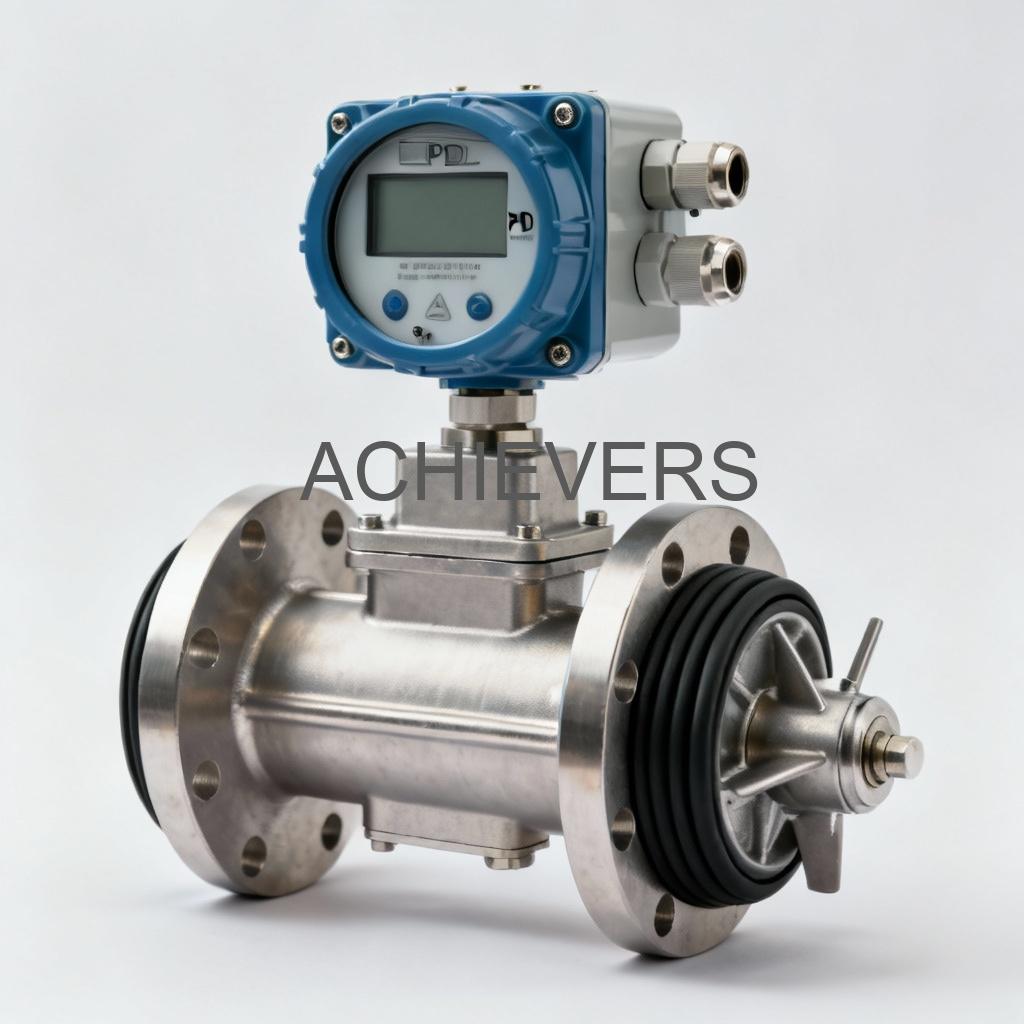
Oil Flow Meters are precision instruments designed to measure the volumetric flow rate of various hydrocarbon-based fluids and viscous liquids. Unlike standard water meters, these devices are engineered to handle the unique challenges posed by oils, such as varying viscosities, temperature fluctuations, and chemical compatibility.
At Chintan Engineers, a leading oil flow meter manufacturer in India, our Oil Flow Meters are built on advanced metering technologies, primarily utilizing positive displacement and oval gear principles. These meters are designed to mechanically trap specific volumes of fluid to provide highly accurate readings regardless of pressure changes or viscosity shifts.
Key Technical Specifications
Based on the specific Oil Flow Meters available in our catalog, here are the core technical capabilities you can expect:
- Flow Range: capable of measuring from as low as 1.0 LPH (Liters Per Hour) up to 24000 LPH, making them versatile for both micro-dosing and bulk transfer.
- Line Sizes: Available in a wide range of sizes from 6mm (1/4") to 150mm (6").
- Accuracy and Repeatability: These meters deliver precision with an accuracy of +/- 0.5% of reading and repeatability better than 0.02% (or +/- 0.1% of reading depending on the specific model configuration).
- Material Construction: Built with lightweight yet robust aluminum alloys that offer a rust-proof nature, ensuring longevity even in humid or harsh industrial environments.
- Temperature Handling: Engineered to withstand high-temperature fluids, specifically accurate for Furnace Oil up to 150°C.
- Digital Integration: Modern variants come equipped with electronic digital displays featuring analog 4-20 mA and Serial RS485 MODBUS outputs for seamless integration with PLC and SCADA systems.
Types and Measurement Principles
The product category encompasses several specific technologies suited for different oil types:
- Positive Displacement Meters: These are the gold standard for high-viscosity fluids. They trap fluid in compartments to measure volume, ensuring high accuracy even if the fluid flow is pulsating.
- In-line Oval Gear Meters: A specific type of positive displacement oil flow meter featuring oval gears. These are excellent for heavy base oils and offer low pressure drop, allowing for gravity-feed applications.
- Turbine Flow Meters: Typically used for lower viscosity fluids where quick response times are required.
2. Selection Guide: Matching Viscosity, Accuracy, and Conditions
This section serves as your oil flow meter selection guide. For plant engineers and maintenance heads, selecting the "ideal" meter is not about buying the most expensive unit, but rather matching the meter's physics to your fluid's chemistry and your process's physics.
Viscosity: The Primary Factor
Viscosity—the fluid's resistance to flow—is the single most critical factor when choosing an Oil Flow Meter. In Indian industries, fluids can range from thin diesel to thick gear oils.
- Low Viscosity (Diesel, Kerosene, Solvents): Turbine meters or standard Oil Flow Meters work well here. The fluid flows easily, and pressure drop is minimal.
- High Viscosity (Lube Oils, Furnace Oil, Heavy Base Oils): You must select a positive displacement oil flow meter (like the Oval Gear type). As viscosity increases, these meters actually become more efficient because fluid slippage (bypass) is reduced. Our Oil Flow Meters are explicitly designed to suit "low to high viscous lube oils" and "viscous additives."
Operating Temperature
Temperature dramatically affects oil volume and viscosity. If you are measuring Furnace Oil for a boiler application, the fluid is often heated to reduce viscosity for combustion.
- Standard Applications: Ambient temperature metering for diesel or lube oil transfer.
- High-Temperature Applications: For applications involving heated furnace oil, you need a meter rated for thermal expansion and material integrity. Our Oil Flow Meters are rated for precise measurement of high-temperature furnace oil up to 150°C.
Flow Rate and Turndown Ratio
Avoid sizing a meter based solely on the pipe size. A 2-inch pipe might carry a flow rate that is too low for a 2-inch turbine meter to register accurately.
- Check the Min/Max: Ensure your normal operating flow falls within the meter’s linear range (e.g., between 1.0 LPH and 24000 LPH).
- Turndown: Positive displacement meters generally offer excellent turndown ratios, meaning they remain accurate even when flow rates drop significantly, which is common in variable speed pumping systems.
Accuracy Requirements vs. Cost
- Custody Transfer/Billing: If the meter is used for loading/unloading tankers where money changes hands, high accuracy (+/- 0.5%) is non-negotiable.
- Process Monitoring: For internal monitoring of coolant or hydraulic oil circulation, repeatability (consistency) might be more important than absolute accuracy.
3. Configuration and Specification Guide for Industrial Buyers
When communicating with an oil flow meter manufacturer in India, providing incomplete data often leads to incorrect sizing. To ensure you receive a quote for the correct Oil Flow Meters, use the following configuration checklist.
Step 1: Define the Fluid Properties
- Fluid Name: (e.g., Hydraulic Oil, Furnace Oil, Vegetable Oil).
- Viscosity: Measured in centistokes (cSt) or centipoise (cP) at operating temperature.
- Corrosiveness: Ensure the aluminum alloy construction is compatible with your fluid (standard for oils, but caution is needed for acidic additives).
Step 2: Determine Installation Constraints
- Line Size: Match the meter connection (1/4" to 6") to your piping. Note that our meters allow for flange or threaded connections.
- Orientation: Do you need vertical or horizontal mounting? Our Oil Flow Meters feature register caps that can be rotated 90 degrees, allowing the display to remain readable regardless of pipe orientation.
- Pressure Head: If you are using a gravity-feed system (common in day tanks), you must choose a meter with low pressure drop, such as our Oval Gear design.
Step 3: Select Output and Automation Needs
In the age of Industry 4.0, a mechanical counter often isn't enough.
- Visual Only: Choose a standard digital or mechanical display for operator walk-bys.
- Automation Ready: Opt for Oil Flow Meters with 4-20 mA analog output for pump speed control or RS485 MODBUS for data logging to a central SCADA system. This is essential for "Lube manufacturing Automation Systems" mentioned in our specs.
Step 4: Filtration
Foreign particles can jam the gears of a precision meter.
- Strainer: Always specify a meter that includes or is paired with an integrated mesh strainer. This protects the internal rotors from debris, especially in "Furnace Oil" lines which can be dirty.
4. Typical Applications in Indian Industries
Our Oil Flow Meters are versatile workhorses deployed across various sectors. Based on their robust aluminum construction and high-viscosity capabilities, here are the most common applications:
- Automotive & Lube Manufacturing:
- Blending Plants: Precise measurement of heavy base oils and viscous additives during the blending process.
- Filling Lines: Ensuring exact volumes are dispensed into drums or containers using batching automation.
- Energy & Power Generation:
- Boiler Fuel Monitoring: Measuring Furnace Oil consumption in boilers and heaters to track efficiency and detect burner issues.
- Diesel Generators: Monitoring fuel inflow and return lines for large DG sets.
- Food Processing:
- Vegetable Oil Measurement: Sanitary measurement of cooking oils during transfer or batching in food industries. The meters provide precision measurement vital for recipe consistency.
- Logistics & Transport:
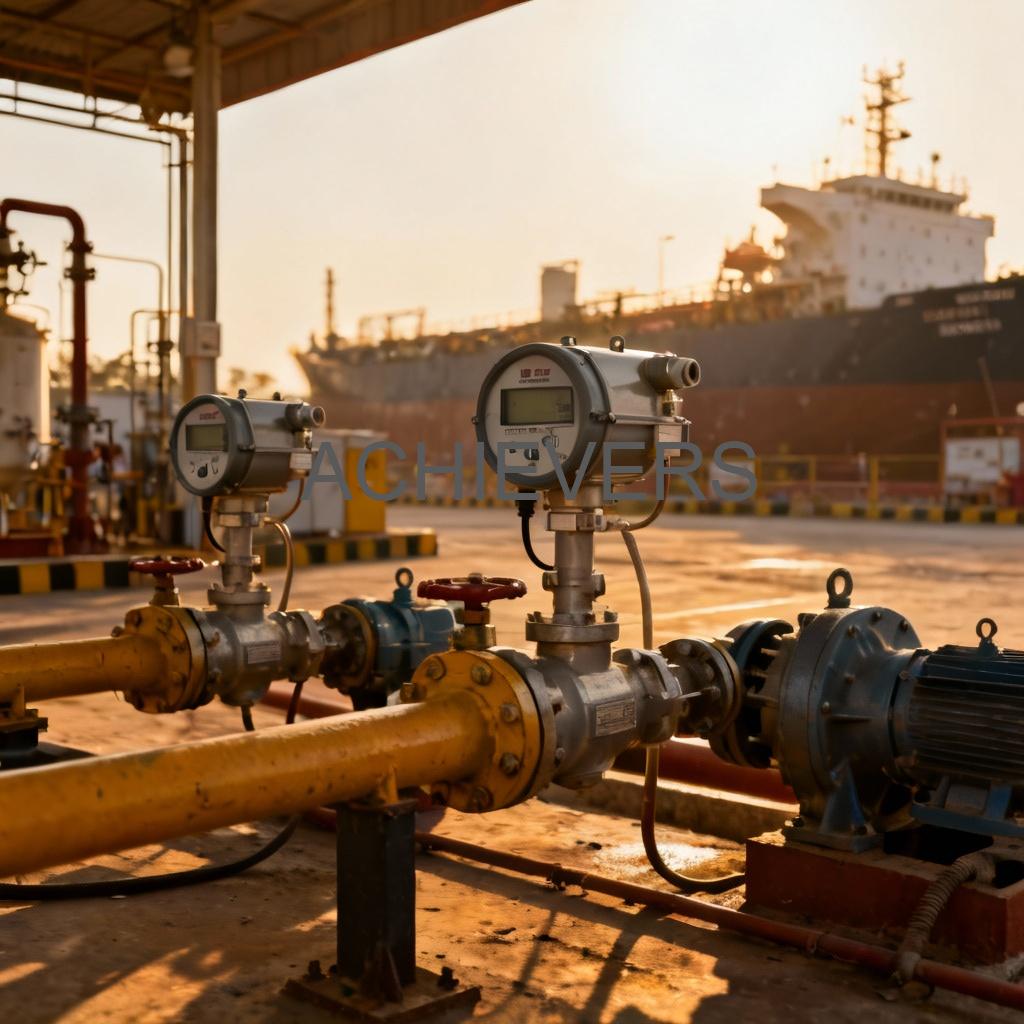
- Tanker Unloading: Verifying the volume of Lube Oils or fuels during loading and unloading from tankers to verify delivered quantities against billed amounts.
- Fleet Refueling: Used in aviation refueling vehicles and distribution depots.
- Hydraulics:
- System Monitoring: acting as an oil flow meter for hydraulic oil to monitor pump performance and detect leaks in high-pressure hydraulic circuits.
- Marine Engineering:
- Fuel management on ships and measuring bunker oil transfers.
5. Service, Installation, and Support
Even the highest quality Oil Flow Meters require proper installation and maintenance to retain their accuracy over decades of service.
Installation Best Practices
- Straight Runs: While positive displacement meters are less sensitive to turbulence than turbine meters, it is still good practice to ensure flow is stabilized.
- Air Elimination: Air bubbles passing through the meter will be counted as liquid, causing reading errors. Install an air eliminator upstream if the line is frequently emptied.
- Calibration: Our meters feature a stepless alignment framework, allowing for fine-tuning. However, accuracy is verified and certified before dispatch.
Maintenance and Warranty
Reliability is key in industrial environments. Our Oil Flow Meters are designed for "quick and simple upkeep." The oval gear design has few moving parts, reducing wear.
- Strainers: The integrated mesh strainer must be cleaned periodically to prevent flow restriction.
- Support: We offer a standard 1-year warranty, with an option for a 2-year extended warranty on demand.
- Spares: As a local manufacturer, we ensure the availability of spare parts (gears, seals, electronic registers), minimizing downtime compared to relying on imported alternatives.
Conclusion
Selecting the correct metering solution is a balance of science and practical site knowledge. Whether you require a positive displacement oil flow meter for thick gear oil or a high-temperature solution for furnace fuel, the key lies in matching the specifications to your reality.
At Chintan Engineers, we combine over 15 years of expertise with high-tech manufacturing to deliver Oil Flow Meters that stand the test of time. With rust-proof construction, digital integration, and nationwide support, we help Indian industries measure every drop with confidence.
Get the Right Configuration for Your Plant
Don't guess when it comes to accuracy. Contact our technical team today with your details:
- Fluid Name & Viscosity
- Flow Rate (Min/Max)
- Pipe Size
- Operating Temperature
We will help you specify the exact Oil Flow Meters model to ensure precision, efficiency, and long-term value for your operations.
